

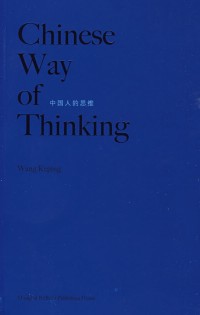
简介
《Chinese Way of Thinking(中国人的思维)》讲述了When t was a guest speaker in Germany in 1992, I said to the audiencethat the intercultural communication between East and West is notproportionately at the same level. For a Chinese professor or universitystudent in general can provide a name list of more than a hundred well-known figures in the Western history. Then, how many of the Chinesecounterparts from antiquity to the present could a German professor oruniversity student at large possibly know? No more than a dozen, I guess.There are of course exceptions among the faculty members and students inthe departments of Sinology who surely know more. How come it is so? Inmy opinion, it is mainly due to the fact that China has been in a passiveposition or "under attack" since the advent of the modern era, thus bearinga kind of eagerness to look into and learn from the West. In contrast, theWest has been in an active position, having far less need to know Chinabecause her existence would matter little to the Western mentality in thepast century or so. Such a situation corresponds more or less to that in the18th century when China assumed herself to be the center of the world andfelt no need to take any look at the West.
目录
Preface Li Zehou
Acknowledgements
Introduction
Section I Nature and Human Existence
1 A Rediscovery of Heaven-and-Human Oneness
The Three-fold Significance
The Two-dimensional Orientation
A Pragmatic Alternative
2 Laozi on the Dao of Human Existence
Frame of Reference: The Dao of Man, Heaven and the Sage
Pursuit of Sageliness: Practical and Sagely Wisdom
Path to Freedom: Attitudes toward Life and Death
3 Zhuangzi's Way of Thinking through Fables
The Peng and Happy Excursion to the Infinite
The Butterfly and Self-emancipation
4 Poetic Wisdom in Zen Enlightenment
Revelations from Natural Scenes
Natural Spontaneity as a Psychical Path
A Poetic Way of Zen Enlightenment
The Realm of Sunyaa~ as Beauty
Section II Harmony, Governance, and Warfare
5 Harmonization without Being Patternized
The Meeting of East and West as a Good-natured Hypothesis
Harmony and Uniformity in Perspective
The Need of a New Philosophos Poiesis
6 Humane Governance and Pragmatic-Reason
Rule of Law as the Fundamental Basis
Wise Leadership of Crucial Necessity
The Pragmatic Reason in Question
7 No More Hiroshimas and Sharp Weapons
A Poetic Reflection after Hiroshima
A Philosophical Pondering over Sharp Weapons
Section III Morality, Art, and Aesthetics
8 Confucius' Expectation of Poetry
Poetry as a Social Discourse Sui Generis
Poetry as an Aesthetic Discourse Sui Generis
Poetry as a Moral Discourse Sui Generis
9 Aesthetic Criticism of Transculturality
Beyond East and West: A Transcultural Transformation
Aesthetic Education as a Critical Necessity (Meiyu Shuo)
Art as a Refuge from Suffering (Jietuo Shuo)
Art as Aesthetic Play for Freedom (Youxi Shuo)
The Artist as Creative Genius (Tiancai Shuo)
The Refined as the Second Form (Guya Shuo)
The Theory of Poetic State par Excellence (Jingjie Shuo)
10 The Theory of Art as Sedimentation
Art as Sedimentation
A Critical Consideration
A Methodological Reflection
11 Appreciating Nature in View of Practical Aesthetics
Three Levels of Aesthetic Experience
Aesthetic Effects of Heaven-and-Human Oneness
Selected Bibliography
Glossary
Acknowledgements
Introduction
Section I Nature and Human Existence
1 A Rediscovery of Heaven-and-Human Oneness
The Three-fold Significance
The Two-dimensional Orientation
A Pragmatic Alternative
2 Laozi on the Dao of Human Existence
Frame of Reference: The Dao of Man, Heaven and the Sage
Pursuit of Sageliness: Practical and Sagely Wisdom
Path to Freedom: Attitudes toward Life and Death
3 Zhuangzi's Way of Thinking through Fables
The Peng and Happy Excursion to the Infinite
The Butterfly and Self-emancipation
4 Poetic Wisdom in Zen Enlightenment
Revelations from Natural Scenes
Natural Spontaneity as a Psychical Path
A Poetic Way of Zen Enlightenment
The Realm of Sunyaa~ as Beauty
Section II Harmony, Governance, and Warfare
5 Harmonization without Being Patternized
The Meeting of East and West as a Good-natured Hypothesis
Harmony and Uniformity in Perspective
The Need of a New Philosophos Poiesis
6 Humane Governance and Pragmatic-Reason
Rule of Law as the Fundamental Basis
Wise Leadership of Crucial Necessity
The Pragmatic Reason in Question
7 No More Hiroshimas and Sharp Weapons
A Poetic Reflection after Hiroshima
A Philosophical Pondering over Sharp Weapons
Section III Morality, Art, and Aesthetics
8 Confucius' Expectation of Poetry
Poetry as a Social Discourse Sui Generis
Poetry as an Aesthetic Discourse Sui Generis
Poetry as a Moral Discourse Sui Generis
9 Aesthetic Criticism of Transculturality
Beyond East and West: A Transcultural Transformation
Aesthetic Education as a Critical Necessity (Meiyu Shuo)
Art as a Refuge from Suffering (Jietuo Shuo)
Art as Aesthetic Play for Freedom (Youxi Shuo)
The Artist as Creative Genius (Tiancai Shuo)
The Refined as the Second Form (Guya Shuo)
The Theory of Poetic State par Excellence (Jingjie Shuo)
10 The Theory of Art as Sedimentation
Art as Sedimentation
A Critical Consideration
A Methodological Reflection
11 Appreciating Nature in View of Practical Aesthetics
Three Levels of Aesthetic Experience
Aesthetic Effects of Heaven-and-Human Oneness
Selected Bibliography
Glossary
- 名称
- 类型
- 大小
光盘服务联系方式: 020-38250260 客服QQ:4006604884
云图客服:
用户发送的提问,这种方式就需要有位在线客服来回答用户的问题,这种 就属于对话式的,问题是这种提问是否需要用户登录才能提问
Video Player
×
Audio Player
×
pdf Player
×
