

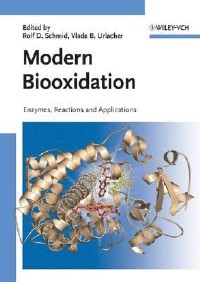
Modern biooxidations : enzymes, reactions and applications /
副标题:无
作 者:edited by Rolf D. Schmid and Vlada B.Urlacher
分类号:
ISBN:9783527315079
微信扫一扫,移动浏览光盘
简介
Scientists with backgrounds in pharmaceuticals or chemistry from industry and academia in Europe, the US, and Japan, discuss current methods for turning oxidizing enzymes into tools for their industries. Among the materials and processes they consider are catalytic applications of laccase, the bacterial cytochrome P450 mono-oxygenases, preparing drug metabolites using fungal and bacterial strains, and recycling and substituting NAD(P)H as a CYP cofactor. Annotation 漏2007 Book News, Inc., Portland, OR (booknews.com)
目录
1 Biooxidation with PQQ- and FAD-Dependent Dehydrogenases Osao Adachi and Yoshitaka Ano and Hirohide Toyama and Kazunobu Matsushita p. 1
1.1 Introduction p. 1
1.2 Basic Technical Information Regarding Membrane-bound Enzymes p. 4
1.2.1 Preparation of Cytosolic Fractions and Membrane Fractions p. 4
1.2.2 EDTA Treatment of the Membrane Fraction Carrying PQQ as Coenzyme p. 9
1.2.3 Assays of Enzyme Activity p. 5
1.3 PQQ-Dependent Dehydrogenases p. 6
1.3.1 Alcohol Oxidation p. 6
1.3.1.1 Membrane-Bound Alcohol Dehydrogenase (ADH III) p. 6
1.3.1.2 Soluble Alcohol Dehydrogenases p. 9
1.3.1.3 Cyclic Alcohol Dehydrogenase (Secondary Alcohol Dehydrogenase), Membrane-Bound p. 9
1.3.2 Glucose Oxidation p. 11
1.3.2.1 Membrane-Bound D-Glucose Dehydrogenase (m-GDH) p. 11
1.3.2.2 Soluble D-Glucose Dehydrogenase (s-GDH) p. 12
1.3.2.3 Applications of Quinoprotein GDHs as D-Glucose Sensors p. 13
1.3.3 Polyol Oxidation p. 14
1.3.3.1 D-Arabitol Dehydrogenase, Membrane-Bound p. 14
1.3.3.2 meso-Erythritol Oxidation Dehydrogenase, Membrane-Bound p. 16
1.3.3.3 D-Gluconate Oxidizing Polyol Dehydrogenase, Membrane-Bound p. 17
1.3.3.4 Glycerol Dehydrogenase, Membrane-Bound p. 19
1.3.3.5 D-Mannitol Dehydrogenase, Membrane-Bound p. 20
1.3.3.6 Ribitol Dehydrogenase, Membrane-Bound p. 21
1.3.3.7 D-Sorbitol Dehydrogenase, Membrane-Bound p. 22
1.3.3.8 L-Sorbosone Dehydrogenase, Membrane-Bound p. 23
1.3.4 Quinate Oxidation. Membrane-Bound Quinate Dehydrogenase (QDH) p. 24
1.4 FAD-Dependent Dehydrogenase p. 27
1.4.1 D-Fructose Dehydrogenase, Membrane-Bound p. 27
1.4.2 D-Gluconate Dehydrogenase, Membrane-Bound p. 28
1.4.3 D-Hexosamine Dehydrogenase, Membrane-Bound p. 29
1.4.4 2-Keto-D-gluconate Dehydrogenase, Membrane-Bound p. 31
1.4.5 Sorbitol Dehydrogenase, Membrane-Bound p. 32
1.5 Miscellaneous p. 33
1.5.1 Aldehyde Dehydrogenase, Membrane-Bound p. 33
References p. 35
2 Catalytic Applications of Laccase Feng Xu and Ture Damhus and Steffen Danielsen and Lars Henrik Ostergaard p. 43
2.1 Properties of Classical Laccase p. 43
2.1.1 Structure p. 43
2.1.2 Enzymology p. 44
2.1.3 4As Industrial Catalysts p. 46
2.1.3.1 Advantages p. 46
2.1.3.2 Shortcomings p. 48
2.2 Applications of Laccase for Industrial Oxidation Processes p. 48
2.2.1 Laboratory-Level Trials p. 49
2.2.1.1 Delignification p. 49
2.2.1.2 Dye and Colorant Bleaching p. 50
2.2.1.3 Bioremediation p. 50
2.2.1.4 Other Degradation Applications p. 51
2.2.1.5 Functional Biotransformation p. 51
2.2.1.6 Biosensing p. 53
2.2.1.7 Desirable Application Modes p. 53
2.2.2 Commercialized Applications p. 55
2.2.2.1 Preventing Taint in Cork Stoppers p. 56
2.2.2.2 Denim Bleaching p. 56
2.2.2.3 Paper Mill Effluent Treatment and Cardboard Strengthening p. 56
2.2.2.4 Major Hurdles to Further Development from Laboratory Trials p. 57
2.3 More Recent Developments p. 57
2.3.1 Novel Laccase Catalytic Systems p. 57
2.3.1.1 New Laccases p. 57
2.3.1.2 New Mediators p. 60
2.3.1.3 Cooperation with Other Enzymes p. 62
2.3.2 New Leads for Laccase Application p. 62
2.3.2.1 Laccase-Based Defense Against Biological and Chemical Warfare Agents p. 62
2.3.2.2 Degradation of PAH, Plastics, or Lipids p. 63
2.3.2.3 Enzymatic Fuel Cells/Batteries p. 64
2.3.2.4 Novel Synthetic Applications p. 65
2.3.2.5 Biorefinery p. 66
2.4 Further Developing Laccase Catalysis p. 66
2.4.1 Laccase Engineering p. 66
2.4.2 Laccase Production p. 67
References p. 68
3 Biocatalytic Scope of Baeyer-Villiger Monooxygenases Marco W. Fraaije and Dick B. Janssen p. 77
3.1 Introduction p. 77
3.1.1 The Baeyer-Villiger Reaction p. 77
3.1.2 Baeyer-Villiger Biocatalysts: Classification and Occurrence p. 78
3.1.2.1 Type I Baeyer-Villiger Monooxygenases p. 78
3.1.2.2 Type II Baeyer-Villiger Monooxygenases p. 78
3.1.2.3 Alternative Baeyer-Villiger Biocatalysts p. 79
3.2 Type I Baeyer-Villiger Monooxygenases: Versatile Oxidative Biocatalysts p. 80
3.2.1 Mechanistic and Structural Properties of Type I BVMOs p. 80
3.2.2 Diversity p. 84
3.2.3 Molecular Features p. 86
3.2.4 Kinetic Characteristics p. 86
3.2.5 Coenzyme Dependency p. 87
3.2.6 Uncoupling and Overoxidation p. 88
3.2.7 Biocatalyst Stability p. 88
3.2.8 Substrate Specificity p. 89
3.2.9 Unexplored Type I BVMOs p. 90
3.2.10 Mining Genomes for Novel BVMOs p. 92
3.3 Concluding Remarks p. 93
References p. 94
4 The Bacterial Cytochrome P450 Monooxygenases: P450cam and P450BM-3 Vlada B. Urlacher and Stephen G. Bell and Luet-Lok Wong p. 99
4.1 Introduction p. 99
4.2 Biotransformation by Bacterial P450 Enzymes p. 99
4.3 General Features of P450cam and P450BM-3 p. 102
4.3.1 Aromatic Compounds p. 105
4.3.2 Alkanes and Alicyclics p. 109
4.3.3 Terpenoid Compounds p. 111
4.3.4 Human Metabolites p. 114
4.4 The Scope of P450 Engineering p. 116
References p. 117
5 Cytochrome P450 Redox Partner Systems: Biodiversity and Biotechnological Implications Andrew W. Munro and Hazel M. Girvan and Joseph P. McVey and Kirsty J. McLean p. 123
5.1 Introduction p. 123
5.2 P450 Redox Partners p. 124
5.2.1 A "Historical" Perspective p. 124
5.2.2 The P450 Catalytic Cycle and Electron Transfer Events p. 125
5.2.3 P450cam and its Reductase System p. 127
5.2.4 Adrenodoxin and Adrenodoxin Reductase p. 128
5.2.5 Cytochrome P450 Reductase p. 129
5.2.6 P450BM-3 and Related CPR Fusion Enzymes p. 131
5.2.7 A Novel Class of P450-Redox Partner Fusion Enzymes p. 136
5.3 Increasing P450-Redox Partner Complexity: Flavodoxins and Diverse Ferredoxins p. 137
5.4 Natural and Artificial P450-Redox Partner Fusion Enzymes and their Biocatalytic Potential p. 138
5.5 Other Routes to Driving P450 Catalytic Function p. 140
5.6 Uncoupling, Enzyme Stability and Coenzyme Issues p. 142
5.7 Future Prospects p. 143
References p. 145
6 Steroid Hydroxylation: Microbial Steroid Biotransformations Using Cytochrome P450 Enzymes Matthias Bureik and Rita Bernhardt p. 155
6.1 Introduction p. 155
6.2 Cytochrome P450-Dependent Steroid Hydroxylase Systems p. 156
6.3 Native Microorganisms in Steroid Biotransformation p. 159
6.3.1 11[alpha]-Hydroxylation p. 160
6.3.2 11[beta]-Hydroxylation p. 161
6.3.3 16[alpha]-Hydroxylation p. 162
6.3.4 Conclusions p. 163
6.4 Genetically Modified Microorganisms in Steroid Biotransformation p. 163
6.4.1 Soluble Cytochromes P450 p. 164
6.4.2 Membrane-Bound Cytochromes P450 p. 166
6.5 Synopsis and Concluding Remarks p. 170
References p. 171
7 A Modular Approach to Biotransformation Using Microbial Cytochrome P450 Monooxygenases Akira Arisawa and Hitosi Agematu p. 177
7.1 Introduction p. 177
7.2 Experimental Outline p. 180
7.2.1 Gene Sequences p. 180
7.2.1.1 pT7NS-camAB p. 180
7.2.1.2 Plasmids to Express Bacterial CYPs p. 180
7.2.2 Preparation of Whole Cell Catalysts p. 181
7.2.3 Biotransformation of the CYP Substrates p. 181
7.2.3.1 Carbomycin A p. 181
7.2.3.2 Pravastatin p. 182
7.2.3.3 7-Hydroxycoumarin p. 182
7.2.4 Biotransformation by CYP Reaction Array p. 182
7.3 Bacterial CYP Expression System in E. coli p. 183
7.4 Construction of a Bacterial CYP Library p. 185
7.5 Construction of a Bacterial CYP Reaction Array p. 186
7.6 Application of the CYP Reaction Array to Biotransformation Screening p. 187
References p. 190
8 Selective Microbial Oxidations in Industry: Oxidations of Alkanes, Fatty Acids, Heterocyclic Compounds, Aromatic Compounds and Glycerol Using Native or Recombinant Microorganisms Albrecht Weiss p. 193
8.1 Introduction p. 193
8.2 Selective Oxidation of Hydrocarbons and Fatty Acids p. 194
8.2.1 Alkane Oxidation to Medium-Chain Alcohols [11] p. 194
8.2.2 Alkane and Fatty Acid Oxidation to Dicarboxylic Acids p. 196
8.2.2.1 Alkanes p. 197
8.2.2.2 Dicarboxylic Acids p. 197
8.3 Aromatic Compounds/Fine Chemicals p. 198
8.3.1 Conversion of Toxic Compounds: Catechols p. 198
8.3.2 Production of (R)-2-(4-Hydroxyphenoxy)propionic Acid p. 199
8.3.3 Selective Oxidation to Aromatic Aldehydes with Recombinant Cells p. 200
8.3.4 Styrene Oxide Production in a Two-Liquid Phase System p. 200
8.4 Heterocyclic Compounds p. 200
8.4.1 Enzymatic Oxidation of Methyl Groups in Aromatic Heterocycles p. 201
8.4.2 Preparation of 6-Hydroxynicotinic Acid p. 202
8.4.3 Preparation of 5-Hydroxypyrazinecarboxylic Acid p. 202
8.4.4 Preparation of 6-Hydroxy-(S)-nicotine and 4-[6-Hydroxypyridin-3-yl]4-oxobutyrate p. 202
8.4.5 Bulk Chemicals/Indigo p. 203
8.5 Glycerol Conversion to Dihydroxyacetone p. 206
8.6 Perspectives p. 207
References p. 207
9 Preparation of Drug Metabolites using Fungal and Bacterial Strains Oreste Ghisalba and Matthias Kittelmann p. 211
9.1 Introduction p. 211
9.2 Phase I Drug-Metabolizing Enzymes p. 212
9.3 Needs and "Platforms" for the Generation of Drug Metabolites p. 214
9.3.1 Recombinant Human Cytochrome P450 (rhCYP) Systems (acquired from British Technology Group/University of Dundee) p. 215
9.3.2 Microbial Strains Performing Oxidative Reactions (in-house technology) p. 215
9.4 Microbial Models for Oxidative Drug Metabolism p. 215
9.4.1 2Prokaryotic P450s p. 218
9.4.2 Microbial Eukaryotic P450s p. 218
9.5 Correlation of Microbial and Mammalian Oxidative Drug Metabolism p. 221
9.6 Correlation of Microbial Reactions with Human CYP Isozyme-Specific Reactions p. 221
9.7 Novartis Research Examples of Microbial Hydroxylations p. 225
9.7.1 Preparation of 10,11-Epoxy-carbamazepine and 10,11-Dihydro-10-hydroxy-carbamazepine p. 225
9.7.2 Preparation of 4-(4[prime]-Hydroxyanilino)-5-anilinophthalimide and 4,5-Bis-(4[prime]-hydroxyanilino)-phthalimide by Microbial Hydroxylation p. 227
9.8 Microbial Oxidation of Natural Products p. 228
9.8.1 Microbial Hydroxylation and Epoxidation of Milbemycins p. 229
9.9 Conclusions p. 229
References p. 231
10 Recombinant Yeast and Bacteria that Express Human P450s: Bioreactors for Drug Discovery, Development, and Biotechnology Steven P. Hanlon and Thomas Friedberg and C. Roland Wolf and Oreste Ghisalba and Matthias Kittelmann p. 233
10.1 Background p. 234
10.1.1 Importance of Recombinant P450s for Drug Development p. 234
10.1.2 Fundamentals of Heterologous Expression in Bacteria p. 235
10.1.3 Fundamentals of Heterologous Expression in Yeast p. 236
10.2 Comparison of P450 Levels and Enzymic Activities in Various Models p. 237
10.3 Use of E. coli P450 Expression Systems in Bioreactors p. 240
10.3.1 General Considerations p. 240
10.3.2 The Roche Experience p. 240
10.3.2.1 Background and Utility of P450 Systems in Pharma Research p. 240
10.3.2.2 Fermentation of Recombinant E. coli p. 241
10.3.2.3 Biotransformations Catalyzed by Recombinant CYP450 p. 241
10.3.2.4 Preparation of N-Desethyl Amodiaquine p. 242
10.3.3 The Novartis Experience p. 244
10.3.3.1 Introduction p. 244
10.3.3.2 Production of E. coli Cells with CYP Activity p. 244
10.3.3.3 Whole Cell Biotransformation p. 246
10.3.3.4 Recent Developments p. 246
10.4 Conclusion p. 246
References p. 247
11 Human Cytochrome P450 Monooxygenases - a General Model of Substrate Specificity and Regioselectivity Jurgen Pleiss p. 253
11.1 Introduction p. 253
11.2 What Can We Learn From Sequence? p. 254
11.2.1 The Cytochrome P450 Engineering Database (CYPED) p. 254
11.2.2 The Effect of Mutations on Activity p. 255
11.3 What Can We Learn from Structure? p. 258
11.3.1 2The Role of Flexibility p. 258
11.3.2 The Role of Binding Site Shape p. 259
11.4 Conclusion p. 261
References p. 262
12 Approaches to Recycling and Substituting NAD(P)H as a CYP Cofactor Dirk Holtmann and Jens Schrader p. 265
12.1 Introduction p. 265
12.2 Chemical Substitution of Cofactors p. 266
12.3 Enzymatic Regeneration of Cofactors p. 267
12.4 Photochemical Approaches to Substituting or Regenerating Cofactors for P450 Systems p. 271
12.5 Electrochemical Systems for Substitution or Regeneration of Cofactors p. 272
12.5.1 Electrochemical Regeneration of Natural Cofactors p. 273
12.5.2 Electrochemical Regeneration of Artificial Cofactors p. 274
12.5.3 Electrochemical Generation of Hydrogen Peroxide p. 275
12.5.4 Electrochemistry of P450 at Modified Electrodes p. 275
12.5.5 Electrochemistry of P450 in Surfactant Films p. 276
12.5.6 Incorporation of Cytochrome P450 in Conducting Polymers p. 278
12.6 Redox Mediators p. 278
12.7 Molecular Biological Approaches p. 280
12.7.1 Peroxide Shunt p. 280
12.7.2 Artificial Electron Transfer Systems p. 281
12.7.3 Changing the Cofactor Specificity of P450 Systems p. 281
12.7.4 Intracellular Cofactor Regeneration p. 282
12.8 Conclusion and Outlook p. 282
References p. 284
Index p. 291
1.1 Introduction p. 1
1.2 Basic Technical Information Regarding Membrane-bound Enzymes p. 4
1.2.1 Preparation of Cytosolic Fractions and Membrane Fractions p. 4
1.2.2 EDTA Treatment of the Membrane Fraction Carrying PQQ as Coenzyme p. 9
1.2.3 Assays of Enzyme Activity p. 5
1.3 PQQ-Dependent Dehydrogenases p. 6
1.3.1 Alcohol Oxidation p. 6
1.3.1.1 Membrane-Bound Alcohol Dehydrogenase (ADH III) p. 6
1.3.1.2 Soluble Alcohol Dehydrogenases p. 9
1.3.1.3 Cyclic Alcohol Dehydrogenase (Secondary Alcohol Dehydrogenase), Membrane-Bound p. 9
1.3.2 Glucose Oxidation p. 11
1.3.2.1 Membrane-Bound D-Glucose Dehydrogenase (m-GDH) p. 11
1.3.2.2 Soluble D-Glucose Dehydrogenase (s-GDH) p. 12
1.3.2.3 Applications of Quinoprotein GDHs as D-Glucose Sensors p. 13
1.3.3 Polyol Oxidation p. 14
1.3.3.1 D-Arabitol Dehydrogenase, Membrane-Bound p. 14
1.3.3.2 meso-Erythritol Oxidation Dehydrogenase, Membrane-Bound p. 16
1.3.3.3 D-Gluconate Oxidizing Polyol Dehydrogenase, Membrane-Bound p. 17
1.3.3.4 Glycerol Dehydrogenase, Membrane-Bound p. 19
1.3.3.5 D-Mannitol Dehydrogenase, Membrane-Bound p. 20
1.3.3.6 Ribitol Dehydrogenase, Membrane-Bound p. 21
1.3.3.7 D-Sorbitol Dehydrogenase, Membrane-Bound p. 22
1.3.3.8 L-Sorbosone Dehydrogenase, Membrane-Bound p. 23
1.3.4 Quinate Oxidation. Membrane-Bound Quinate Dehydrogenase (QDH) p. 24
1.4 FAD-Dependent Dehydrogenase p. 27
1.4.1 D-Fructose Dehydrogenase, Membrane-Bound p. 27
1.4.2 D-Gluconate Dehydrogenase, Membrane-Bound p. 28
1.4.3 D-Hexosamine Dehydrogenase, Membrane-Bound p. 29
1.4.4 2-Keto-D-gluconate Dehydrogenase, Membrane-Bound p. 31
1.4.5 Sorbitol Dehydrogenase, Membrane-Bound p. 32
1.5 Miscellaneous p. 33
1.5.1 Aldehyde Dehydrogenase, Membrane-Bound p. 33
References p. 35
2 Catalytic Applications of Laccase Feng Xu and Ture Damhus and Steffen Danielsen and Lars Henrik Ostergaard p. 43
2.1 Properties of Classical Laccase p. 43
2.1.1 Structure p. 43
2.1.2 Enzymology p. 44
2.1.3 4As Industrial Catalysts p. 46
2.1.3.1 Advantages p. 46
2.1.3.2 Shortcomings p. 48
2.2 Applications of Laccase for Industrial Oxidation Processes p. 48
2.2.1 Laboratory-Level Trials p. 49
2.2.1.1 Delignification p. 49
2.2.1.2 Dye and Colorant Bleaching p. 50
2.2.1.3 Bioremediation p. 50
2.2.1.4 Other Degradation Applications p. 51
2.2.1.5 Functional Biotransformation p. 51
2.2.1.6 Biosensing p. 53
2.2.1.7 Desirable Application Modes p. 53
2.2.2 Commercialized Applications p. 55
2.2.2.1 Preventing Taint in Cork Stoppers p. 56
2.2.2.2 Denim Bleaching p. 56
2.2.2.3 Paper Mill Effluent Treatment and Cardboard Strengthening p. 56
2.2.2.4 Major Hurdles to Further Development from Laboratory Trials p. 57
2.3 More Recent Developments p. 57
2.3.1 Novel Laccase Catalytic Systems p. 57
2.3.1.1 New Laccases p. 57
2.3.1.2 New Mediators p. 60
2.3.1.3 Cooperation with Other Enzymes p. 62
2.3.2 New Leads for Laccase Application p. 62
2.3.2.1 Laccase-Based Defense Against Biological and Chemical Warfare Agents p. 62
2.3.2.2 Degradation of PAH, Plastics, or Lipids p. 63
2.3.2.3 Enzymatic Fuel Cells/Batteries p. 64
2.3.2.4 Novel Synthetic Applications p. 65
2.3.2.5 Biorefinery p. 66
2.4 Further Developing Laccase Catalysis p. 66
2.4.1 Laccase Engineering p. 66
2.4.2 Laccase Production p. 67
References p. 68
3 Biocatalytic Scope of Baeyer-Villiger Monooxygenases Marco W. Fraaije and Dick B. Janssen p. 77
3.1 Introduction p. 77
3.1.1 The Baeyer-Villiger Reaction p. 77
3.1.2 Baeyer-Villiger Biocatalysts: Classification and Occurrence p. 78
3.1.2.1 Type I Baeyer-Villiger Monooxygenases p. 78
3.1.2.2 Type II Baeyer-Villiger Monooxygenases p. 78
3.1.2.3 Alternative Baeyer-Villiger Biocatalysts p. 79
3.2 Type I Baeyer-Villiger Monooxygenases: Versatile Oxidative Biocatalysts p. 80
3.2.1 Mechanistic and Structural Properties of Type I BVMOs p. 80
3.2.2 Diversity p. 84
3.2.3 Molecular Features p. 86
3.2.4 Kinetic Characteristics p. 86
3.2.5 Coenzyme Dependency p. 87
3.2.6 Uncoupling and Overoxidation p. 88
3.2.7 Biocatalyst Stability p. 88
3.2.8 Substrate Specificity p. 89
3.2.9 Unexplored Type I BVMOs p. 90
3.2.10 Mining Genomes for Novel BVMOs p. 92
3.3 Concluding Remarks p. 93
References p. 94
4 The Bacterial Cytochrome P450 Monooxygenases: P450cam and P450BM-3 Vlada B. Urlacher and Stephen G. Bell and Luet-Lok Wong p. 99
4.1 Introduction p. 99
4.2 Biotransformation by Bacterial P450 Enzymes p. 99
4.3 General Features of P450cam and P450BM-3 p. 102
4.3.1 Aromatic Compounds p. 105
4.3.2 Alkanes and Alicyclics p. 109
4.3.3 Terpenoid Compounds p. 111
4.3.4 Human Metabolites p. 114
4.4 The Scope of P450 Engineering p. 116
References p. 117
5 Cytochrome P450 Redox Partner Systems: Biodiversity and Biotechnological Implications Andrew W. Munro and Hazel M. Girvan and Joseph P. McVey and Kirsty J. McLean p. 123
5.1 Introduction p. 123
5.2 P450 Redox Partners p. 124
5.2.1 A "Historical" Perspective p. 124
5.2.2 The P450 Catalytic Cycle and Electron Transfer Events p. 125
5.2.3 P450cam and its Reductase System p. 127
5.2.4 Adrenodoxin and Adrenodoxin Reductase p. 128
5.2.5 Cytochrome P450 Reductase p. 129
5.2.6 P450BM-3 and Related CPR Fusion Enzymes p. 131
5.2.7 A Novel Class of P450-Redox Partner Fusion Enzymes p. 136
5.3 Increasing P450-Redox Partner Complexity: Flavodoxins and Diverse Ferredoxins p. 137
5.4 Natural and Artificial P450-Redox Partner Fusion Enzymes and their Biocatalytic Potential p. 138
5.5 Other Routes to Driving P450 Catalytic Function p. 140
5.6 Uncoupling, Enzyme Stability and Coenzyme Issues p. 142
5.7 Future Prospects p. 143
References p. 145
6 Steroid Hydroxylation: Microbial Steroid Biotransformations Using Cytochrome P450 Enzymes Matthias Bureik and Rita Bernhardt p. 155
6.1 Introduction p. 155
6.2 Cytochrome P450-Dependent Steroid Hydroxylase Systems p. 156
6.3 Native Microorganisms in Steroid Biotransformation p. 159
6.3.1 11[alpha]-Hydroxylation p. 160
6.3.2 11[beta]-Hydroxylation p. 161
6.3.3 16[alpha]-Hydroxylation p. 162
6.3.4 Conclusions p. 163
6.4 Genetically Modified Microorganisms in Steroid Biotransformation p. 163
6.4.1 Soluble Cytochromes P450 p. 164
6.4.2 Membrane-Bound Cytochromes P450 p. 166
6.5 Synopsis and Concluding Remarks p. 170
References p. 171
7 A Modular Approach to Biotransformation Using Microbial Cytochrome P450 Monooxygenases Akira Arisawa and Hitosi Agematu p. 177
7.1 Introduction p. 177
7.2 Experimental Outline p. 180
7.2.1 Gene Sequences p. 180
7.2.1.1 pT7NS-camAB p. 180
7.2.1.2 Plasmids to Express Bacterial CYPs p. 180
7.2.2 Preparation of Whole Cell Catalysts p. 181
7.2.3 Biotransformation of the CYP Substrates p. 181
7.2.3.1 Carbomycin A p. 181
7.2.3.2 Pravastatin p. 182
7.2.3.3 7-Hydroxycoumarin p. 182
7.2.4 Biotransformation by CYP Reaction Array p. 182
7.3 Bacterial CYP Expression System in E. coli p. 183
7.4 Construction of a Bacterial CYP Library p. 185
7.5 Construction of a Bacterial CYP Reaction Array p. 186
7.6 Application of the CYP Reaction Array to Biotransformation Screening p. 187
References p. 190
8 Selective Microbial Oxidations in Industry: Oxidations of Alkanes, Fatty Acids, Heterocyclic Compounds, Aromatic Compounds and Glycerol Using Native or Recombinant Microorganisms Albrecht Weiss p. 193
8.1 Introduction p. 193
8.2 Selective Oxidation of Hydrocarbons and Fatty Acids p. 194
8.2.1 Alkane Oxidation to Medium-Chain Alcohols [11] p. 194
8.2.2 Alkane and Fatty Acid Oxidation to Dicarboxylic Acids p. 196
8.2.2.1 Alkanes p. 197
8.2.2.2 Dicarboxylic Acids p. 197
8.3 Aromatic Compounds/Fine Chemicals p. 198
8.3.1 Conversion of Toxic Compounds: Catechols p. 198
8.3.2 Production of (R)-2-(4-Hydroxyphenoxy)propionic Acid p. 199
8.3.3 Selective Oxidation to Aromatic Aldehydes with Recombinant Cells p. 200
8.3.4 Styrene Oxide Production in a Two-Liquid Phase System p. 200
8.4 Heterocyclic Compounds p. 200
8.4.1 Enzymatic Oxidation of Methyl Groups in Aromatic Heterocycles p. 201
8.4.2 Preparation of 6-Hydroxynicotinic Acid p. 202
8.4.3 Preparation of 5-Hydroxypyrazinecarboxylic Acid p. 202
8.4.4 Preparation of 6-Hydroxy-(S)-nicotine and 4-[6-Hydroxypyridin-3-yl]4-oxobutyrate p. 202
8.4.5 Bulk Chemicals/Indigo p. 203
8.5 Glycerol Conversion to Dihydroxyacetone p. 206
8.6 Perspectives p. 207
References p. 207
9 Preparation of Drug Metabolites using Fungal and Bacterial Strains Oreste Ghisalba and Matthias Kittelmann p. 211
9.1 Introduction p. 211
9.2 Phase I Drug-Metabolizing Enzymes p. 212
9.3 Needs and "Platforms" for the Generation of Drug Metabolites p. 214
9.3.1 Recombinant Human Cytochrome P450 (rhCYP) Systems (acquired from British Technology Group/University of Dundee) p. 215
9.3.2 Microbial Strains Performing Oxidative Reactions (in-house technology) p. 215
9.4 Microbial Models for Oxidative Drug Metabolism p. 215
9.4.1 2Prokaryotic P450s p. 218
9.4.2 Microbial Eukaryotic P450s p. 218
9.5 Correlation of Microbial and Mammalian Oxidative Drug Metabolism p. 221
9.6 Correlation of Microbial Reactions with Human CYP Isozyme-Specific Reactions p. 221
9.7 Novartis Research Examples of Microbial Hydroxylations p. 225
9.7.1 Preparation of 10,11-Epoxy-carbamazepine and 10,11-Dihydro-10-hydroxy-carbamazepine p. 225
9.7.2 Preparation of 4-(4[prime]-Hydroxyanilino)-5-anilinophthalimide and 4,5-Bis-(4[prime]-hydroxyanilino)-phthalimide by Microbial Hydroxylation p. 227
9.8 Microbial Oxidation of Natural Products p. 228
9.8.1 Microbial Hydroxylation and Epoxidation of Milbemycins p. 229
9.9 Conclusions p. 229
References p. 231
10 Recombinant Yeast and Bacteria that Express Human P450s: Bioreactors for Drug Discovery, Development, and Biotechnology Steven P. Hanlon and Thomas Friedberg and C. Roland Wolf and Oreste Ghisalba and Matthias Kittelmann p. 233
10.1 Background p. 234
10.1.1 Importance of Recombinant P450s for Drug Development p. 234
10.1.2 Fundamentals of Heterologous Expression in Bacteria p. 235
10.1.3 Fundamentals of Heterologous Expression in Yeast p. 236
10.2 Comparison of P450 Levels and Enzymic Activities in Various Models p. 237
10.3 Use of E. coli P450 Expression Systems in Bioreactors p. 240
10.3.1 General Considerations p. 240
10.3.2 The Roche Experience p. 240
10.3.2.1 Background and Utility of P450 Systems in Pharma Research p. 240
10.3.2.2 Fermentation of Recombinant E. coli p. 241
10.3.2.3 Biotransformations Catalyzed by Recombinant CYP450 p. 241
10.3.2.4 Preparation of N-Desethyl Amodiaquine p. 242
10.3.3 The Novartis Experience p. 244
10.3.3.1 Introduction p. 244
10.3.3.2 Production of E. coli Cells with CYP Activity p. 244
10.3.3.3 Whole Cell Biotransformation p. 246
10.3.3.4 Recent Developments p. 246
10.4 Conclusion p. 246
References p. 247
11 Human Cytochrome P450 Monooxygenases - a General Model of Substrate Specificity and Regioselectivity Jurgen Pleiss p. 253
11.1 Introduction p. 253
11.2 What Can We Learn From Sequence? p. 254
11.2.1 The Cytochrome P450 Engineering Database (CYPED) p. 254
11.2.2 The Effect of Mutations on Activity p. 255
11.3 What Can We Learn from Structure? p. 258
11.3.1 2The Role of Flexibility p. 258
11.3.2 The Role of Binding Site Shape p. 259
11.4 Conclusion p. 261
References p. 262
12 Approaches to Recycling and Substituting NAD(P)H as a CYP Cofactor Dirk Holtmann and Jens Schrader p. 265
12.1 Introduction p. 265
12.2 Chemical Substitution of Cofactors p. 266
12.3 Enzymatic Regeneration of Cofactors p. 267
12.4 Photochemical Approaches to Substituting or Regenerating Cofactors for P450 Systems p. 271
12.5 Electrochemical Systems for Substitution or Regeneration of Cofactors p. 272
12.5.1 Electrochemical Regeneration of Natural Cofactors p. 273
12.5.2 Electrochemical Regeneration of Artificial Cofactors p. 274
12.5.3 Electrochemical Generation of Hydrogen Peroxide p. 275
12.5.4 Electrochemistry of P450 at Modified Electrodes p. 275
12.5.5 Electrochemistry of P450 in Surfactant Films p. 276
12.5.6 Incorporation of Cytochrome P450 in Conducting Polymers p. 278
12.6 Redox Mediators p. 278
12.7 Molecular Biological Approaches p. 280
12.7.1 Peroxide Shunt p. 280
12.7.2 Artificial Electron Transfer Systems p. 281
12.7.3 Changing the Cofactor Specificity of P450 Systems p. 281
12.7.4 Intracellular Cofactor Regeneration p. 282
12.8 Conclusion and Outlook p. 282
References p. 284
Index p. 291
Modern biooxidations : enzymes, reactions and applications /
- 名称
- 类型
- 大小
光盘服务联系方式: 020-38250260 客服QQ:4006604884
云图客服:
用户发送的提问,这种方式就需要有位在线客服来回答用户的问题,这种 就属于对话式的,问题是这种提问是否需要用户登录才能提问
Video Player
×
Audio Player
×
pdf Player
×
