

简介
Summary:
Publisher Summary 1
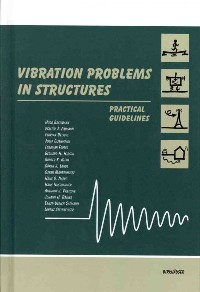
Large structures such as factories, gymnasia, concert halls, bridges, towers, masts and chimneys can be detrimentally affected by vibrations. This book provides structural and civil engineers working in construction and environmental engineering with practical guidelines for counteracting vibration problems.
Publisher Summary 2
Authors: Hugo Bachmann, Walter J. Ammann, Florian Deischl, Josef Eisenmann, Ingomar Floegl, Gerhard H. Hirsch, G眉nter K. Klein, G枚ran J. Lande, Oskar Mahrenholtz, Hans G. Natke, Hans Nussbaumer, Anthony J. Pretlove, Johann H. Rainer, Ernst-Ulrich Saemann, Lorenz Steinbeisser. Large structures such as factories, gymnasia, concert halls, bridges, towers, masts and chimneys can be detrimentally affected by vibrations. These vibrations can cause either serviceability problems, severely hampering the user's comfort, or safety problems. The aim of this book is to provide structural and civil engineers working in construction and environmental engineering with practical guidelines for counteracting vibration problems. Dynamic actions are considered from the following sources of vibration: - human body motions, - rotating, oscillating and impacting machines, - wind flow, - road traffic, railway traffic and construction work. The main section of the book presents tools that aid in decision-making and in deriving simple solutions to cases of frequently occurring "normal" vibration problems. Complexer problems and more advanced solutions are also considered. In all cases these guidelines should enable the engineer to decide on appropriate solutions expeditiously. The appendices of the book contain fundamentals essential to the main chapters.
目录
Table Of Contents:
Preface v
Contents vii
1 Vibrations induced by people 1(28)
1.1 Pedestrian bridges 2(9)
1.1.1 Problem description 2(1)
1.1.2 Dynamic actions 2(1)
1.1.3 Structural criteria 3(1)
a) Natural frequencies 3(1)
b) Damping 4(1)
c) Stiffness 5(1)
1.1.4 Effects 5(1)
1.1.5 Tolerable values 6(1)
1.1.6 Simple design rules 6(1)
a) Tuning method 6(1)
b) Code method 6(1)
c) Calculation of upper bound response for one pedestrian 7(1)
d) Effects of several pedestrians 8(1)
1.1.7 More advanced design rules 8(1)
1.1.8 Remedial measures 9(1)
a) Stiffening 9(1)
b) Increased damping 9(1)
c) Vibration absorbers 10(1)
1.2 Floors with walking people 11(7)
1.2.1 Problem description 11(1)
1.2.2 Dynamic actions 11(1)
1.2.3 Structural criteria 11(1)
a) Natural frequencies 11(1)
b) Damping 12(1)
1.2.4 Effects 12(1)
1.2.5 Tolerable values 12(1)
1.2.6 Simple design rules 12(1)
a) High tuning method 12(1)
b) Heel impact method 13(4)
1.2.7 More advanced design rules 17(1)
1.2.8 Remedial measures 17(1)
a) Shift of the natural frequency 17(1)
b) Non-structural elements 17(1)
1.3 Floors for sport or dance activities 18(4)
1.3.1 Problem description 18(1)
1.3.2 Dynamic actions 18(1)
1.3.3 Structural criteria 19(1)
a) Natural frequencies 19(1)
b) Damping 19(1)
1.3.4 Effects 19(1)
1.3.5 Tolerable values 20(1)
1.3.6 Simple design rules 20(1)
1.3.7 More advanced design rules 21(1)
1.3.8 Remedial measures 21(1)
a) Raising the natural frequency by means of added stiffness 21(1)
b) Increasing structural damping 21(1)
c) Use of vibration absorbers 21(1)
1.4 Floors with fixed seating and spectator galleries 22(3)
1.4.1 Problem description 22(1)
1.4.2 Dynamic actions 22(1)
1.4.3 Structural criteria 23(1)
a) Natural frequencies 23(1)
b) Damping 23(1)
1.4.4 Effects 23(1)
1.4.5 Tolerable values 23(1)
1.4.6 Simple design rules 24(1)
1.4.7 More advanced design rules 24(1)
1.4.8 Remedial measures 24(1)
1.5 High-diving platforms 25(3)
1.5.1 Problem description 25(1)
1.5.2 Dynamic actions 25(1)
1.5.3 Structural criteria 25(1)
a) Natural frequencies 25(1)
b) Damping 25(1)
1.5.4 Effects 26(1)
1.5.5 Tolerable values 26(1)
1.5.6 Simple design rules 26(1)
a) Stiffness criteria 26(1)
b) Frequency criteria 27(1)
1.5.7 More advanced design rules 27(1)
1.5.8 Remedial measures 27(1)
References to Chapter 1 28(1)
2 Machinery-induced vibrations 29(44)
2.1 Machine foundations and supports 30(20)
2.1.1 Problem description 30(1)
2.1.2 Dynamic actions 31(1)
a) Causes 31(1)
b) Periodic excitation 32(2)
c) Transient excitation 34(1)
d) Stochastic excitation 35(1)
2.1.3 Structural criteria 36(1)
a) Natural frequencies 36(1)
b) Damping 36(1)
2.1.4 Effects 36(1)
a) Effects on structures 36(1)
b) Effects on people 36(1)
c) Effects on machinery and installations 37(1)
d) Effects due to structure-borne sound 37(1)
2.1.5 Tolerable values 37(1)
a) General Aspects 37(1)
b) Structural criteria 37(2)
c) Physiological criteria 39(1)
d) Production-quality criteria 39(1)
e) Tolerable values relative to structure-borne sound 39(1)
2.1.6 Simple design rules 39(1)
a) General 39(1)
b) Data desirable for the design of machine supports 40(1)
c) Measures for rotating or oscillating machines 41(5)
d) Measures for machines with impacting parts 46(1)
e) Rules for detailing and construction 47(1)
2.1.7 More advanced design rules 48(1)
2.1.8 Remedial measures 49(1)
2.2 Bell towers 50(6)
2.2.1 Problem description 50(1)
2.2.2 Dynamic actions 50(2)
2.2.3 Structural criteria 52(1)
a) Natural frequencies 52(1)
b) Damping 52(1)
2.2.4 Effects 52(1)
2.2.5 Tolerable values 52(1)
2.2.6 Simple design rules 53(1)
2.2.7 More advanced design rules 53(1)
2.2.8 Remedial measures 54(2)
2.3 Structure-borne sound 56(10)
2.3.1 Problem description 56(1)
2.3.2 Dynamic actions 56(1)
2.3.3 Structural criteria 56(1)
2.3.4 Effects 57(1)
2.3.5 Tolerable values 57(1)
2.3.6 Simple design rules 57(1)
a) Influencing the initiation 58(1)
b) Influencing the transmission 58(7)
2.3.7 More advanced design rules 65(1)
2.3.8 Remedial measures 65(1)
2.4 Ground-transmitted vibrations 66(5)
2.4.1 Problem description 66(1)
2.4.2 Dynamic actions 67(1)
2.4.3 Structural criteria 67(1)
a) Natural frequencies 67(1)
b) Damping 67(1)
2.4.4 Effects 68(1)
2.4.5 Tolerable values 68(1)
2.4.6 Simple design rules 68(1)
a) Emission 68(1)
b) Transmission 69(1)
c) Immission 69(1)
2.4.7 More advanced design rules 69(1)
2.4.8 Remedial measures 70(1)
References to Chapter 2 71(2)
3 Wind-induced vibrations 73(40)
3.1 Buildings 74(6)
3.1.1 Problem description 74(1)
3.1.2 Dynamic actions 75(1)
3.1.3 Structural criteria 75(1)
a) Natural frequencies 75(1)
b) Damping 75(1)
c) Stiffness 76(1)
3.1.4 Effects 76(1)
3.1.5 Tolerable values 77(1)
3.1.6 Simple design rules 77(1)
3.1.7 More advanced design rules 78(1)
3.1.8 Remedial measures 78(1)
a) Installation of damping elements 78(1)
b) Vibration absorbers 78(2)
3.2 Towers 80(6)
3.2.1 Problem description 80(1)
3.2.2 Dynamic actions 81(1)
3.2.3 Structural criteria 82(1)
a) Natural frequencies 82(1)
b) Damping 82(1)
c) Stiffness 83(1)
3.2.4 Effects 83(1)
3.2.5 Tolerable values 84(1)
3.2.6 Simple design rules 84(1)
3.2.7 More advanced design rules 84(1)
3.2.8 Remedial measures 85(1)
3.3 Chimneys and Masts 86(7)
3.3.1 Problem description 86(1)
3.3.2 Dynamic actions 86(3)
3.3.3 Structural criteria 89(1)
a) Natural frequencies 89(1)
b) Damping 90(1)
3.3.4 Effects 90(1)
3.3.5 Tolerable values 90(1)
3.3.6 Simple design rules 91(1)
3.3.7 More advanced design rules 91(1)
3.3.8 Remedial measures 91(2)
3.4 Guyed Masts 93(4)
3.4.1 Problem description 93(1)
3.4.2 Dynamic actions 93(1)
3.4.3 Structural criteria 93(1)
a) Natural frequencies 93(1)
b) Damping 94(1)
3.4.4 Effects 94(1)
3.4.5 Tolerable values 95(1)
3.4.6 Simple design rules 95(1)
3.4.7 More advanced design rules 95(1)
3.4.8 Remedial measures 96(1)
3.5 Pylons 97(5)
3.5.1 Problem description 97(1)
3.5.2 Dynamic actions 98(1)
3.5.3 Structural criteria 99(1)
a) Natural frequencies 99(1)
b) Damping 99(1)
3.5.4 Effects 99(1)
3.5.5 Tolerable values 100(1)
3.5.6 Simple design rules 100(1)
3.5.7 More advanced design rules 100(1)
3.5.8 Remedial measures 100(2)
3.6 Suspension and Cable-Stayed Bridges 102(6)
3.6.1 Problem description 102(1)
3.6.2 Dynamic actions 103(1)
3.6.3 Structural criteria 103(1)
a) Natural frequencies 103(1)
b) Damping 104(1)
3.6.4 Effects 105(1)
3.6.5 Tolerable values 105(1)
3.6.6 Simple design rules 105(1)
3.6.7 More advanced design rules 105(1)
3.6.8 Remedial measures 106(2)
3.7 Cantilevered Roofs 108(3)
3.7.1 Problem description 108(1)
3.7.2 Dynamic actions 109(1)
3.7.3 Structural criteria 109(1)
a) Natural frequencies 109(1)
b) Damping 109(1)
3.7.4 Effects 109(1)
3.7.5 Tolerable values 109(1)
3.7.6 Simple design rules 109(1)
3.7.7 More advanced design rules 110(1)
3.7.8 Remedial measures 110(1)
References to Chapter 3 111(2)
4 Vibrations induced by traffic and construction activity 113(28)
4.1 Roads 114(5)
4.1.1 Problem description 114(1)
4.1.2 Dynamic actions 114(1)
4.1.3 Structural criteria 115(1)
4.1.4 Effects 116(1)
4.1.5 Tolerable values 116(1)
4.1.6 Simple design rules 116(1)
4.1.7 More advanced design rules 117(1)
4.1.8 Remedial measures 118(1)
4.2 Railways 119(6)
4.2.1 Problem description 119(1)
4.2.2 Dynamic actions 119(1)
4.2.3 Structural criteria 119(1)
4.2.4 Effects 119(1)
4.2.5 Tolerable values 120(1)
4.2.6 Simple design rules 120(1)
a) General aspects 120(1)
b) Measures against increased vibration level 120(1)
4.2.7 More advanced design rules 121(3)
4.2.8 Remedial measures 124(1)
4.3 Bridges 125(4)
4.3.1 Problem description 125(1)
4.3.2 Dynamic actions 125(1)
4.3.3 Structural criteria 126(1)
4.3.4 Effects 127(1)
4.3.5 Tolerable values 127(1)
4.3.6 Simple design rules 128(1)
4.3.7 More advanced design rules 128(1)
4.3.8 Remedial measures 128(1)
4.4 Construction Work 129(11)
4.4.1 Problem description 129(1)
4.4.2 Dynamic actions 129(1)
4.4.3 Structural criteria 130(1)
4.4.4 Effects 131(1)
4.4.5 Tolerable values 132(2)
4.4.6 Simple rules 134(1)
a) Vehicles on construction sites 134(1)
b) Piling, sheet piling 135(1)
c) Vibratory compaction 136(1)
d) Dynamic consolidation 137(1)
e) Excavation 137(1)
f) Blasting 137(1)
4.4.7 More advanced measures 138(1)
4.4.8 Remedial measures 139(1)
References to Chapter 4 140(1)
A Basic vibration theory and its application to beams and plates 141(14)
A.1 Free vibration 141(2)
A.2 Forced vibration 143(1)
A.3 Harmonic excitation 143(2)
A.4 Periodic excitation 145(2)
A.4.1 Fourier analysis of the forcing function 145(1)
A.4.2 How the Fourier decomposition works 146(1)
A.4.3 The Fourier Transform 146(1)
A.5 Tuning of a structure 147(2)
A.6 Impedance 149(1)
A.7 Vibration Isolation (Transmissibility) 149(1)
A.8 Continuous systems and their equivalent SDOF systems 150(5)
B Decibel Scales 155(2)
B.1 Sound pressure level 155(1)
B.2 Weighting of the sound pressure level 156(1)
C Damping 157(12)
C.1 Introduction 157(1)
C.2 Damping Quantities (Definitions, Interpretations) 157(5)
C.3 Measurement of damping properties of structures 162(2)
C.3.1 Decay curve method 162(1)
C.3.2 Bandwidth method 163(1)
C.3.3 Conclusions 164(1)
C.4 Damping mechanisms in reinforced concrete 164(2)
C.5 Overall damping of a structure 166(3)
C.5.1 Damping of the bare structure 166(1)
C.5.2 Damping by non-structural elements 166(1)
C.5.3 Damping by energy radiation to the soil 167(1)
C.5.4 Overall damping 167(2)
D Tuned vibration absorbers 169(4)
D.1 Definition 169(1)
D.2 Modelling and differential equations of motion 169(1)
D.3 Optimum tuning and optimum damping of the absorber 170(1)
D.4 Practical hints 171(2)
E Wave Propagation 173(4)
E.1 Introduction 173(1)
E.2 Wave types and propagation velocities 173(2)
E.3 Attenuation laws 175(2)
F Behaviour of concrete and steel under dynamic actions 177(8)
F.1 Introduction 177(2)
F.2 Behaviour of concrete 179(2)
F.2.1 Modulus of elasticity 179(1)
F.2.2 Compressive strength 179(1)
F.2.3 Ultimate strain in compression 179(1)
F.2.4 Tensile strength 180(1)
F.2.5 Ultimate strain in tension 180(1)
F.2.6 Bond between reinforcing steel and concrete 181(1)
F.3 Behaviour of reinforcing steel 181(4)
F.3.1 Modulus of Elasticity 181(1)
F.3.2 Strength in Tension 182(1)
F.3.3 Strain in tension 183(2)
G Dynamic forces from rhythmical human body motions 185(6)
G.1 Rhythmical human body motions 185(1)
G.2 Representative types of activity 186(1)
G.3 Normalised dynamic forces 187(4)
H Dynamic effects from wind 191(24)
H.1 Basic theory 191(4)
H.1.1 Wind speed and pressure 191(1)
H.1.2 Statistical characteristics 192(1)
a) Gust spectrum 193(1)
b) Aerodynamic admittance function 193(1)
c) Spectral density of the wind force 193(1)
H.1.3 Dynamic effects 193(2)
H.2 Vibrations in along-wind direction induced by gusts 195(5)
H.2.1 Spectral methods 195(1)
a) Mechanical amplification function 195(1)
b) Spectral density of the system response 195(1)
H.2.2 Static equivalent force method based on stochastic loading 196(4)
H.2.3 Static equivalent force method based on deterministic loading 200(1)
H.2.4 Remedial measures 200(1)
H.3 Vibrations in along-wind direction induced by buffeting 200(3)
H.4 Vibrations in across-wind direction induced by vortex-shedding 203(5)
H.4.1 Single structures 203(4)
H.4.2 Several structures one behind another 207(1)
H.4.3 Conical structures 207(1)
H.4.4 Vibrations of shells 207(1)
H.5 Vibrations in across-wind direction: Galloping 208(1)
H.6 Vibrations in across-wind direction: flutter 209(3)
H.7 Damping of high and slender RC structures subjected to wind 212(3)
I Human response to vibrations 215(4)
I.1 Introduction 215(1)
I.2 Codes of practice 215(4)
I.2.1 ISO 2631 216(2)
I.2.2 DIN 4150/2 218(1)
J Building response to vibrations 219(4)
J.1 General 219(1)
J.2 Examples of recommended limit values 220(3)
References to the Appendices 223(4)
List of Codes and Standards 227(4)
Index 231
Preface v
Contents vii
1 Vibrations induced by people 1(28)
1.1 Pedestrian bridges 2(9)
1.1.1 Problem description 2(1)
1.1.2 Dynamic actions 2(1)
1.1.3 Structural criteria 3(1)
a) Natural frequencies 3(1)
b) Damping 4(1)
c) Stiffness 5(1)
1.1.4 Effects 5(1)
1.1.5 Tolerable values 6(1)
1.1.6 Simple design rules 6(1)
a) Tuning method 6(1)
b) Code method 6(1)
c) Calculation of upper bound response for one pedestrian 7(1)
d) Effects of several pedestrians 8(1)
1.1.7 More advanced design rules 8(1)
1.1.8 Remedial measures 9(1)
a) Stiffening 9(1)
b) Increased damping 9(1)
c) Vibration absorbers 10(1)
1.2 Floors with walking people 11(7)
1.2.1 Problem description 11(1)
1.2.2 Dynamic actions 11(1)
1.2.3 Structural criteria 11(1)
a) Natural frequencies 11(1)
b) Damping 12(1)
1.2.4 Effects 12(1)
1.2.5 Tolerable values 12(1)
1.2.6 Simple design rules 12(1)
a) High tuning method 12(1)
b) Heel impact method 13(4)
1.2.7 More advanced design rules 17(1)
1.2.8 Remedial measures 17(1)
a) Shift of the natural frequency 17(1)
b) Non-structural elements 17(1)
1.3 Floors for sport or dance activities 18(4)
1.3.1 Problem description 18(1)
1.3.2 Dynamic actions 18(1)
1.3.3 Structural criteria 19(1)
a) Natural frequencies 19(1)
b) Damping 19(1)
1.3.4 Effects 19(1)
1.3.5 Tolerable values 20(1)
1.3.6 Simple design rules 20(1)
1.3.7 More advanced design rules 21(1)
1.3.8 Remedial measures 21(1)
a) Raising the natural frequency by means of added stiffness 21(1)
b) Increasing structural damping 21(1)
c) Use of vibration absorbers 21(1)
1.4 Floors with fixed seating and spectator galleries 22(3)
1.4.1 Problem description 22(1)
1.4.2 Dynamic actions 22(1)
1.4.3 Structural criteria 23(1)
a) Natural frequencies 23(1)
b) Damping 23(1)
1.4.4 Effects 23(1)
1.4.5 Tolerable values 23(1)
1.4.6 Simple design rules 24(1)
1.4.7 More advanced design rules 24(1)
1.4.8 Remedial measures 24(1)
1.5 High-diving platforms 25(3)
1.5.1 Problem description 25(1)
1.5.2 Dynamic actions 25(1)
1.5.3 Structural criteria 25(1)
a) Natural frequencies 25(1)
b) Damping 25(1)
1.5.4 Effects 26(1)
1.5.5 Tolerable values 26(1)
1.5.6 Simple design rules 26(1)
a) Stiffness criteria 26(1)
b) Frequency criteria 27(1)
1.5.7 More advanced design rules 27(1)
1.5.8 Remedial measures 27(1)
References to Chapter 1 28(1)
2 Machinery-induced vibrations 29(44)
2.1 Machine foundations and supports 30(20)
2.1.1 Problem description 30(1)
2.1.2 Dynamic actions 31(1)
a) Causes 31(1)
b) Periodic excitation 32(2)
c) Transient excitation 34(1)
d) Stochastic excitation 35(1)
2.1.3 Structural criteria 36(1)
a) Natural frequencies 36(1)
b) Damping 36(1)
2.1.4 Effects 36(1)
a) Effects on structures 36(1)
b) Effects on people 36(1)
c) Effects on machinery and installations 37(1)
d) Effects due to structure-borne sound 37(1)
2.1.5 Tolerable values 37(1)
a) General Aspects 37(1)
b) Structural criteria 37(2)
c) Physiological criteria 39(1)
d) Production-quality criteria 39(1)
e) Tolerable values relative to structure-borne sound 39(1)
2.1.6 Simple design rules 39(1)
a) General 39(1)
b) Data desirable for the design of machine supports 40(1)
c) Measures for rotating or oscillating machines 41(5)
d) Measures for machines with impacting parts 46(1)
e) Rules for detailing and construction 47(1)
2.1.7 More advanced design rules 48(1)
2.1.8 Remedial measures 49(1)
2.2 Bell towers 50(6)
2.2.1 Problem description 50(1)
2.2.2 Dynamic actions 50(2)
2.2.3 Structural criteria 52(1)
a) Natural frequencies 52(1)
b) Damping 52(1)
2.2.4 Effects 52(1)
2.2.5 Tolerable values 52(1)
2.2.6 Simple design rules 53(1)
2.2.7 More advanced design rules 53(1)
2.2.8 Remedial measures 54(2)
2.3 Structure-borne sound 56(10)
2.3.1 Problem description 56(1)
2.3.2 Dynamic actions 56(1)
2.3.3 Structural criteria 56(1)
2.3.4 Effects 57(1)
2.3.5 Tolerable values 57(1)
2.3.6 Simple design rules 57(1)
a) Influencing the initiation 58(1)
b) Influencing the transmission 58(7)
2.3.7 More advanced design rules 65(1)
2.3.8 Remedial measures 65(1)
2.4 Ground-transmitted vibrations 66(5)
2.4.1 Problem description 66(1)
2.4.2 Dynamic actions 67(1)
2.4.3 Structural criteria 67(1)
a) Natural frequencies 67(1)
b) Damping 67(1)
2.4.4 Effects 68(1)
2.4.5 Tolerable values 68(1)
2.4.6 Simple design rules 68(1)
a) Emission 68(1)
b) Transmission 69(1)
c) Immission 69(1)
2.4.7 More advanced design rules 69(1)
2.4.8 Remedial measures 70(1)
References to Chapter 2 71(2)
3 Wind-induced vibrations 73(40)
3.1 Buildings 74(6)
3.1.1 Problem description 74(1)
3.1.2 Dynamic actions 75(1)
3.1.3 Structural criteria 75(1)
a) Natural frequencies 75(1)
b) Damping 75(1)
c) Stiffness 76(1)
3.1.4 Effects 76(1)
3.1.5 Tolerable values 77(1)
3.1.6 Simple design rules 77(1)
3.1.7 More advanced design rules 78(1)
3.1.8 Remedial measures 78(1)
a) Installation of damping elements 78(1)
b) Vibration absorbers 78(2)
3.2 Towers 80(6)
3.2.1 Problem description 80(1)
3.2.2 Dynamic actions 81(1)
3.2.3 Structural criteria 82(1)
a) Natural frequencies 82(1)
b) Damping 82(1)
c) Stiffness 83(1)
3.2.4 Effects 83(1)
3.2.5 Tolerable values 84(1)
3.2.6 Simple design rules 84(1)
3.2.7 More advanced design rules 84(1)
3.2.8 Remedial measures 85(1)
3.3 Chimneys and Masts 86(7)
3.3.1 Problem description 86(1)
3.3.2 Dynamic actions 86(3)
3.3.3 Structural criteria 89(1)
a) Natural frequencies 89(1)
b) Damping 90(1)
3.3.4 Effects 90(1)
3.3.5 Tolerable values 90(1)
3.3.6 Simple design rules 91(1)
3.3.7 More advanced design rules 91(1)
3.3.8 Remedial measures 91(2)
3.4 Guyed Masts 93(4)
3.4.1 Problem description 93(1)
3.4.2 Dynamic actions 93(1)
3.4.3 Structural criteria 93(1)
a) Natural frequencies 93(1)
b) Damping 94(1)
3.4.4 Effects 94(1)
3.4.5 Tolerable values 95(1)
3.4.6 Simple design rules 95(1)
3.4.7 More advanced design rules 95(1)
3.4.8 Remedial measures 96(1)
3.5 Pylons 97(5)
3.5.1 Problem description 97(1)
3.5.2 Dynamic actions 98(1)
3.5.3 Structural criteria 99(1)
a) Natural frequencies 99(1)
b) Damping 99(1)
3.5.4 Effects 99(1)
3.5.5 Tolerable values 100(1)
3.5.6 Simple design rules 100(1)
3.5.7 More advanced design rules 100(1)
3.5.8 Remedial measures 100(2)
3.6 Suspension and Cable-Stayed Bridges 102(6)
3.6.1 Problem description 102(1)
3.6.2 Dynamic actions 103(1)
3.6.3 Structural criteria 103(1)
a) Natural frequencies 103(1)
b) Damping 104(1)
3.6.4 Effects 105(1)
3.6.5 Tolerable values 105(1)
3.6.6 Simple design rules 105(1)
3.6.7 More advanced design rules 105(1)
3.6.8 Remedial measures 106(2)
3.7 Cantilevered Roofs 108(3)
3.7.1 Problem description 108(1)
3.7.2 Dynamic actions 109(1)
3.7.3 Structural criteria 109(1)
a) Natural frequencies 109(1)
b) Damping 109(1)
3.7.4 Effects 109(1)
3.7.5 Tolerable values 109(1)
3.7.6 Simple design rules 109(1)
3.7.7 More advanced design rules 110(1)
3.7.8 Remedial measures 110(1)
References to Chapter 3 111(2)
4 Vibrations induced by traffic and construction activity 113(28)
4.1 Roads 114(5)
4.1.1 Problem description 114(1)
4.1.2 Dynamic actions 114(1)
4.1.3 Structural criteria 115(1)
4.1.4 Effects 116(1)
4.1.5 Tolerable values 116(1)
4.1.6 Simple design rules 116(1)
4.1.7 More advanced design rules 117(1)
4.1.8 Remedial measures 118(1)
4.2 Railways 119(6)
4.2.1 Problem description 119(1)
4.2.2 Dynamic actions 119(1)
4.2.3 Structural criteria 119(1)
4.2.4 Effects 119(1)
4.2.5 Tolerable values 120(1)
4.2.6 Simple design rules 120(1)
a) General aspects 120(1)
b) Measures against increased vibration level 120(1)
4.2.7 More advanced design rules 121(3)
4.2.8 Remedial measures 124(1)
4.3 Bridges 125(4)
4.3.1 Problem description 125(1)
4.3.2 Dynamic actions 125(1)
4.3.3 Structural criteria 126(1)
4.3.4 Effects 127(1)
4.3.5 Tolerable values 127(1)
4.3.6 Simple design rules 128(1)
4.3.7 More advanced design rules 128(1)
4.3.8 Remedial measures 128(1)
4.4 Construction Work 129(11)
4.4.1 Problem description 129(1)
4.4.2 Dynamic actions 129(1)
4.4.3 Structural criteria 130(1)
4.4.4 Effects 131(1)
4.4.5 Tolerable values 132(2)
4.4.6 Simple rules 134(1)
a) Vehicles on construction sites 134(1)
b) Piling, sheet piling 135(1)
c) Vibratory compaction 136(1)
d) Dynamic consolidation 137(1)
e) Excavation 137(1)
f) Blasting 137(1)
4.4.7 More advanced measures 138(1)
4.4.8 Remedial measures 139(1)
References to Chapter 4 140(1)
A Basic vibration theory and its application to beams and plates 141(14)
A.1 Free vibration 141(2)
A.2 Forced vibration 143(1)
A.3 Harmonic excitation 143(2)
A.4 Periodic excitation 145(2)
A.4.1 Fourier analysis of the forcing function 145(1)
A.4.2 How the Fourier decomposition works 146(1)
A.4.3 The Fourier Transform 146(1)
A.5 Tuning of a structure 147(2)
A.6 Impedance 149(1)
A.7 Vibration Isolation (Transmissibility) 149(1)
A.8 Continuous systems and their equivalent SDOF systems 150(5)
B Decibel Scales 155(2)
B.1 Sound pressure level 155(1)
B.2 Weighting of the sound pressure level 156(1)
C Damping 157(12)
C.1 Introduction 157(1)
C.2 Damping Quantities (Definitions, Interpretations) 157(5)
C.3 Measurement of damping properties of structures 162(2)
C.3.1 Decay curve method 162(1)
C.3.2 Bandwidth method 163(1)
C.3.3 Conclusions 164(1)
C.4 Damping mechanisms in reinforced concrete 164(2)
C.5 Overall damping of a structure 166(3)
C.5.1 Damping of the bare structure 166(1)
C.5.2 Damping by non-structural elements 166(1)
C.5.3 Damping by energy radiation to the soil 167(1)
C.5.4 Overall damping 167(2)
D Tuned vibration absorbers 169(4)
D.1 Definition 169(1)
D.2 Modelling and differential equations of motion 169(1)
D.3 Optimum tuning and optimum damping of the absorber 170(1)
D.4 Practical hints 171(2)
E Wave Propagation 173(4)
E.1 Introduction 173(1)
E.2 Wave types and propagation velocities 173(2)
E.3 Attenuation laws 175(2)
F Behaviour of concrete and steel under dynamic actions 177(8)
F.1 Introduction 177(2)
F.2 Behaviour of concrete 179(2)
F.2.1 Modulus of elasticity 179(1)
F.2.2 Compressive strength 179(1)
F.2.3 Ultimate strain in compression 179(1)
F.2.4 Tensile strength 180(1)
F.2.5 Ultimate strain in tension 180(1)
F.2.6 Bond between reinforcing steel and concrete 181(1)
F.3 Behaviour of reinforcing steel 181(4)
F.3.1 Modulus of Elasticity 181(1)
F.3.2 Strength in Tension 182(1)
F.3.3 Strain in tension 183(2)
G Dynamic forces from rhythmical human body motions 185(6)
G.1 Rhythmical human body motions 185(1)
G.2 Representative types of activity 186(1)
G.3 Normalised dynamic forces 187(4)
H Dynamic effects from wind 191(24)
H.1 Basic theory 191(4)
H.1.1 Wind speed and pressure 191(1)
H.1.2 Statistical characteristics 192(1)
a) Gust spectrum 193(1)
b) Aerodynamic admittance function 193(1)
c) Spectral density of the wind force 193(1)
H.1.3 Dynamic effects 193(2)
H.2 Vibrations in along-wind direction induced by gusts 195(5)
H.2.1 Spectral methods 195(1)
a) Mechanical amplification function 195(1)
b) Spectral density of the system response 195(1)
H.2.2 Static equivalent force method based on stochastic loading 196(4)
H.2.3 Static equivalent force method based on deterministic loading 200(1)
H.2.4 Remedial measures 200(1)
H.3 Vibrations in along-wind direction induced by buffeting 200(3)
H.4 Vibrations in across-wind direction induced by vortex-shedding 203(5)
H.4.1 Single structures 203(4)
H.4.2 Several structures one behind another 207(1)
H.4.3 Conical structures 207(1)
H.4.4 Vibrations of shells 207(1)
H.5 Vibrations in across-wind direction: Galloping 208(1)
H.6 Vibrations in across-wind direction: flutter 209(3)
H.7 Damping of high and slender RC structures subjected to wind 212(3)
I Human response to vibrations 215(4)
I.1 Introduction 215(1)
I.2 Codes of practice 215(4)
I.2.1 ISO 2631 216(2)
I.2.2 DIN 4150/2 218(1)
J Building response to vibrations 219(4)
J.1 General 219(1)
J.2 Examples of recommended limit values 220(3)
References to the Appendices 223(4)
List of Codes and Standards 227(4)
Index 231
- 名称
- 类型
- 大小
光盘服务联系方式: 020-38250260 客服QQ:4006604884
云图客服:
用户发送的提问,这种方式就需要有位在线客服来回答用户的问题,这种 就属于对话式的,问题是这种提问是否需要用户登录才能提问
Video Player
×
Audio Player
×
pdf Player
×
