

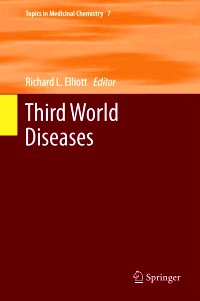
简介
Federico Gomez de las Heras: Overview of Neglected Tropical Diseases Gwendolyn A. Marriner 鈥?Amit Nayyar 鈥?Eugene Uh 鈥?Sharon Y. Wong 鈥?Tathagata Mukherjee 鈥?Laura E. Via 鈥?Matthew Carroll 鈥?Rachel L. Edwards 鈥?Todd D. Gruber 鈥?Inhee Choi 鈥?Jinwoo Lee 鈥?Kriti Arora 鈥?Kathleen D. England 鈥?Helena I.M. Boshoff 鈥?Clifton E. Barry III: The Medicinal Chemistry of Tuberculosis Chemotherapy Jeremy N. Burrows 鈥?David Waterson: Discovering New Medicines to Control and Eradicate Malaria Tomas von Geldern 鈥?Michael Oscar Harhay 鈥?Ivan Scandale 鈥?Robert Don: Kinetoplastid Parasites Pei-Yong Shi 鈥?Zheng Yin 鈥?Shahul Nilar 鈥?Thomas H. Keller: Dengue Drug Discovery Dan Marquess: Recent Advances in Discovery and Development of Medicines for the Treatment of Secretory Diarrhea in the Developing World
目录
Preface to the Series 9
Preface 11
Contents 13
Overview of Neglected Tropical Diseases 15
1 Introduction 16
2 The Diseases 17
2.1 Disease Burden 17
2.2 Pathogenicity 21
2.3 Epidemiologic Overlap of DDW: Coinfection 23
2.4 Unmet Needs 24
3 Current Status 26
3.1 General Socioeconomic Factors 26
3.2 New Commitments to Combat Neglected Diseases 27
3.3 Current Model for the RandD of New Drugs for DDW: PPPs 28
3.4 Incentives 32
4 Current Treatments 33
4.1 Nondrug Approaches 34
4.1.1 Vaccines 34
4.1.2 Vector Control and Transmission Blocking 35
4.1.3 Diagnostics 36
4.2 Drug Approaches 36
4.2.1 MDA and Integrated Control Programs 37
4.2.2 Resistance 39
4.2.3 The Special Cases of Pregnant Women and Children: IPT 41
4.2.4 Combinations 43
5 New DDW Drugs 44
5.1 Drug Discovery Strategies 45
5.1.1 Target-Based Approaches to Lead Identification 45
5.1.2 Whole Cell Approaches to Lead Identification 47
5.1.3 Other Approaches 48
5.2 RandD Drug Pipeline for DDWs 49
5.3 Issues and Opportunities 49
5.4 New RandD Tools 51
5.5 Potential Synergy Across Targets/Diseases 53
5.6 Criteria for Progression 54
6 Future Outlook/Conclusion 54
References 56
The Medicinal Chemistry of Tuberculosis Chemotherapy 61
1 Introduction 62
1.1 TB: A Global Epidemic 62
1.2 The Medical History of Current TB Chemotherapy 63
1.3 The Emergence of Drug-Resistant TB 66
1.4 Special Challenges in TB Drug Development 68
2 The Development of Commonly Used First-Line and Second-Line Agents for TB Therapy 69
2.1 Rifamycins 69
2.2 Isoniazid 71
2.3 Thioisonicotinamides and Thiosemicarbazones 72
2.4 Pyrazinamide 72
2.5 Cycloserine 73
2.6 Para-Aminosalicylic Acid 74
2.7 Capreomycin 74
2.8 Aminoglycosides 75
3 Classes of Compounds in Clinical Development 76
3.1 Nitroimidazoles 76
3.1.1 History 76
3.1.2 SAR of Nitroimidazooxazines 77
3.1.3 Biology of Nitroimidazooxazines 78
3.1.4 Clinical Use of Nitroimidazooxazines 79
3.1.5 SAR of Nitroimidazooxazoles 79
3.1.6 Biology of Nitroimidazooxazoles 79
3.1.7 Clinical Use of Nitroimidazooxazoles 80
3.2 Diarylquinolines 81
3.2.1 History 81
3.2.2 SAR of TMC207 81
3.2.3 Biology 82
3.2.4 Clinical Use 82
3.3 Oxazolidinones 83
3.3.1 History 83
3.3.2 Structure-Activity Relationship 83
3.3.3 Biology 84
3.3.4 Clinical Use 85
3.4 Fluoroquinolones 86
3.4.1 History 86
3.4.2 Structure-Activity Relationships 88
3.4.3 Biology 89
3.4.4 Clinical Use 89
3.5 Ethylenediamines 91
3.5.1 History 91
3.5.2 Structure-Activity Relationship 91
3.5.3 Biology 92
3.5.4 Clinical Use 93
3.5.5 Other Diamine Derivatives 93
4 Series in Preclinical Development 94
4.1 Benzothiazinones 94
4.1.1 History 94
4.1.2 Structure-Activity Relationship 94
4.1.3 Biology 94
4.2 Nucleosides 95
4.2.1 History 95
4.2.2 Structure-Activity Relationship 95
4.2.3 Biology 97
4.3 Macrolides 97
4.3.1 History 97
4.3.2 Structure-Activity Relationship 97
4.3.3 Biology 98
4.4 beta-Lactams 99
4.4.1 History 99
4.4.2 Structure-Activity Relationship 99
4.4.3 Biology 100
4.5 Rhiminophenazines 102
4.5.1 History 102
4.5.2 Structure-Activity Relationship 102
4.5.3 Biology 102
4.6 Pyrroles 103
4.6.1 History 103
4.6.2 Structure-Activity Relationship 104
4.6.3 Biology 104
4.7 Deazapteridines 104
4.7.1 History 104
4.7.2 Structure-Activity Relationship 104
4.7.3 Biology 105
5 Critical Issues in TB Drug Development 105
5.1 Cell Penetration 105
5.2 Animal Models for Evaluation 107
5.3 Pharmacological Models for Antitubercular Drugs 111
5.4 Clinical Development Methodologies 113
6 Concluding Remarks 115
References 116
Discovering New Medicines to Control and Eradicate Malaria 139
1 Introduction 140
1.1 Plasmodium falciparum Malaria Life Cycle 140
1.2 Plasmodium vivax 142
1.3 Target Product Profiles for the Eradication Agenda 143
2 Antimalarial Medicines 143
2.1 Antimalarials Approved for Use in Man 143
2.2 Antimalarial Therapies in Clinical Development 144
3 Recent Advances in Small Molecule Discovery 148
3.1 Scope 148
3.2 Hit Identification Strategies 149
3.2.1 Optimisation of a Known Antimalarial Chemotype 149
3.2.2 Target-Based Screening 149
3.2.3 Whole Cell Phenotypic Screening 150
Published Whole Cell Screening Data 152
3.2.4 Repositioning of Clinical Candidates Developed for Other Indications 153
4 Moving from Hits to Leads to Candidates: Target-Independent Optimisation Using Whole Parasites 153
4.1 Endoperoxides: Natural and Synthetic Peroxides 154
4.2 Amino-Alcohols 156
4.3 4-Aminoquinolines 158
4.4 8-Aminoquinolines 160
4.5 Natural Products 162
4.6 Novel and Advanced Chemotypes 163
4.6.1 Spiroindolone 163
4.6.2 Aminoindole 164
4.6.3 Oxaborole 164
4.6.4 Diverse Chemotypes 165
4.7 Liver Stage Acting Antimalarials 167
4.8 Compounds Affecting Transmission 169
5 Moving from Hits to Leads to Candidates: Target-Based Optimisation 169
5.1 Nucleic Acid Synthesis Pathways 170
5.1.1 Pyrimidine Biosynthesis 170
Carbonic Anhydrase 170
Cytochrome Bc1 170
Dihydroorotate Dehydrogenase 172
Orotodine 5-Monophosphate Decarboxylase 173
5.1.2 Folate Biosynthesis 173
Dihydrofolate Reductase-Thymidylate Synthase 173
5.1.3 Deoxyuridine 5-Triphosphate Nucleotidohydrolase 173
5.1.4 Purine Biosynthesis 174
Purine Nucleoside Phosphorylase 174
Adenosine Deaminase 175
Hypoxanthine-Guanine-Xanthine Phosphoribosyltransferase 176
5.2 Degradation/Catabolic Pathways 176
5.2.1 Haemoglobin Processing 176
Cysteinyl Proteases: Falcipains 176
Aspartyl Proteases: Plasmepsins 177
Plasmodial Aminopeptidase 178
5.2.2 Heat Shock Proteins 70/90 178
5.3 Anabolism/Synthesis Pathways 179
5.3.1 Non-Mevalonate Pathway 179
1-Deoxy-d-Xylulose 5-Phosphate Reductoisomerase 179
5.3.2 Choline Pathway 180
5.3.3 Fatty Acids 180
5.4 Signalling/Proliferation Pathways 181
5.4.1 Kinases 181
5.4.2 Histone Deacetylase 182
5.4.3 DNA-Binding Bisamidines 183
5.4.4 Protein Farnesyltransferase 185
5.5 Protein Synthesis Pathways 185
6 Conclusion 185
References 186
Kinetoplastid Parasites 195
1 Introduction 196
1.1 Leishmania 197
1.1.1 Epidemiology and Clinical Characteristics 197
1.1.2 Brief History of Control 198
1.1.3 Current Treatments for Leishmaniasis 199
Pentavalent Antimonials [37] 199
Amphotericin B [37] 199
Paromomycin [37] 200
Miltefosine [37] 201
1.2 American Trypanosomiasis (Chagas Disease) 201
1.2.1 Epidemiology and Clinical Characteristics 201
1.2.2 Brief History of Control 202
1.2.3 Current Treatment for Chagas Disease 203
1.3 Human African Trypanosomiasis 203
1.3.1 Epidemiology and Clinical Characteristics 203
1.3.2 Brief History of Control 204
1.3.3 Current Treatments for HAT 205
Suramin 205
Pentamidine 206
Melarsoprol 207
Eflornithine 207
2 Therapeutic Approaches to Kinetoplastid Diseases: Established Mechanisms 208
2.1 Nucleotide Uptake 208
2.2 Polyamine Synthesis 210
2.2.1 Ornithine Decarboxylase 210
2.3 Trypanothione Reductase 212
2.4 Aminoquinolines and Quinolines for Leishmaniasis 214
3 Therapeutic Approaches to Kinetoplastid Diseases: Novel Mechanisms 215
3.1 Lipid Biosynthesis Inhibitors 215
3.2 Isoprenoid Pathway Targets 220
3.3 Protein Myristoylation 222
3.4 Dihydrofolate Reductase and Pteridine Reductase 223
3.5 Protease Inhibitors 224
3.6 NO Regulators 226
3.7 Isoprenoid Pathway Targets 227
3.7.1 Tubulin Binders 227
3.7.2 HDAC Inhibitors 229
3.7.3 Kinetoplastid Topoisomerase Inhibitors 229
4 Optimizing the Utility of Existing Agents (``the Low-Hanging Fruit麓麓) 230
4.1 Nifurtimox-Eflornithine Combination Therapy for HAT 230
4.2 Pediatric Benznidazole for Chagas 230
4.3 Combination Therapy for Visceral Leishmaniasis (Kala-Azar) 231
5 Chemical Platform-Based Approaches to Developing New Antiprotozoals 232
5.1 Fexinidazole for HAT 232
5.2 Cell Cycle Inhibitors for HAT 234
5.3 Nitroheterocycles for Leishmaniasis 235
5.4 Oxaboroles for Kinetoplastid Diseases 236
5.4.1 The Development of SCYX-7158 for HAT 236
5.4.2 The Development of AN-4169 for Leishmaniasis 239
5.4.3 The Development of Oxaboroles for Chagas Disease 239
6 Summary and Conclusions 240
References 241
Dengue Drug Discovery 256
1 Introduction 257
2 Dengue Disease Complex 258
2.1 Medicinal Chemistry Perspective 259
3 Dengue Genome and Replication 260
4 Dengue Drug Targets 261
4.1 Envelope Protein 261
4.1.1 Inhibition of Cellular Attachment 261
4.1.2 Inhibition of the Fusion Process 262
4.1.3 Medicinal Chemistry Perspective 265
4.2 NS3 Helicase 266
4.2.1 Medicinal Chemistry Perspective 266
4.3 NS3 Protease 267
4.3.1 Inhibitors of Dengue Protease 267
4.3.2 Structural Studies of NS3 Protease 268
4.3.3 Medicinal Chemistry Perspective 271
4.4 NS5 Polymerase 272
4.4.1 Chain Termination 273
4.4.2 Allosteric Inhibition 275
4.4.3 Medicinal Chemistry Perspective 277
4.5 NS5 Methyltransferase 278
4.5.1 Medicinal Chemistry Perspective 278
5 Host Targets 279
5.1 Glucosidase 279
5.2 Medicinal Chemistry Perspective 282
6 Conclusions 282
References 283
Recent Advances in Discovery and Development of Medicines for the Treatment of Secretory Diarrhea in the Developing World 289
1 Introduction and Scope of This Review 290
1.1 Prevalence and Epidemiology 290
1.2 Current Treatment Options for Secretory Diarrhea 291
1.3 Scope of This Review 292
2 Physiology of Increased GI Secretion and Pharmacological Mechanisms for Treatment 292
2.1 Pharmacological Mechanisms of Secretion, Pathophysiology of Secretion and Morbidity/Mortality 292
2.2 Clinically Validated Pharmacological Mechanisms for the Treatment of Secretory Diarrhea 294
3 Advances in Discovery and Development of NEP Inhibitors 296
3.1 Role of NEP in Modulating Enkephalin Metabolism and Altering GI Function via Opioid Receptor Signaling 296
3.2 Recent Preclinical Studies with NEP Inhibitors 297
3.3 Recent Clinical Safety and Efficacy Studies with NEP Inhibitors 298
3.4 Recent Advances in Medicinal Chemistry of NEP Inhibitors 299
3.5 Conclusions and Outlook for the Discovery and Development of NEP Inhibitors for the Treatment of Secretory Diarrhea 302
4 Advances in Discovery and Development of Cystic Fibrosis Transmembrane Conductance Regulator Inhibitors 303
4.1 Role of CFTR in Modulating GI Secretion 303
4.2 Recent Preclinical Studies with CFTR Inhibitors 304
4.3 Recent Clinical Safety and Efficacy Studies with CFTR Inhibitors 304
4.4 Recent Advances in the Medicinal Chemistry of CFTR Inhibitors 305
4.5 Conclusions and Outlook for CTFR Inhibitors for the Treatmentof Secretory Diarrhea 308
5 Role for Opioid Receptor Agonists the Treatment of Secretory Diarrhea 309
5.1 Role of Opioid Agonists in Modulating GI Function 309
5.2 Recent Clinical Safety and Efficacy Studies with Opioid Agonists 309
6 Conclusion and Outlook for Antisecretory Medicines for the Treatment of Secretory Diarrhea 310
References 311
Index 313
Preface 11
Contents 13
Overview of Neglected Tropical Diseases 15
1 Introduction 16
2 The Diseases 17
2.1 Disease Burden 17
2.2 Pathogenicity 21
2.3 Epidemiologic Overlap of DDW: Coinfection 23
2.4 Unmet Needs 24
3 Current Status 26
3.1 General Socioeconomic Factors 26
3.2 New Commitments to Combat Neglected Diseases 27
3.3 Current Model for the RandD of New Drugs for DDW: PPPs 28
3.4 Incentives 32
4 Current Treatments 33
4.1 Nondrug Approaches 34
4.1.1 Vaccines 34
4.1.2 Vector Control and Transmission Blocking 35
4.1.3 Diagnostics 36
4.2 Drug Approaches 36
4.2.1 MDA and Integrated Control Programs 37
4.2.2 Resistance 39
4.2.3 The Special Cases of Pregnant Women and Children: IPT 41
4.2.4 Combinations 43
5 New DDW Drugs 44
5.1 Drug Discovery Strategies 45
5.1.1 Target-Based Approaches to Lead Identification 45
5.1.2 Whole Cell Approaches to Lead Identification 47
5.1.3 Other Approaches 48
5.2 RandD Drug Pipeline for DDWs 49
5.3 Issues and Opportunities 49
5.4 New RandD Tools 51
5.5 Potential Synergy Across Targets/Diseases 53
5.6 Criteria for Progression 54
6 Future Outlook/Conclusion 54
References 56
The Medicinal Chemistry of Tuberculosis Chemotherapy 61
1 Introduction 62
1.1 TB: A Global Epidemic 62
1.2 The Medical History of Current TB Chemotherapy 63
1.3 The Emergence of Drug-Resistant TB 66
1.4 Special Challenges in TB Drug Development 68
2 The Development of Commonly Used First-Line and Second-Line Agents for TB Therapy 69
2.1 Rifamycins 69
2.2 Isoniazid 71
2.3 Thioisonicotinamides and Thiosemicarbazones 72
2.4 Pyrazinamide 72
2.5 Cycloserine 73
2.6 Para-Aminosalicylic Acid 74
2.7 Capreomycin 74
2.8 Aminoglycosides 75
3 Classes of Compounds in Clinical Development 76
3.1 Nitroimidazoles 76
3.1.1 History 76
3.1.2 SAR of Nitroimidazooxazines 77
3.1.3 Biology of Nitroimidazooxazines 78
3.1.4 Clinical Use of Nitroimidazooxazines 79
3.1.5 SAR of Nitroimidazooxazoles 79
3.1.6 Biology of Nitroimidazooxazoles 79
3.1.7 Clinical Use of Nitroimidazooxazoles 80
3.2 Diarylquinolines 81
3.2.1 History 81
3.2.2 SAR of TMC207 81
3.2.3 Biology 82
3.2.4 Clinical Use 82
3.3 Oxazolidinones 83
3.3.1 History 83
3.3.2 Structure-Activity Relationship 83
3.3.3 Biology 84
3.3.4 Clinical Use 85
3.4 Fluoroquinolones 86
3.4.1 History 86
3.4.2 Structure-Activity Relationships 88
3.4.3 Biology 89
3.4.4 Clinical Use 89
3.5 Ethylenediamines 91
3.5.1 History 91
3.5.2 Structure-Activity Relationship 91
3.5.3 Biology 92
3.5.4 Clinical Use 93
3.5.5 Other Diamine Derivatives 93
4 Series in Preclinical Development 94
4.1 Benzothiazinones 94
4.1.1 History 94
4.1.2 Structure-Activity Relationship 94
4.1.3 Biology 94
4.2 Nucleosides 95
4.2.1 History 95
4.2.2 Structure-Activity Relationship 95
4.2.3 Biology 97
4.3 Macrolides 97
4.3.1 History 97
4.3.2 Structure-Activity Relationship 97
4.3.3 Biology 98
4.4 beta-Lactams 99
4.4.1 History 99
4.4.2 Structure-Activity Relationship 99
4.4.3 Biology 100
4.5 Rhiminophenazines 102
4.5.1 History 102
4.5.2 Structure-Activity Relationship 102
4.5.3 Biology 102
4.6 Pyrroles 103
4.6.1 History 103
4.6.2 Structure-Activity Relationship 104
4.6.3 Biology 104
4.7 Deazapteridines 104
4.7.1 History 104
4.7.2 Structure-Activity Relationship 104
4.7.3 Biology 105
5 Critical Issues in TB Drug Development 105
5.1 Cell Penetration 105
5.2 Animal Models for Evaluation 107
5.3 Pharmacological Models for Antitubercular Drugs 111
5.4 Clinical Development Methodologies 113
6 Concluding Remarks 115
References 116
Discovering New Medicines to Control and Eradicate Malaria 139
1 Introduction 140
1.1 Plasmodium falciparum Malaria Life Cycle 140
1.2 Plasmodium vivax 142
1.3 Target Product Profiles for the Eradication Agenda 143
2 Antimalarial Medicines 143
2.1 Antimalarials Approved for Use in Man 143
2.2 Antimalarial Therapies in Clinical Development 144
3 Recent Advances in Small Molecule Discovery 148
3.1 Scope 148
3.2 Hit Identification Strategies 149
3.2.1 Optimisation of a Known Antimalarial Chemotype 149
3.2.2 Target-Based Screening 149
3.2.3 Whole Cell Phenotypic Screening 150
Published Whole Cell Screening Data 152
3.2.4 Repositioning of Clinical Candidates Developed for Other Indications 153
4 Moving from Hits to Leads to Candidates: Target-Independent Optimisation Using Whole Parasites 153
4.1 Endoperoxides: Natural and Synthetic Peroxides 154
4.2 Amino-Alcohols 156
4.3 4-Aminoquinolines 158
4.4 8-Aminoquinolines 160
4.5 Natural Products 162
4.6 Novel and Advanced Chemotypes 163
4.6.1 Spiroindolone 163
4.6.2 Aminoindole 164
4.6.3 Oxaborole 164
4.6.4 Diverse Chemotypes 165
4.7 Liver Stage Acting Antimalarials 167
4.8 Compounds Affecting Transmission 169
5 Moving from Hits to Leads to Candidates: Target-Based Optimisation 169
5.1 Nucleic Acid Synthesis Pathways 170
5.1.1 Pyrimidine Biosynthesis 170
Carbonic Anhydrase 170
Cytochrome Bc1 170
Dihydroorotate Dehydrogenase 172
Orotodine 5-Monophosphate Decarboxylase 173
5.1.2 Folate Biosynthesis 173
Dihydrofolate Reductase-Thymidylate Synthase 173
5.1.3 Deoxyuridine 5-Triphosphate Nucleotidohydrolase 173
5.1.4 Purine Biosynthesis 174
Purine Nucleoside Phosphorylase 174
Adenosine Deaminase 175
Hypoxanthine-Guanine-Xanthine Phosphoribosyltransferase 176
5.2 Degradation/Catabolic Pathways 176
5.2.1 Haemoglobin Processing 176
Cysteinyl Proteases: Falcipains 176
Aspartyl Proteases: Plasmepsins 177
Plasmodial Aminopeptidase 178
5.2.2 Heat Shock Proteins 70/90 178
5.3 Anabolism/Synthesis Pathways 179
5.3.1 Non-Mevalonate Pathway 179
1-Deoxy-d-Xylulose 5-Phosphate Reductoisomerase 179
5.3.2 Choline Pathway 180
5.3.3 Fatty Acids 180
5.4 Signalling/Proliferation Pathways 181
5.4.1 Kinases 181
5.4.2 Histone Deacetylase 182
5.4.3 DNA-Binding Bisamidines 183
5.4.4 Protein Farnesyltransferase 185
5.5 Protein Synthesis Pathways 185
6 Conclusion 185
References 186
Kinetoplastid Parasites 195
1 Introduction 196
1.1 Leishmania 197
1.1.1 Epidemiology and Clinical Characteristics 197
1.1.2 Brief History of Control 198
1.1.3 Current Treatments for Leishmaniasis 199
Pentavalent Antimonials [37] 199
Amphotericin B [37] 199
Paromomycin [37] 200
Miltefosine [37] 201
1.2 American Trypanosomiasis (Chagas Disease) 201
1.2.1 Epidemiology and Clinical Characteristics 201
1.2.2 Brief History of Control 202
1.2.3 Current Treatment for Chagas Disease 203
1.3 Human African Trypanosomiasis 203
1.3.1 Epidemiology and Clinical Characteristics 203
1.3.2 Brief History of Control 204
1.3.3 Current Treatments for HAT 205
Suramin 205
Pentamidine 206
Melarsoprol 207
Eflornithine 207
2 Therapeutic Approaches to Kinetoplastid Diseases: Established Mechanisms 208
2.1 Nucleotide Uptake 208
2.2 Polyamine Synthesis 210
2.2.1 Ornithine Decarboxylase 210
2.3 Trypanothione Reductase 212
2.4 Aminoquinolines and Quinolines for Leishmaniasis 214
3 Therapeutic Approaches to Kinetoplastid Diseases: Novel Mechanisms 215
3.1 Lipid Biosynthesis Inhibitors 215
3.2 Isoprenoid Pathway Targets 220
3.3 Protein Myristoylation 222
3.4 Dihydrofolate Reductase and Pteridine Reductase 223
3.5 Protease Inhibitors 224
3.6 NO Regulators 226
3.7 Isoprenoid Pathway Targets 227
3.7.1 Tubulin Binders 227
3.7.2 HDAC Inhibitors 229
3.7.3 Kinetoplastid Topoisomerase Inhibitors 229
4 Optimizing the Utility of Existing Agents (``the Low-Hanging Fruit麓麓) 230
4.1 Nifurtimox-Eflornithine Combination Therapy for HAT 230
4.2 Pediatric Benznidazole for Chagas 230
4.3 Combination Therapy for Visceral Leishmaniasis (Kala-Azar) 231
5 Chemical Platform-Based Approaches to Developing New Antiprotozoals 232
5.1 Fexinidazole for HAT 232
5.2 Cell Cycle Inhibitors for HAT 234
5.3 Nitroheterocycles for Leishmaniasis 235
5.4 Oxaboroles for Kinetoplastid Diseases 236
5.4.1 The Development of SCYX-7158 for HAT 236
5.4.2 The Development of AN-4169 for Leishmaniasis 239
5.4.3 The Development of Oxaboroles for Chagas Disease 239
6 Summary and Conclusions 240
References 241
Dengue Drug Discovery 256
1 Introduction 257
2 Dengue Disease Complex 258
2.1 Medicinal Chemistry Perspective 259
3 Dengue Genome and Replication 260
4 Dengue Drug Targets 261
4.1 Envelope Protein 261
4.1.1 Inhibition of Cellular Attachment 261
4.1.2 Inhibition of the Fusion Process 262
4.1.3 Medicinal Chemistry Perspective 265
4.2 NS3 Helicase 266
4.2.1 Medicinal Chemistry Perspective 266
4.3 NS3 Protease 267
4.3.1 Inhibitors of Dengue Protease 267
4.3.2 Structural Studies of NS3 Protease 268
4.3.3 Medicinal Chemistry Perspective 271
4.4 NS5 Polymerase 272
4.4.1 Chain Termination 273
4.4.2 Allosteric Inhibition 275
4.4.3 Medicinal Chemistry Perspective 277
4.5 NS5 Methyltransferase 278
4.5.1 Medicinal Chemistry Perspective 278
5 Host Targets 279
5.1 Glucosidase 279
5.2 Medicinal Chemistry Perspective 282
6 Conclusions 282
References 283
Recent Advances in Discovery and Development of Medicines for the Treatment of Secretory Diarrhea in the Developing World 289
1 Introduction and Scope of This Review 290
1.1 Prevalence and Epidemiology 290
1.2 Current Treatment Options for Secretory Diarrhea 291
1.3 Scope of This Review 292
2 Physiology of Increased GI Secretion and Pharmacological Mechanisms for Treatment 292
2.1 Pharmacological Mechanisms of Secretion, Pathophysiology of Secretion and Morbidity/Mortality 292
2.2 Clinically Validated Pharmacological Mechanisms for the Treatment of Secretory Diarrhea 294
3 Advances in Discovery and Development of NEP Inhibitors 296
3.1 Role of NEP in Modulating Enkephalin Metabolism and Altering GI Function via Opioid Receptor Signaling 296
3.2 Recent Preclinical Studies with NEP Inhibitors 297
3.3 Recent Clinical Safety and Efficacy Studies with NEP Inhibitors 298
3.4 Recent Advances in Medicinal Chemistry of NEP Inhibitors 299
3.5 Conclusions and Outlook for the Discovery and Development of NEP Inhibitors for the Treatment of Secretory Diarrhea 302
4 Advances in Discovery and Development of Cystic Fibrosis Transmembrane Conductance Regulator Inhibitors 303
4.1 Role of CFTR in Modulating GI Secretion 303
4.2 Recent Preclinical Studies with CFTR Inhibitors 304
4.3 Recent Clinical Safety and Efficacy Studies with CFTR Inhibitors 304
4.4 Recent Advances in the Medicinal Chemistry of CFTR Inhibitors 305
4.5 Conclusions and Outlook for CTFR Inhibitors for the Treatmentof Secretory Diarrhea 308
5 Role for Opioid Receptor Agonists the Treatment of Secretory Diarrhea 309
5.1 Role of Opioid Agonists in Modulating GI Function 309
5.2 Recent Clinical Safety and Efficacy Studies with Opioid Agonists 309
6 Conclusion and Outlook for Antisecretory Medicines for the Treatment of Secretory Diarrhea 310
References 311
Index 313
- 名称
- 类型
- 大小
光盘服务联系方式: 020-38250260 客服QQ:4006604884
云图客服:
用户发送的提问,这种方式就需要有位在线客服来回答用户的问题,这种 就属于对话式的,问题是这种提问是否需要用户登录才能提问
Video Player
×
Audio Player
×
pdf Player
×
