

简介
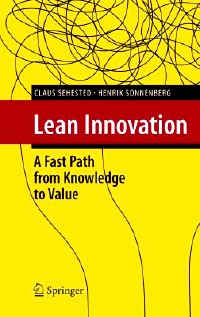
Within manufacturing, Lean has lead to significant results throughout the world. But what happens when Lean meets Innovation? Is the needed creativity destroyed, or can Lean make the results of the organization even better? In "Lean Innovation", Claus Sehested and Henrik Sonnenberg reveal how a managed iteration between creativity and effectiveness can ensure that the visions of top management are realized through the innovation processes. Lean can elevate the innovation processes to a new level where they become a true strategic differentiator. The authors address the key challenges
目录
Preface 4
Contents 6
Part I Understanding the Background 10
Introduction 11
What is Lean Innovation? 11
Fast from Knowledge to Value 13
Having Your Cake and Eating it Too 14
Our Aim with this Book 15
The Case Companies 15
Structure of the Book 16
Chapter 1 The Potential of Lean Innovation 18
Generating Return on Innovation 19
So How Do We Get Better? 23
Difficulty Knowing What Has the Highest Effect 23
Difficulty Making and Maintaining Improvements 23
Lean Innovation as a Framework for Improvement 24
Motivation for Lean in Companies 25
The Second Toyota Paradox and Lean Innovation 27
The Impact of Lean Innovation in Scandinavia \u2013 and in Japan 28
Literature: 31
Part II Understanding the Fundamentals 32
Chapter 2 Understanding Innovation 33
Defining Innovation 33
The Challenge of Innovation 35
Innovation as a Team Effort 36
Team Learning and Prioritization 36
Culture and Physical Environment 38
Open and Closed Problems 40
Prioritization and Solution Selection 41
Visualization 41
Wicked Problems 41
Structure of the Innovation Process 43
Innovation with Extreme Concepts 43
Analysis of \u2018Innovation with Extreme Concepts\u2019 45
Management of Innovation Processes 47
The Personal Perspective 48
Literature: 49
Chapter 3 Understanding Lean Innovation 50
Lean Innovation Is Getting Smart Faster 51
What Lean Innovation Is Not 53
Lean Innovation Is Not a Manufacturing Method 53
Lean Innovation Does Not Kill Creativity 55
Lean Innovation Is Not a way to Make People Work Faster 56
The Concept of Waste in Lean Innovation 57
Lean Innovation \u2013 Three Parallel Goals 58
Key Principles for Lean Innovation 62
Literature: 74
Part III Achieving Success with Lean Innovation 75
Chapter 4 Releasing the Potential for Innovation 76
A Common Goal for the Company\u2019s Innovation 77
Lean in the Main Parts of the Innovation System 79
Management 79
The portfolio 80
Projects 80
Project Support 80
Literature: 81
Chapter 5 Active and Visible Management 82
Lean Is a Leadership Philosophy 83
Focus on Customer-Oriented Processes 83
The Upside-Down Organizational Chart 84
Task Management is a Management Task 85
Management Should Develop the Processes 88
Management Must be Open to Change 90
Working Systematically with Improvements 91
Management and Continuous Improvements 93
Improving Management Efficiency 94
But how do we prioritize? 95
Visible and Active Leadership 95
When Management Becomes a Strategic Competency 95
Examples of Lean in Management 96
Improvement Boards at Management Level 96
Commitment to Doing Something 97
The Manager Must be a Facilitator 98
Linking Improvement Boards 99
Many Improvements 99
The Number of Improvements 100
The Scope of Improvements 100
Keeping the Improvement Process Alive 101
The Manager\u2019s Experience 102
Clear Ownership of Processes and Methods 102
Standardizing Management Practice 103
Coordinated Meeting Structure 103
Zone Management 104
Management Must Take the Lead 106
Literature: 106
Chapter 6 Realizing Your Strategy through Portfolio Management 107
Organizing Knowledge Work into Projects 107
The Management Must Be Committed to the Portfolio 108
Portfolio Management \u2013 A Learning Process 109
Matching Portfolio Management with Project Type 110
Ensuring a Healthy Portfolio that Creates Value 111
Prioritizing Projects for Start-up 113
Establishing a Framework that Promotes Progress 114
Portfolio Management with One-Piece Flow 115
Portfolio Management with Timeboxing 117
Portfolio Management with Takt 118
Optimizing Project Resources and Staffing 120
Portfolio Follow-up and Adjustment 121
Measuring the Portfolio 122
Canceling Projects 122
Examples of Lean in Portfolio Management 123
Portfolio Prioritization 123
Portfolio Overview as a Horserace 125
Measuring Project Focus and Progress 127
Management Must Be Able to Navigate in the Project Organization 129
Literature: 129
Chapter 7 Projects Create Customer Value 130
Lean in Projects 131
Projects Integrate Knowledge Across Disciplines 131
More Innovation and Less Operations 132
Companies Have Strengthened Their Project Competencies 133
Project Models Generate Structure and a Common Language 133
Education Improves Individual Competencies 134
Project Managers Lack Focus on Customer Value and Management 135
Value Creation of Project Teams Can Differ Significantly 136
Project A: 136
Project B: 136
Roles and Responsibilities Must Be Well-Defined 137
The Value Stream in Innovation 138
Identifying customer value 139
Developing the Value Stream 139
Driving the Value Stream 140
Examples of Lean in Projects 140
The Visual Project Board 141
Defining Project Objectives 143
Planning the Project 145
Establishing Key Performance Indicators for the Project 148
Mapping Project Risks 149
Conducting Status Meetings 150
Replanning 152
Visual Management Helps the Project Manager, but It Takes Practice 152
Management Has a Responsibility for Making the Visual Process Work 153
Front Loading in Projects 154
Front loading with 200 Questions 155
Front Loading with Customer Involvement 156
Continuous Improvements with Project Forums 158
Project Work Can Reach New Heights with Lean 158
Literature: 159
Chapter 8 The Role of Project Support in Innovation 160
Give Projects and Support Functions a Common Objective 161
Simplify Interaction through Standardization 162
SLA \u2013 Service Level Agreements 163
A Proactive Support Function 164
Overview of Processes and Capacity 164
Optimizing the Support Functions 165
Examples of Lean in Support Functions 166
Optimizing Interaction Between Projects and Support 166
Reducing Lead Time in the Documentation Process 168
Prioritize Processes on the Critical Path 169
Doubling Capacity with Takt and Visual Management 170
Literature: 171
Part IV Starting the Development Process 172
Chapter 9 Fast from Knowledge to Value 173
Understanding Strategic and Individual Motivation 173
The Strategic Motivation 174
The Motivation of Management 174
The Motivation of Employees 175
Defining Clear Objectives 175
Choosing the Right Approach 176
Choosing an Implementation Strategy 176
Involve the Customers from the Beginning 178
Create Results that Customers Can See 179
Focus on Reducing Development Time 179
Make Management a Driver and Role Model 180
Let the Case Companies Inspire You 181
Comments from Aage Andersen, ECCO 181
Comments from Claus S酶rensen, LINAK 181
Comments from Anders R酶dgaard Knudsen, Ramboll Oil & Gas 182
Comments from Karsten Lund, Exhausto 183
Comments from John Raabo Nielsen, Coloplast 183
Literature: 184
Postscript Fueled by a Dream 185
Contents 6
Part I Understanding the Background 10
Introduction 11
What is Lean Innovation? 11
Fast from Knowledge to Value 13
Having Your Cake and Eating it Too 14
Our Aim with this Book 15
The Case Companies 15
Structure of the Book 16
Chapter 1 The Potential of Lean Innovation 18
Generating Return on Innovation 19
So How Do We Get Better? 23
Difficulty Knowing What Has the Highest Effect 23
Difficulty Making and Maintaining Improvements 23
Lean Innovation as a Framework for Improvement 24
Motivation for Lean in Companies 25
The Second Toyota Paradox and Lean Innovation 27
The Impact of Lean Innovation in Scandinavia \u2013 and in Japan 28
Literature: 31
Part II Understanding the Fundamentals 32
Chapter 2 Understanding Innovation 33
Defining Innovation 33
The Challenge of Innovation 35
Innovation as a Team Effort 36
Team Learning and Prioritization 36
Culture and Physical Environment 38
Open and Closed Problems 40
Prioritization and Solution Selection 41
Visualization 41
Wicked Problems 41
Structure of the Innovation Process 43
Innovation with Extreme Concepts 43
Analysis of \u2018Innovation with Extreme Concepts\u2019 45
Management of Innovation Processes 47
The Personal Perspective 48
Literature: 49
Chapter 3 Understanding Lean Innovation 50
Lean Innovation Is Getting Smart Faster 51
What Lean Innovation Is Not 53
Lean Innovation Is Not a Manufacturing Method 53
Lean Innovation Does Not Kill Creativity 55
Lean Innovation Is Not a way to Make People Work Faster 56
The Concept of Waste in Lean Innovation 57
Lean Innovation \u2013 Three Parallel Goals 58
Key Principles for Lean Innovation 62
Literature: 74
Part III Achieving Success with Lean Innovation 75
Chapter 4 Releasing the Potential for Innovation 76
A Common Goal for the Company\u2019s Innovation 77
Lean in the Main Parts of the Innovation System 79
Management 79
The portfolio 80
Projects 80
Project Support 80
Literature: 81
Chapter 5 Active and Visible Management 82
Lean Is a Leadership Philosophy 83
Focus on Customer-Oriented Processes 83
The Upside-Down Organizational Chart 84
Task Management is a Management Task 85
Management Should Develop the Processes 88
Management Must be Open to Change 90
Working Systematically with Improvements 91
Management and Continuous Improvements 93
Improving Management Efficiency 94
But how do we prioritize? 95
Visible and Active Leadership 95
When Management Becomes a Strategic Competency 95
Examples of Lean in Management 96
Improvement Boards at Management Level 96
Commitment to Doing Something 97
The Manager Must be a Facilitator 98
Linking Improvement Boards 99
Many Improvements 99
The Number of Improvements 100
The Scope of Improvements 100
Keeping the Improvement Process Alive 101
The Manager\u2019s Experience 102
Clear Ownership of Processes and Methods 102
Standardizing Management Practice 103
Coordinated Meeting Structure 103
Zone Management 104
Management Must Take the Lead 106
Literature: 106
Chapter 6 Realizing Your Strategy through Portfolio Management 107
Organizing Knowledge Work into Projects 107
The Management Must Be Committed to the Portfolio 108
Portfolio Management \u2013 A Learning Process 109
Matching Portfolio Management with Project Type 110
Ensuring a Healthy Portfolio that Creates Value 111
Prioritizing Projects for Start-up 113
Establishing a Framework that Promotes Progress 114
Portfolio Management with One-Piece Flow 115
Portfolio Management with Timeboxing 117
Portfolio Management with Takt 118
Optimizing Project Resources and Staffing 120
Portfolio Follow-up and Adjustment 121
Measuring the Portfolio 122
Canceling Projects 122
Examples of Lean in Portfolio Management 123
Portfolio Prioritization 123
Portfolio Overview as a Horserace 125
Measuring Project Focus and Progress 127
Management Must Be Able to Navigate in the Project Organization 129
Literature: 129
Chapter 7 Projects Create Customer Value 130
Lean in Projects 131
Projects Integrate Knowledge Across Disciplines 131
More Innovation and Less Operations 132
Companies Have Strengthened Their Project Competencies 133
Project Models Generate Structure and a Common Language 133
Education Improves Individual Competencies 134
Project Managers Lack Focus on Customer Value and Management 135
Value Creation of Project Teams Can Differ Significantly 136
Project A: 136
Project B: 136
Roles and Responsibilities Must Be Well-Defined 137
The Value Stream in Innovation 138
Identifying customer value 139
Developing the Value Stream 139
Driving the Value Stream 140
Examples of Lean in Projects 140
The Visual Project Board 141
Defining Project Objectives 143
Planning the Project 145
Establishing Key Performance Indicators for the Project 148
Mapping Project Risks 149
Conducting Status Meetings 150
Replanning 152
Visual Management Helps the Project Manager, but It Takes Practice 152
Management Has a Responsibility for Making the Visual Process Work 153
Front Loading in Projects 154
Front loading with 200 Questions 155
Front Loading with Customer Involvement 156
Continuous Improvements with Project Forums 158
Project Work Can Reach New Heights with Lean 158
Literature: 159
Chapter 8 The Role of Project Support in Innovation 160
Give Projects and Support Functions a Common Objective 161
Simplify Interaction through Standardization 162
SLA \u2013 Service Level Agreements 163
A Proactive Support Function 164
Overview of Processes and Capacity 164
Optimizing the Support Functions 165
Examples of Lean in Support Functions 166
Optimizing Interaction Between Projects and Support 166
Reducing Lead Time in the Documentation Process 168
Prioritize Processes on the Critical Path 169
Doubling Capacity with Takt and Visual Management 170
Literature: 171
Part IV Starting the Development Process 172
Chapter 9 Fast from Knowledge to Value 173
Understanding Strategic and Individual Motivation 173
The Strategic Motivation 174
The Motivation of Management 174
The Motivation of Employees 175
Defining Clear Objectives 175
Choosing the Right Approach 176
Choosing an Implementation Strategy 176
Involve the Customers from the Beginning 178
Create Results that Customers Can See 179
Focus on Reducing Development Time 179
Make Management a Driver and Role Model 180
Let the Case Companies Inspire You 181
Comments from Aage Andersen, ECCO 181
Comments from Claus S酶rensen, LINAK 181
Comments from Anders R酶dgaard Knudsen, Ramboll Oil & Gas 182
Comments from Karsten Lund, Exhausto 183
Comments from John Raabo Nielsen, Coloplast 183
Literature: 184
Postscript Fueled by a Dream 185
- 名称
- 类型
- 大小
光盘服务联系方式: 020-38250260 客服QQ:4006604884
云图客服:
用户发送的提问,这种方式就需要有位在线客服来回答用户的问题,这种 就属于对话式的,问题是这种提问是否需要用户登录才能提问
Video Player
×
Audio Player
×
pdf Player
×
