

简介
Summary:
Publisher Summary 1
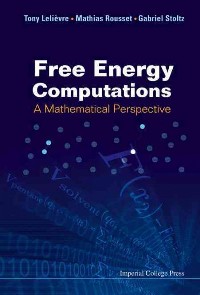
Applied mathematicians Leli茅vre, Gabriel Stoltz (both INRIA Rocquencourt) and Mathias Rousset (INRIA Lille) could find no textbook suitable to teach numerical problems from the perspective of computational statistical physics, so offer this to fill the gap. The readers they have in mind are mathematicians and scientists from the applied communities such as physics and biology who use free-energy techniques as one tool among many to study the complex systems of their field. They did, however, try to make the treatment accessible to graduate students as well as researchers. After an introduction, they cover sampling methods, thermodynamic integration and sampling with constraints, nonequilibrium models, adaptive methods, and selection. Distributed in the US by World Scientific. Annotation 漏2010 Book News, Inc., Portland, OR (booknews.com)
Publisher Summary 2
This monograph provides a general introduction to advanced computational methods for free energy calculations, from the systematic and rigorous point of view of applied mathematics. Free energy calculations in molecular dynamics have become an outstanding and increasingly broad computational field in physics, chemistry and molecular biology within the past few years, by making possible the analysis of complex molecular systems. This work proposes a new, general and rigorous presentation, intended both for practitioners interested in a mathematical treatment, and for applied mathematicians interested in molecular dynamics.
目录
Contents 10
Preface 6
1. Introduction 14
1.1 Computational statistical physics: some landmarks 14
1.1.1 Some orders of magnitude 15
1.1.2 Aims of molecular simulation 16
1.1.2.1 An example: the equation of state of Argon 17
1.2 Microscopic description of physical systems 19
1.2.1 Interactions 19
1.2.1.1 Boundary conditions 20
1.2.1.2 Potential functions 21
1.2.2 Dynamics of isolated systems 26
1.2.2.1 The Hamiltonian dynamics 27
1.2.2.2 Equivalent reformulations 28
1.2.2.3 Properties of the Hamiltonian dynamics 29
1.2.2.4 Numerical integration 30
1.2.3 Thermodynamic ensembles 33
1.2.3.1 The microcanonical ensemble 34
1.2.3.2 The canonical ensemble 38
1.2.3.3 Other thermodynamic ensembles 43
1.3 Free energy and its numerical computation 46
1.3.1 Absolute free energy 47
1.3.1.1 Definition 47
1.3.1.2 Relationship with macroscopic thermodynamics 48
1.3.2 Relative free energies 50
1.3.2.1 Alchemical transitions 50
1.3.2.2 Transitions indexed by a reaction coordinate 52
1.3.2.3 A typical alchemical transition: Widom insertion 54
1.3.2.4 A typical transition indexed by a reaction coordinate: Dimer in a solvent 56
1.3.3 Free energy and metastability 57
1.3.3.1 A simple example of metastable dynamics 58
1.3.3.2 Entropic and energetic barriers 59
1.3.3.3 Free energy biased sampling 63
1.3.4 Computational techniques 64
1.3.4.1 Thermodynamic integration 67
1.3.4.2 Methods based on straightforward sampling 67
1.3.4.3 Nonequilibrium dynamics 68
1.3.4.4 Adaptive dynamics 70
1.4 Summary of the mathematical tools and structure of the book 72
2. Sampling methods 74
2.1 Markov chain methods 76
2.1.1 Some background material on the theory of Markov chains 77
2.1.2 The Metropolis-Hastings algorithm 80
2.1.2.1 Presentation of the method 80
2.1.2.2 Mathematical properties 82
2.1.2.3 Some examples of proposition transition kernels 83
2.1.3 Hybrid Monte-Carlo 85
2.1.4 Generalized Metropolis-Hastings variants 87
2.1.4.1 Presentation of the method 87
2.1.4.2 Mathematical properties 88
2.1.4.3 Relationship with the Hybrid Monte-Carlo algorithm 89
2.2 Continuous stochastic dynamics 90
2.2.1 Mathematical background on Markovian continu- ous processes 91
2.2.1.1 Infinitesimal generator of diffusion processes 91
2.2.1.2 Properties of time-homogeneous diffusion processes 96
2.2.2 Overdamped Langevin process 99
2.2.2.1 Detailed balance and ergodicity 99
2.2.2.2 Time discretization and numerical implementation 100
2.2.3 Langevin process 101
2.2.3.1 Detailed balance and ergodicity 103
2.2.3.2 Time discretization and numerical implementation 105
2.2.4 Overdamped limit of the Langevin dynamics 110
2.2.4.1 Limit of the stochastic processes 110
2.2.4.2 Overdamped limit of the numerical schemes 116
2.3 Convergence of sampling methods 118
2.3.1 Sampling errors 118
2.3.1.1 Bias 119
2.3.1.2 Statistical errors 120
2.3.1.3 Practical computation of error bars 123
2.3.2 Rate of convergence for stochastic processes 126
2.3.2.1 Longtime convergence 127
2.3.2.2 A possible quantification of metastability 130
2.3.2.3 Obtaining logarithmic Sobolev inequalities 131
2.4 Methods for alchemical free energy differences 131
2.4.1 Free energy perturbation 132
2.4.1.1 General idea of the method 132
2.4.1.2 Expansions using the distribution of energy differences 134
2.4.1.3 Staging 137
2.4.1.4 Umbrella sampling 138
2.4.2 Bridge sampling 145
2.4.2.1 Presentation of the method 145
2.4.2.2 Derivation of the optimal function 146
2.4.2.3 Numerical strategy 149
2.4.2.4 Numerical illustration 150
2.5 Histogram methods 151
2.5.1 Principle of histogram methods 151
2.5.1.1 Free energy as an approximated canonical average 152
2.5.1.2 Combining partial samples 153
2.5.2 Extended bridge sampling 155
2.5.2.1 Presentation of the method 155
2.5.2.2 Recovering canonical averages 159
2.5.2.3 Application to the model problem 160
3. Thermodynamic integration and sampling with constraints 162
3.1 Introduction: The alchemical setting 163
3.1.1 General strategy 163
3.1.2 Numerical application 165
3.2 The reaction coordinate case: configurational space sampling 167
3.2.1 Reaction coordinate and free energy 167
3.2.1.1 Marginal and conditional probability measures 168
3.2.1.2 The free energy 173
3.2.1.3 The case of a non-standard scalar product 174
3.2.2 The mean force 176
3.2.3 Sampling measures on submanifolds of Rn 181
3.2.3.1 Geometrical notation 182
3.2.3.2 Projected dynamics 187
3.2.3.3 Ergodicity of the projected dynamics 189
3.2.3.4 Softly and rigidly constrained dynamics 192
3.2.4 Sampling measures on submanifolds of Rn: dis- cretization 193
3.2.4.1 Rewriting of the projected dynamics (3.52) using Lagrange multipliers 194
3.2.4.2 Discretization of the projected dynamics (3.52) 195
3.2.4.3 Consistency of the predictor-corrector schemes. 197
3.2.4.4 Ergodicity of the numerical schemes and time discretiza- tion error 200
3.2.5 Computing the mean force 201
3.2.5.1 Methods based on the sampling of the conditional mea- sures v (.|z) 201
3.2.5.2 Methods based on the sampling of the conditional mea- sures v (.|z): discretization 204
3.2.5.3 Methods based on the sampling of the measures v (z) 209
3.2.5.4 A numerical illustration 212
3.2.6 On the efficiency of constrained sampling 213
3.3 The reaction coordinate case: Phase space sampling 216
3.3.1 Constrained mechanical systems 217
3.3.1.1 Definition of the dynamics 217
3.3.1.2 Explicit expression of the Lagrange multipliers 219
3.3.1.3 Generalization of the constraints 220
3.3.2 Phase space measures for constrained systems 222
3.3.2.1 Surface measures 223
3.3.2.2 The co-area formula 227
3.3.2.3 Canonical distributions 230
3.3.3 Hamilton and Poisson formalisms with constraints 232
3.3.3.1 Definition of the constrained dynamics 233
3.3.3.2 Properties of the constrained dynamics 235
3.3.4 Constrained Langevin processes 240
3.3.4.1 Definition of the dynamics 241
3.3.5 Numerical implementation 245
3.3.5.1 Numerical schemes for the Hamiltonian part 246
3.3.5.2 Fluctuation-dissipation part 247
3.3.5.3 Numerical schemes obtained by a splitting strategy 249
3.3.5.4 Metropolization 251
3.3.5.5 Exact sampling of constrained overdamped processes 252
3.3.6 Thermodynamic integration with constrained Langevin processes 255
3.3.6.1 Free energy 255
3.3.6.2 The case of molecular constraints 258
3.3.6.3 The mean force 260
3.3.6.4 Free energy from Lagrange multipliers 263
3.3.6.5 Numerical illustration 268
4. Nonequilibrium methods 272
4.1 The Jarzynski equality in the alchemical case 273
4.1.1 Markovian nonequilibrium simulations 273
4.1.2 Importance weights of nonequilibrium simulations 275
4.1.3 Practical implementation 279
4.1.4 Degeneracy of weights 282
4.1.4.1 Work distributions 282
4.1.4.2 An analytical example 284
4.1.4.3 Reducing the width of work distributions 286
4.1.5 Error analysis 288
4.1.5.1 One-sided averages 288
4.1.5.2 Double-sided averages 293
4.1.5.3 Influence of the parameters 294
4.1.5.4 Numerical results for Widom insertion 295
4.2 Generalized Jarzynski-Crooks fluctuation identity 297
4.2.1 Derivation of the identity 298
4.2.2 Relationship with standard equalities in the physics and chemistry literature 304
4.2.3 Numerical strategies 306
4.3 Nonequilibrium stochastic methods in the reaction coordi- nate case 309
4.3.1 Overdamped nonequilibrium dynamics 309
4.3.1.1 Definition of the switched dynamics 311
4.3.1.2 Jarzynski-Crooks identity 313
4.3.1.3 Numerical implementation 317
4.3.2 Hamiltonian and Langevin nonequilibrium dynamics 318
4.3.2.1 Generalized free energy and notation 319
4.3.2.2 Dynamics and generators 321
4.3.2.3 Definition of the work 325
4.3.2.4 Jarzynski-Crooks identity 326
4.3.2.5 Numerical schemes 331
4.3.3 Numerical results 336
4.4 Path sampling strategies 337
4.4.1 The path ensemble 337
4.4.1.1 Equilibrium paths 338
4.4.1.2 Switching paths 339
4.4.2 Sampling switching paths 340
4.4.2.1 General sampling strategy 340
4.4.2.2 Shooting moves 342
4.4.2.3 Brownian tube moves for stochastic dynamics 344
4.4.2.4 Weighted path ensembles 347
4.4.2.5 Importance sampling 349
4.4.2.6 Efficiency of the path sampling approach 349
4.4.2.7 Application to Widom insertion 350
5. Adaptive methods 352
5.1 Adaptive algorithms: A general framework 353
5.1.1 Updating formulas 356
5.1.1.1 Observed free energy and mean force 356
5.1.1.2 Updating the bias with the observed quantities 357
5.1.1.3 Consistency of adaptive methods. 359
5.1.1.4 Generalized adaptive importance sampling strategies 361
5.1.1.5 Adaptive biasing force or adaptive biasing potential? 362
5.1.2 Extended dynamics 363
5.1.3 Discretization methods 366
5.1.3.1 Approximation of probability measures 367
5.1.3.2 Approximations based on kernel density estimation: regu- larization and mathematical results 368
5.1.3.3 Discretization of functions defined on the reaction coordi- nate space 371
5.1.3.4 Approximation of the law based on trajectorial averages 375
5.1.4 Classical examples of adaptive methods 378
5.1.4.1 Metadynamics 378
5.1.4.2 Wang-Landau 380
5.1.4.3 The Adaptive Biasing Force method 380
5.1.4.4 An ABF method in extended space 381
5.1.4.5 The self-healing umbrella sampling method 381
5.1.5 Numerical illustration 382
5.2 Convergence of the adaptive biasing force method 385
5.2.1 Presentation of the studied ABF dynamics 385
5.2.1.1 Notation and definitions 385
5.2.1.2 The ABF dynamics 387
5.2.1.3 Reformulation as a nonlinear partial differential equation 388
5.2.2 Precise statements of the convergence results 390
5.2.2.1 Decomposition of the entropy 390
5.2.2.2 Convergence of the adaptive dynamics (5:60)\u2013(5:61) 393
5.2.2.3 Interpretation and discussion of the rate of convergence 396
5.2.2.4 Discussion and extension of Assumptions 5.12\u20135.14 398
5.2.2.5 A convergence result for the adaptive dynamics (5:62)\u2013 (5:61) 401
5.2.3 Proofs 403
5.2.3.1 Proof of Proposition 5.11 and Theorem 5.15 in a simple case 403
5.2.3.2 Proof of Proposition 5:11 and Theorem 5:15 in the general case 407
5.2.3.3 Proof of Corollary 5:16 412
5.2.3.4 Proof of Theorem 5:19 417
6. Selection 418
6.1 Replica selection framework 420
6.1.1 Weighted replica ensembles 420
6.1.1.1 An example: alchemical transitions with nonequilibrium switching dynamics 420
6.1.1.2 General presentation of weighted ensembles of replicas 422
6.1.2 Resampling strategies 426
6.1.2.1 Measuring the degeneracy 426
6.1.2.2 Resampling algorithm 426
6.1.2.3 Computation of the branching numbers 428
6.1.2.4 Continuous-in-time selection 429
6.1.2.5 Consistency and convergence 430
6.1.2.6 Application to the computation of free energy differences 431
6.1.3 Discrete-time version 432
6.1.4 Numerical application 435
6.2 Selection in adaptive methods 437
6.2.1 Motivation for the selection term 437
6.2.1.1 Description of the dynamics without selection 437
6.2.1.2 Motivation for the selection term 438
6.2.2 Numerical application 441
Appendix A Most important notation used throughout this book 444
A.1 General notation 444
A.2 Physical spaces and energies 446
A.3 Spaces with constraints, projection operators 447
A.4 Measures 449
A.5 Free energy 451
Bibliography 454
Index 468
Preface 6
1. Introduction 14
1.1 Computational statistical physics: some landmarks 14
1.1.1 Some orders of magnitude 15
1.1.2 Aims of molecular simulation 16
1.1.2.1 An example: the equation of state of Argon 17
1.2 Microscopic description of physical systems 19
1.2.1 Interactions 19
1.2.1.1 Boundary conditions 20
1.2.1.2 Potential functions 21
1.2.2 Dynamics of isolated systems 26
1.2.2.1 The Hamiltonian dynamics 27
1.2.2.2 Equivalent reformulations 28
1.2.2.3 Properties of the Hamiltonian dynamics 29
1.2.2.4 Numerical integration 30
1.2.3 Thermodynamic ensembles 33
1.2.3.1 The microcanonical ensemble 34
1.2.3.2 The canonical ensemble 38
1.2.3.3 Other thermodynamic ensembles 43
1.3 Free energy and its numerical computation 46
1.3.1 Absolute free energy 47
1.3.1.1 Definition 47
1.3.1.2 Relationship with macroscopic thermodynamics 48
1.3.2 Relative free energies 50
1.3.2.1 Alchemical transitions 50
1.3.2.2 Transitions indexed by a reaction coordinate 52
1.3.2.3 A typical alchemical transition: Widom insertion 54
1.3.2.4 A typical transition indexed by a reaction coordinate: Dimer in a solvent 56
1.3.3 Free energy and metastability 57
1.3.3.1 A simple example of metastable dynamics 58
1.3.3.2 Entropic and energetic barriers 59
1.3.3.3 Free energy biased sampling 63
1.3.4 Computational techniques 64
1.3.4.1 Thermodynamic integration 67
1.3.4.2 Methods based on straightforward sampling 67
1.3.4.3 Nonequilibrium dynamics 68
1.3.4.4 Adaptive dynamics 70
1.4 Summary of the mathematical tools and structure of the book 72
2. Sampling methods 74
2.1 Markov chain methods 76
2.1.1 Some background material on the theory of Markov chains 77
2.1.2 The Metropolis-Hastings algorithm 80
2.1.2.1 Presentation of the method 80
2.1.2.2 Mathematical properties 82
2.1.2.3 Some examples of proposition transition kernels 83
2.1.3 Hybrid Monte-Carlo 85
2.1.4 Generalized Metropolis-Hastings variants 87
2.1.4.1 Presentation of the method 87
2.1.4.2 Mathematical properties 88
2.1.4.3 Relationship with the Hybrid Monte-Carlo algorithm 89
2.2 Continuous stochastic dynamics 90
2.2.1 Mathematical background on Markovian continu- ous processes 91
2.2.1.1 Infinitesimal generator of diffusion processes 91
2.2.1.2 Properties of time-homogeneous diffusion processes 96
2.2.2 Overdamped Langevin process 99
2.2.2.1 Detailed balance and ergodicity 99
2.2.2.2 Time discretization and numerical implementation 100
2.2.3 Langevin process 101
2.2.3.1 Detailed balance and ergodicity 103
2.2.3.2 Time discretization and numerical implementation 105
2.2.4 Overdamped limit of the Langevin dynamics 110
2.2.4.1 Limit of the stochastic processes 110
2.2.4.2 Overdamped limit of the numerical schemes 116
2.3 Convergence of sampling methods 118
2.3.1 Sampling errors 118
2.3.1.1 Bias 119
2.3.1.2 Statistical errors 120
2.3.1.3 Practical computation of error bars 123
2.3.2 Rate of convergence for stochastic processes 126
2.3.2.1 Longtime convergence 127
2.3.2.2 A possible quantification of metastability 130
2.3.2.3 Obtaining logarithmic Sobolev inequalities 131
2.4 Methods for alchemical free energy differences 131
2.4.1 Free energy perturbation 132
2.4.1.1 General idea of the method 132
2.4.1.2 Expansions using the distribution of energy differences 134
2.4.1.3 Staging 137
2.4.1.4 Umbrella sampling 138
2.4.2 Bridge sampling 145
2.4.2.1 Presentation of the method 145
2.4.2.2 Derivation of the optimal function 146
2.4.2.3 Numerical strategy 149
2.4.2.4 Numerical illustration 150
2.5 Histogram methods 151
2.5.1 Principle of histogram methods 151
2.5.1.1 Free energy as an approximated canonical average 152
2.5.1.2 Combining partial samples 153
2.5.2 Extended bridge sampling 155
2.5.2.1 Presentation of the method 155
2.5.2.2 Recovering canonical averages 159
2.5.2.3 Application to the model problem 160
3. Thermodynamic integration and sampling with constraints 162
3.1 Introduction: The alchemical setting 163
3.1.1 General strategy 163
3.1.2 Numerical application 165
3.2 The reaction coordinate case: configurational space sampling 167
3.2.1 Reaction coordinate and free energy 167
3.2.1.1 Marginal and conditional probability measures 168
3.2.1.2 The free energy 173
3.2.1.3 The case of a non-standard scalar product 174
3.2.2 The mean force 176
3.2.3 Sampling measures on submanifolds of Rn 181
3.2.3.1 Geometrical notation 182
3.2.3.2 Projected dynamics 187
3.2.3.3 Ergodicity of the projected dynamics 189
3.2.3.4 Softly and rigidly constrained dynamics 192
3.2.4 Sampling measures on submanifolds of Rn: dis- cretization 193
3.2.4.1 Rewriting of the projected dynamics (3.52) using Lagrange multipliers 194
3.2.4.2 Discretization of the projected dynamics (3.52) 195
3.2.4.3 Consistency of the predictor-corrector schemes. 197
3.2.4.4 Ergodicity of the numerical schemes and time discretiza- tion error 200
3.2.5 Computing the mean force 201
3.2.5.1 Methods based on the sampling of the conditional mea- sures v (.|z) 201
3.2.5.2 Methods based on the sampling of the conditional mea- sures v (.|z): discretization 204
3.2.5.3 Methods based on the sampling of the measures v (z) 209
3.2.5.4 A numerical illustration 212
3.2.6 On the efficiency of constrained sampling 213
3.3 The reaction coordinate case: Phase space sampling 216
3.3.1 Constrained mechanical systems 217
3.3.1.1 Definition of the dynamics 217
3.3.1.2 Explicit expression of the Lagrange multipliers 219
3.3.1.3 Generalization of the constraints 220
3.3.2 Phase space measures for constrained systems 222
3.3.2.1 Surface measures 223
3.3.2.2 The co-area formula 227
3.3.2.3 Canonical distributions 230
3.3.3 Hamilton and Poisson formalisms with constraints 232
3.3.3.1 Definition of the constrained dynamics 233
3.3.3.2 Properties of the constrained dynamics 235
3.3.4 Constrained Langevin processes 240
3.3.4.1 Definition of the dynamics 241
3.3.5 Numerical implementation 245
3.3.5.1 Numerical schemes for the Hamiltonian part 246
3.3.5.2 Fluctuation-dissipation part 247
3.3.5.3 Numerical schemes obtained by a splitting strategy 249
3.3.5.4 Metropolization 251
3.3.5.5 Exact sampling of constrained overdamped processes 252
3.3.6 Thermodynamic integration with constrained Langevin processes 255
3.3.6.1 Free energy 255
3.3.6.2 The case of molecular constraints 258
3.3.6.3 The mean force 260
3.3.6.4 Free energy from Lagrange multipliers 263
3.3.6.5 Numerical illustration 268
4. Nonequilibrium methods 272
4.1 The Jarzynski equality in the alchemical case 273
4.1.1 Markovian nonequilibrium simulations 273
4.1.2 Importance weights of nonequilibrium simulations 275
4.1.3 Practical implementation 279
4.1.4 Degeneracy of weights 282
4.1.4.1 Work distributions 282
4.1.4.2 An analytical example 284
4.1.4.3 Reducing the width of work distributions 286
4.1.5 Error analysis 288
4.1.5.1 One-sided averages 288
4.1.5.2 Double-sided averages 293
4.1.5.3 Influence of the parameters 294
4.1.5.4 Numerical results for Widom insertion 295
4.2 Generalized Jarzynski-Crooks fluctuation identity 297
4.2.1 Derivation of the identity 298
4.2.2 Relationship with standard equalities in the physics and chemistry literature 304
4.2.3 Numerical strategies 306
4.3 Nonequilibrium stochastic methods in the reaction coordi- nate case 309
4.3.1 Overdamped nonequilibrium dynamics 309
4.3.1.1 Definition of the switched dynamics 311
4.3.1.2 Jarzynski-Crooks identity 313
4.3.1.3 Numerical implementation 317
4.3.2 Hamiltonian and Langevin nonequilibrium dynamics 318
4.3.2.1 Generalized free energy and notation 319
4.3.2.2 Dynamics and generators 321
4.3.2.3 Definition of the work 325
4.3.2.4 Jarzynski-Crooks identity 326
4.3.2.5 Numerical schemes 331
4.3.3 Numerical results 336
4.4 Path sampling strategies 337
4.4.1 The path ensemble 337
4.4.1.1 Equilibrium paths 338
4.4.1.2 Switching paths 339
4.4.2 Sampling switching paths 340
4.4.2.1 General sampling strategy 340
4.4.2.2 Shooting moves 342
4.4.2.3 Brownian tube moves for stochastic dynamics 344
4.4.2.4 Weighted path ensembles 347
4.4.2.5 Importance sampling 349
4.4.2.6 Efficiency of the path sampling approach 349
4.4.2.7 Application to Widom insertion 350
5. Adaptive methods 352
5.1 Adaptive algorithms: A general framework 353
5.1.1 Updating formulas 356
5.1.1.1 Observed free energy and mean force 356
5.1.1.2 Updating the bias with the observed quantities 357
5.1.1.3 Consistency of adaptive methods. 359
5.1.1.4 Generalized adaptive importance sampling strategies 361
5.1.1.5 Adaptive biasing force or adaptive biasing potential? 362
5.1.2 Extended dynamics 363
5.1.3 Discretization methods 366
5.1.3.1 Approximation of probability measures 367
5.1.3.2 Approximations based on kernel density estimation: regu- larization and mathematical results 368
5.1.3.3 Discretization of functions defined on the reaction coordi- nate space 371
5.1.3.4 Approximation of the law based on trajectorial averages 375
5.1.4 Classical examples of adaptive methods 378
5.1.4.1 Metadynamics 378
5.1.4.2 Wang-Landau 380
5.1.4.3 The Adaptive Biasing Force method 380
5.1.4.4 An ABF method in extended space 381
5.1.4.5 The self-healing umbrella sampling method 381
5.1.5 Numerical illustration 382
5.2 Convergence of the adaptive biasing force method 385
5.2.1 Presentation of the studied ABF dynamics 385
5.2.1.1 Notation and definitions 385
5.2.1.2 The ABF dynamics 387
5.2.1.3 Reformulation as a nonlinear partial differential equation 388
5.2.2 Precise statements of the convergence results 390
5.2.2.1 Decomposition of the entropy 390
5.2.2.2 Convergence of the adaptive dynamics (5:60)\u2013(5:61) 393
5.2.2.3 Interpretation and discussion of the rate of convergence 396
5.2.2.4 Discussion and extension of Assumptions 5.12\u20135.14 398
5.2.2.5 A convergence result for the adaptive dynamics (5:62)\u2013 (5:61) 401
5.2.3 Proofs 403
5.2.3.1 Proof of Proposition 5.11 and Theorem 5.15 in a simple case 403
5.2.3.2 Proof of Proposition 5:11 and Theorem 5:15 in the general case 407
5.2.3.3 Proof of Corollary 5:16 412
5.2.3.4 Proof of Theorem 5:19 417
6. Selection 418
6.1 Replica selection framework 420
6.1.1 Weighted replica ensembles 420
6.1.1.1 An example: alchemical transitions with nonequilibrium switching dynamics 420
6.1.1.2 General presentation of weighted ensembles of replicas 422
6.1.2 Resampling strategies 426
6.1.2.1 Measuring the degeneracy 426
6.1.2.2 Resampling algorithm 426
6.1.2.3 Computation of the branching numbers 428
6.1.2.4 Continuous-in-time selection 429
6.1.2.5 Consistency and convergence 430
6.1.2.6 Application to the computation of free energy differences 431
6.1.3 Discrete-time version 432
6.1.4 Numerical application 435
6.2 Selection in adaptive methods 437
6.2.1 Motivation for the selection term 437
6.2.1.1 Description of the dynamics without selection 437
6.2.1.2 Motivation for the selection term 438
6.2.2 Numerical application 441
Appendix A Most important notation used throughout this book 444
A.1 General notation 444
A.2 Physical spaces and energies 446
A.3 Spaces with constraints, projection operators 447
A.4 Measures 449
A.5 Free energy 451
Bibliography 454
Index 468
- 名称
- 类型
- 大小
光盘服务联系方式: 020-38250260 客服QQ:4006604884
云图客服:
用户发送的提问,这种方式就需要有位在线客服来回答用户的问题,这种 就属于对话式的,问题是这种提问是否需要用户登录才能提问
Video Player
×
Audio Player
×
pdf Player
×
