

简介
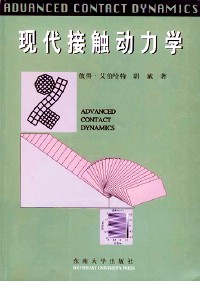
接触动力学是一门有重要理论与实用意义并有街于深入研究的学科。接触问题,如摩擦和碰撞,出现在诸如机械、仪器及车辆等许多工业领域中,只有解决其计算问题,才能在许多情况下模拟其真实过程,改进设计,减少费用,降低噪声等。
本书全面介绍了当今计算接触动力学问题的基本方法,包括多刚体动力学、线性和非线性有限元、刚体接触和弹性接触以及数值和几何问题的算法,着重讨论了如何用多刚体和有限元混合算法计算求解大运动、大变形的动态接触问题,并对描述碰撞接触过程的理论模型和测试手段作了扼要的介绍。
本书可作为力学、机械、车辆、仪器等专业研究生的教材,也可作为以上领域科技人员的参考书。
目录
1 绪论(Introduction)
2 多刚体系统(Multibody Systems)
2.1 多刚体系统运动学(Kinematics of multibody systems)
2.1.1 自由体运动学(Kinematics of free bodies)
2.1.2 约束体运动学(Kinematics of constrained bodies)
2.2 多刚体系统动力学(Kinetics of multibody systems)
2.3 多刚体系统计算软件和求解过程(Approaches and programs for multibody systems)
2.4 简单的多刚体系统示例(Example of a simple multibody system)
3 线性有限元法(Linear finite element method)
3.1 弹性理论基础(Foundations of the theory of elasticity)
3.2 偏微分方程的近似解(Approximate solutions of partial differential equations)
3.3 加权余量法(The weighted residual method)
3.4 基本边界条件(Essential boundary conditions)
3.5 坐标变换(Coordinate transformations)
3.6 单元格式(Elements)
3.6.1 等参单元(Isoparametric elements)
3.6.2 分类(Classification)
3.6.3 线性三角形单元(Linear triangular element)
3.6.4 二次三角形单元(Quadratic triangular element)
3.6.5 双线性四边形单元(Bilinear rectangular element)
3.6.6 二次Serendipity四边形单元(Quadratic Serendipity element)
3.6.7 双二次四边形单元(Biquadratic rectangular element)
3.7 边界载荷(Boundary loads)
3.7.1 线性插值单元(Linear interpolation elements)
3.7.2 二次插值单元(Quadratic interpolation elements)
3.8 应力计算(Stress calculation)
3.8.1 线性三角形单元(Linear triangular element)
3.8.2 二次三角形单元(Quadratic triangular element)
3.8.3 双线性四边形单元(Bilinear rectangular element)
3.8.4 二次Serendipity四边形单元(Quadratic Serendipity element)
3.8.5 双二次四边形单元(Biquadratic rectangular element)
3.8.6 等效应力(Stress criteria)
3.9 系统装配(Assembling finite elements)
3.10 线性有限元举例(Numerical examples of linear finite elements)
4 非线性有限元法(Nonlinear finite element method)
4.1 非线性溯源(Source of nonlinearities)
4.2 导数概念以及线性化(Derivatives and linearization)
4.3 连续体力学中的基本变量(Some definitions in continuum mechanics)
4.3.1 应力的度量(Stress measures)
4.3.2 关于刚体运动的不变性(Invariance to rigid body motion)
4.3.3 能量共轭的应力和应变张量(Energy conjugate stress and strain measures)
4.4 材料的本构关系(Constitutive laws)
4.5 强解形式(The strong form)
4.6 弱解形式(The weak form)
4.6.1 虚功原理(Principle of virtual work)
4.6.2 有限元近似(Finite element approximation)
4.6.3 切线刚度矩阵的计算(Computation of the tangential stiffness matrix)
4.6.4 线性有限元和非线性有限元的一致性(Consistence between the linear and nonlinear finite element method)
4.7 求解过程(Solution procedure)
4.8 非线性有限元算例(Numerical example of nonlinear finite element)
5 刚体接触(Contact of rigid bodies)
5.1 刚体接触运动学(Contact kinematics)
5.2 接触类型(Contact classification)
5.2.1 含有接触力的运动方程(Equations of motion with contact forces)
5.2.2 碰撞的动量守恒(Balance of momentum for impact)
5.2.3 接触状态(Contact status)
5.3 持续接触计算(Approach to persistent contact)
5.4 碰撞计算(Approach to impact)
5.5 接触过程数值模拟(Numerical contact simulation)
5.6 刚体接触举例(Examples of contact of rigid bodies)
5.6.1 自由下落的圆柱体(Falling cylinder)
5.6.2 抛落的积木块(Dropping block)
6 弹性接触(Contact of deformable bodies)
6.1 接触问题的描述(Problem description)
6.2 特征鉴别(Characteristics of contacts)
6.3 带有约束条件的优化(Optimization with constraints)
6.3.1 独立与非独立的变分(Independent and dependent variations)
6.3.2 优化问题和必要条件(Optimization and necessary conditions)
6.3.3 优化计算方法(Optimization methods)
6.4 接触问题看作优化问题(Contact as an optimization problem)
6.4.1 法向接触(Normal direction)
6.4.2 切向接触(Tangential direction)
6.5 切线刚度矩阵和接触余量的确定(Tangential stiffness matrix and contact residual)
6.5.1 接触几何(Contact geometry)
6.5.2 法向接触(Normal contact)
6.5.3 切向接触(Tangential contact)
6.6 接触算法概要(Survey of contact algorithms)
6.7 其他方面(Other aspects)
6.7.1 矩阵分块求解(Matrix decomposition)
6.7.2 接触边线(Contact segment)
6.7.3 单通算法和双通算法(One-pass and Two-pass algorithms)
6.7.4 接触应力的平滑(Smoothing of contact stresses)
6.7.5 速度和加速度的校正(Modification of velocity and acceleration)
6.7.6 互补问题(Linear complementary problems)
6.7.7 接触状态判别(Detection of the contact status)
6.8 弹性接触问题算例(Numerical examples for elastic contacts)
6.8.1 经典的赫兹接触问题(Classic hertzian contact problem)
6.8.2 带有摩擦的接触(Contact with friction)
7 数值算法(Numerical algorithms)
7.1 数值体积分(Numerical domain integration)
7.2 数值时间积分(Numerical time integration)
7.2.1 有限元系统的数值时间积分(Numerical integration for finite element systems)
7.2.2 中心差分法(Central difference method)
7.2.3 纽马克法(Newmark method)
7.3 求解非线性方程组(Solving nonlinear equations)
7.4 非线性有限元问题的求解(Solving nonlinear finite element problems)
7.5 线性方程组的求解(Solving linear equations)
7.5.1 问题陈述(Problem description)
7.5.2 具体算法(Algorithms)
7.5.3 直接算法(Direct methods)
7.5.4 迭代算法(Iterative methods)
7.5.5 稀疏系数的线性方程组(Linear systems with sparse matrices)
7.5.6 应用举例(Examples)
7.6 求解线性互补问题(Solving linear complementary problems(LCP))
7.6.1 线性互补问题的直观描述(Geometric description of LCP)
7.6.2 与二次型优化问题的关系(Relation to the quadratic optimization problems)
7.6.3 线性互补问题的数值算法(Numerical algorithms for LCP)
8 几何问题算法(Geometric algorithms)
8.1 碰撞识别(Collision detection)
8.1.1 粗检验和细检验(Coarse and fine collision tests)
8.1.2 平面体碰撞检验(Planar collision test)
8.1.3 空间体碰撞检验(Spatial collision test)
8.2 几何辅助变量的计算(Computation of geometric variables)
8.2.1 顶点的凸性(Convexity of corners)
8.2.2 确定最邻近点(Determination of the closest point)
8.2.3 存储接触状态的数据结构(Data structure for the contact status)
8.3 物体边界的确定(Determination of boundary polygons and polyhedra)
8.4 空间离散化(Domain discretization)
8.4.1 基本知识(Foundations)
8.4.2 Delaunay三角形分划(Delaunay triangularization)
8.4.3 具有特定特征的网格(Mesh with specific properties)
8.4.4 四边形分划(Quadrilateral mesh)
8.4.5 四面体网格(Tetrahedralization)
8.4.6 网格细化(Mesh, refinement)
9 多刚体和有限元混合算法(Hybrid multibody system/finite element simulation)
9.1 混合算法概述(Overview of the whole procedure)
9.2 多刚体系统向有限元系统的转换(Transition from a multibody system to a finite element system)
9.3 有限元系统向多刚体系统的转换(Transition from a finite element system to a multibody system)
9.3.1 物体位置(Body position)
9.3.2 物体的转角(Body orientation)
9.3.3 质心速度(Velocity of the center of mass)
9.3.4 物体的转动角速度(Angular velocity of a body)
9.4 网格释放时刻(Instants for releasing a mesh)
9.5 物体接触状态(Contact status for a body)
9.6 系统的接触状态(Contact status for a system)
9.7 混合算法举例(Numerical example for the hybrid method)
10 弹性体碰撞理论分析(Theoretical analysis of elastic impacts)
10.1 弹性波理论(Wave propagation in elastic bodies)
10.2 刚体与杆的平面接触模型(Symbolical analysis for planar impacts between rigid bodies and elastic rods)
10.2.1 弹性杆的波动方程(Wave equations for elastic rods)
10.2.2 刚体与杆的平面接触(Planar impacts between rigid bodies and elastic rods)
10.2.3 刚体与自由杆碰撞(Impacts between rigid bodies and free rods)
10.2.4 刚体与固支杆碰撞(Impacts between rigid bodies and fixed rods)
10.3 球体与杆的点接触模型(Analytical models for point impacts between spheres and elastic rods)
10.3.1 球体与杆的点接触(Point impacts between spheres and rods)
10.3.2 球体与自由杆碰撞(Impacts between spheres and free rods)
10.3.3 球体与固支杆碰撞(Impacts between spheres and fixed rods)
10.4 球体与不连续截面杆的点接触模型(Impact analysis for point impacts between spheres and elastic rods with discontinuous cross-sections)
10.5 用多时间尺度计算碰撞响应(Multi-time scale simulation for impact responses)
11 碰撞测试(Measurements of impact responses)
11.1 实验设计(Experiment design)
11.2 动态应变测量(Measurement of dynamic strains)
11.3 位移和速度的激光测量(Measurement of displacements and velocities with Laser-Doppler-Vibrometers)
11.4 球杆碰撞测试分析(Experimental investigations of longitudinal impacts between spheres and rods)
11.5 球与半圆板径向碰撞测试分析(Experimental investigations of radial impacts between spheres and plates)
附录A 符号说明(Notation)
A.1 张量的表达(Tensor)
A.2 下标形式(Index)
A.3 与标量的乘法(Multiplication with scalar)
A.4 点积(Scalar product)
A.5 矢量叉乘(Vector product)
A.6 Dyade乘积(Dyade product)
A.7 混合积(Combined products)
A.8 微分(Differentiation)
A.9 ▽算子和高斯积分定理(Nabla-Operator and the Gauss integral theorem)
A.10 特殊的张量(Special tensors)
附录B 有限元接触计算中一些重要的辅助变量(Computation of some auxiliary variables)
B.1 线性接触单元中导数aε/aU,at_m/aU和an_m/aU的计算(First derivations in linear element)
B.2 计算二次接触单元中的导数aε/aU,at_m/aU和an_m/a (First derivations in quadratic element)
B.3 二次接触单元中二阶导数a^2ε/aU^2的计算(Second derivations in quadratic element)
B.4 静摩擦计算的一致性(Consistence of static friction)
附录C 中心差分法的递推形式(Recursive form for the central difference method)
附录D 软件包FEMEX (Program FEMEX)
D.1 有限元法输入参数的描述 (Input data for the finite element code)
D.2 多刚体法中的输入数据文件 (Input data for the multibody system code)
附录E 计算刚体撞击弹性固支杆纵波传播规律的Maple程序(Maple program for computing the propagation of longitudinal impact waves in a fixed rod)
中文参考文献
外文参考文献
2 多刚体系统(Multibody Systems)
2.1 多刚体系统运动学(Kinematics of multibody systems)
2.1.1 自由体运动学(Kinematics of free bodies)
2.1.2 约束体运动学(Kinematics of constrained bodies)
2.2 多刚体系统动力学(Kinetics of multibody systems)
2.3 多刚体系统计算软件和求解过程(Approaches and programs for multibody systems)
2.4 简单的多刚体系统示例(Example of a simple multibody system)
3 线性有限元法(Linear finite element method)
3.1 弹性理论基础(Foundations of the theory of elasticity)
3.2 偏微分方程的近似解(Approximate solutions of partial differential equations)
3.3 加权余量法(The weighted residual method)
3.4 基本边界条件(Essential boundary conditions)
3.5 坐标变换(Coordinate transformations)
3.6 单元格式(Elements)
3.6.1 等参单元(Isoparametric elements)
3.6.2 分类(Classification)
3.6.3 线性三角形单元(Linear triangular element)
3.6.4 二次三角形单元(Quadratic triangular element)
3.6.5 双线性四边形单元(Bilinear rectangular element)
3.6.6 二次Serendipity四边形单元(Quadratic Serendipity element)
3.6.7 双二次四边形单元(Biquadratic rectangular element)
3.7 边界载荷(Boundary loads)
3.7.1 线性插值单元(Linear interpolation elements)
3.7.2 二次插值单元(Quadratic interpolation elements)
3.8 应力计算(Stress calculation)
3.8.1 线性三角形单元(Linear triangular element)
3.8.2 二次三角形单元(Quadratic triangular element)
3.8.3 双线性四边形单元(Bilinear rectangular element)
3.8.4 二次Serendipity四边形单元(Quadratic Serendipity element)
3.8.5 双二次四边形单元(Biquadratic rectangular element)
3.8.6 等效应力(Stress criteria)
3.9 系统装配(Assembling finite elements)
3.10 线性有限元举例(Numerical examples of linear finite elements)
4 非线性有限元法(Nonlinear finite element method)
4.1 非线性溯源(Source of nonlinearities)
4.2 导数概念以及线性化(Derivatives and linearization)
4.3 连续体力学中的基本变量(Some definitions in continuum mechanics)
4.3.1 应力的度量(Stress measures)
4.3.2 关于刚体运动的不变性(Invariance to rigid body motion)
4.3.3 能量共轭的应力和应变张量(Energy conjugate stress and strain measures)
4.4 材料的本构关系(Constitutive laws)
4.5 强解形式(The strong form)
4.6 弱解形式(The weak form)
4.6.1 虚功原理(Principle of virtual work)
4.6.2 有限元近似(Finite element approximation)
4.6.3 切线刚度矩阵的计算(Computation of the tangential stiffness matrix)
4.6.4 线性有限元和非线性有限元的一致性(Consistence between the linear and nonlinear finite element method)
4.7 求解过程(Solution procedure)
4.8 非线性有限元算例(Numerical example of nonlinear finite element)
5 刚体接触(Contact of rigid bodies)
5.1 刚体接触运动学(Contact kinematics)
5.2 接触类型(Contact classification)
5.2.1 含有接触力的运动方程(Equations of motion with contact forces)
5.2.2 碰撞的动量守恒(Balance of momentum for impact)
5.2.3 接触状态(Contact status)
5.3 持续接触计算(Approach to persistent contact)
5.4 碰撞计算(Approach to impact)
5.5 接触过程数值模拟(Numerical contact simulation)
5.6 刚体接触举例(Examples of contact of rigid bodies)
5.6.1 自由下落的圆柱体(Falling cylinder)
5.6.2 抛落的积木块(Dropping block)
6 弹性接触(Contact of deformable bodies)
6.1 接触问题的描述(Problem description)
6.2 特征鉴别(Characteristics of contacts)
6.3 带有约束条件的优化(Optimization with constraints)
6.3.1 独立与非独立的变分(Independent and dependent variations)
6.3.2 优化问题和必要条件(Optimization and necessary conditions)
6.3.3 优化计算方法(Optimization methods)
6.4 接触问题看作优化问题(Contact as an optimization problem)
6.4.1 法向接触(Normal direction)
6.4.2 切向接触(Tangential direction)
6.5 切线刚度矩阵和接触余量的确定(Tangential stiffness matrix and contact residual)
6.5.1 接触几何(Contact geometry)
6.5.2 法向接触(Normal contact)
6.5.3 切向接触(Tangential contact)
6.6 接触算法概要(Survey of contact algorithms)
6.7 其他方面(Other aspects)
6.7.1 矩阵分块求解(Matrix decomposition)
6.7.2 接触边线(Contact segment)
6.7.3 单通算法和双通算法(One-pass and Two-pass algorithms)
6.7.4 接触应力的平滑(Smoothing of contact stresses)
6.7.5 速度和加速度的校正(Modification of velocity and acceleration)
6.7.6 互补问题(Linear complementary problems)
6.7.7 接触状态判别(Detection of the contact status)
6.8 弹性接触问题算例(Numerical examples for elastic contacts)
6.8.1 经典的赫兹接触问题(Classic hertzian contact problem)
6.8.2 带有摩擦的接触(Contact with friction)
7 数值算法(Numerical algorithms)
7.1 数值体积分(Numerical domain integration)
7.2 数值时间积分(Numerical time integration)
7.2.1 有限元系统的数值时间积分(Numerical integration for finite element systems)
7.2.2 中心差分法(Central difference method)
7.2.3 纽马克法(Newmark method)
7.3 求解非线性方程组(Solving nonlinear equations)
7.4 非线性有限元问题的求解(Solving nonlinear finite element problems)
7.5 线性方程组的求解(Solving linear equations)
7.5.1 问题陈述(Problem description)
7.5.2 具体算法(Algorithms)
7.5.3 直接算法(Direct methods)
7.5.4 迭代算法(Iterative methods)
7.5.5 稀疏系数的线性方程组(Linear systems with sparse matrices)
7.5.6 应用举例(Examples)
7.6 求解线性互补问题(Solving linear complementary problems(LCP))
7.6.1 线性互补问题的直观描述(Geometric description of LCP)
7.6.2 与二次型优化问题的关系(Relation to the quadratic optimization problems)
7.6.3 线性互补问题的数值算法(Numerical algorithms for LCP)
8 几何问题算法(Geometric algorithms)
8.1 碰撞识别(Collision detection)
8.1.1 粗检验和细检验(Coarse and fine collision tests)
8.1.2 平面体碰撞检验(Planar collision test)
8.1.3 空间体碰撞检验(Spatial collision test)
8.2 几何辅助变量的计算(Computation of geometric variables)
8.2.1 顶点的凸性(Convexity of corners)
8.2.2 确定最邻近点(Determination of the closest point)
8.2.3 存储接触状态的数据结构(Data structure for the contact status)
8.3 物体边界的确定(Determination of boundary polygons and polyhedra)
8.4 空间离散化(Domain discretization)
8.4.1 基本知识(Foundations)
8.4.2 Delaunay三角形分划(Delaunay triangularization)
8.4.3 具有特定特征的网格(Mesh with specific properties)
8.4.4 四边形分划(Quadrilateral mesh)
8.4.5 四面体网格(Tetrahedralization)
8.4.6 网格细化(Mesh, refinement)
9 多刚体和有限元混合算法(Hybrid multibody system/finite element simulation)
9.1 混合算法概述(Overview of the whole procedure)
9.2 多刚体系统向有限元系统的转换(Transition from a multibody system to a finite element system)
9.3 有限元系统向多刚体系统的转换(Transition from a finite element system to a multibody system)
9.3.1 物体位置(Body position)
9.3.2 物体的转角(Body orientation)
9.3.3 质心速度(Velocity of the center of mass)
9.3.4 物体的转动角速度(Angular velocity of a body)
9.4 网格释放时刻(Instants for releasing a mesh)
9.5 物体接触状态(Contact status for a body)
9.6 系统的接触状态(Contact status for a system)
9.7 混合算法举例(Numerical example for the hybrid method)
10 弹性体碰撞理论分析(Theoretical analysis of elastic impacts)
10.1 弹性波理论(Wave propagation in elastic bodies)
10.2 刚体与杆的平面接触模型(Symbolical analysis for planar impacts between rigid bodies and elastic rods)
10.2.1 弹性杆的波动方程(Wave equations for elastic rods)
10.2.2 刚体与杆的平面接触(Planar impacts between rigid bodies and elastic rods)
10.2.3 刚体与自由杆碰撞(Impacts between rigid bodies and free rods)
10.2.4 刚体与固支杆碰撞(Impacts between rigid bodies and fixed rods)
10.3 球体与杆的点接触模型(Analytical models for point impacts between spheres and elastic rods)
10.3.1 球体与杆的点接触(Point impacts between spheres and rods)
10.3.2 球体与自由杆碰撞(Impacts between spheres and free rods)
10.3.3 球体与固支杆碰撞(Impacts between spheres and fixed rods)
10.4 球体与不连续截面杆的点接触模型(Impact analysis for point impacts between spheres and elastic rods with discontinuous cross-sections)
10.5 用多时间尺度计算碰撞响应(Multi-time scale simulation for impact responses)
11 碰撞测试(Measurements of impact responses)
11.1 实验设计(Experiment design)
11.2 动态应变测量(Measurement of dynamic strains)
11.3 位移和速度的激光测量(Measurement of displacements and velocities with Laser-Doppler-Vibrometers)
11.4 球杆碰撞测试分析(Experimental investigations of longitudinal impacts between spheres and rods)
11.5 球与半圆板径向碰撞测试分析(Experimental investigations of radial impacts between spheres and plates)
附录A 符号说明(Notation)
A.1 张量的表达(Tensor)
A.2 下标形式(Index)
A.3 与标量的乘法(Multiplication with scalar)
A.4 点积(Scalar product)
A.5 矢量叉乘(Vector product)
A.6 Dyade乘积(Dyade product)
A.7 混合积(Combined products)
A.8 微分(Differentiation)
A.9 ▽算子和高斯积分定理(Nabla-Operator and the Gauss integral theorem)
A.10 特殊的张量(Special tensors)
附录B 有限元接触计算中一些重要的辅助变量(Computation of some auxiliary variables)
B.1 线性接触单元中导数aε/aU,at_m/aU和an_m/aU的计算(First derivations in linear element)
B.2 计算二次接触单元中的导数aε/aU,at_m/aU和an_m/a (First derivations in quadratic element)
B.3 二次接触单元中二阶导数a^2ε/aU^2的计算(Second derivations in quadratic element)
B.4 静摩擦计算的一致性(Consistence of static friction)
附录C 中心差分法的递推形式(Recursive form for the central difference method)
附录D 软件包FEMEX (Program FEMEX)
D.1 有限元法输入参数的描述 (Input data for the finite element code)
D.2 多刚体法中的输入数据文件 (Input data for the multibody system code)
附录E 计算刚体撞击弹性固支杆纵波传播规律的Maple程序(Maple program for computing the propagation of longitudinal impact waves in a fixed rod)
中文参考文献
外文参考文献
现代接触动力学
- 名称
- 类型
- 大小
光盘服务联系方式: 020-38250260 客服QQ:4006604884
云图客服:
用户发送的提问,这种方式就需要有位在线客服来回答用户的问题,这种 就属于对话式的,问题是这种提问是否需要用户登录才能提问
Video Player
×
Audio Player
×
pdf Player
×
