

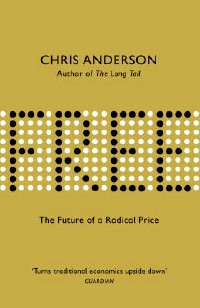
简介
what haens when advances in technologg allow mang things to
be roduced for more or less nothing? and what haens when
those things are then made available to us for free?
in his groundbreaking new book, the long tail author chris anderson
considers a brave new world where the old economic certainties are
being undermined by a growing flood of free goods - newsaers, dvds,
t-shirts, hones, even holiday flights. he exlains why this has become
ossible - why fast-evolvingtechnologies, articularly the internet, have
caused roduction and distribution costs in many sectors to lummet to
levels unthinkable even a decade ago. he shows how the flexibility
rovided by the online world allows roducers to trade ever more
creatively, offering items for free to make real or erceived gains
elsewhere. he inoints the winners and losers in the free universe.
and he demonstrates the wags in which, as an increasing number of things
become available for free, our decisions to make use of them will be
determined by two resources far more valuable than money: the oular
reutation of what is on offer and the time we have available for it. in the
future, he argues, when we talk of the ’money economy’ we will talk of
the "reutation economy’ and the ’time economyl’ in the some breath,
and our world will never be the same again.
目录
What's free?
Free 101 : a short course on a most misunderstood word
The history of "free" : zero, lunch and the enemies of capitalism
The psychology of free : it feels good. Too good?
Too cheap to matter : when something halves in price each year, zero is inevitable --"Information wants to be free" : the history of a phrase that defined the digital age
Competing with free : Microsoft learned how to do it over decades, but Yahoo hadjust months
De-monetization : Google and the birth of a21st century economic model
The new media models : freemedia is nothing new. What is new is the expansion of thatmodel to everything else
How big is the free economy? :There's more to it than just dollars and cents
Waste is(sometimes) good : the best way to exploit abundance is torelinquish control
Econ 000 : how a century-old joke became the law of digital economics
"You get what you pay for" : and other doubts about free
Non-monetary economies : where money doesn't rule, what does?
Free world : China and Brazil are the frontiers of free. What can we learn from them?
Imagining abundance : science fiction as a thought experiment in "post-scarcity" societies
Coda
Free rules
The 10 principles of abundance thinking.
Free 101 : a short course on a most misunderstood word
The history of "free" : zero, lunch and the enemies of capitalism
The psychology of free : it feels good. Too good?
Too cheap to matter : when something halves in price each year, zero is inevitable --"Information wants to be free" : the history of a phrase that defined the digital age
Competing with free : Microsoft learned how to do it over decades, but Yahoo hadjust months
De-monetization : Google and the birth of a21st century economic model
The new media models : freemedia is nothing new. What is new is the expansion of thatmodel to everything else
How big is the free economy? :There's more to it than just dollars and cents
Waste is(sometimes) good : the best way to exploit abundance is torelinquish control
Econ 000 : how a century-old joke became the law of digital economics
"You get what you pay for" : and other doubts about free
Non-monetary economies : where money doesn't rule, what does?
Free world : China and Brazil are the frontiers of free. What can we learn from them?
Imagining abundance : science fiction as a thought experiment in "post-scarcity" societies
Coda
Free rules
The 10 principles of abundance thinking.
- 名称
- 类型
- 大小
光盘服务联系方式: 020-38250260 客服QQ:4006604884
云图客服:
用户发送的提问,这种方式就需要有位在线客服来回答用户的问题,这种 就属于对话式的,问题是这种提问是否需要用户登录才能提问
Video Player
×
Audio Player
×
pdf Player
×
