

简介
Summary:
Publisher Summary 1
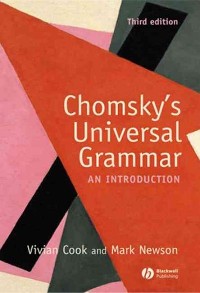
Cook (applied linguistics, U. of Newcastle-upon-Tyne, UK) and Newson (English linguistics, E枚tv枚s Lor谩nd U., Budapest, Hungary) present the latest edition of their introductory text on the Universal Grammar (UG) Theory developed by Noam Chomsky. Designed for those needing an broad overview of UG, as opposed to specialist students of syntax, the text introduces the reader to Chomsky's theory of language by setting the specifics of syntactic analysis in the framework of his general ideas. Revised and updated throughout to incorporate developments since the 1996 second edition, the third edition includes new data on first and second language acquisition and the syntax of the developing Minimalist Program, such as Phase Theory. Additional discussion topics and exercises have been incorporated into each chapter. Annotation 漏2007 Book News, Inc., Portland, OR (booknews.com)
Publisher Summary 2
The 3rd edition of Chomsky's Universal Grammarintroduces the reader to Noam Chomsky's theory of language by setting the specifics of syntactic analysis in the framework of his general ideas.
Updated and revised to include a broader range of issues and discussion topics
Traces the development of Chomsky's thinking and of the Minimalist Program since 1995, providing a new picture of this current model of syntactic theory
Introduces both the general concepts of the theory of Universal Grammar and the main areas of syntax such as X-bar theory, movement and government/binding theory
Includes discussion topics, exercises, and suggestions for further readings in each chapter
目录
Preface to the Third Edition p. vii
The Nature of Universal Grammar p. 1
The early development of Universal Grammar Theory p. 2
Relating 'sounds' and 'meanings' p. 4
The computational system p. 8
Questions for linguistics p. 11
General ideas of language p. 13
Linguistic universals p. 20
The evidence for Universal Grammar Theory p. 24
Conclusion p. 26
Principles, Parameters and Language Acquisition p. 28
Principles and parameters p. 28
Language acquisition p. 45
Structure in the Government/Binding Model p. 61
The heart of the Government/Binding Model p. 62
Modules, principles and parameters p. 62
X-bar Theory in Government and Binding p. 73
Theta Theory p. 80
Control Theory and null subjects p. 86
Further developments in X-bar Theory p. 100
Summary p. 118
Movement in Government/Binding Theory p. 121
An overview of movement p. 121
Further developments to the theory of movement p. 133
Bounding, Barriers and Relativized Minimality p. 139
Case Theory p. 146
Binding Theory p. 162
Beyond S-structure and the Empty Category Principle p. 175
Chomskyan Approaches to Language Acquisition p. 185
The physical basis for Universal Grammar p. 185
A language learning model p. 189
The innateness hypothesis p. 204
The role of Universal Grammar in learning p. 205
Complete from the beginning or developing with time? p. 207
Issues in parameter setting p. 209
Markedness and language development p. 215
Second Language Acquisition and Universal Grammar p. 221
The purity of the monolingual argument p. 221
Universal bilingualism p. 222
The multi-competence view p. 223
The poverty-of-the-stimulus argument and second language acquisition p. 224
Models and metaphors p. 228
Hypotheses of the initial second language state p. 231
The final state of second language acquisition p. 238
Structure in the Minimalist Program p. 242
From Government/Binding to the Minimalist Program p. 243
Basic minimalist concepts p. 249
Phrase structure in the Minimalist Program p. 255
Thematic roles and structural positions p. 262
Adjunction p. 265
Linear order p. 268
Movement in the Minimalist Program p. 271
Functional heads and projections p. 271
The motivation for movement p. 275
The nature of movement p. 279
Overt and covert movement p. 281
Properties of movement p. 287
Phases p. 301
Conclusion p. 308
References p. 310
Index p. 319
The Nature of Universal Grammar p. 1
The early development of Universal Grammar Theory p. 2
Relating 'sounds' and 'meanings' p. 4
The computational system p. 8
Questions for linguistics p. 11
General ideas of language p. 13
Linguistic universals p. 20
The evidence for Universal Grammar Theory p. 24
Conclusion p. 26
Principles, Parameters and Language Acquisition p. 28
Principles and parameters p. 28
Language acquisition p. 45
Structure in the Government/Binding Model p. 61
The heart of the Government/Binding Model p. 62
Modules, principles and parameters p. 62
X-bar Theory in Government and Binding p. 73
Theta Theory p. 80
Control Theory and null subjects p. 86
Further developments in X-bar Theory p. 100
Summary p. 118
Movement in Government/Binding Theory p. 121
An overview of movement p. 121
Further developments to the theory of movement p. 133
Bounding, Barriers and Relativized Minimality p. 139
Case Theory p. 146
Binding Theory p. 162
Beyond S-structure and the Empty Category Principle p. 175
Chomskyan Approaches to Language Acquisition p. 185
The physical basis for Universal Grammar p. 185
A language learning model p. 189
The innateness hypothesis p. 204
The role of Universal Grammar in learning p. 205
Complete from the beginning or developing with time? p. 207
Issues in parameter setting p. 209
Markedness and language development p. 215
Second Language Acquisition and Universal Grammar p. 221
The purity of the monolingual argument p. 221
Universal bilingualism p. 222
The multi-competence view p. 223
The poverty-of-the-stimulus argument and second language acquisition p. 224
Models and metaphors p. 228
Hypotheses of the initial second language state p. 231
The final state of second language acquisition p. 238
Structure in the Minimalist Program p. 242
From Government/Binding to the Minimalist Program p. 243
Basic minimalist concepts p. 249
Phrase structure in the Minimalist Program p. 255
Thematic roles and structural positions p. 262
Adjunction p. 265
Linear order p. 268
Movement in the Minimalist Program p. 271
Functional heads and projections p. 271
The motivation for movement p. 275
The nature of movement p. 279
Overt and covert movement p. 281
Properties of movement p. 287
Phases p. 301
Conclusion p. 308
References p. 310
Index p. 319
- 名称
- 类型
- 大小
光盘服务联系方式: 020-38250260 客服QQ:4006604884
云图客服:
用户发送的提问,这种方式就需要有位在线客服来回答用户的问题,这种 就属于对话式的,问题是这种提问是否需要用户登录才能提问
Video Player
×
Audio Player
×
pdf Player
×
