

简介
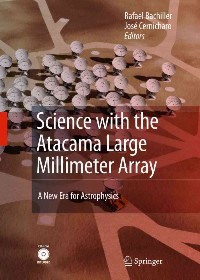
Currently under construction in the Andean Altiplano, Northern Chile, the Atacama Large Millimeter Array (ALMA) is the most ambitious astronomy facility under construction. ALMA is a radio interferometer composed of 54 antennas of 12 m diameter, and twelve 7 m antennas with about 6600 square meters of total collecting area. Initially covering the most interesting spectral wavelength ranges from 3 to 0.3 mm, ALMA will be a revolutionary telescope aimed to unveil the details of star and planet formation and to provide astronomy with the first exhaustive view of the dark and youngest objects of the Universe. This book describes the enormous capabilities of ALMA, the state of the project, and most notably the scientific prospects with such a unique facility. The book includes comprehensive reviews and recent results on most hot topics of modern Astronomy (the formation and evolution of galaxies, the physics and chemistry of the interstellar medium, and the processes of star and planet formation) with prospects to the revolutionary results to be obtained with ALMA. These topics, discussed with special emphasis on millimeter and sub-millimeter astronomy, are presented by some of the most world-wide reputed scientists in their fields.
目录
Contents 3
Preface 6
Acknowledgements 7
Organizing Committees 8
The Atacama Large Millimeter/Submillimeter Array: overview & status 28
ALMA capabilities for observations of spectral line emission 35
ALMA capabilities for observations of continuum emission 39
Star and planet-formation with ALMA: an overview 41
High-mass star forming regions: An ALMA view 49
Early stages of star formation 55
Chemistry in low-mass star forming regions 61
Molecular outflows observed with ALMA 67
Unveiling the chemistry of hot protostellar cores with ALMA 71
High resolution submillimeter observations of massive protostars 78
High-resolution mm interferometry and the search for massive protostellar disks: the case of Cep-A HW2 83
The Class 0 source Barnard 1c 88
APEX and ATCA observations of the southern hot core G327.3- 0.6 and its environs 92
The physical conditions in the BHR71 outflows 96
Interstellar deuteroammonia 100
Massive star formation in the southern Milky Way 104
SMA observations of the magnetic fields around a low-mass protostellar system 109
ASTE observations of the massive-star forming region Sgr B2: a giant impact scenario 113
A new view of proto-planetary disks with ALMA 117
Observational signature of planet formation: The ALMA view 123
Detecting protoplanets with ALMA 130
The study of young substellar objects with ALMA 134
A submillimeter view of protoplanetary dust disks 139
Studies of dense cores with ALMA 143
Chemistry in the ISM: the ALMA (r)evolution 149
High angular resolution imaging of the circumstellar material around intermediate mass (IM) stars 155
Polarization measurements of molecular lines 160
Molecular clouds and star formation in the Magellanic Clouds and the Milky Way 164
Complex organic molecules in an early stage of protostellar evolution 171
Revealing the \ 176
A new evolutionary scenario of intermediate-mass star-formation revealed by multi-wavelength observations of OMC-2/3 181
Scientific role of ACA for low-mass star-formation study 185
Planetary atmospheres with ALMA 190
Cometary science with ALMA 197
Observations of asteroids with ALMA 204
ALMA as the ideal probe of the solar chromosphere 210
The study of evolved stars with ALMA 214
Molecular lines from protoplanetary nebulae: observations with ALMA 221
Planetary nebulae and ALMA 227
Chemistry in the circumstellar medium 234
Understanding the chemical complexity in Circumstellar Envelopes of C-Rich AGB stars: the case of IRC + 10216 239
New Plateau de Bure observations of M1-92; unveiling the core 244
A massive, dusty toroid with large grains in the pre-planetary nebula IRAS22036+5306 249
Gas dynamics and structure of galaxies 253
Investigations of star formation in galaxies using ALMA 260
Probing the feeding and feedback of activity near and far 267
Chemical complexity in galaxies 272
Chemistry in luminous AGN and starburst galaxies 278
Dense gas in normal and active galaxies 284
Spectroscopic surveys of cosmic evolution 291
Observations of molecular clouds in nearby galaxies with ALMA 296
Luminous infrared galaxies with the submillimeter array: probing the extremes of star formation 300
The Galactic Center as nearby extragalactic chemical laboratory 306
Studying the first galaxies with ALMA 310
Detecting the most distant (z > 7) objects with ALMA 315
Redshift distribution of the submillimeter extragalactic background light 319
Molecular absorptions in high-z objects 323
Molecular signature of star formation at high redshifts 329
Dense molecular gas in a sample of LIRGs and ULIRGs: The low-redshift connection to the huge high-redshift starbursts and AGNs 333
Preface 6
Acknowledgements 7
Organizing Committees 8
The Atacama Large Millimeter/Submillimeter Array: overview & status 28
ALMA capabilities for observations of spectral line emission 35
ALMA capabilities for observations of continuum emission 39
Star and planet-formation with ALMA: an overview 41
High-mass star forming regions: An ALMA view 49
Early stages of star formation 55
Chemistry in low-mass star forming regions 61
Molecular outflows observed with ALMA 67
Unveiling the chemistry of hot protostellar cores with ALMA 71
High resolution submillimeter observations of massive protostars 78
High-resolution mm interferometry and the search for massive protostellar disks: the case of Cep-A HW2 83
The Class 0 source Barnard 1c 88
APEX and ATCA observations of the southern hot core G327.3- 0.6 and its environs 92
The physical conditions in the BHR71 outflows 96
Interstellar deuteroammonia 100
Massive star formation in the southern Milky Way 104
SMA observations of the magnetic fields around a low-mass protostellar system 109
ASTE observations of the massive-star forming region Sgr B2: a giant impact scenario 113
A new view of proto-planetary disks with ALMA 117
Observational signature of planet formation: The ALMA view 123
Detecting protoplanets with ALMA 130
The study of young substellar objects with ALMA 134
A submillimeter view of protoplanetary dust disks 139
Studies of dense cores with ALMA 143
Chemistry in the ISM: the ALMA (r)evolution 149
High angular resolution imaging of the circumstellar material around intermediate mass (IM) stars 155
Polarization measurements of molecular lines 160
Molecular clouds and star formation in the Magellanic Clouds and the Milky Way 164
Complex organic molecules in an early stage of protostellar evolution 171
Revealing the \ 176
A new evolutionary scenario of intermediate-mass star-formation revealed by multi-wavelength observations of OMC-2/3 181
Scientific role of ACA for low-mass star-formation study 185
Planetary atmospheres with ALMA 190
Cometary science with ALMA 197
Observations of asteroids with ALMA 204
ALMA as the ideal probe of the solar chromosphere 210
The study of evolved stars with ALMA 214
Molecular lines from protoplanetary nebulae: observations with ALMA 221
Planetary nebulae and ALMA 227
Chemistry in the circumstellar medium 234
Understanding the chemical complexity in Circumstellar Envelopes of C-Rich AGB stars: the case of IRC + 10216 239
New Plateau de Bure observations of M1-92; unveiling the core 244
A massive, dusty toroid with large grains in the pre-planetary nebula IRAS22036+5306 249
Gas dynamics and structure of galaxies 253
Investigations of star formation in galaxies using ALMA 260
Probing the feeding and feedback of activity near and far 267
Chemical complexity in galaxies 272
Chemistry in luminous AGN and starburst galaxies 278
Dense gas in normal and active galaxies 284
Spectroscopic surveys of cosmic evolution 291
Observations of molecular clouds in nearby galaxies with ALMA 296
Luminous infrared galaxies with the submillimeter array: probing the extremes of star formation 300
The Galactic Center as nearby extragalactic chemical laboratory 306
Studying the first galaxies with ALMA 310
Detecting the most distant (z > 7) objects with ALMA 315
Redshift distribution of the submillimeter extragalactic background light 319
Molecular absorptions in high-z objects 323
Molecular signature of star formation at high redshifts 329
Dense molecular gas in a sample of LIRGs and ULIRGs: The low-redshift connection to the huge high-redshift starbursts and AGNs 333
- 名称
- 类型
- 大小
光盘服务联系方式: 020-38250260 客服QQ:4006604884
云图客服:
用户发送的提问,这种方式就需要有位在线客服来回答用户的问题,这种 就属于对话式的,问题是这种提问是否需要用户登录才能提问
Video Player
×
Audio Player
×
pdf Player
×
