

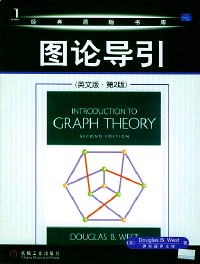
Introduction to graph theory = 图论导引 / 2nd ed.
副标题:无
分类号:O157.5
ISBN:9787111152156
微信扫一扫,移动浏览光盘
简介
图论在计算科学、社会科学和自然科学等各个领域都有广泛应用。本书是本科生或研究生一学期或两学期的图论课程教材。全书力求保持按证明的难度和算法的复杂性循序渐进的风格,使学生能够深入理解书中的内容。书中包括对证明技巧的讨论、1200多道习题、400多幅插图以及许多例题,而且对所有定理都给出了详细完整的证明。虽然本书包括许多算法和应用,但是重点在于理解图论结构和分析图论问题的技巧。
? ? 本书配有支持网站 http://www.math.uiuc.edu/~west/igt) ,其中包括课程提纲、勘误表、更新等辅助材料。
目录
contents
preface
chapter 1 fundamental concepts
1.1 what is a graph?
the definition, 1
graphs as models, 3
matrices and isomorphism, 6
. decomposition and special graphs, 11
exercises, 14
1.2 paths, cycles, and trails
connection in graphs, 20
bipartite graphs, 24
eulerian circuits, 26
exercises, 31
1.3 vertex degrees and counting
counting and bijections, 35
extremal problems, 38
graphic sequences, 44
exercises, 47
1.4 directed graphs
.definitions and examples, 53
vertex degrees, 58
eulerian digraphs, 60
orientations and tournaments, 61
exercises, 63
chapter 2 trees and distance
2.1 basic properties
properties of trees, 68
distance in trees and graphs, 70
disjoint spanning trees (optional), 73
exercises, 75
2.2 spanning trees and enumeration
enumeration of trees, 81
spanning trees in graphs, 83
decomposition and graceful labelings, 87
branchings and eulerian digraphs (optional), 89
exercises, 92
2.3 optimization and trees
minimum spanning tree, 95
shortest paths, 97
trees in computer science (optional), 100
exercises, 103
chapter 3 matchings and factors
3.1 matchings and covers
maximum matchings, 108
hall's matching condition, 110
mm-max theorems, 112
independent sets and covers, 113
dominating sets (optional), 116
exercises, 118
3.2 algorithms and applications
maximum bipartite matching, 123
weighted bipartite matching, 125
stable matchings (optional), 130
faster bipartite matching (optional), 132
exercises, 134
3.3 matchings in general graphs
tutte's l-factor theorem, 136
f-factors of graphs (optional), 140
edmonds' blossom algorithm (optional), 142
exercises, 145
chapter 4 connectivity and paths
4.1 cuts and connectivity
connectivity, 149
edge-connectivity, 152
blocks, 155
exercises, 158
4.2 k-connected graphs
2-connected graphs, 161
connectivity of digraphs, 164
k-connected and k-edge-connected graphs, 166
applications of menger's theorem, 170
exercises, 172
4.3 network flow problems
maximum network flow, 176
integral flows 181
supplies and demands (optional), 184
exercises, 188
chapter 5 coloring of graphs
5.1 vertex colorings and upper bounds
definitions and examples, 191
upper bounds, 194
brooks' theorem, 197
exercises, 199
5.2 structure of k-chromatic graphs
graphs with large chromatic number, 205
extremal problems and turan's theorem 207
color-critical graphs, 210
forced subdivisions, 212
exercises, 214
5.3 enumerative aspects
counting proper colorings, 219
chordal graphs, 224
a hint of perfect graphs, 226
counting acyclic orientations (optional), 228
exercises, 229
chapter 6 planar graphs
6.1 embeddings and euler's formula
drawings in the plane, 233
dual graphs, 236
euler's formula, 241 255
exercises, 243
6.2 characterization of planar graphs
preparation for kuratowski's theorem, 247
convex embeddings, 248
planarity testing (optional), 252
exercises, 255
6.3 parameters of planarity
coloring of planar graphs, 257
crossing number, 261
surfaces of higher genus (optional), 266
exercises, 269
chapter 7 edges and cycles
7.1 line graphs and edge-coloring
edge-colorings, 274
characterization of line graphs (optional), 279
exercises, 282
7.2 hamiltonian cycles
necessary conditions, 287
sufficient conditions, 288
cycles in directed graphs (optional), 293
exercises, 294
7.3 planarity, coloring, and cycles
tait's theorem, 300
grinberg's theorem, 302
snarks (optional), 304
flows and cycle covers (optional), 307
exercises, 314
chapter 8 additional topics (optional)
8.1 perfect graphs
the perfect graph theorem, 320
chordal graphs revisited, 323
other classes of perfect graphs, 328
imperfect graphs, 334
the strong perfect graph conjecture, 340
exercises, 344
8.2 matroids
hereditary systems and examples, 349
properties of matroids, 354
the span function, 358
the dual of a matroid, 360
matroid minors and planar graphs, 363
matroid intersection, 366
matroid union, 369
exercises, 372
8.3 pamsey theory,
the pigeonhole principle revisited, 378
ramsey's theorem, 380
ramsey numbers, 383
'graph ramsey theory, 386
sperner's lemma and bandwidth, 388
exercises, 392
8.4 more extremal problems
encodings of graphs, 397
branchings and gossip, 404
list coloring and choosability, 408
partitions using paths and cycles, 413
circumference, 416
exercises, 422
8.5 random graphs
existence and expectation, 426
properties of almost all graphs, 430
threshold functions, 432
evolution and graph parameters, 436
connectivity, cliques, and coloring, 439
martingales, 442
exercises, 448
8.6 eigenvalues of graphs
the characteristic polynomial, 453
linear algebra of real symmetric matrices, 456
eigenvalues and graph parameters, 458
eigenvalues of regular graphs, 460
eigenvalues and expanders, 463
strongly regular graphs, 464
exercises, 467
appendix a mathematical background
sets, 471
quantifiers and proofs, 475
induction and recurrence, 479
functions, 483
counting and binomial coefficients, 485
relations, 489
the pigeonhole principle, 491
appendix b optimization and complexity
intractability, 493
heuristics and bounds, 496
np-completeness proofs, 499
exercises, 505
appendix c hints for selected exercises
general discussion, 507
supplemental specific hints, 508
appendix d glossary of terms
appendix e supplemental reading
appendix f references
author index
subject index
preface
chapter 1 fundamental concepts
1.1 what is a graph?
the definition, 1
graphs as models, 3
matrices and isomorphism, 6
. decomposition and special graphs, 11
exercises, 14
1.2 paths, cycles, and trails
connection in graphs, 20
bipartite graphs, 24
eulerian circuits, 26
exercises, 31
1.3 vertex degrees and counting
counting and bijections, 35
extremal problems, 38
graphic sequences, 44
exercises, 47
1.4 directed graphs
.definitions and examples, 53
vertex degrees, 58
eulerian digraphs, 60
orientations and tournaments, 61
exercises, 63
chapter 2 trees and distance
2.1 basic properties
properties of trees, 68
distance in trees and graphs, 70
disjoint spanning trees (optional), 73
exercises, 75
2.2 spanning trees and enumeration
enumeration of trees, 81
spanning trees in graphs, 83
decomposition and graceful labelings, 87
branchings and eulerian digraphs (optional), 89
exercises, 92
2.3 optimization and trees
minimum spanning tree, 95
shortest paths, 97
trees in computer science (optional), 100
exercises, 103
chapter 3 matchings and factors
3.1 matchings and covers
maximum matchings, 108
hall's matching condition, 110
mm-max theorems, 112
independent sets and covers, 113
dominating sets (optional), 116
exercises, 118
3.2 algorithms and applications
maximum bipartite matching, 123
weighted bipartite matching, 125
stable matchings (optional), 130
faster bipartite matching (optional), 132
exercises, 134
3.3 matchings in general graphs
tutte's l-factor theorem, 136
f-factors of graphs (optional), 140
edmonds' blossom algorithm (optional), 142
exercises, 145
chapter 4 connectivity and paths
4.1 cuts and connectivity
connectivity, 149
edge-connectivity, 152
blocks, 155
exercises, 158
4.2 k-connected graphs
2-connected graphs, 161
connectivity of digraphs, 164
k-connected and k-edge-connected graphs, 166
applications of menger's theorem, 170
exercises, 172
4.3 network flow problems
maximum network flow, 176
integral flows 181
supplies and demands (optional), 184
exercises, 188
chapter 5 coloring of graphs
5.1 vertex colorings and upper bounds
definitions and examples, 191
upper bounds, 194
brooks' theorem, 197
exercises, 199
5.2 structure of k-chromatic graphs
graphs with large chromatic number, 205
extremal problems and turan's theorem 207
color-critical graphs, 210
forced subdivisions, 212
exercises, 214
5.3 enumerative aspects
counting proper colorings, 219
chordal graphs, 224
a hint of perfect graphs, 226
counting acyclic orientations (optional), 228
exercises, 229
chapter 6 planar graphs
6.1 embeddings and euler's formula
drawings in the plane, 233
dual graphs, 236
euler's formula, 241 255
exercises, 243
6.2 characterization of planar graphs
preparation for kuratowski's theorem, 247
convex embeddings, 248
planarity testing (optional), 252
exercises, 255
6.3 parameters of planarity
coloring of planar graphs, 257
crossing number, 261
surfaces of higher genus (optional), 266
exercises, 269
chapter 7 edges and cycles
7.1 line graphs and edge-coloring
edge-colorings, 274
characterization of line graphs (optional), 279
exercises, 282
7.2 hamiltonian cycles
necessary conditions, 287
sufficient conditions, 288
cycles in directed graphs (optional), 293
exercises, 294
7.3 planarity, coloring, and cycles
tait's theorem, 300
grinberg's theorem, 302
snarks (optional), 304
flows and cycle covers (optional), 307
exercises, 314
chapter 8 additional topics (optional)
8.1 perfect graphs
the perfect graph theorem, 320
chordal graphs revisited, 323
other classes of perfect graphs, 328
imperfect graphs, 334
the strong perfect graph conjecture, 340
exercises, 344
8.2 matroids
hereditary systems and examples, 349
properties of matroids, 354
the span function, 358
the dual of a matroid, 360
matroid minors and planar graphs, 363
matroid intersection, 366
matroid union, 369
exercises, 372
8.3 pamsey theory,
the pigeonhole principle revisited, 378
ramsey's theorem, 380
ramsey numbers, 383
'graph ramsey theory, 386
sperner's lemma and bandwidth, 388
exercises, 392
8.4 more extremal problems
encodings of graphs, 397
branchings and gossip, 404
list coloring and choosability, 408
partitions using paths and cycles, 413
circumference, 416
exercises, 422
8.5 random graphs
existence and expectation, 426
properties of almost all graphs, 430
threshold functions, 432
evolution and graph parameters, 436
connectivity, cliques, and coloring, 439
martingales, 442
exercises, 448
8.6 eigenvalues of graphs
the characteristic polynomial, 453
linear algebra of real symmetric matrices, 456
eigenvalues and graph parameters, 458
eigenvalues of regular graphs, 460
eigenvalues and expanders, 463
strongly regular graphs, 464
exercises, 467
appendix a mathematical background
sets, 471
quantifiers and proofs, 475
induction and recurrence, 479
functions, 483
counting and binomial coefficients, 485
relations, 489
the pigeonhole principle, 491
appendix b optimization and complexity
intractability, 493
heuristics and bounds, 496
np-completeness proofs, 499
exercises, 505
appendix c hints for selected exercises
general discussion, 507
supplemental specific hints, 508
appendix d glossary of terms
appendix e supplemental reading
appendix f references
author index
subject index
Introduction to graph theory = 图论导引 / 2nd ed.
- 名称
- 类型
- 大小
光盘服务联系方式: 020-38250260 客服QQ:4006604884
云图客服:
用户发送的提问,这种方式就需要有位在线客服来回答用户的问题,这种 就属于对话式的,问题是这种提问是否需要用户登录才能提问
Video Player
×
Audio Player
×
pdf Player
×
