

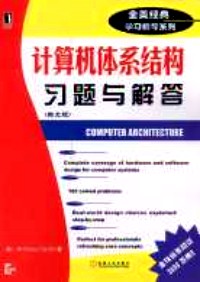
Computer Architecture
副标题:无
分类号:
ISBN:9787111104186
微信扫一扫,移动浏览光盘
简介
This book includes a selection oftopics intended to make it useful to readers with a wide range of previous exposure to the field. Chapters l through 5 cover many of the basic concepts in computer organization including how performance is pro 6 and 7 cover pipelining and instruction-level parallelism. two technologies that are extremely important to the performance ofmodem processors. Chapters 8, 9, and I O cover memory system design. including memory hierarchies, caches, and virtual memory. Chapter II describes I/0 systems, while Chapter 12 provides an inuoduction to multiprocessor systems----computers that combine multiple processors to deliver improved performance.
目录
CHAPTER 1 Introd uction
1.1 Purpose of This Book
1.2 Background Assumed
1.3 Material Covered
1.4 Chapter Objectives
1.5 Technological Trends
1.6 Measuring Performance
1.7 Speedup
1.8 Amdahl's Law
1.9 S
Solved Problems
CHAPTER 2 Data Representations and Computer Arithmetic
2.1 Objectives
2.2 From Electrons to Bits
2.3 Binary Representation of Positive Integers
2.4 Arithmetic Operations on Positive Integers
2.5 Negative Integers
2.6 Floating-Point Numbers
2.7 S
Solved Problems
CHAPTER 3 Computer Organization
3.1 Objectives
3.2 Introduction
3.3 Programs
3.4 Operating Systems
3.5 Computer Oganization
3.6 Summary
Solved Problems
CHAPTER 4 Programming Models
4.1 Objectives
4.2 Introduction
4.3 Types of Instructions
4.4 Stack-Based Architectures
4.5 General-Purpose Register Architectures
4.6 Comparing Stack-Based and General-Purpose Register
Architectures
4.7 Using Stacks to Implement Procedure Calls
4.8 Summary '
Solved Problems
CHAPTER 5 Processor Design
5.1 Objectives
5.2 Introduction
5.3 Instruction Set Architecture
5.4 Processor Microarchitecture
5.5 S
Solved Problems
CHAPTER 6 Pipelining
6.1 Objectives
6.2 Introduction
6.3 Pipelining
6.4 Instruction Hazards and Their Impact on Throughput
6.5 Predicting Execution Time in Pipelined Processors
6.6 Result Forwarding (Bypassing)
6.7 S
Solved Problems
CHAPTER 7 Instruction-Level Parallelism
7.1 Objectives
7.2 Introduction.
7.3 What is Instruction-Level Parallelism?
7.4 Limitations of instruction-Level Parallelism
7.5 Superscalar Processors
7.6 In-Order versus Out-of-Order Execution
7.7 Register Renaming '
7.8 VLIW Processors
7.9 Compilation Techniques for Instruction-Level Palallelism
7.1O S
Solved Problems
CHAPTER 8 Memory Systems
8.1 Objectives
8.2 Introduction
8.3 Latency, Throughput and Bandwidth
8.4 Memory Hierarchies
8.5 Memory Technologies
8.6 S
Solved Problems
CHAPTER 9 Caches
9.1 Objectives
9.2 Introduction
9.3 Data Caches, Instruction Caches, and Unified Caches
9.4 Describing Caches
9.5 Capacity
9.6 Line Length
9.7 Associativity
9.8 Replacement Policy
9.9 Write-Back versus Write-Through Caches
9.1O Cache Implementations
9.11 Tag Arrays
9.12 Hit/Miss Logic
9.13 Data Arrays
9.14 Categorizing Cache Misses
9.15 Multilevel Caches
9.16 S
Solved Problems
CHAPTER IO Virtual Nemory
l0.1 Objectives '
10.2 Introduction
10.3 Address Translation
10.4 Demand Paging versus Swapping
10.5 Page Tables
10.6 Translation Lookaside Buffers
10.7 Proteaion
10.8 Caches and Virtual Memory
10.9 Summary
Solved Problems
CHAPTER 11 I/O
11.1 Objectives
11.2 Introduction
11.3 I/0 Buses
11.4 Interrupts
11.5 Memory-Mapped I/O
11.6 Direct Memory Aceess
11.7 I/O Devices
11.8 Disk Systems
11.9 S
Solved Problems
CHAPTER 12 Multiprocessors
12.1 Objectives
12.2 Introduction
12.3 Speedup and Performance
12.4 Multiprocessor Systems
12.5 Message-Passing Systems
12.6 Shared-Memory Systems
12.7 Comparing Message-Passing and Shared Memory
12.8 Summary
Solved Problems
INDEX
1.1 Purpose of This Book
1.2 Background Assumed
1.3 Material Covered
1.4 Chapter Objectives
1.5 Technological Trends
1.6 Measuring Performance
1.7 Speedup
1.8 Amdahl's Law
1.9 S
Solved Problems
CHAPTER 2 Data Representations and Computer Arithmetic
2.1 Objectives
2.2 From Electrons to Bits
2.3 Binary Representation of Positive Integers
2.4 Arithmetic Operations on Positive Integers
2.5 Negative Integers
2.6 Floating-Point Numbers
2.7 S
Solved Problems
CHAPTER 3 Computer Organization
3.1 Objectives
3.2 Introduction
3.3 Programs
3.4 Operating Systems
3.5 Computer Oganization
3.6 Summary
Solved Problems
CHAPTER 4 Programming Models
4.1 Objectives
4.2 Introduction
4.3 Types of Instructions
4.4 Stack-Based Architectures
4.5 General-Purpose Register Architectures
4.6 Comparing Stack-Based and General-Purpose Register
Architectures
4.7 Using Stacks to Implement Procedure Calls
4.8 Summary '
Solved Problems
CHAPTER 5 Processor Design
5.1 Objectives
5.2 Introduction
5.3 Instruction Set Architecture
5.4 Processor Microarchitecture
5.5 S
Solved Problems
CHAPTER 6 Pipelining
6.1 Objectives
6.2 Introduction
6.3 Pipelining
6.4 Instruction Hazards and Their Impact on Throughput
6.5 Predicting Execution Time in Pipelined Processors
6.6 Result Forwarding (Bypassing)
6.7 S
Solved Problems
CHAPTER 7 Instruction-Level Parallelism
7.1 Objectives
7.2 Introduction.
7.3 What is Instruction-Level Parallelism?
7.4 Limitations of instruction-Level Parallelism
7.5 Superscalar Processors
7.6 In-Order versus Out-of-Order Execution
7.7 Register Renaming '
7.8 VLIW Processors
7.9 Compilation Techniques for Instruction-Level Palallelism
7.1O S
Solved Problems
CHAPTER 8 Memory Systems
8.1 Objectives
8.2 Introduction
8.3 Latency, Throughput and Bandwidth
8.4 Memory Hierarchies
8.5 Memory Technologies
8.6 S
Solved Problems
CHAPTER 9 Caches
9.1 Objectives
9.2 Introduction
9.3 Data Caches, Instruction Caches, and Unified Caches
9.4 Describing Caches
9.5 Capacity
9.6 Line Length
9.7 Associativity
9.8 Replacement Policy
9.9 Write-Back versus Write-Through Caches
9.1O Cache Implementations
9.11 Tag Arrays
9.12 Hit/Miss Logic
9.13 Data Arrays
9.14 Categorizing Cache Misses
9.15 Multilevel Caches
9.16 S
Solved Problems
CHAPTER IO Virtual Nemory
l0.1 Objectives '
10.2 Introduction
10.3 Address Translation
10.4 Demand Paging versus Swapping
10.5 Page Tables
10.6 Translation Lookaside Buffers
10.7 Proteaion
10.8 Caches and Virtual Memory
10.9 Summary
Solved Problems
CHAPTER 11 I/O
11.1 Objectives
11.2 Introduction
11.3 I/0 Buses
11.4 Interrupts
11.5 Memory-Mapped I/O
11.6 Direct Memory Aceess
11.7 I/O Devices
11.8 Disk Systems
11.9 S
Solved Problems
CHAPTER 12 Multiprocessors
12.1 Objectives
12.2 Introduction
12.3 Speedup and Performance
12.4 Multiprocessor Systems
12.5 Message-Passing Systems
12.6 Shared-Memory Systems
12.7 Comparing Message-Passing and Shared Memory
12.8 Summary
Solved Problems
INDEX
Computer Architecture
- 名称
- 类型
- 大小
光盘服务联系方式: 020-38250260 客服QQ:4006604884
云图客服:
用户发送的提问,这种方式就需要有位在线客服来回答用户的问题,这种 就属于对话式的,问题是这种提问是否需要用户登录才能提问
Video Player
×
Audio Player
×
pdf Player
×
