

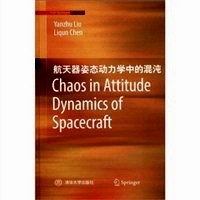
简介
本书致力于总结该领域的近期发展,提供研究航天器姿态运动的新方法和观点,也为该领域进一步的深入分析研究提供有明确工程背景的新的数学模型。
目录
Chapter 1 Primer on Spacecraft Dynamics
1.1 Orbital Motion of Spacecraft
1.1.1 Gravitational Field of a Particle
1.1.2 Gravitational Field of a Rigid Body
1.1.3 Dynamical Equations of Two-body System
1.1.4 First Integrals
1.1.5 Characteristics of Keplerian Orbit
1.1.6 Elliptic Orbit
1.2 Environmental Torques Acting on Spacecraft
1.2.1 Gravitational Torque
1.2.2 Magnetic Torque
1.3 Attitude Motion of Spacecraft in the Gravitational Field
1.3.1 Euler's Equations and Poisson's Equations
1.3.2 Planar Libration
1.3.3 Stability of Relative Equilibrium
1.3.4 Attitude Motion of a Gyrostat
1.4 Attitude Motion of Torque-free Spacecraft
1.4.1 Torque-free Rigid Body
1.4.2 Torque-free Gyrostat
1.4.3 Influence of Energy Dissipation on Spinning Spacecraft References
Chapter 2 A Survey of Chaos Theory
2.1 The Overview of Chaos
2.1.1 Descriptions of Chaos
2.1.2 Geometrical Structures of Chaos
2.1.3 Routes to Chaos
2.2 Numerical Identification of Chaos
2.2.1 Introduction
2.2.2 Lyapunov Exponents
2.2.3 Power Spectra
2.3 Melnikov Theory
2.3.1 Introduction
2.3.2 Transversal Homoclinic/Heteroclinic Point
2.3.3 Analytical Prediction
2.3.4 Interruptions
2.4 Chaos in Hamiltonian Systems
2.4.1 Hamiltonian Systems, Integrability and KAM Theorem
2.4.2 Stochastic Layers and Global Chaos
2.4.3 Arnol'd Diffusion
2.4.4 Higher-Dimensional Version of Melnikov Theory
References
Chapter 3 Chaos in Planar Attitude Motion of Spacecraft
3.1 Rigid Spacecraft in an Elliptic Orbit
3.1.1 Introduction
3.1.2 Dynamical Model
3.1.3 Melnikov Analysis
3.1.4 Numerical Simulations
3.2 Tethered Satellite Systems
3.2.1 Introduction
3.2.2 Dynamical Models
3.2.3 Melnikov Analysis of the Uncoupled Case
3.2.4 Numerical Simulations
3.3 Magnetic Rigid Spacecraft in a Circular Orbit
3.3.1 Introduction
3.3.2 Dynamical Model
3.3.3 Melnikov Analysis
3.3.4 Numerical Investigations: Undamped Case
3.3.5 Numerical Investigations: Damped Case
3.4 Magnetic Rigid Spacecraft in an Elliptic Orbit
3.4.1 Introduction
3.4.2 Dynamical Model
3.4.3 Melnikov Analysis
3.4.4 Numerical Simulations
References
Chapter 4 Chaos in Spatial Attitude Motion of Spacecraft
4.1 Attitude Motion Described by Serret-Andoyer Variables
4.1.1 Serret-Andoyer Variables
4.1.2 Torque-free Rigid Body
4.1.3 Torque-free Gyrostat
4.1.4 Gyrostat in the Gravitational Field
4.1.5 Influence of the Geomagnetic Field
4.2 Rigid-body Spacecraft in an Elliptic Orbit
4.2.1 Introduction
4.2.2 Dynamical Model
4.2.3 Melnikov Analysis
4.2.4 Numerical Simulations
4.3 Rigid-body Spacecraft with an Eccentrically Rotating Mass
4.3.1 Introduction
4.3.2 Dynamical Model
4.3.3 Melnikov Analysis
4.3.4 Numerical Simulations
4.4 Magnetic Gyrostat Spacecraft in a Circular Orbit
4.4.1 Introduction
4.4.2 Unperturbed Motion of a Gyrostat
4.4.3 Melnikov Analysis
4.4.4 Numerical Simulations
References
Chapter 5 Control of Chaotic Attitude Motion
5.1 Control of Chaos:An Overview
5.1. 1 Introduction
5.1.2 Problem Formulations
5.1.3 OGY Method and Its Generalization
5.1.4 Synchronization: Chaos Control in a Broader Sense
5.2 The Parametric Open-plus-closed-loop Method
5.2.1 Introduction
5.2.2 The Control Law
5.2.3 Numerical Examples
5.2.4 Discussions
5.3 The Stability Criterion Method
5.3.1 Introduction
5.3.2 The Control Law
5.3.3 Numerical Examples
5.4 Controlling Chaotic Attitude Motions
5.4.1 Introduction
5.4.2 Dynamical Model of Controlled Spacecraft
5.4.3 Applications of the Parametric Open-plus-closed-loop Method
5.4.4 Applications of the Stability Criterion Method
References
1.1 Orbital Motion of Spacecraft
1.1.1 Gravitational Field of a Particle
1.1.2 Gravitational Field of a Rigid Body
1.1.3 Dynamical Equations of Two-body System
1.1.4 First Integrals
1.1.5 Characteristics of Keplerian Orbit
1.1.6 Elliptic Orbit
1.2 Environmental Torques Acting on Spacecraft
1.2.1 Gravitational Torque
1.2.2 Magnetic Torque
1.3 Attitude Motion of Spacecraft in the Gravitational Field
1.3.1 Euler's Equations and Poisson's Equations
1.3.2 Planar Libration
1.3.3 Stability of Relative Equilibrium
1.3.4 Attitude Motion of a Gyrostat
1.4 Attitude Motion of Torque-free Spacecraft
1.4.1 Torque-free Rigid Body
1.4.2 Torque-free Gyrostat
1.4.3 Influence of Energy Dissipation on Spinning Spacecraft References
Chapter 2 A Survey of Chaos Theory
2.1 The Overview of Chaos
2.1.1 Descriptions of Chaos
2.1.2 Geometrical Structures of Chaos
2.1.3 Routes to Chaos
2.2 Numerical Identification of Chaos
2.2.1 Introduction
2.2.2 Lyapunov Exponents
2.2.3 Power Spectra
2.3 Melnikov Theory
2.3.1 Introduction
2.3.2 Transversal Homoclinic/Heteroclinic Point
2.3.3 Analytical Prediction
2.3.4 Interruptions
2.4 Chaos in Hamiltonian Systems
2.4.1 Hamiltonian Systems, Integrability and KAM Theorem
2.4.2 Stochastic Layers and Global Chaos
2.4.3 Arnol'd Diffusion
2.4.4 Higher-Dimensional Version of Melnikov Theory
References
Chapter 3 Chaos in Planar Attitude Motion of Spacecraft
3.1 Rigid Spacecraft in an Elliptic Orbit
3.1.1 Introduction
3.1.2 Dynamical Model
3.1.3 Melnikov Analysis
3.1.4 Numerical Simulations
3.2 Tethered Satellite Systems
3.2.1 Introduction
3.2.2 Dynamical Models
3.2.3 Melnikov Analysis of the Uncoupled Case
3.2.4 Numerical Simulations
3.3 Magnetic Rigid Spacecraft in a Circular Orbit
3.3.1 Introduction
3.3.2 Dynamical Model
3.3.3 Melnikov Analysis
3.3.4 Numerical Investigations: Undamped Case
3.3.5 Numerical Investigations: Damped Case
3.4 Magnetic Rigid Spacecraft in an Elliptic Orbit
3.4.1 Introduction
3.4.2 Dynamical Model
3.4.3 Melnikov Analysis
3.4.4 Numerical Simulations
References
Chapter 4 Chaos in Spatial Attitude Motion of Spacecraft
4.1 Attitude Motion Described by Serret-Andoyer Variables
4.1.1 Serret-Andoyer Variables
4.1.2 Torque-free Rigid Body
4.1.3 Torque-free Gyrostat
4.1.4 Gyrostat in the Gravitational Field
4.1.5 Influence of the Geomagnetic Field
4.2 Rigid-body Spacecraft in an Elliptic Orbit
4.2.1 Introduction
4.2.2 Dynamical Model
4.2.3 Melnikov Analysis
4.2.4 Numerical Simulations
4.3 Rigid-body Spacecraft with an Eccentrically Rotating Mass
4.3.1 Introduction
4.3.2 Dynamical Model
4.3.3 Melnikov Analysis
4.3.4 Numerical Simulations
4.4 Magnetic Gyrostat Spacecraft in a Circular Orbit
4.4.1 Introduction
4.4.2 Unperturbed Motion of a Gyrostat
4.4.3 Melnikov Analysis
4.4.4 Numerical Simulations
References
Chapter 5 Control of Chaotic Attitude Motion
5.1 Control of Chaos:An Overview
5.1. 1 Introduction
5.1.2 Problem Formulations
5.1.3 OGY Method and Its Generalization
5.1.4 Synchronization: Chaos Control in a Broader Sense
5.2 The Parametric Open-plus-closed-loop Method
5.2.1 Introduction
5.2.2 The Control Law
5.2.3 Numerical Examples
5.2.4 Discussions
5.3 The Stability Criterion Method
5.3.1 Introduction
5.3.2 The Control Law
5.3.3 Numerical Examples
5.4 Controlling Chaotic Attitude Motions
5.4.1 Introduction
5.4.2 Dynamical Model of Controlled Spacecraft
5.4.3 Applications of the Parametric Open-plus-closed-loop Method
5.4.4 Applications of the Stability Criterion Method
References
Chaos in attitude dynamics of spacecraft
- 名称
- 类型
- 大小
光盘服务联系方式: 020-38250260 客服QQ:4006604884
云图客服:
用户发送的提问,这种方式就需要有位在线客服来回答用户的问题,这种 就属于对话式的,问题是这种提问是否需要用户登录才能提问
Video Player
×
Audio Player
×
pdf Player
×
