

简介
回到顶部↑
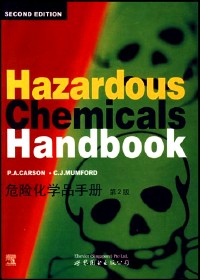
The aim of this book remains as for the first edition, namely to provide an initial point of ready reference for the identification of hazards and precautions for dangerous chemicals. It is targeted not only at those in the chemical and process industries, but also anyone likely to work with chemicals within industry and in the service sector, e.g. hospitals, uniyersities, research laboratories, engineering, agriculture, etc. It embraces the entire life-cycle of chemicals during transport, storage, processing, marketing, use and eventual disposal and should appeal to chemists, occupational and environmental health practitioners and students, engineers, waste handlers, safety officers and representatives, and health care professionals. Clearly, more detailed texts or professional advice may need to be consulted for specific applications. ...
目录回到顶部↑
Preface to the second edition .
Preface to the first edition
1 Introduction
2 Terminology
3 General principles of chemistry
Introduction
Atoms and molecules
Periodic table
Valency
Chemical bonds
Oxidation/Reduction
Physical state
Acids
Bases
Halogens
Metals
Oxygen and sulphur
Nitrogen, phosphorus, arsenic and antimony
pH
.Salts
Organic chemistry
Combustion chemistry
Chemical reactivity
4 Physicochemistry
Vapour pressure
Gas-liquid solubility
Liquid-to-vapour phase change
Solid-to-liquid phase change
Density differences of gases and vapours
Density differences of liquids
Immiscible liquid-liquid systems
Vapour flashing
Effects of particle or droplet size
Surface area effects in mass transfer or heterogeneous reactions
Enthalpy changes on mixing of liquids
Critical temperatures of gases
Chemical reaction kinetics
Corrosion
Force and pressure
Expansion and contraction of solids
5 Toxic chemicals
Introduction
Hazard recognition
Types of toxic chemicals
Hazard assessment
Risk assessment of carcinogens
Risk control
Control of substances hazardous to health
Specific precautions
6 Flammable chemicals
Ignition and propagation of a flame front
Control measures
Fire extinguishment
Fire precautions
7 Reactive chemicals
Water-sensitive chemicals
Toxic hazards from mixtures
Reactive hazards from mixtures
Oxidizing agents
Explosive chemicals
General principles for storage
Hazards arising in chemicals processing
8 Cryogens
Liquid oxygen
Liquid nitrogen and argon
Liquid carbon dioxide
Liquefied natural gas
9 Compressed gases
Acetylene
Air
Ammonia
Carbon dioxide
Carbon monoxide
Chlorine
Hydrogen
Hydrogen chloride
Hydrogen sulphide
Liquefied petroleum gases
Methane
Nitrogen ..
Nitrogen oxides
Oxygen
Ozone
Sulphur dioxide
10 Monitoring techniques
Selected general analytical techniques for monitoring environmental pollution
Gases and vapours
Particulates
Monitoring water quality
Monitoring land pollution
Monitoring air pollution
Flammable gases
Toxic particulates
Official methods
Sampling strategies
Selected strategies for determining employees' exposure to airborne chemicals
Pollution monitoring strategies in incident investigation
11 Radioactive chemicals
Hazards
Types of radiation
Control measures
12 Safety by design
Design procedures
Layout
Storage
Equipment design
Piping arrangements
Fire protection
Installation and operation
13 Operating procedures
Commissioning
Operation
Maintenance
Pressure systems
Emergency procedures
Spillage
First aid
Personal protection
Medical screening
Monitoring standards
Training
14 Marketing
Classification
Packaging
Labelling
Information
15 Transport of chemicals
Road transport
Rail transport
Air transport
Sea transport
Modes of transport for liquids, gases and solids
Loading and unloading
Container filling/discharging
16 Chemicals and the environment: sources and impact
Atmospheric emissions
Liquid effluents
Solid wastes
17 Chemicals and the environment: monitoring and protection
Legislative control
Waste management
Environmental Impact Assessment
Control of atmospheric emissions
Liquid effluent treatment operations
Control of solid waste
Monitoring and auditing
18 Conversion tables and measurement data
19 Bibliography
Appendix: Selected UK legislation relevant to environmental protection and occupational health and safety in relation to chemicals
Index ...
↓展开全部内容
前言回到顶部↑
The aim of this book remains as for the first edition, namely to provide an initial point of ready reference for the identification of hazards and precautions for dangerous chemicals. It is targeted not only at those in the chemical and process industries, but also anyone likely to work with chemicals within industry and in the service sector, e.g. hospitals, uniyersities, research laboratories, engineering, agriculture, etc. It embraces the entire life-cycle of chemicals during transport, storage, processing, marketing, use and eventual disposal and should appeal to chemists, occupational and environmental health practitioners and students, engineers, waste handlers, safety officers and representatives, and health care professionals. Clearly, more detailed texts or professional advice may need to be consulted for specific applications. .
Since the first edition in 1994 there have been no significant changes in the fundamentals of chemistry, physics and toxicology upon which the safe handling of chemicals are based. There has, however, been some increase in knowledge relating to the chronic toxicological and potential environmental effects of specific chemicals, and in legislation and government guidelines. These are reflected in the second edition. In general, within the UK the predominant legislation relating to substances hazardous to health, the Control of Substances Hazardous to Health Regulations 1999 and its accompanying Approved Code of Practice, incorporate significant changes since the 1988 (and 1994) versions. There has been an increase in the controls applicable to the marketing and transportation of different classes of chemicals. Those applicable to major hazards have changed under the Control of Major Accident Hazard Regulations 1999. Other legislation has been introduced: e.g. the Confined Spaces Regulations 1997, the Reporting of Injuries, Diseases and Dangerous Occurrences Regulation 1995, the Health and Safety (Safety Signs and Signals) Regulations 1996, and the Pressure Systems Safety Regulations 2000 which is of importance to the scope of this text. Increased concern as to the possible environmental impacts of chemical discharges and disposal has been accompanied by more comprehensive legislation for control. General safety legislation was expanded by the introduction of various separate regulations in 1993, including that dealing with management of health and safety at work; workplace health, safety and welfare; workplace equipment; and personal protective equipment. These improvements are, in general, now reflected in industry.
The opportunity has been taken to improve each chapter and to update the information. The main changes include an expansion of the terminology in Chapter 2 and provision of an introduction to basic chemical principles for non-chemists in a new Chapter 3. Chapter 4 on Physicochemistry contains additional examples. Chapter 5 on Toxic chemicals has been enlarged and the table of hygiene standards updated. Chapters 6, 7 and 8 on Flammable chemicals, Reactive chemicals and Cryogens, respectively, have been updated and expanded. The scope of Chapter 9 on Compressed gases has been widened to include additional examples together with the basic techniques of preparing gases in situ. Chapter 10 summarizes techniques for monitoring air quality and employee exposure. It has also been expanded to provide guidance on monitoring of water and land pollution. The chapter on Radioactive chemicals (Chapter 11) has been updated. Considerations of safety in design (Chapter 12) are presented separately from systems of work requirements, i.e. Operating procedures (Chapter 13). The considerations for Marketing and transportation of hazardous chemicals are now addressed in two separate chapters (Chapters 14 and 15). Chemicals and the Environment are now also covered in two chapters (Chapters 16 and 17) to reflect the requirement that the impact of chemicals on the environment should be properly assessed, monitored and controlled. Although a substantial contribution to atmospheric pollution is made by emissions from road vehicles and other means of transport, and this is now strictly legislated for, this topic is outside the scope of this text. Chapter 18 provides useful conversion factors to help with the myriad of units used internationally. ..
Whilst the hazards identified, and the principles and practice for the control of risks are universal, i.e. they are independent of location, in order to assist quick-reference an appendix of relevant contemporaneous UK legislation has been added as a guide together with a much-expanded Bibliography in Chapter 19. Finally, for convenience of use, the Index has been enlarged.
It is hoped that the improvements will help to achieve the objectives for which the text was originally conceived, i.e. to summarize in relatively basic terms the hazards associated with chemicals and how the ensuing risks can be controlled, and to provide sufficient detailed information to supplement that obtainable from suppliers, government publications, trade associations, and computerized data banks where recourse to specialized textbooks may be premature, difficult or unnecessary. ...
P.A.C.
C.J.M.
目录
Preface to the second edition
Preface to the first edition
1 Introduction
2 Terminology
3 General principles of chemistry
Introduction
Atoms and molecules
Periodic table
Valency
Chemical bonds
Oxidation/Reduction
Physical state
Acids
Bases
Halogens
Metals
Oxygen and sulphur
Nitrogen, phosphorus, arsenic and antimony
pH
Salts
Organic chemistry
Combustion chemistry
Chemical reactivity
4 Physicochenustry
Vapour pressure
Gas-liquid solubility
Liquid-to-vapour phase change
Solid-to-Iiquid phase change
Density differences of gases and vapours
Density differences of liquids
Immiscible liquid-liquid systems
Vapour flashing
Effects of particle or droplet size
Surface area effects in mass transfer or heterogeneous reactions
Enthalpy changes on mixing of liquids
Critical temperatures of gases
Chemical reaction kinetics
Corrosion
Force and pressure
Expansion and contraction of solids
5 Toxic chemicals
Introduction
Hazard recognition
Types of toxic chemicals
Hazard assessment
Risk assessment of carcinogens
Risk control
Control of substances hazardous to health
Specific precautions
6 Flammable chemicals
Ignition and propagation of a flame front
Control measures
Fire extinguishment
Fire precautions
7 Reactive chemicals
Water-sensitive chemicals
Toxic hazards from mixtures
Reactive hazards from mixtures
Oxidizing agents
Explosive chemicals
General principles for storage
Hazards arising in chemicals processing
8 Cryogens
Liquid oxygen
Liquid nitrogen and argon
Liquid carbon dioxide
Liquefied natural gas
9 Compressed gases
Acetylene
Air
Ammonia
Carbon dioxide
Carbon monoxide
Chlorine
Hydrogen
Hydrogen chloride
……
10 Monitoring techniques
11 Radioactive chemicals
12 Safety by design
13 Operating procedures
14 Marketing
15 Transport of chemicals
16 Chemicals and the environment:sources and impact
17 Chemicals and the environment:monitoring and protection
18 Conversion tables and measurement data
19 Bibliography
Appendix
Index
Preface to the first edition
1 Introduction
2 Terminology
3 General principles of chemistry
Introduction
Atoms and molecules
Periodic table
Valency
Chemical bonds
Oxidation/Reduction
Physical state
Acids
Bases
Halogens
Metals
Oxygen and sulphur
Nitrogen, phosphorus, arsenic and antimony
pH
Salts
Organic chemistry
Combustion chemistry
Chemical reactivity
4 Physicochenustry
Vapour pressure
Gas-liquid solubility
Liquid-to-vapour phase change
Solid-to-Iiquid phase change
Density differences of gases and vapours
Density differences of liquids
Immiscible liquid-liquid systems
Vapour flashing
Effects of particle or droplet size
Surface area effects in mass transfer or heterogeneous reactions
Enthalpy changes on mixing of liquids
Critical temperatures of gases
Chemical reaction kinetics
Corrosion
Force and pressure
Expansion and contraction of solids
5 Toxic chemicals
Introduction
Hazard recognition
Types of toxic chemicals
Hazard assessment
Risk assessment of carcinogens
Risk control
Control of substances hazardous to health
Specific precautions
6 Flammable chemicals
Ignition and propagation of a flame front
Control measures
Fire extinguishment
Fire precautions
7 Reactive chemicals
Water-sensitive chemicals
Toxic hazards from mixtures
Reactive hazards from mixtures
Oxidizing agents
Explosive chemicals
General principles for storage
Hazards arising in chemicals processing
8 Cryogens
Liquid oxygen
Liquid nitrogen and argon
Liquid carbon dioxide
Liquefied natural gas
9 Compressed gases
Acetylene
Air
Ammonia
Carbon dioxide
Carbon monoxide
Chlorine
Hydrogen
Hydrogen chloride
……
10 Monitoring techniques
11 Radioactive chemicals
12 Safety by design
13 Operating procedures
14 Marketing
15 Transport of chemicals
16 Chemicals and the environment:sources and impact
17 Chemicals and the environment:monitoring and protection
18 Conversion tables and measurement data
19 Bibliography
Appendix
Index
- 名称
- 类型
- 大小
光盘服务联系方式: 020-38250260 客服QQ:4006604884
云图客服:
用户发送的提问,这种方式就需要有位在线客服来回答用户的问题,这种 就属于对话式的,问题是这种提问是否需要用户登录才能提问
Video Player
×
Audio Player
×
pdf Player
×
