

简介
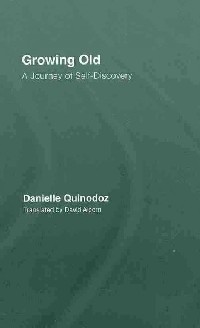
People react very differently to the process of ageing. Some people shy away from old age for as long as they can and eventually spend it reflecting on times when they were physically and mentally stronger and more independent. For others old age is embraced as a new adventure and something to look forward to. In this book psychoanalyst Daniell... more 籩 Quinodoz highlights the value of old age and the fact that although many elderly people have suffered losses, either of their own good health or through bereavement, most have managed to retain the most important thing 鈥?their sense of self. Quinodoz argues that growing old provides us with the opportunity to learn more about ourselves and instead of facing it with dread, it should be celebrated. Divided into accessible chapters this book covers topics including: the internal life-history remembering phases of life anxiety about death being a psychoanalyst and growing old. Throughout Growing Oldthe author draws on both her clinical experience of working with the elderly, and her own personal experience of growing old. This makes it an interesting read for both practising psychoanalysts, and those who wish to gain a greater insight of the natural progression into later life. ?less
目录
Table Of Contents:
Acknowledgements xi
Prologue xii
Reconstructing one's own internal life-history 1(7)
The work of growing old: Reconstructing one's own internal life-history 1(1)
Our internal life-history: A juxtaposition of various events or a coherent narrative? 2(2)
The need for coherence 4(1)
In order to give up our place, we first have to possess one 5(2)
Integrating memories 7(1)
One small second of eternity 8(11)
Representations of the passing of time 8(1)
The experience of one small second of eternity 9(1)
Catching hold of small seconds of eternity 10(1)
How can we have some idea of time that is not purely chronological? 11(5)
Life has to do with chronological time and simultaneously lies outside that dimension 16(1)
Supposing eternity and chronological time turned out to be compatible? 17(1)
Life takes place in present time 18(1)
The work of remembering 19(10)
Reintegrating lost memories 19(1)
An example of reintegrating a lost memory: Fred 20(1)
Memory: A jigsaw piece or part of a living organism? 21(2)
Doing away with some memories in order to avoid anxiety 23(1)
The emotional meaning of pain varies with age 24(1)
Piling up memories or integrating them: Laure 24(2)
Turning the page - yes, but only after reading it 26(3)
The phases of life 29(12)
Our present is marked by all the stages we have gone through in life 29(1)
Different ways of cutting oneself off from one's childhood: Tania, Xavier, Sofia 29(3)
Different ways of cutting oneself off from one's adolescence 32(1)
Keeping one's childhood present does not imply lapsing into second childhood 33(1)
The present is free and distinct from the past 34(1)
The present is free and distinct from the future 35(1)
Staying true to oneself, without staying the same 35(1)
Integrating change and permanency 36(2)
Being surprised by the other person's presence 38(1)
Dreams of integrating the different phases of one's life as an analysis comes to its end 38(1)
Life begins today 39(1)
Is the flux of these phases in any way meaningful? 40(1)
Anxiety about death 41(19)
When we face death, what meaning does life have? 41(1)
When will I take the time to live? 42(1)
`Dying usefully' 43(1)
Growing old usefully: The ability to be passionate about things 43(2)
Putting one's internal and external world in order before dying: Laura, Elisabeth 45(6)
Conscious fear of death: Yalom, Balzac 51(4)
Unconscious anxiety about death: Segal 55(4)
Every death is unique 59(1)
What lies behind the decline of very old people? 60(17)
Mental decline is not the same as growing old 60(1)
The brain reorganizes itself all through life 60(2)
Mental decline and the mourning process 62(4)
Internal mental decline and external mental decline: The one may generate the other 66(2)
Some mechanisms behind the mental type of decline 68(2)
What are the unconscious benefits of mental decline? 70(1)
Could dementia be a means of defence against anxiety about death? 71(1)
The role of envy: Vicious circle, virtuous circle 72(2)
The freedom to take off and head for the unknown 74(3)
Losing everything without losing oneself 77(17)
Preserving on a psychological level what has been concretely lost: Xantia, Alex, Bruna 78(3)
Taking stock of our own valuable assets sometimes has to be done through someone else's eyes 81(2)
Losing everything except oneself: Lou 83(1)
The more visible the loss, the more difficult it is to see the hidden resources: Alzheimer's disease 84(3)
From painful solitude to the richness of being oneself 87(1)
Sexuality and older people 88(3)
Giving up the pasts we never had so as to learn from the past that was in fact our own 91(1)
Integrating in advance the unknown part of the future so as not to lose ourselves 92(1)
Growing old: A work of art 92(2)
The resources of old age 94(17)
The intensity of present time 94(1)
The spice of little things 95(1)
The emotional value of an object 96(1)
The importance of people who are present 96(1)
Being astonished by another person's presence: Diane and Sam 97(3)
Looking at the other person in a new way: `Discovering the concave dish' 100(1)
The mystery that is within each person: something we will never stop trying to understand 101(1)
Taking time, listening to the silence, communicating from within 102(1)
Taking the fragility of political power into consideration and being able to distance oneself from it 103(2)
Free at last! `At my age, I've nothing more to lose' 105(1)
What will I construct with the building blocks I was given at birth? 106(1)
Creating something new out of something old: Turning one's life into a work of art 107(2)
Neto: An internal world which resembled that of Guernica 109(1)
From chaos to harmony 110(1)
`Strait is the gate' 111(14)
A gate so `strait' that only one person can go through it 111(1)
Anxiety about being oneself 112(2)
Taking pleasure in being simply oneself 114(1)
Elise and the strait gate 115(2)
A door that is shaped like each one of us 117(1)
The flux of life begins to flow again 118(2)
Looking with astonishment at ourselves 120(2)
Words can be a door that lets feelings through 122(1)
A small doorway that opens on to infinity 122(3)
Psychoanalytic psychotherapy and older people 125(20)
Older patients do not think of asking for psychotherapy 125(1)
Psychotherapy can be very helpful for older people 126(2)
The main motives of patients in psychotherapy: Marie 128(2)
The sense of self-identity: Thomas, Josiane 130(4)
The importance of non-verbal communication between elderly patient and therapist: Jeff 134(6)
Is it worthwhile offering psychotherapy to elderly people? 140(1)
The time factor 141(4)
Psychoanalysis and elderly people 145(23)
There is no age limit for beginning psychoanalysis 145(1)
The received ideas of young psychoanalysts 146(3)
For elderly patients, the die is not cast: Ida 149(4)
Opening up to sublimation: Mado, Stephen 153(4)
An Oedipus complex that does not grow old: Berthe 157(1)
Elderly people and their cultural environment 158(1)
Female sexuality and elderly patients: Jane's analysis 159(7)
It is impossible to summarize the sheer quality of the psychoanalytic experience 166(2)
Being a psychoanalyst and growing old 168(12)
A psychoanalyst is simultaneously of various ages 168(3)
The role of experience 171(1)
Feeling responsibility for one's state of mental and somatic health 171(1)
Being a psychoanalyst as the end of life approaches 172(3)
Older and younger psychoanalysts 175(3)
Can we grasp the meaning of a theatrical production without knowing the last line of the play? 178(2)
Grandparents and the difference between generations 180(13)
Narcissus and the fear of becoming wrinkled 180(3)
Mirror, mirror, what age am I? 183(1)
Being old is not enough for discovering that one is a grandparent 184(1)
Intergenerational relationships have changed over time 185(2)
The grandparent role does not do away with that of parent: It is an additional feature 187(2)
Our elders: Some are old, others are very old 189(1)
The grandparents' role 190(1)
Improvisation never stops developing 191(2)
The blue note and the discovery of loving 193(9)
Fearing to love 193(1)
A whole life in order to learn to love 194(1)
The blue note 195(1)
The reflection of a reflection 196(1)
Savouring the blue note 197(1)
When eternity and chronological time coincide 198(1)
If loving is to unfold, it has to involve both kinds of time 198(2)
The discovery of growing old 200(2)
References 202(6)
Index 208
Acknowledgements xi
Prologue xii
Reconstructing one's own internal life-history 1(7)
The work of growing old: Reconstructing one's own internal life-history 1(1)
Our internal life-history: A juxtaposition of various events or a coherent narrative? 2(2)
The need for coherence 4(1)
In order to give up our place, we first have to possess one 5(2)
Integrating memories 7(1)
One small second of eternity 8(11)
Representations of the passing of time 8(1)
The experience of one small second of eternity 9(1)
Catching hold of small seconds of eternity 10(1)
How can we have some idea of time that is not purely chronological? 11(5)
Life has to do with chronological time and simultaneously lies outside that dimension 16(1)
Supposing eternity and chronological time turned out to be compatible? 17(1)
Life takes place in present time 18(1)
The work of remembering 19(10)
Reintegrating lost memories 19(1)
An example of reintegrating a lost memory: Fred 20(1)
Memory: A jigsaw piece or part of a living organism? 21(2)
Doing away with some memories in order to avoid anxiety 23(1)
The emotional meaning of pain varies with age 24(1)
Piling up memories or integrating them: Laure 24(2)
Turning the page - yes, but only after reading it 26(3)
The phases of life 29(12)
Our present is marked by all the stages we have gone through in life 29(1)
Different ways of cutting oneself off from one's childhood: Tania, Xavier, Sofia 29(3)
Different ways of cutting oneself off from one's adolescence 32(1)
Keeping one's childhood present does not imply lapsing into second childhood 33(1)
The present is free and distinct from the past 34(1)
The present is free and distinct from the future 35(1)
Staying true to oneself, without staying the same 35(1)
Integrating change and permanency 36(2)
Being surprised by the other person's presence 38(1)
Dreams of integrating the different phases of one's life as an analysis comes to its end 38(1)
Life begins today 39(1)
Is the flux of these phases in any way meaningful? 40(1)
Anxiety about death 41(19)
When we face death, what meaning does life have? 41(1)
When will I take the time to live? 42(1)
`Dying usefully' 43(1)
Growing old usefully: The ability to be passionate about things 43(2)
Putting one's internal and external world in order before dying: Laura, Elisabeth 45(6)
Conscious fear of death: Yalom, Balzac 51(4)
Unconscious anxiety about death: Segal 55(4)
Every death is unique 59(1)
What lies behind the decline of very old people? 60(17)
Mental decline is not the same as growing old 60(1)
The brain reorganizes itself all through life 60(2)
Mental decline and the mourning process 62(4)
Internal mental decline and external mental decline: The one may generate the other 66(2)
Some mechanisms behind the mental type of decline 68(2)
What are the unconscious benefits of mental decline? 70(1)
Could dementia be a means of defence against anxiety about death? 71(1)
The role of envy: Vicious circle, virtuous circle 72(2)
The freedom to take off and head for the unknown 74(3)
Losing everything without losing oneself 77(17)
Preserving on a psychological level what has been concretely lost: Xantia, Alex, Bruna 78(3)
Taking stock of our own valuable assets sometimes has to be done through someone else's eyes 81(2)
Losing everything except oneself: Lou 83(1)
The more visible the loss, the more difficult it is to see the hidden resources: Alzheimer's disease 84(3)
From painful solitude to the richness of being oneself 87(1)
Sexuality and older people 88(3)
Giving up the pasts we never had so as to learn from the past that was in fact our own 91(1)
Integrating in advance the unknown part of the future so as not to lose ourselves 92(1)
Growing old: A work of art 92(2)
The resources of old age 94(17)
The intensity of present time 94(1)
The spice of little things 95(1)
The emotional value of an object 96(1)
The importance of people who are present 96(1)
Being astonished by another person's presence: Diane and Sam 97(3)
Looking at the other person in a new way: `Discovering the concave dish' 100(1)
The mystery that is within each person: something we will never stop trying to understand 101(1)
Taking time, listening to the silence, communicating from within 102(1)
Taking the fragility of political power into consideration and being able to distance oneself from it 103(2)
Free at last! `At my age, I've nothing more to lose' 105(1)
What will I construct with the building blocks I was given at birth? 106(1)
Creating something new out of something old: Turning one's life into a work of art 107(2)
Neto: An internal world which resembled that of Guernica 109(1)
From chaos to harmony 110(1)
`Strait is the gate' 111(14)
A gate so `strait' that only one person can go through it 111(1)
Anxiety about being oneself 112(2)
Taking pleasure in being simply oneself 114(1)
Elise and the strait gate 115(2)
A door that is shaped like each one of us 117(1)
The flux of life begins to flow again 118(2)
Looking with astonishment at ourselves 120(2)
Words can be a door that lets feelings through 122(1)
A small doorway that opens on to infinity 122(3)
Psychoanalytic psychotherapy and older people 125(20)
Older patients do not think of asking for psychotherapy 125(1)
Psychotherapy can be very helpful for older people 126(2)
The main motives of patients in psychotherapy: Marie 128(2)
The sense of self-identity: Thomas, Josiane 130(4)
The importance of non-verbal communication between elderly patient and therapist: Jeff 134(6)
Is it worthwhile offering psychotherapy to elderly people? 140(1)
The time factor 141(4)
Psychoanalysis and elderly people 145(23)
There is no age limit for beginning psychoanalysis 145(1)
The received ideas of young psychoanalysts 146(3)
For elderly patients, the die is not cast: Ida 149(4)
Opening up to sublimation: Mado, Stephen 153(4)
An Oedipus complex that does not grow old: Berthe 157(1)
Elderly people and their cultural environment 158(1)
Female sexuality and elderly patients: Jane's analysis 159(7)
It is impossible to summarize the sheer quality of the psychoanalytic experience 166(2)
Being a psychoanalyst and growing old 168(12)
A psychoanalyst is simultaneously of various ages 168(3)
The role of experience 171(1)
Feeling responsibility for one's state of mental and somatic health 171(1)
Being a psychoanalyst as the end of life approaches 172(3)
Older and younger psychoanalysts 175(3)
Can we grasp the meaning of a theatrical production without knowing the last line of the play? 178(2)
Grandparents and the difference between generations 180(13)
Narcissus and the fear of becoming wrinkled 180(3)
Mirror, mirror, what age am I? 183(1)
Being old is not enough for discovering that one is a grandparent 184(1)
Intergenerational relationships have changed over time 185(2)
The grandparent role does not do away with that of parent: It is an additional feature 187(2)
Our elders: Some are old, others are very old 189(1)
The grandparents' role 190(1)
Improvisation never stops developing 191(2)
The blue note and the discovery of loving 193(9)
Fearing to love 193(1)
A whole life in order to learn to love 194(1)
The blue note 195(1)
The reflection of a reflection 196(1)
Savouring the blue note 197(1)
When eternity and chronological time coincide 198(1)
If loving is to unfold, it has to involve both kinds of time 198(2)
The discovery of growing old 200(2)
References 202(6)
Index 208
- 名称
- 类型
- 大小
光盘服务联系方式: 020-38250260 客服QQ:4006604884
云图客服:
用户发送的提问,这种方式就需要有位在线客服来回答用户的问题,这种 就属于对话式的,问题是这种提问是否需要用户登录才能提问
Video Player
×
Audio Player
×
pdf Player
×
