

简介
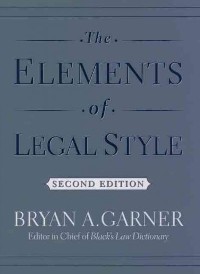
Since the first edition was published in 1991, The Elements of Legal Style has established itself as the authoritative guide on all the major issues of writing style in law. Now its coverage has been expanded in this new edition, which features additional sections, many more examples, and a thoroughly researched appendix that contains 80 major statements on prose style what it is and how to attain it. Inspired by Strunk and White's The Elements of Style, this book clearly (often wittily) explains the full range of what legal writers need to know: mechanics, word choice, structure, and rhetoric, as well as all the special conventions that legal writers should follow in using headings, defined terms, quotations, and many other devices. The Elements of Legal Style, 2nd Edition is written for lawyers, law students, judges, and their law clerks - and for anyone who writes in and about the law. With broad experience as a practitioner, academic, and writing consultant, Bryan Garner knows firsthand where legal writing so often goes wrong, and he pays particular attention to these trouble spots. (Publisher)
目录
Table Of Contents:
Acknowledgments xiii
Foreword xv
The Letters of the Law 1(14)
Fundamental Rules of Usage 15(38)
Punctuation 15(1)
Always use the serial comma 15(1)
Set off a dependent introductory phrase with a comma 16(1)
Put a comma between two adjectives that modify a noun similarly 17(1)
Put a comma before the second clause in a compound sentence 18(1)
Avoid using a comma to combine two sentences into one 18(2)
Form singular possessives by adding's to the singular form of the noun 20(1)
Form a plural possessive by adding an apostrophe to the plural form of the noun:-s' 20(1)
Use a semicolon to separate sentence parts calling for a stronger break than a comma 21(2)
Set off incidental comments with paired marks of punctuation 23(1)
Hyphenate phrasal adjectives 24(2)
Otherwise, be stingy with hyphens 26(2)
Slash out virgules (/) 28(2)
Word Choice 29(1)
Strike out and replace fancy words 30(1)
Challenge vague words 31(1)
Shun vogue words 32(1)
Eschew euphemisms 33(2)
Toss out timid phrases 35(1)
Discard empty dogmatisms 35(1)
Be cautious about using neologisms 36(1)
Tune the levels of usage with a fine ear 37(3)
Grammar and Syntax 40(1)
Use the active voice 40(1)
Put pronouns in their proper case and number 41(3)
Make the verb agree in number with its subject 44(1)
Anchor modifiers to what they modify 45(3)
Split infinitives warily, if at all 48(1)
Don't be afraid to begin a sentence with And or But 49(1)
End sentences with prepositions when you need to 50(1)
Use conditional sentences instead of provisos 51(2)
Fundamental Principles of Legal Writing 53(22)
Brevity and Clarity 53(4)
Simplicity of Structure 57(1)
Organizing Arguments 58(4)
Constructing Paragraphs 62(4)
Constructing Sentences 66(9)
Some Matters of Form 75(24)
Titles 75(2)
Headings 77(1)
Italics 78(1)
Numbers 79(1)
Defined Terms 80(1)
Contractions 81(1)
First Person 82(1)
Enumerations 83(1)
Quotations 84(2)
Alterations and Ellipses 86(3)
Citations 89(3)
Footnotes 92(2)
Forms of Address and Reference 94(3)
Signing Off 97(2)
Words and Expressions Confused and Misused 99(50)
Rhetorical Figures in Law 149(28)
Comparison 150(1)
Metaphor 150(1)
Personification 151(2)
Simile 153(1)
Wordplay 154(1)
Hyperbole 154(1)
Irony 155(2)
Meiosis 157(1)
Paronomasia 157(3)
Syntactic Arrangement 160(1)
Anastrophe 160(1)
Antithesis 160(2)
Asyndeton 162(1)
Climax 162(1)
Parallelism 163(1)
Periodic Sentence 164(2)
Rhetorical Question 166(2)
Repetition 168(1)
Alliteration 168(1)
Anadiplosis 168(1)
Anaphora 169(1)
Antanaclasis 170(1)
Chiasmus 171(1)
Epanalepsis 172(1)
Epistrophe 173(1)
Epizeuxis 173(1)
Pleonasm 174(1)
Polysyndeton 174(3)
Conclusion 176(1)
An Approach to Legal Style 177(44)
Being Yourself 177(1)
Develop your own plain voice 177(1)
When appropriate, invest your writing with some honest feeling 178(1)
Establish your tone and stick to it 179(2)
Exposition and Argument 181(1)
Assume an audience of well-informed generalists 181(2)
Sharpen your reasoning by summarizing your analysis up front, with just the amount of particularity that a generalist would need 183(5)
Take pains to be thorough, and then distill the essence. Get to the point 188(3)
Speaking Legally 191(1)
Avoid jargon and beware terms of art 191(2)
Write in English 193(2)
Instead of using doublets or triplets, use a single word 195(2)
Understate rather than overstate 197(1)
Expressive Tactics 198(1)
Put the action into verbs, not nouns and adjectives 198(2)
Stress nouns and verbs, not qualifiers 200(1)
Mind the cadence of your prose 201(2)
Use cliches with caution. And avoid purple prose 203(4)
Root out sexist language 207(6)
Forgo commenting on your words 213(1)
Ban omnibus words 214(1)
Use one word for one notion 215(2)
Ferret out ambiguities 217(1)
Revise, revise, revise 218(3)
A Parting Word 221(2)
Appendix Eighty Classic Statements About Style 223(18)
Index 241
Acknowledgments xiii
Foreword xv
The Letters of the Law 1(14)
Fundamental Rules of Usage 15(38)
Punctuation 15(1)
Always use the serial comma 15(1)
Set off a dependent introductory phrase with a comma 16(1)
Put a comma between two adjectives that modify a noun similarly 17(1)
Put a comma before the second clause in a compound sentence 18(1)
Avoid using a comma to combine two sentences into one 18(2)
Form singular possessives by adding's to the singular form of the noun 20(1)
Form a plural possessive by adding an apostrophe to the plural form of the noun:-s' 20(1)
Use a semicolon to separate sentence parts calling for a stronger break than a comma 21(2)
Set off incidental comments with paired marks of punctuation 23(1)
Hyphenate phrasal adjectives 24(2)
Otherwise, be stingy with hyphens 26(2)
Slash out virgules (/) 28(2)
Word Choice 29(1)
Strike out and replace fancy words 30(1)
Challenge vague words 31(1)
Shun vogue words 32(1)
Eschew euphemisms 33(2)
Toss out timid phrases 35(1)
Discard empty dogmatisms 35(1)
Be cautious about using neologisms 36(1)
Tune the levels of usage with a fine ear 37(3)
Grammar and Syntax 40(1)
Use the active voice 40(1)
Put pronouns in their proper case and number 41(3)
Make the verb agree in number with its subject 44(1)
Anchor modifiers to what they modify 45(3)
Split infinitives warily, if at all 48(1)
Don't be afraid to begin a sentence with And or But 49(1)
End sentences with prepositions when you need to 50(1)
Use conditional sentences instead of provisos 51(2)
Fundamental Principles of Legal Writing 53(22)
Brevity and Clarity 53(4)
Simplicity of Structure 57(1)
Organizing Arguments 58(4)
Constructing Paragraphs 62(4)
Constructing Sentences 66(9)
Some Matters of Form 75(24)
Titles 75(2)
Headings 77(1)
Italics 78(1)
Numbers 79(1)
Defined Terms 80(1)
Contractions 81(1)
First Person 82(1)
Enumerations 83(1)
Quotations 84(2)
Alterations and Ellipses 86(3)
Citations 89(3)
Footnotes 92(2)
Forms of Address and Reference 94(3)
Signing Off 97(2)
Words and Expressions Confused and Misused 99(50)
Rhetorical Figures in Law 149(28)
Comparison 150(1)
Metaphor 150(1)
Personification 151(2)
Simile 153(1)
Wordplay 154(1)
Hyperbole 154(1)
Irony 155(2)
Meiosis 157(1)
Paronomasia 157(3)
Syntactic Arrangement 160(1)
Anastrophe 160(1)
Antithesis 160(2)
Asyndeton 162(1)
Climax 162(1)
Parallelism 163(1)
Periodic Sentence 164(2)
Rhetorical Question 166(2)
Repetition 168(1)
Alliteration 168(1)
Anadiplosis 168(1)
Anaphora 169(1)
Antanaclasis 170(1)
Chiasmus 171(1)
Epanalepsis 172(1)
Epistrophe 173(1)
Epizeuxis 173(1)
Pleonasm 174(1)
Polysyndeton 174(3)
Conclusion 176(1)
An Approach to Legal Style 177(44)
Being Yourself 177(1)
Develop your own plain voice 177(1)
When appropriate, invest your writing with some honest feeling 178(1)
Establish your tone and stick to it 179(2)
Exposition and Argument 181(1)
Assume an audience of well-informed generalists 181(2)
Sharpen your reasoning by summarizing your analysis up front, with just the amount of particularity that a generalist would need 183(5)
Take pains to be thorough, and then distill the essence. Get to the point 188(3)
Speaking Legally 191(1)
Avoid jargon and beware terms of art 191(2)
Write in English 193(2)
Instead of using doublets or triplets, use a single word 195(2)
Understate rather than overstate 197(1)
Expressive Tactics 198(1)
Put the action into verbs, not nouns and adjectives 198(2)
Stress nouns and verbs, not qualifiers 200(1)
Mind the cadence of your prose 201(2)
Use cliches with caution. And avoid purple prose 203(4)
Root out sexist language 207(6)
Forgo commenting on your words 213(1)
Ban omnibus words 214(1)
Use one word for one notion 215(2)
Ferret out ambiguities 217(1)
Revise, revise, revise 218(3)
A Parting Word 221(2)
Appendix Eighty Classic Statements About Style 223(18)
Index 241
- 名称
- 类型
- 大小
光盘服务联系方式: 020-38250260 客服QQ:4006604884
云图客服:
用户发送的提问,这种方式就需要有位在线客服来回答用户的问题,这种 就属于对话式的,问题是这种提问是否需要用户登录才能提问
Video Player
×
Audio Player
×
pdf Player
×
