

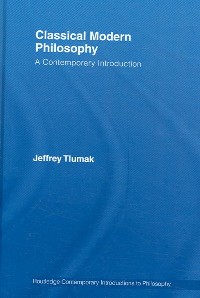
简介
Classical Modern Philosophy introduces students to the key philosophers of the seventeenth and eighteenth centuries, and explores their most important works. Jeffrey Tlumak takes the reader on a chronological journey from Descartes to Kant, tracing the themes that run through the period and their interrelations. The main texts covered a... more 籸e: Descartes' Meditations on First PhilosophySpinoza's EthicsLocke's Essay Concerning Human UnderstandingLeibniz's Discourse on Metaphysics and MonadologyBerkeley's ATreatise Concerning the Principles of Human Knowledgeand Three Dialogues between Hylas and PhilonousHume's An Enquiry Concerning Human Understanding andDialogues Concerning Natural ReligionKant's Critique of Pure Reason Classical Modern Philosophyis the ideal textbook to accompany a course in the history of modern philosophy, but each chapter can also be studied alone as an introduction to the featured philosopher or work. Jeffrey Tlumak outlines and assesses prominent interpretations of the texts, and surveys the legacy of each great thinker. ?less
目录
Preface p. xi
Acknowledgments p. xiii
Descartes and the Rise of Modern Philosophy p. 1
Background to Descartes' Meditations p. 2
Descartes' innovations in how philosophy is written p. 10
Lead-in to the First Meditation p. 13
The First Meditation p. 15
The Second Meditation p. 22
The Third Meditation p. 32
The Fourth Meditation p. 38
The Fifth Meditation p. 47
The Sixth Meditation p. 59
A summary of Cartesian commitments p. 66
Topical highlights from Descartes' correspondence p. 69
Questions about Descartes p. 71
Transition to the remainder of the book p. 74
Some recommended books p. 75
Spinoza p. 77
Overview of Spinoza's philosophy and life p. 77
Ethics Part I: On the nature of the universe p. 80
Ethics Part II: On the nature and origin of the mind p. 88
Ethics Part III: On the nature and origin of actions and passions p. 95
Ethics Part IV: On the burdens of human existence and the ways to overcome them p. 98
Ethics Part V: On the power of reason to liberate us to live blessedly p. 100
Questions about Spinoza p. 102
Some recommended books p. 104
Locke p. 106
An overview of Locke's outlook in the Essay p. 106
Essay Book I: Locke's anti-innatist strategy p. 109
Essay Book II: Perception as the basis for all thinking p. 110
Test Case One: Thinking about power p. 114
Test Case Two: Thinking about substance p. 116
Test Case Three: Thinking about identity p. 118
Essay Book III: Expressing thought in language p. 122
Essay Book IV: Knowledge and opinion p. 125
Questions about Locke p. 128
Some recommended books p. 131
Leibniz p. 133
Background to Leibniz's philosophy p. 133
Overview of Leibniz's philosophy p. 136
How the Discourse on Metaphysics and the Monadology are structured p. 138
Understanding Leibniz's metaphysics by way of his defense of contingency p. 141
Understanding the debate about what things for Leibniz are substances p. 155
Understanding the debate about Leibniz's essentialism p. 158
Understanding what it means for the world to be the best possible p. 159
Understanding debates about relations among key Leibnizian theses p. 164
Space and time as relations among phenomena p. 166
Key elements of Leibniz's epistemology p. 169
Questions about Leibniz p. 171
Some recommended books p. 173
Berkeley p. 174
Overview of approach to the Principles p. 174
Structure of the Principles p. 176
A fuller analysis of four key arguments p. 180
Structure of the Three Dialogues p. 186
A mini-glossary to aid interpretation p. 189
Questions about Berkeley p. 190
Some recommended books p. 191
Hume p. 193
Main alternatives for interpreting Hume p. 193
An outline of the first Enquiry p. 195
Enquiry Sections I-III: Basic principles and materials of the understanding p. 196
Enquiry Sections IV-VII: The basis for all factual thinking p. 199
Enquiry Section VIII: Implications for freedom and morality p. 201
Enquiry Section X: Implications for religion based on miracles p. 205
Treatise: Overview and key elements of Book I, on the understanding p. 208
A famous perplexity about how to read Treatise Book I p. 213
Treatise: Key elements of Book II, on the passions p. 221
Treatise: Key elements of Book III, on morality p. 225
Dialogues: Overview and stage-setting Part I p. 226
Dialogues Parts II-VIII: Design argument for natural religion p. 230
Dialogues Part IX: Cosmological, a priori proof of theism p. 232
Dialogues Parts X-XI: Evil as challenge to theism p. 234
Dialogues Part XII: Guides to deciding Hume's overall message p. 237
Questions about Hume p. 238
Some recommended books p. 242
Kant p. 244
The central strand of Kant's argument p. 244
A precis of the Critique of Pure Reason p. 249
Prefaces and Introduction: Clarifying the project p. 250
Transcendental Aesthetic: How we receive data p. 254
Transcendental Analytic: How we understand data p. 258
Transcendental Dialectic: How we fundamentally misapply thought p. 278
Exploration of pivotal stages of Kant's argument p. 291
My general orientation to the Critique p. 291
A fuller analysis of introductory material p. 295
A fuller analysis of the Aesthetic p. 300
A fuller analysis of the Analytic of Concepts p. 303
A fuller analysis of the Analytic of Principles p. 312
The transition from the Analytic to the Dialectic p. 320
A fuller analysis of the Transcendental Dialectic p. 324
The transition from theoretical to practical philosophy p. 330
The philosophical foundations for moral theory p. 333
Kant on philosophical method p. 342
The Prolegomena's relation to the Critique p. 343
Questions about Kant p. 345
Some recommended books p. 348
Bibliography p. 353
Index p. 357
Acknowledgments p. xiii
Descartes and the Rise of Modern Philosophy p. 1
Background to Descartes' Meditations p. 2
Descartes' innovations in how philosophy is written p. 10
Lead-in to the First Meditation p. 13
The First Meditation p. 15
The Second Meditation p. 22
The Third Meditation p. 32
The Fourth Meditation p. 38
The Fifth Meditation p. 47
The Sixth Meditation p. 59
A summary of Cartesian commitments p. 66
Topical highlights from Descartes' correspondence p. 69
Questions about Descartes p. 71
Transition to the remainder of the book p. 74
Some recommended books p. 75
Spinoza p. 77
Overview of Spinoza's philosophy and life p. 77
Ethics Part I: On the nature of the universe p. 80
Ethics Part II: On the nature and origin of the mind p. 88
Ethics Part III: On the nature and origin of actions and passions p. 95
Ethics Part IV: On the burdens of human existence and the ways to overcome them p. 98
Ethics Part V: On the power of reason to liberate us to live blessedly p. 100
Questions about Spinoza p. 102
Some recommended books p. 104
Locke p. 106
An overview of Locke's outlook in the Essay p. 106
Essay Book I: Locke's anti-innatist strategy p. 109
Essay Book II: Perception as the basis for all thinking p. 110
Test Case One: Thinking about power p. 114
Test Case Two: Thinking about substance p. 116
Test Case Three: Thinking about identity p. 118
Essay Book III: Expressing thought in language p. 122
Essay Book IV: Knowledge and opinion p. 125
Questions about Locke p. 128
Some recommended books p. 131
Leibniz p. 133
Background to Leibniz's philosophy p. 133
Overview of Leibniz's philosophy p. 136
How the Discourse on Metaphysics and the Monadology are structured p. 138
Understanding Leibniz's metaphysics by way of his defense of contingency p. 141
Understanding the debate about what things for Leibniz are substances p. 155
Understanding the debate about Leibniz's essentialism p. 158
Understanding what it means for the world to be the best possible p. 159
Understanding debates about relations among key Leibnizian theses p. 164
Space and time as relations among phenomena p. 166
Key elements of Leibniz's epistemology p. 169
Questions about Leibniz p. 171
Some recommended books p. 173
Berkeley p. 174
Overview of approach to the Principles p. 174
Structure of the Principles p. 176
A fuller analysis of four key arguments p. 180
Structure of the Three Dialogues p. 186
A mini-glossary to aid interpretation p. 189
Questions about Berkeley p. 190
Some recommended books p. 191
Hume p. 193
Main alternatives for interpreting Hume p. 193
An outline of the first Enquiry p. 195
Enquiry Sections I-III: Basic principles and materials of the understanding p. 196
Enquiry Sections IV-VII: The basis for all factual thinking p. 199
Enquiry Section VIII: Implications for freedom and morality p. 201
Enquiry Section X: Implications for religion based on miracles p. 205
Treatise: Overview and key elements of Book I, on the understanding p. 208
A famous perplexity about how to read Treatise Book I p. 213
Treatise: Key elements of Book II, on the passions p. 221
Treatise: Key elements of Book III, on morality p. 225
Dialogues: Overview and stage-setting Part I p. 226
Dialogues Parts II-VIII: Design argument for natural religion p. 230
Dialogues Part IX: Cosmological, a priori proof of theism p. 232
Dialogues Parts X-XI: Evil as challenge to theism p. 234
Dialogues Part XII: Guides to deciding Hume's overall message p. 237
Questions about Hume p. 238
Some recommended books p. 242
Kant p. 244
The central strand of Kant's argument p. 244
A precis of the Critique of Pure Reason p. 249
Prefaces and Introduction: Clarifying the project p. 250
Transcendental Aesthetic: How we receive data p. 254
Transcendental Analytic: How we understand data p. 258
Transcendental Dialectic: How we fundamentally misapply thought p. 278
Exploration of pivotal stages of Kant's argument p. 291
My general orientation to the Critique p. 291
A fuller analysis of introductory material p. 295
A fuller analysis of the Aesthetic p. 300
A fuller analysis of the Analytic of Concepts p. 303
A fuller analysis of the Analytic of Principles p. 312
The transition from the Analytic to the Dialectic p. 320
A fuller analysis of the Transcendental Dialectic p. 324
The transition from theoretical to practical philosophy p. 330
The philosophical foundations for moral theory p. 333
Kant on philosophical method p. 342
The Prolegomena's relation to the Critique p. 343
Questions about Kant p. 345
Some recommended books p. 348
Bibliography p. 353
Index p. 357
- 名称
- 类型
- 大小
光盘服务联系方式: 020-38250260 客服QQ:4006604884
云图客服:
用户发送的提问,这种方式就需要有位在线客服来回答用户的问题,这种 就属于对话式的,问题是这种提问是否需要用户登录才能提问
Video Player
×
Audio Player
×
pdf Player
×
