

简介
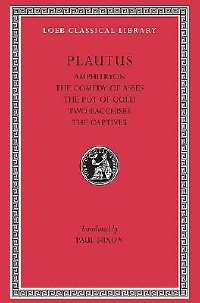
Plautus (Titus Maccius), born about 254 BCE at Sarsina in Umbria, went to Rome, engaged in work connected with the stage, lost his money in commerce, then turned to writing comedies. Twenty-one plays by Plautus have survived (one is incomplete). The basis of all is a free translation from comedies by such writers as Menander, Diphilus, and Philemon. So we have Greek manners of Athens about 300-250 BCE transferred to the Roman stage of about 225-185, with Greek places, people, and customs, for popular amusement in a Latin city whose own culture was not yet developed and whose manners were more severe. To make his plays live for his audience, Plautus included many Roman details, especially concerning slavery, military affairs, and law, with some invention of his own, notably in management of metres. The resulting mixture is lively, genial and humorous, with good dialogue and vivid style. There are plays of intrigue ( Two Bacchises, The Haunted House, Pseudolus ); of intrigue with a recognition theme ( The Captives, The Carthaginian, Curculio ); plays which develop character ( The Pot of Gold, Miles Gloriosus ); others which turn on mistaken identity (accidental as in the Menaechmi ; caused on purpose as in Amphitryon ); plays of domestic life ( The Merchant, Casina, both unpleasant; Trinummus, Stichus, both pleasant). The Loeb Classical Library edition of Plautus is in five volumes.
目录
Greek Originals Of The Plays
Introduction
Bibliography
Amphitruo, Or
Amphitryon Asinaria, Or
The Comedy Of Asses Aulularia, Or
The Pot Of Gold Bacchides, Or
The Two Bacchises Captivi, Or
The Captives
Index
Introduction
Bibliography
Amphitruo, Or
Amphitryon Asinaria, Or
The Comedy Of Asses Aulularia, Or
The Pot Of Gold Bacchides, Or
The Two Bacchises Captivi, Or
The Captives
Index
- 名称
- 类型
- 大小
光盘服务联系方式: 020-38250260 客服QQ:4006604884
云图客服:
用户发送的提问,这种方式就需要有位在线客服来回答用户的问题,这种 就属于对话式的,问题是这种提问是否需要用户登录才能提问
Video Player
×
Audio Player
×
pdf Player
×
