

简介
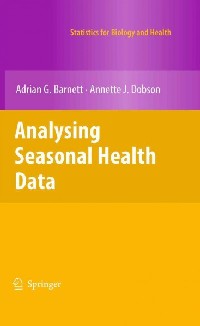
Seasonal patterns have been found in a remarkable range of health conditions, including birth defects, respiratory infections and cardiovascular disease. Accurately estimating the size and timing of seasonal peaks in disease incidence is an aid to understanding the causes and possibly to developing interventions. With global warming increasing the intensity of seasonal weather patterns around the world, a review of the methods for estimating seasonal effects on health is timely. This is the first book on statistical methods for seasonal data written for a health audience. It describes methods for a range of outcomes (including continuous, count and binomial data) and demonstrates appropriate techniques for summarising and modelling these data. It has a practical focus and uses interesting examples to motivate and illustrate the methods. The statistical procedures and example data sets are available in an R package called 鈥榮eason鈥? Adrian Barnett is a senior research fellow at Queensland University of Technology, Australia. Annette Dobson is a Professor of Biostatistics at The University of Queensland, Australia. Both are experienced medical statisticians with a commitment to statistical education and have previously collaborated in research in the methodological developments and applications of biostatistics, especially to time series data. Among other projects, they worked together on revising the well-known textbook "An Introduction to Generalized Linear Models," third edition, Chapman Hall/CRC, 2008. In their new book they share their knowledge of statistical methods for examining seasonal patterns in health.
目录
Preface 5
Acknowledgements 6
Contents 7
Acronyms 10
1 Introduction 11
1.1 Example Data Sets 11
1.1.1 Cardiovascular Disease Deaths 11
1.1.2 Schizophrenia 12
1.1.3 Influenza 14
1.1.4 Exercise 15
1.1.5 Stillbirths 16
1.1.6 Footballers 17
1.2 Time Series Methods 18
1.2.1 Autocovariance and Autocorrelation 19
1.2.1.1 Sample Mean, Variance and Median 19
1.2.1.2 Hypotheses Testing 20
1.2.1.3 Autocovariance 21
1.2.1.4 Autocorrelation 23
1.3 Fourier Series 24
1.3.1 Cosine and Sine Functions 24
1.3.2 Fourier Series 28
1.3.3 Periodogram 29
1.3.4 Cumulative Periodogram 33
1.4 Regression Methods 35
1.4.1 Scatter Plot 36
1.4.2 Linear Regression 37
1.4.2.1 R-Squared 38
1.4.2.2 Centring and Scaling 38
1.4.3 Residual Checking 39
1.4.3.1 Independence of Residuals Over Time 41
1.4.3.2 Distributional Assumptions 42
1.4.4 Influential Observations 43
1.4.5 Generalized Linear Model 45
1.4.5.1 Poisson Regression Example 46
1.4.5.2 Logistic Regression Example 47
1.4.6 Offsets 48
1.4.7 Akaike Information Criterion 49
1.4.8 Non-linear Regression Using Splines 50
1.4.8.1 Example of a Non-linear Spline 52
1.5 Box Plots 52
1.6 Bayesian Statistics 54
1.6.1 Markov Chain Monte Carlo Estimation 55
1.6.2 Deviance Information Criterion 56
2 Introduction to Seasonality 58
2.1 What is a Season? 58
2.1.1 Seasonality and Health 59
2.1.1.1 Environmental Seasonal Exposures 60
2.1.1.2 Social Seasonal Exposures 61
2.2 Descriptive Seasonal Statistics and Plots 62
2.2.1 Adjusting Monthly Counts 62
2.2.2 Data Reduction 64
2.2.2.1 Grouping Data into the Four Seasons 66
2.2.3 Circular Plot 70
2.2.4 Smooth Plot of Season 72
2.3 Modelling Monthly Data 74
2.3.1 Month as a Fixed Effect 75
2.3.2 Month as a Random Effect 78
2.3.3 Month as a Correlated Random Effect 78
3 Cosinor 84
3.1 Examples 85
3.1.1 Cardiovascular Disease Deaths 85
3.1.2 Exercise 87
3.1.3 Stillbirths 89
3.2 Tests of Seasonality 89
3.2.1 Chi-Squared Test of Seasonality 92
3.2.1.1 Simulation Study Comparing Tests of Seasonality 92
3.2.2 Sample Size Using the Cosinor Test 94
3.3 Sawtooth Season 95
3.3.1 Examples 96
3.3.1.1 Footballers 96
3.3.1.2 Cardiovascular Disease 99
4 Decomposing Time Series 102
4.1 Stationary Cosinor 105
4.1.1 Examples 106
4.1.1.1 Cardiovascular Disease Deaths 106
4.1.1.2 Schizophrenia 106
4.2 Season, Trend, Loess 107
4.2.1 Examples 110
4.2.1.1 Cardiovascular Disease Deaths 110
4.2.1.2 Schizophrenia 112
4.3 Non-stationary Cosinor 113
4.3.1 Parameter Estimation 115
4.3.1.1 Estimating the Amplitude and Phase 117
4.3.2 Examples 118
4.3.2.1 Cardiovascular Disease Deaths 118
4.3.2.2 Schizophrenia 120
4.4 Modelling the Amplitude and Phase 120
4.4.1 Parameter Estimation 123
4.4.2 Examples 125
4.4.2.1 Cardiovascular Disease Deaths 125
4.4.2.2 Exercise Data 126
4.5 Month as a Random Effect 127
4.5.1 Examples 128
4.5.1.1 Cardiovascular Disease Deaths 128
4.6 Comparing the Decomposition Methods 130
4.7 Exposures 131
4.7.1 Comparing Trends with Trends and Seasonswith Seasons 132
4.7.1.1 Cardiovascular Disease Deaths and Temperature 132
4.7.2 Exposure\u2013Risk Relationships 133
4.7.2.1 Example 135
5 Controlling for Season 138
5.1 Case\u2013Crossover 138
5.1.1 Matching Using Day of the Week 141
5.1.2 Case\u2013Crossover Examples 142
5.1.3 Changing Stratum Length 144
5.1.4 Matching Using a Continuous Confounder 144
5.1.5 Non-linear Associations 145
5.2 Generalized Additive Model 147
5.2.1 Definition of a GAM 147
5.2.1.1 An Example of Applying a Seasonal GAM 147
5.2.2 Non-linear Confounders 149
5.3 A Spiked Seasonal Pattern 151
5.3.1 Modelling a Spiked Seasonal Pattern 152
5.4 Adjusting for Seasonal Independent Variables 155
5.4.1 Effect on Estimates of Long-term Risk 156
5.4.1.1 Example Using Long-term Survival After Hospital Discharge 158
5.5 Biases Caused by Ignoring Season 158
6 Clustered Seasonal Data 160
6.1 Seasonal Heterogeneity 160
6.2 Longitudinal Models 162
6.2.1 Example 163
6.3 Spatial Models 164
6.3.1 Example 165
References 168
Index 172
Acknowledgements 6
Contents 7
Acronyms 10
1 Introduction 11
1.1 Example Data Sets 11
1.1.1 Cardiovascular Disease Deaths 11
1.1.2 Schizophrenia 12
1.1.3 Influenza 14
1.1.4 Exercise 15
1.1.5 Stillbirths 16
1.1.6 Footballers 17
1.2 Time Series Methods 18
1.2.1 Autocovariance and Autocorrelation 19
1.2.1.1 Sample Mean, Variance and Median 19
1.2.1.2 Hypotheses Testing 20
1.2.1.3 Autocovariance 21
1.2.1.4 Autocorrelation 23
1.3 Fourier Series 24
1.3.1 Cosine and Sine Functions 24
1.3.2 Fourier Series 28
1.3.3 Periodogram 29
1.3.4 Cumulative Periodogram 33
1.4 Regression Methods 35
1.4.1 Scatter Plot 36
1.4.2 Linear Regression 37
1.4.2.1 R-Squared 38
1.4.2.2 Centring and Scaling 38
1.4.3 Residual Checking 39
1.4.3.1 Independence of Residuals Over Time 41
1.4.3.2 Distributional Assumptions 42
1.4.4 Influential Observations 43
1.4.5 Generalized Linear Model 45
1.4.5.1 Poisson Regression Example 46
1.4.5.2 Logistic Regression Example 47
1.4.6 Offsets 48
1.4.7 Akaike Information Criterion 49
1.4.8 Non-linear Regression Using Splines 50
1.4.8.1 Example of a Non-linear Spline 52
1.5 Box Plots 52
1.6 Bayesian Statistics 54
1.6.1 Markov Chain Monte Carlo Estimation 55
1.6.2 Deviance Information Criterion 56
2 Introduction to Seasonality 58
2.1 What is a Season? 58
2.1.1 Seasonality and Health 59
2.1.1.1 Environmental Seasonal Exposures 60
2.1.1.2 Social Seasonal Exposures 61
2.2 Descriptive Seasonal Statistics and Plots 62
2.2.1 Adjusting Monthly Counts 62
2.2.2 Data Reduction 64
2.2.2.1 Grouping Data into the Four Seasons 66
2.2.3 Circular Plot 70
2.2.4 Smooth Plot of Season 72
2.3 Modelling Monthly Data 74
2.3.1 Month as a Fixed Effect 75
2.3.2 Month as a Random Effect 78
2.3.3 Month as a Correlated Random Effect 78
3 Cosinor 84
3.1 Examples 85
3.1.1 Cardiovascular Disease Deaths 85
3.1.2 Exercise 87
3.1.3 Stillbirths 89
3.2 Tests of Seasonality 89
3.2.1 Chi-Squared Test of Seasonality 92
3.2.1.1 Simulation Study Comparing Tests of Seasonality 92
3.2.2 Sample Size Using the Cosinor Test 94
3.3 Sawtooth Season 95
3.3.1 Examples 96
3.3.1.1 Footballers 96
3.3.1.2 Cardiovascular Disease 99
4 Decomposing Time Series 102
4.1 Stationary Cosinor 105
4.1.1 Examples 106
4.1.1.1 Cardiovascular Disease Deaths 106
4.1.1.2 Schizophrenia 106
4.2 Season, Trend, Loess 107
4.2.1 Examples 110
4.2.1.1 Cardiovascular Disease Deaths 110
4.2.1.2 Schizophrenia 112
4.3 Non-stationary Cosinor 113
4.3.1 Parameter Estimation 115
4.3.1.1 Estimating the Amplitude and Phase 117
4.3.2 Examples 118
4.3.2.1 Cardiovascular Disease Deaths 118
4.3.2.2 Schizophrenia 120
4.4 Modelling the Amplitude and Phase 120
4.4.1 Parameter Estimation 123
4.4.2 Examples 125
4.4.2.1 Cardiovascular Disease Deaths 125
4.4.2.2 Exercise Data 126
4.5 Month as a Random Effect 127
4.5.1 Examples 128
4.5.1.1 Cardiovascular Disease Deaths 128
4.6 Comparing the Decomposition Methods 130
4.7 Exposures 131
4.7.1 Comparing Trends with Trends and Seasonswith Seasons 132
4.7.1.1 Cardiovascular Disease Deaths and Temperature 132
4.7.2 Exposure\u2013Risk Relationships 133
4.7.2.1 Example 135
5 Controlling for Season 138
5.1 Case\u2013Crossover 138
5.1.1 Matching Using Day of the Week 141
5.1.2 Case\u2013Crossover Examples 142
5.1.3 Changing Stratum Length 144
5.1.4 Matching Using a Continuous Confounder 144
5.1.5 Non-linear Associations 145
5.2 Generalized Additive Model 147
5.2.1 Definition of a GAM 147
5.2.1.1 An Example of Applying a Seasonal GAM 147
5.2.2 Non-linear Confounders 149
5.3 A Spiked Seasonal Pattern 151
5.3.1 Modelling a Spiked Seasonal Pattern 152
5.4 Adjusting for Seasonal Independent Variables 155
5.4.1 Effect on Estimates of Long-term Risk 156
5.4.1.1 Example Using Long-term Survival After Hospital Discharge 158
5.5 Biases Caused by Ignoring Season 158
6 Clustered Seasonal Data 160
6.1 Seasonal Heterogeneity 160
6.2 Longitudinal Models 162
6.2.1 Example 163
6.3 Spatial Models 164
6.3.1 Example 165
References 168
Index 172
- 名称
- 类型
- 大小
光盘服务联系方式: 020-38250260 客服QQ:4006604884
云图客服:
用户发送的提问,这种方式就需要有位在线客服来回答用户的问题,这种 就属于对话式的,问题是这种提问是否需要用户登录才能提问
Video Player
×
Audio Player
×
pdf Player
×
