

简介
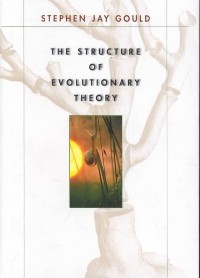
"With attention to detail, Stephen Jay Gould first describes the content and discusses the history and origins of the three core commitments of classical Darwinism: that natural selection works on organisms, not genes or species; that it is almost exclusively the mechanism of adaptive evolutionary change; and that these changes are incremental, not drastic. Next, he examines the three critiques that currently challenge this classic Darwinian edifice: that selection operates on multiple levels, from the gene to the group; that evolution proceeds by a variety of mechanisms, not just natural selection; and that causes operating at broader scales, including catastrophes, have figured prominently in the course of evolution. Then, in a stunning tour de force that will likely stimulate discussion and debate for decades, Gould proposes his own system for integrating these classical commitments and contemporary critiques into a new structure of evolutionary thought.".
"In 2001 the Library of Congress named Stephen Jay Gould one of America's eighty-three Living Legends - people who embody the "quintessentially American ideal of individual creativity, conviction, dedication, and exuberance." Each of these qualities finds full expression in this peerless work, the likes of which the scientific world has not seen - and may not see again - for well over a century."--BOOK JACKET.
目录
Table Of Contents:
Defining and Revising the Structure of Evolutionary Theory 1(93)
Theories Need Both Essences and Histories 1(11)
The Structure of Evolutionary Theory: Revising the Three Central Features of Darwinian Logic 12(12)
Apologia Pro Vita Sua 24(24)
A Time to Keep 24(9)
A Personal Odyssey 33(15)
Epitomes for a Long Development 48(45)
Levels of Potential Originality 48(5)
An Abstract of One Long Argument 53(40)
Part I: The History of Darwinian Logic and Debate
The Essence of Darwinism and the Basis of Modern Orthodoxy: An Exegesis of the Origin of Species 93(77)
A Revolution in the Small 93(4)
Darwin as a Historical Methodologist 97(19)
One Long Argument 97(2)
The Problem of History 99(4)
A Fourfold Continuum of Methods for the Inference of History 103(13)
Darwin as a Philosophical Revolutionary 116(47)
The Causes of Nature's Harmony 116(1)
Darwin and William Paley 116(5)
Darwin and Adam Smith 121(4)
The First Theme: The Organism as the Agent of Selection 125(12)
The Second Theme: Natural Selection as a Creative Force 137(4)
The Requirements for Variation 141(1)
Copious 141(2)
Small 143(1)
Undirected 144(2)
Gradualism 146(9)
The Adaptationist Program 155(4)
The Third Theme: The Uniformitarian Need to Extrapolate: Environment as Enabler of Change 159(4)
Judgements of Importance 163(7)
Seeds of Hierarchy 170(81)
Lamarck and the Birth of Modern Evolutionism in Two-Factor Theories 170(22)
The Myths of Lamarck 170(4)
Lamarck as a Source 174(1)
Lamarck's Two-Factor Theory: Sources for the Two Parts 175(1)
The First Set: Environment and Adaptation 176(3)
The Second Set: Progress and Taxonomy 179(2)
Distinctness of the Two Sets 181
Lamarck's Two-Factor Theory: The Hierarchy of Progress and Deviation 175(14)
Antinomies of the Two-Factor Theory 189(3)
An Interlude on Darwin's Reaction 192(5)
No Allmacht without Hierarchy: Weissman on Germinal Selection 197(27)
The Allmacht of Selection 197(4)
Weismann's Argument on Lamarck and the Allmacht of Selection 201(2)
The Problem of Degeneration and Weismann's Impetus for Germinal Selection 203(5)
Some Antecedents to Hierarchy in German Evolutionary Thought 208(1)
Haeckel's Descriptive Hierarchy in Levels of Organization 208(2)
Roux's Theory of Intracorporeal Struggle 210(4)
Germinal Selection as a Helpmate to Personal Selection 214(5)
Germinal Selection as a Full Theory of Hierarchy 219(5)
Hints of Hierarchy in Supraorganismal Selection: Darwin on the Principle of Divergence 224(25)
Divergence and the Completion of Darwin's System 224(8)
The Genesis of Divergence 232(2)
Divergence as a Consequence of Natural Selection 234(2)
The Failure of Darwin's Argument and the Need for Species Selection 236(2)
The Calculus of Individual Success 238(2)
The Causes of Trends 240(6)
Species Selection Based on Propensity for Extinction 246(2)
Postscript: Solution to the Problem of the ``Delicate Arrangement'' 248(1)
Coda 249(2)
Internalism and Laws of Form: Pre-Darwinian Alternatives to Functionalism 251(91)
Prologue: Darwin's Fateful Decision 251(9)
Two Ways to Glorify God in Nature 260(21)
William Paley and British Functionalism: Praising God in the Details of Design 262(9)
Louis Agassiz and Continental Formalism: Praising God in the Grandeur of Taxonomic Order 271(7)
An Epilog on the Dichotomy 278(3)
Unity of Plan as the Strongest Version of Formalism: The Pre-Darwinian Debate 281(49)
Mehr Licht on Goethe's Leaf 281(10)
Geoffroy and Cuvier 291(1)
Cuvier and Conditions of Existence 291(7)
Geoffroy's Formalist Vision 298(6)
The Debate of 1830: Foreplay and Aftermath 304(8)
Richard Owen and English Formalism: The Archetype of Vertebrates 312(1)
No Formalism Please, We're British 312(4)
The Vertebrate Archetype: Constraint and Nonadaptation 316(10)
Owen and Darwin 326(4)
Darwin's Strong but Limited Interest in Structural Constraint 330(12)
Darwin's Debt to Both Poles of the Dichotomy 330(2)
Darwin on Correlation of Parts 332(7)
The ``Quite Subordinate Position'' of Constraint to Selection 339(3)
The Fruitful Facets of Galton's Polyhedron: Channels and Saltations in Post-Darwinian Formalism 342(125)
Galton's Polyhedron 342(9)
Orthogenesis as a Theory of Channels and One-Way Streets: the Marginalization of Darwinism 351(45)
Misconceptions and Relative Frequencies 351(4)
Theodor Eimer and the Ohnmacht of Selection 355(10)
Alpheus Hyatt: An Orthogenetic Hard Line from the World of Mollusks 365(18)
C.O. Whitman: An Orthogenetic Dove in Darwin's World of Pigeons 383(13)
Saltation as a Theory of Internal Impetus: A Second Formalist Strategy for Pushing Darwinism to a Causal Periphery 396(71)
William Bateson: The Documentation of Inherent Discontinuity 396(19)
Hugo de Vries: A Most Reluctant Non-Darwinian 415(1)
Dousing the Great Party of 1909 415(3)
The (Not So Contradictory) Sources of the Mutation Theory 418(7)
The Mutation Theory: Origin and Central Tenets 425(14)
Darwinism and the Mutation Theory 439(1)
Confusing Rhetoric and the Personal Factor 439(4)
The Logic of Darwinism and Its Different Place in de Vries' System 443(3)
De Vries on Macroevolution 446(5)
Richard Goldschmidt's Appropriate Role as a Formalist Embodiment of All that Pure Darwinism Must Oppose 451(16)
Pattern and Progress on the Geological Stage 467(36)
Darwin and the Fruits of Biotic Competition 467(12)
A Geological License for Progress 467(3)
The Predominance of Biotic Competition and Its Sequelae 470(9)
Uniformity on the Geological Stage 479(24)
Lyell's Victory in Fact and Rhetoric 479(5)
Catastrophism as Good Science: Cuvier's Essay 484(8)
Darwin's Geological Need and Kelvin's Odious Spectre 492(4)
A Question of Time (Too Little Geology) 496(1)
A Question of Direction (Too Much Geology) 497(6)
The Modern Synthesis as a Limited Consensus 503(92)
Why Synthesis? 503(2)
Synthesis as Restriction 505(13)
The Initial Goal of Rejecting Old Alternatives 505(3)
R. A. Fisher and the Darwinian Core 508(6)
J. B. S. Haldane and the Initial Pluralism of the Synthesis 514(2)
J. S. Huxley: Pluralism of the Type 516(2)
Synthesis as Hardening 518(25)
The Later Goal of Exalting Selection's Power 518(6)
Increasing Emphasis on Selection and Adaptation between the First (1937) and Last (1951) Edition of Dobzhansky's Genetics and the Origin of Species 524(4)
The Shift in G. G. Simpson's Explanation of ``Quantum Evolution'' from Drift and Nonadaptation (1944) to the Embodiment of Strict Adaptation (1953) 528(3)
Mayr at the Inception (1942) and Codification (1963): Shifting from the ``Genetic Consistency'' to the ``Adaptationist'' Paradigm 531(10)
Why Hardening? 541(2)
Hardening on the Other Two Legs of the Darwinian Tripod 543(23)
Levels of Selection 544(12)
Extrapolation into Geological Time 556(10)
From Overstressed Doubt to Overextended Certainty 566(29)
A Tale of Two Centennials 566(10)
All Quiet on the Textbook Front 576(1)
Adaptation and Natural Selection 577(2)
Reduction and Trivialization of Macroevolution 579(6)
Segue to Part II 585(10)
Part II: Towards a Revised and Expanded Evolutionary Theory
Species as Individuals in the Hierarchical Theory of Selection 595(150)
The Evolutionary Definition of Individuality 595(18)
An Individualistic Prolegomenon 595(2)
The Meaning of Individuality and the Expansion of the Darwinian Research Program 597(5)
Criteria for Vernacular Individuality 602(6)
Criteria for Evolutionary Individuality 608(5)
The Evolutionary Definition of Selective Agency and the Fallacy of Selfish Genes 613(31)
A Fruitful Error of Logic 613(1)
Hierarchical vs. Genic Selectionism 614(1)
The Distinction of Replicators and Interactors as a Framework for Discussion 615(1)
Faithful Replication as the Central Criterion for the Gene-Centered View of Evolution 616(3)
Sieves, Plurifiers, and the Nature of Selection: The Rejection of Replication as a Criterion of Agency 619(3)
Interaction as the Proper Criterion for Identifying Units of Selection 622(3)
The Internal Incoherence of Gene Selectionism 625(7)
Bookkeeping and Causality: The Fundamental Error of Gene Selectionism 632(5)
Gambits of Reform and Retreat by Gene Selectionists 637(7)
Logical and Empirical Foundations for the Theory of Hierarchical Selection 644(70)
Logical Validation and Empirical Challenges 644(1)
R. A. Fisher and the Compelling Logic of Species Selection 644(2)
The Classical Arguments against Efficacy of Higher-Level Selection 646(2)
Overcoming These Classical Arguments, in Practice for Interdemic Selection, but in Principle for Species Selection 648(4)
Emergence and the Proper Criterion for Species Selection 652(1)
Differential Proliferation or Downward Effect? 652(4)
Shall Emergent Characters or Emergent Fitnesses Define the Operation of Species Selection? 656(17)
Hierarchy and the Sixfold Way 673(1)
A Literary Prologue for the Two Major Properties of Hierarchies 673(8)
Redressing the Tyranny of the Organism: Comments on Characteristic Features and Differences among Six Primary Levels 681(2)
The Gene-Individual 683(1)
Motoo Kimura and the ``Neutral Theory of Molecular Evolution'' 684(5)
True Genic Selection 689(6)
The Cell-Individual 695(5)
The Organism-Individual 700(1)
The Deme-Individual 701(2)
The Species-Individual 703(1)
Species as Individuals 703(1)
Species as Interactors 704(5)
Species Selection as Potent 709(3)
The Clade-Individual 712(2)
The Grand Analogy: A Speciational Basis for Macroevolution 714(31)
Presentation of the Chart for Macroevolutionary Distinctiveness 714(2)
The Particulars of Macroevolutionary Explanation 716(1)
The Structural Basis 716(4)
Criteria for Individuality 720(1)
Contrasting Modalities of Change: The Basic Categories 721(1)
Ontogenetic Drive: The Analogy of Lamarckism and Anagenesis 722(2)
Reproductive Drive: Directional Speciation as an Important and Irreducible Macroevolutionary Mode Separate from Species Selection 724(7)
Species Selection, Wright's Rule, and the Power of Interaction with Directional Speciation 731(4)
Species Level Drifts as More Powerful than the Analogous Phenomena in Microevolution 735(3)
The Scaling of External and Internal Environments 738(3)
Summary Comments on the Strengths of Species Selection and its Interaction with Other Macroevolutionary Causes of Change 741(4)
Punctuated Equilibrium and the Validation of Macroevolutionary Theory 745(280)
What Every Paleontologist Knows 745(20)
An Introductory Example 745(4)
Testimonials to Common Knowledge 749(6)
Darwinian Solutions and Paradoxes 755(3)
The Paradox of Insulation from Disproof 758(3)
The Paradox of Stymied Practice 761(4)
The Primary Claims of Punctuated Equilibrium 765(19)
Data and Definitions 765(9)
Microevolutionary Links 774(7)
Microevolutionary Implications 781(1)
Tempo and the Significance of Stasis 782(1)
Mode and the Speciational Foundation of Macroevolution 783(1)
The Scientific Debate on Punctuated Equilibrium: Critiques and Responses 784(38)
Critiques Based on the Definability of Paleontological Species 784(1)
Empirical Affirmation 784(5)
Reasons for a Potential Systematic Underestimation of Biospecies by Paleospecies 789(1)
Reasons for a Potential Systematic Overestimation of Biospecies by Paleospecies 789(4)
Reasons Why an Observed Punctuational Pattern Might Not Represent Speciation 793(3)
Critiques Based on Denying Events of Speciation as the Primary Locus of Change 796(6)
Critiques Based on Supposed Failures of Empirical Results to Affirm Predictions of Punctuated Equilibrium 802(1)
Claims for Empirical Refutation by Cases 802(1)
Phenotypes 802(8)
Genotypes 810(2)
Empirical Tests of Conformity with Models 812(10)
Sources of Data for Testing Punctuated Equilibrium 822(52)
Preamble 822(2)
The Equilibrium in Punctuated Equilibrium: Quantitatively Documented Patterns of Stasis in Unbranched Segments of Lineages 824(15)
The Punctuations of Punctuated Equilibrium: Tempo and Mode in the Origin of Paleospecies 839(1)
The Inference of Cladogenesis by the Criterion of Ancestral Survival 840(10)
The ``Dissection'' of Punctuations to Infer Both Existence and Modality 850(1)
Time 851(1)
Geography 852(1)
Morphometric Mode 852(2)
Proper and Adequate Tests of Relative Frequencies: The Strong Empirical Validation of Punctuated Equilibrium 854(1)
The Indispensability of Data on Relative Frequencies 854(2)
Relative Frequencies for Higher Taxa in Entire Biotas 856(10)
Relative Frequencies for Entire Clades 866(4)
Causal Clues from Differential Patterns of Relative Frequencies 870(4)
The Broader Implications of Punctuated Equilibrium for Evolutionary Theory and General Notions of Change 874(98)
What Changes May Punctuated Equilibrium Instigate in Our Views about Evolutionary Mechanisms and the History of Life? 874(1)
The Explanation and Broader Meaning of Stasis 874(1)
Frequency 875(1)
Generality 876(1)
Causality 877(8)
Punctuation, the Origin of New Macroevolutionary Individuals, and Resulting Implications for Evolutionary Theory 885(1)
Trends 886(7)
The Speciational Reformulation of Macroevolution 893(4)
Life Itself 897(4)
General Rules 901(4)
Particular Cases 905(1)
Horses as the Exemplar of ``Life's Little Joke'' 905(3)
Rethinking Human Evolution 908(8)
Ecological and Higher-Level Extensions 916(6)
Punctuation All the Way Up and Down? The Generalization and Broader Utility of Punctuated Equilibrium (in More Than a Metaphorical Sense) at Other Levels of Evolution, and for Other Disciplines In and Outside the Natural Sciences 922(1)
General Models for Punctuated Equilibrium 922(6)
Punctuational Change at Other Levels and Scales of Evolution 928(1)
A Preliminary Note on Homology and Analogy in the Conceptual Realm 928(3)
Punctuation Below the Species Level 931(5)
Punctuation Above the Species Level 936(1)
Stasis Analogs: Trending and Non-Trending in the Geological History of Clades 936(3)
Punctuational Analogs in Lineages: The Pace of Morphological Innovation 939(7)
Punctuational Analogs in Faunas and Ecosystems 946(6)
Punctuational Models in Other Disciplines: Towards a General Theory of Change 952(1)
Principles for a Choice of Examples 952(1)
Examples from the History of Human Artifacts and Cultures 952(5)
Examples from Human Institutions and Theories about the Natural World 957(5)
Two Concluding Examples, a General Statement, and a Coda 962(10)
Appendix: A Largely Sociological (and Fully Partisan) History of the Impact and Critique of Punctuated Equilibrium 972(53)
The Entrance of Punctuated Equilibrium into Common Language and General Culture 972(7)
An Episodic History of Punctuated Equilibrium 979(1)
Early Stages and Future Contexts 979(7)
Creationist Misappropriation of Punctuated Equilibrium 986(4)
Punctuated Equilibrium in Journalism and Textbooks 990(9)
The Personal Aspect of Professional Reaction 999(1)
The Case Ad Hominem against Punctuated Equilibrium 1000(10)
An Interlude on Sources of Error 1010(4)
The Wages of Jealousy 1014(1)
The Descent to Nastiness 1014(5)
The Most Unkindest Cut of All 1019(2)
The Wisdom of Agassiz's and von Baer's Threefold History of Scientific Ideas 1021(1)
A Coda on the Kindness and Generosity of Most Colleagues 1022(3)
The Integration of Constraint and Adaptation (Structure and Function) in Ontogeny and Phylogeny: Historical Constraints and the Evolution of Development 1025(154)
Constraint as a Positive Concept 1025(36)
Two Kinds of Positivity 1025(1)
An Etymological Introduction 1025(2)
The First (Empirical) Positive Meaning of Channeling 1027(5)
The Second (Definitional) Positive Meaning of Causes outside Accepted Mechanisms 1032(5)
Heterochrony and Allometry as the Locus Classicus of the First Positive (Empirical) Meaning. Channeled Directionality by Constraint 1037(3)
The Two Structural Themes of Internally Set Channels and Ease of Transformation as Potentially Synergistic with Functional Causality by Natural Selection: Increasing Shell Stability in the Gryphaea Heterochronocline 1040(5)
Ontogenetically Channeled Allometric Constraint as a Primary Basis of Expressed Evolutionary Variation: The Full Geographic and Morphological Range of Cerion uva 1045(6)
The Aptive Triangle and the Second Positive Meaning: Constraint as a Theory-Bound Term for Patterns and Directions Not Built Exclusively (Or Sometimes Even at All) by Natural Selection 1051(1)
The Model of the Aptive Triangle 1051(2)
Distinguishing and Sharpening the Two Great Questions 1053(1)
The Structural Vertex 1053(2)
The Historical Vertex 1055(2)
An Epitome for the Theory-Bound Nature of Constraint Terminology 1057(4)
Deep Homology and Pervasive Parallelism: Historical Constraint as the Primary Gatekeeper and Guardian of Morphospace 1061(118)
A Historical and Conceptual Analysis of the Underappreciated Importance of Parallelism for Evolutionary Theory 1061(1)
A Context for Excitement 1061(8)
A Terminological Excursus on the Meaning of Parallelism 1069(1)
The Nine Fateful Little Words of E. Ray Lankester 1069(7)
The Terminological Origin and Debate about the Meaning and Utility of Parallelism 1076(13)
A Symphony in Four Movements on the Role of Historical Constraint in Evolution: Towards the Harmonious Rebalancing of Form and Function in Evolutionary Theory 1089(1)
Movement One, Statement: Deep Homology across Phyla: Mayr's Functional Certainty and Geoffroy's Structural Vindication 1089(1)
Deep Homology, Archetypal Theories, and Historical Constraint 1089(3)
Mehr Licht (More Light) on Goethe's Angiosperm Archetype 1092(3)
Hoxology and Geoffroy's First Archetypal Theory of Segmental Homology 1095(1)
An Epitome and Capsule History of Hoxology 1095(6)
Vertebrate Homologs in Structure and Action 1101(5)
Segmental Homologies of Arthropods and Vertebrates: Geoffroy's Vindication 1106(1)
Rediscovering the Vertebrate Rhombomeres 1107(2)
More Extensive Homologies throughout the Developing Somites 1109(3)
Some Caveats and Tentative Conclusions 1112(5)
Geoffrey's Second Archetypal Theory of Dorso-Ventral Inversion in the Common Bilaterian Groundplan 1117(5)
Movement Two, Elaboration: Parallelism of Underlying Generators: Deep Homology Builds Positive Channels of Constraint 1122(1)
Parallelism All the Way Down: Shining a Light and Feeding the Walk 1122(1)
Parallelism in the Large: Pax-6 and the Homology of Developmental Pathways in Homoplastic Eyes of Several Phyla 1123(1)
Data and Discovery 1123(4)
Theoretical Issues 1127(3)
A Question of Priority 1130(2)
Parallelism in the Small: The Origin of Crustacean Feeding Organs 1132(2)
Pharaonic Bricks and Corinthian Columns 1134(8)
Movement Three, Scherzo: Does Evolutionary Change Often Proceed by Saltation Down Channels of Historical Constraint? 1142(5)
Movement Four, Recapitulation and Summary: Early Establishment of Rules and the Inhomogenous Population of Morphospace: Dobzhansky's Landscape as Primarily Structural and Historical, Not Functional and Immediate 1147(1)
Bilaterian History as Top-Down by Tinkering of an Initial Set of Rules, Not Bottom-Up by Adding Increments of Complexity 1147(8)
Setting of Historical Constraints in the Cambrian Explosion 1155(6)
Channeling the Subsequent Directions of Bilaterian History from the Inside 1161(12)
An Epilog on Dobzhansky's Landscape and the Dominant Role of Historical Constraint in the Clumped Population of Morphospace 1173(6)
The Intergration of Constraint and Adaptation (Structure and Function) in Ontogeny and Phylogeny: Structural Constraints, Spandrels, and the Centrality of Exaptation in Macroevolution 1179(117)
The Timeless Physics of Evolved Function 1179(35)
Structuralism's Odd Man Outside 1179(3)
D'Arcy Thompson's Science of Form 1182(1)
The Structure of an Argument 1182(7)
The Tactic and Application of an Argument 1189(7)
The Admitted Limitation and Ultimate Failure of An Argument 1196(4)
Odd Man In (D'Arcy Thompson's Structuralist Critique of Darwinism) and Odd Man Out (His Disparagement of Historicism) 1200(7)
An Epilog to an Argument 1207(1)
Order for Free and Realms of Relevance for Thompsonian Structuralism 1208(6)
Exapting the Rich and Inevitable Spandrels of History 1214(56)
Nietzsche's Most Important Proposition of Historical Method 1214(4)
Exaptation and the Principle of Quirky Functional Shift: The Restricted Darwinian Version as the Ground of Contingency 1218(1)
How Darwin Resolved Mivart's Challenge of Incipient Stages 1218(6)
The Two Great Historical and Structural Implications of Quirky Functional Shift 1224(5)
How Exaptation Completes and Rationalizes the Terminology of Evolutionary Change by Functional Shifting 1229(5)
Key Criteria and Examples of Exaptation 1234(12)
The Complete Version, Replete with Spandrels: Exaptation and the Terminology of Nonadaptative Origin 1246(1)
The More Radical Category of Exapted Features with Truly Nonadaptive Origins as Structural Constraints 1246(3)
Defining and Defending Spandrels: A Revisit to San Marco 1249(9)
Three Major Reasons for the Centrality of Spandrels, and Therefore of Nonadaptation, in Evolutionary Theory 1258(12)
The Exaptive Pool: The Proper Conceptual Formula and Ground of Evolvability 1270(26)
Resolving the Paradox of Evolvability and Defining the Exaptive Pool 1270(7)
The Taxonomy of the Exaptive Pool 1277(1)
Franklins and Miltons, or Inherent Potentials vs. Available Things 1277(3)
Choosing a Fundamentum Divisionis for a Taxonomy: An Apparently Arcane and Linguistic Matter That Actually Embodies a Central Scientific Decision 1280(6)
Cross-Level Effects as Miltonic Spandrels, Not Franklinian Potentials: The Nub of Integration and Radical Importance 1286(8)
A Closing Comment to Resolve the Macroevolutionary Paradox that Constraint Ensures Flexibility Whereas Selection Crafts Restriction 1294(2)
Tiers of Time and Trials of Extrapolationism, With an Epilog on the Interaction of General Theory and Contingent History 1296(1)
Failure of Extrapolationism in the Non-Isotropy of Time and Geology 1296(1)
The Specter of Catastrophic Mass Extinction: Darwin to Chicxulub 1296(24)
The Paradox of the First Tier: Towards a General Theory of Tiers of Time 1320(12)
An Epilog on Theory and History in Creating the Grandeur of This View of Life 1332
Defining and Revising the Structure of Evolutionary Theory 1(93)
Theories Need Both Essences and Histories 1(11)
The Structure of Evolutionary Theory: Revising the Three Central Features of Darwinian Logic 12(12)
Apologia Pro Vita Sua 24(24)
A Time to Keep 24(9)
A Personal Odyssey 33(15)
Epitomes for a Long Development 48(45)
Levels of Potential Originality 48(5)
An Abstract of One Long Argument 53(40)
Part I: The History of Darwinian Logic and Debate
The Essence of Darwinism and the Basis of Modern Orthodoxy: An Exegesis of the Origin of Species 93(77)
A Revolution in the Small 93(4)
Darwin as a Historical Methodologist 97(19)
One Long Argument 97(2)
The Problem of History 99(4)
A Fourfold Continuum of Methods for the Inference of History 103(13)
Darwin as a Philosophical Revolutionary 116(47)
The Causes of Nature's Harmony 116(1)
Darwin and William Paley 116(5)
Darwin and Adam Smith 121(4)
The First Theme: The Organism as the Agent of Selection 125(12)
The Second Theme: Natural Selection as a Creative Force 137(4)
The Requirements for Variation 141(1)
Copious 141(2)
Small 143(1)
Undirected 144(2)
Gradualism 146(9)
The Adaptationist Program 155(4)
The Third Theme: The Uniformitarian Need to Extrapolate: Environment as Enabler of Change 159(4)
Judgements of Importance 163(7)
Seeds of Hierarchy 170(81)
Lamarck and the Birth of Modern Evolutionism in Two-Factor Theories 170(22)
The Myths of Lamarck 170(4)
Lamarck as a Source 174(1)
Lamarck's Two-Factor Theory: Sources for the Two Parts 175(1)
The First Set: Environment and Adaptation 176(3)
The Second Set: Progress and Taxonomy 179(2)
Distinctness of the Two Sets 181
Lamarck's Two-Factor Theory: The Hierarchy of Progress and Deviation 175(14)
Antinomies of the Two-Factor Theory 189(3)
An Interlude on Darwin's Reaction 192(5)
No Allmacht without Hierarchy: Weissman on Germinal Selection 197(27)
The Allmacht of Selection 197(4)
Weismann's Argument on Lamarck and the Allmacht of Selection 201(2)
The Problem of Degeneration and Weismann's Impetus for Germinal Selection 203(5)
Some Antecedents to Hierarchy in German Evolutionary Thought 208(1)
Haeckel's Descriptive Hierarchy in Levels of Organization 208(2)
Roux's Theory of Intracorporeal Struggle 210(4)
Germinal Selection as a Helpmate to Personal Selection 214(5)
Germinal Selection as a Full Theory of Hierarchy 219(5)
Hints of Hierarchy in Supraorganismal Selection: Darwin on the Principle of Divergence 224(25)
Divergence and the Completion of Darwin's System 224(8)
The Genesis of Divergence 232(2)
Divergence as a Consequence of Natural Selection 234(2)
The Failure of Darwin's Argument and the Need for Species Selection 236(2)
The Calculus of Individual Success 238(2)
The Causes of Trends 240(6)
Species Selection Based on Propensity for Extinction 246(2)
Postscript: Solution to the Problem of the ``Delicate Arrangement'' 248(1)
Coda 249(2)
Internalism and Laws of Form: Pre-Darwinian Alternatives to Functionalism 251(91)
Prologue: Darwin's Fateful Decision 251(9)
Two Ways to Glorify God in Nature 260(21)
William Paley and British Functionalism: Praising God in the Details of Design 262(9)
Louis Agassiz and Continental Formalism: Praising God in the Grandeur of Taxonomic Order 271(7)
An Epilog on the Dichotomy 278(3)
Unity of Plan as the Strongest Version of Formalism: The Pre-Darwinian Debate 281(49)
Mehr Licht on Goethe's Leaf 281(10)
Geoffroy and Cuvier 291(1)
Cuvier and Conditions of Existence 291(7)
Geoffroy's Formalist Vision 298(6)
The Debate of 1830: Foreplay and Aftermath 304(8)
Richard Owen and English Formalism: The Archetype of Vertebrates 312(1)
No Formalism Please, We're British 312(4)
The Vertebrate Archetype: Constraint and Nonadaptation 316(10)
Owen and Darwin 326(4)
Darwin's Strong but Limited Interest in Structural Constraint 330(12)
Darwin's Debt to Both Poles of the Dichotomy 330(2)
Darwin on Correlation of Parts 332(7)
The ``Quite Subordinate Position'' of Constraint to Selection 339(3)
The Fruitful Facets of Galton's Polyhedron: Channels and Saltations in Post-Darwinian Formalism 342(125)
Galton's Polyhedron 342(9)
Orthogenesis as a Theory of Channels and One-Way Streets: the Marginalization of Darwinism 351(45)
Misconceptions and Relative Frequencies 351(4)
Theodor Eimer and the Ohnmacht of Selection 355(10)
Alpheus Hyatt: An Orthogenetic Hard Line from the World of Mollusks 365(18)
C.O. Whitman: An Orthogenetic Dove in Darwin's World of Pigeons 383(13)
Saltation as a Theory of Internal Impetus: A Second Formalist Strategy for Pushing Darwinism to a Causal Periphery 396(71)
William Bateson: The Documentation of Inherent Discontinuity 396(19)
Hugo de Vries: A Most Reluctant Non-Darwinian 415(1)
Dousing the Great Party of 1909 415(3)
The (Not So Contradictory) Sources of the Mutation Theory 418(7)
The Mutation Theory: Origin and Central Tenets 425(14)
Darwinism and the Mutation Theory 439(1)
Confusing Rhetoric and the Personal Factor 439(4)
The Logic of Darwinism and Its Different Place in de Vries' System 443(3)
De Vries on Macroevolution 446(5)
Richard Goldschmidt's Appropriate Role as a Formalist Embodiment of All that Pure Darwinism Must Oppose 451(16)
Pattern and Progress on the Geological Stage 467(36)
Darwin and the Fruits of Biotic Competition 467(12)
A Geological License for Progress 467(3)
The Predominance of Biotic Competition and Its Sequelae 470(9)
Uniformity on the Geological Stage 479(24)
Lyell's Victory in Fact and Rhetoric 479(5)
Catastrophism as Good Science: Cuvier's Essay 484(8)
Darwin's Geological Need and Kelvin's Odious Spectre 492(4)
A Question of Time (Too Little Geology) 496(1)
A Question of Direction (Too Much Geology) 497(6)
The Modern Synthesis as a Limited Consensus 503(92)
Why Synthesis? 503(2)
Synthesis as Restriction 505(13)
The Initial Goal of Rejecting Old Alternatives 505(3)
R. A. Fisher and the Darwinian Core 508(6)
J. B. S. Haldane and the Initial Pluralism of the Synthesis 514(2)
J. S. Huxley: Pluralism of the Type 516(2)
Synthesis as Hardening 518(25)
The Later Goal of Exalting Selection's Power 518(6)
Increasing Emphasis on Selection and Adaptation between the First (1937) and Last (1951) Edition of Dobzhansky's Genetics and the Origin of Species 524(4)
The Shift in G. G. Simpson's Explanation of ``Quantum Evolution'' from Drift and Nonadaptation (1944) to the Embodiment of Strict Adaptation (1953) 528(3)
Mayr at the Inception (1942) and Codification (1963): Shifting from the ``Genetic Consistency'' to the ``Adaptationist'' Paradigm 531(10)
Why Hardening? 541(2)
Hardening on the Other Two Legs of the Darwinian Tripod 543(23)
Levels of Selection 544(12)
Extrapolation into Geological Time 556(10)
From Overstressed Doubt to Overextended Certainty 566(29)
A Tale of Two Centennials 566(10)
All Quiet on the Textbook Front 576(1)
Adaptation and Natural Selection 577(2)
Reduction and Trivialization of Macroevolution 579(6)
Segue to Part II 585(10)
Part II: Towards a Revised and Expanded Evolutionary Theory
Species as Individuals in the Hierarchical Theory of Selection 595(150)
The Evolutionary Definition of Individuality 595(18)
An Individualistic Prolegomenon 595(2)
The Meaning of Individuality and the Expansion of the Darwinian Research Program 597(5)
Criteria for Vernacular Individuality 602(6)
Criteria for Evolutionary Individuality 608(5)
The Evolutionary Definition of Selective Agency and the Fallacy of Selfish Genes 613(31)
A Fruitful Error of Logic 613(1)
Hierarchical vs. Genic Selectionism 614(1)
The Distinction of Replicators and Interactors as a Framework for Discussion 615(1)
Faithful Replication as the Central Criterion for the Gene-Centered View of Evolution 616(3)
Sieves, Plurifiers, and the Nature of Selection: The Rejection of Replication as a Criterion of Agency 619(3)
Interaction as the Proper Criterion for Identifying Units of Selection 622(3)
The Internal Incoherence of Gene Selectionism 625(7)
Bookkeeping and Causality: The Fundamental Error of Gene Selectionism 632(5)
Gambits of Reform and Retreat by Gene Selectionists 637(7)
Logical and Empirical Foundations for the Theory of Hierarchical Selection 644(70)
Logical Validation and Empirical Challenges 644(1)
R. A. Fisher and the Compelling Logic of Species Selection 644(2)
The Classical Arguments against Efficacy of Higher-Level Selection 646(2)
Overcoming These Classical Arguments, in Practice for Interdemic Selection, but in Principle for Species Selection 648(4)
Emergence and the Proper Criterion for Species Selection 652(1)
Differential Proliferation or Downward Effect? 652(4)
Shall Emergent Characters or Emergent Fitnesses Define the Operation of Species Selection? 656(17)
Hierarchy and the Sixfold Way 673(1)
A Literary Prologue for the Two Major Properties of Hierarchies 673(8)
Redressing the Tyranny of the Organism: Comments on Characteristic Features and Differences among Six Primary Levels 681(2)
The Gene-Individual 683(1)
Motoo Kimura and the ``Neutral Theory of Molecular Evolution'' 684(5)
True Genic Selection 689(6)
The Cell-Individual 695(5)
The Organism-Individual 700(1)
The Deme-Individual 701(2)
The Species-Individual 703(1)
Species as Individuals 703(1)
Species as Interactors 704(5)
Species Selection as Potent 709(3)
The Clade-Individual 712(2)
The Grand Analogy: A Speciational Basis for Macroevolution 714(31)
Presentation of the Chart for Macroevolutionary Distinctiveness 714(2)
The Particulars of Macroevolutionary Explanation 716(1)
The Structural Basis 716(4)
Criteria for Individuality 720(1)
Contrasting Modalities of Change: The Basic Categories 721(1)
Ontogenetic Drive: The Analogy of Lamarckism and Anagenesis 722(2)
Reproductive Drive: Directional Speciation as an Important and Irreducible Macroevolutionary Mode Separate from Species Selection 724(7)
Species Selection, Wright's Rule, and the Power of Interaction with Directional Speciation 731(4)
Species Level Drifts as More Powerful than the Analogous Phenomena in Microevolution 735(3)
The Scaling of External and Internal Environments 738(3)
Summary Comments on the Strengths of Species Selection and its Interaction with Other Macroevolutionary Causes of Change 741(4)
Punctuated Equilibrium and the Validation of Macroevolutionary Theory 745(280)
What Every Paleontologist Knows 745(20)
An Introductory Example 745(4)
Testimonials to Common Knowledge 749(6)
Darwinian Solutions and Paradoxes 755(3)
The Paradox of Insulation from Disproof 758(3)
The Paradox of Stymied Practice 761(4)
The Primary Claims of Punctuated Equilibrium 765(19)
Data and Definitions 765(9)
Microevolutionary Links 774(7)
Microevolutionary Implications 781(1)
Tempo and the Significance of Stasis 782(1)
Mode and the Speciational Foundation of Macroevolution 783(1)
The Scientific Debate on Punctuated Equilibrium: Critiques and Responses 784(38)
Critiques Based on the Definability of Paleontological Species 784(1)
Empirical Affirmation 784(5)
Reasons for a Potential Systematic Underestimation of Biospecies by Paleospecies 789(1)
Reasons for a Potential Systematic Overestimation of Biospecies by Paleospecies 789(4)
Reasons Why an Observed Punctuational Pattern Might Not Represent Speciation 793(3)
Critiques Based on Denying Events of Speciation as the Primary Locus of Change 796(6)
Critiques Based on Supposed Failures of Empirical Results to Affirm Predictions of Punctuated Equilibrium 802(1)
Claims for Empirical Refutation by Cases 802(1)
Phenotypes 802(8)
Genotypes 810(2)
Empirical Tests of Conformity with Models 812(10)
Sources of Data for Testing Punctuated Equilibrium 822(52)
Preamble 822(2)
The Equilibrium in Punctuated Equilibrium: Quantitatively Documented Patterns of Stasis in Unbranched Segments of Lineages 824(15)
The Punctuations of Punctuated Equilibrium: Tempo and Mode in the Origin of Paleospecies 839(1)
The Inference of Cladogenesis by the Criterion of Ancestral Survival 840(10)
The ``Dissection'' of Punctuations to Infer Both Existence and Modality 850(1)
Time 851(1)
Geography 852(1)
Morphometric Mode 852(2)
Proper and Adequate Tests of Relative Frequencies: The Strong Empirical Validation of Punctuated Equilibrium 854(1)
The Indispensability of Data on Relative Frequencies 854(2)
Relative Frequencies for Higher Taxa in Entire Biotas 856(10)
Relative Frequencies for Entire Clades 866(4)
Causal Clues from Differential Patterns of Relative Frequencies 870(4)
The Broader Implications of Punctuated Equilibrium for Evolutionary Theory and General Notions of Change 874(98)
What Changes May Punctuated Equilibrium Instigate in Our Views about Evolutionary Mechanisms and the History of Life? 874(1)
The Explanation and Broader Meaning of Stasis 874(1)
Frequency 875(1)
Generality 876(1)
Causality 877(8)
Punctuation, the Origin of New Macroevolutionary Individuals, and Resulting Implications for Evolutionary Theory 885(1)
Trends 886(7)
The Speciational Reformulation of Macroevolution 893(4)
Life Itself 897(4)
General Rules 901(4)
Particular Cases 905(1)
Horses as the Exemplar of ``Life's Little Joke'' 905(3)
Rethinking Human Evolution 908(8)
Ecological and Higher-Level Extensions 916(6)
Punctuation All the Way Up and Down? The Generalization and Broader Utility of Punctuated Equilibrium (in More Than a Metaphorical Sense) at Other Levels of Evolution, and for Other Disciplines In and Outside the Natural Sciences 922(1)
General Models for Punctuated Equilibrium 922(6)
Punctuational Change at Other Levels and Scales of Evolution 928(1)
A Preliminary Note on Homology and Analogy in the Conceptual Realm 928(3)
Punctuation Below the Species Level 931(5)
Punctuation Above the Species Level 936(1)
Stasis Analogs: Trending and Non-Trending in the Geological History of Clades 936(3)
Punctuational Analogs in Lineages: The Pace of Morphological Innovation 939(7)
Punctuational Analogs in Faunas and Ecosystems 946(6)
Punctuational Models in Other Disciplines: Towards a General Theory of Change 952(1)
Principles for a Choice of Examples 952(1)
Examples from the History of Human Artifacts and Cultures 952(5)
Examples from Human Institutions and Theories about the Natural World 957(5)
Two Concluding Examples, a General Statement, and a Coda 962(10)
Appendix: A Largely Sociological (and Fully Partisan) History of the Impact and Critique of Punctuated Equilibrium 972(53)
The Entrance of Punctuated Equilibrium into Common Language and General Culture 972(7)
An Episodic History of Punctuated Equilibrium 979(1)
Early Stages and Future Contexts 979(7)
Creationist Misappropriation of Punctuated Equilibrium 986(4)
Punctuated Equilibrium in Journalism and Textbooks 990(9)
The Personal Aspect of Professional Reaction 999(1)
The Case Ad Hominem against Punctuated Equilibrium 1000(10)
An Interlude on Sources of Error 1010(4)
The Wages of Jealousy 1014(1)
The Descent to Nastiness 1014(5)
The Most Unkindest Cut of All 1019(2)
The Wisdom of Agassiz's and von Baer's Threefold History of Scientific Ideas 1021(1)
A Coda on the Kindness and Generosity of Most Colleagues 1022(3)
The Integration of Constraint and Adaptation (Structure and Function) in Ontogeny and Phylogeny: Historical Constraints and the Evolution of Development 1025(154)
Constraint as a Positive Concept 1025(36)
Two Kinds of Positivity 1025(1)
An Etymological Introduction 1025(2)
The First (Empirical) Positive Meaning of Channeling 1027(5)
The Second (Definitional) Positive Meaning of Causes outside Accepted Mechanisms 1032(5)
Heterochrony and Allometry as the Locus Classicus of the First Positive (Empirical) Meaning. Channeled Directionality by Constraint 1037(3)
The Two Structural Themes of Internally Set Channels and Ease of Transformation as Potentially Synergistic with Functional Causality by Natural Selection: Increasing Shell Stability in the Gryphaea Heterochronocline 1040(5)
Ontogenetically Channeled Allometric Constraint as a Primary Basis of Expressed Evolutionary Variation: The Full Geographic and Morphological Range of Cerion uva 1045(6)
The Aptive Triangle and the Second Positive Meaning: Constraint as a Theory-Bound Term for Patterns and Directions Not Built Exclusively (Or Sometimes Even at All) by Natural Selection 1051(1)
The Model of the Aptive Triangle 1051(2)
Distinguishing and Sharpening the Two Great Questions 1053(1)
The Structural Vertex 1053(2)
The Historical Vertex 1055(2)
An Epitome for the Theory-Bound Nature of Constraint Terminology 1057(4)
Deep Homology and Pervasive Parallelism: Historical Constraint as the Primary Gatekeeper and Guardian of Morphospace 1061(118)
A Historical and Conceptual Analysis of the Underappreciated Importance of Parallelism for Evolutionary Theory 1061(1)
A Context for Excitement 1061(8)
A Terminological Excursus on the Meaning of Parallelism 1069(1)
The Nine Fateful Little Words of E. Ray Lankester 1069(7)
The Terminological Origin and Debate about the Meaning and Utility of Parallelism 1076(13)
A Symphony in Four Movements on the Role of Historical Constraint in Evolution: Towards the Harmonious Rebalancing of Form and Function in Evolutionary Theory 1089(1)
Movement One, Statement: Deep Homology across Phyla: Mayr's Functional Certainty and Geoffroy's Structural Vindication 1089(1)
Deep Homology, Archetypal Theories, and Historical Constraint 1089(3)
Mehr Licht (More Light) on Goethe's Angiosperm Archetype 1092(3)
Hoxology and Geoffroy's First Archetypal Theory of Segmental Homology 1095(1)
An Epitome and Capsule History of Hoxology 1095(6)
Vertebrate Homologs in Structure and Action 1101(5)
Segmental Homologies of Arthropods and Vertebrates: Geoffroy's Vindication 1106(1)
Rediscovering the Vertebrate Rhombomeres 1107(2)
More Extensive Homologies throughout the Developing Somites 1109(3)
Some Caveats and Tentative Conclusions 1112(5)
Geoffrey's Second Archetypal Theory of Dorso-Ventral Inversion in the Common Bilaterian Groundplan 1117(5)
Movement Two, Elaboration: Parallelism of Underlying Generators: Deep Homology Builds Positive Channels of Constraint 1122(1)
Parallelism All the Way Down: Shining a Light and Feeding the Walk 1122(1)
Parallelism in the Large: Pax-6 and the Homology of Developmental Pathways in Homoplastic Eyes of Several Phyla 1123(1)
Data and Discovery 1123(4)
Theoretical Issues 1127(3)
A Question of Priority 1130(2)
Parallelism in the Small: The Origin of Crustacean Feeding Organs 1132(2)
Pharaonic Bricks and Corinthian Columns 1134(8)
Movement Three, Scherzo: Does Evolutionary Change Often Proceed by Saltation Down Channels of Historical Constraint? 1142(5)
Movement Four, Recapitulation and Summary: Early Establishment of Rules and the Inhomogenous Population of Morphospace: Dobzhansky's Landscape as Primarily Structural and Historical, Not Functional and Immediate 1147(1)
Bilaterian History as Top-Down by Tinkering of an Initial Set of Rules, Not Bottom-Up by Adding Increments of Complexity 1147(8)
Setting of Historical Constraints in the Cambrian Explosion 1155(6)
Channeling the Subsequent Directions of Bilaterian History from the Inside 1161(12)
An Epilog on Dobzhansky's Landscape and the Dominant Role of Historical Constraint in the Clumped Population of Morphospace 1173(6)
The Intergration of Constraint and Adaptation (Structure and Function) in Ontogeny and Phylogeny: Structural Constraints, Spandrels, and the Centrality of Exaptation in Macroevolution 1179(117)
The Timeless Physics of Evolved Function 1179(35)
Structuralism's Odd Man Outside 1179(3)
D'Arcy Thompson's Science of Form 1182(1)
The Structure of an Argument 1182(7)
The Tactic and Application of an Argument 1189(7)
The Admitted Limitation and Ultimate Failure of An Argument 1196(4)
Odd Man In (D'Arcy Thompson's Structuralist Critique of Darwinism) and Odd Man Out (His Disparagement of Historicism) 1200(7)
An Epilog to an Argument 1207(1)
Order for Free and Realms of Relevance for Thompsonian Structuralism 1208(6)
Exapting the Rich and Inevitable Spandrels of History 1214(56)
Nietzsche's Most Important Proposition of Historical Method 1214(4)
Exaptation and the Principle of Quirky Functional Shift: The Restricted Darwinian Version as the Ground of Contingency 1218(1)
How Darwin Resolved Mivart's Challenge of Incipient Stages 1218(6)
The Two Great Historical and Structural Implications of Quirky Functional Shift 1224(5)
How Exaptation Completes and Rationalizes the Terminology of Evolutionary Change by Functional Shifting 1229(5)
Key Criteria and Examples of Exaptation 1234(12)
The Complete Version, Replete with Spandrels: Exaptation and the Terminology of Nonadaptative Origin 1246(1)
The More Radical Category of Exapted Features with Truly Nonadaptive Origins as Structural Constraints 1246(3)
Defining and Defending Spandrels: A Revisit to San Marco 1249(9)
Three Major Reasons for the Centrality of Spandrels, and Therefore of Nonadaptation, in Evolutionary Theory 1258(12)
The Exaptive Pool: The Proper Conceptual Formula and Ground of Evolvability 1270(26)
Resolving the Paradox of Evolvability and Defining the Exaptive Pool 1270(7)
The Taxonomy of the Exaptive Pool 1277(1)
Franklins and Miltons, or Inherent Potentials vs. Available Things 1277(3)
Choosing a Fundamentum Divisionis for a Taxonomy: An Apparently Arcane and Linguistic Matter That Actually Embodies a Central Scientific Decision 1280(6)
Cross-Level Effects as Miltonic Spandrels, Not Franklinian Potentials: The Nub of Integration and Radical Importance 1286(8)
A Closing Comment to Resolve the Macroevolutionary Paradox that Constraint Ensures Flexibility Whereas Selection Crafts Restriction 1294(2)
Tiers of Time and Trials of Extrapolationism, With an Epilog on the Interaction of General Theory and Contingent History 1296(1)
Failure of Extrapolationism in the Non-Isotropy of Time and Geology 1296(1)
The Specter of Catastrophic Mass Extinction: Darwin to Chicxulub 1296(24)
The Paradox of the First Tier: Towards a General Theory of Tiers of Time 1320(12)
An Epilog on Theory and History in Creating the Grandeur of This View of Life 1332
- 名称
- 类型
- 大小
光盘服务联系方式: 020-38250260 客服QQ:4006604884
云图客服:
用户发送的提问,这种方式就需要有位在线客服来回答用户的问题,这种 就属于对话式的,问题是这种提问是否需要用户登录才能提问
Video Player
×
Audio Player
×
pdf Player
×
