

简介
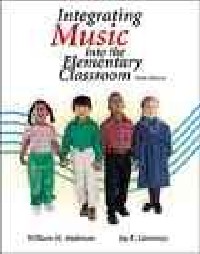
New edition of a resource that tells how to teach music successfully and to integrate it into many other subject areas in the curriculum. Assuming no prior musical experience on the part of the reader, Anderson and Lawrence (music education, Kent State U.) cover music fundamentals as well as materials and methods. They examine how children learn music and present easy-to-use techniques for instruction in singing, playing instruments, moving to music, and creating music. They also offer methods for teaching from multicultural perspectives and include a variety of examples from different cultures. Contains model lesson plans. The included music CD-ROM features about 50 songs from the text, with accompaniment. Wire spiral binding. Annotation c. Book News, Inc., Portland, OR (booknews.com)
目录
Introduction p. 1
The Importance of Music and Other Arts in the Elementary School p. 2
An Integrated Approach to Learning and Teaching p. 4
The Plan for This Book p. 5
How Children Learn p. 7
Basic Types of Learning p. 7
Psychomotor Learning p. 7
Cognitive Learning p. 8
Affective Learning p. 8
Learning in Music Needs to Be Active p. 9
Teacher-Centered and Child-Centered Learning p. 9
The Structure of Musical Learning p. 10
Make What You Teach Meaningful p. 10
Organize Material Sequentially p. 10
Experience Music Before Labeling It p. 10
Use a Conceptual Approach to Learning p. 11
Use a Multisensory Approach to Learning p. 11
Use a Multicultural Approach to Learning p. 12
Provide Reinforcement p. 12
Teach for Transfer p. 12
Techniques for Applying Principles to Musical Learning p. 13
Cooperative Learning p. 13
Musical Experiences for Inclusive Learning p. 13
The Gifted Student p. 15
The Mentally Challenged Student p. 16
Instructional Technology for the Classroom p. 17
Looking for Information About Music on the Internet p. 18
For Your Journal p. 19
Guidelines for Teaching Music p. 21
Designing Integrated Learning Experiences with Music p. 21
Identifying Long- and Short-term Goals p. 22
Deciding on Musical Concepts p. 22
Developing Objectives p. 23
Choosing Appropriate Musical Materials and Activities p. 24
Teaching and Learning in Logical Sequence p. 25
Deciding on Length and Frequency of Lessons p. 25
Relating Music to Students' Personal Lives p. 26
Developing Multisensory Experiences p. 26
Including Multicultural Experiences p. 26
Designing Audiovisual Media p. 26
Bringing Closure to a Learning Experience p. 26
Assessing Learning p. 27
National Standards in Music Education p. 27
Writing Lesson Plans p. 28
Reminders for Planning and Teaching Lessons p. 36
Some Options to Use When Teaching Music p. 37
Making Good Teaching Great Teaching p. 38
For Your Journal p. 38
Fundamentals of Music: Understanding How Sounds Are Organized in a Musical Composition p. 39
Experiences with Melody p. 39
A Melody Is Based on a Set of Pitches p. 40
A Melody Moves by Steps and Skips p. 40
A Melody Has Shape p. 41
A Melody Has Range p. 43
A Melody Is Made Up of Phrases p. 44
A Melody May Be Based on a Scale p. 45
A Melody May Contain Accidentals p. 52
A Melody Has a Key p. 54
Experiences with Rhythm p. 57
Rhythm Has a Beat p. 57
Rhythm Has Tempo p. 57
Rhythm Has Meter p. 58
Rhythm May Have Syncopation p. 60
Rhythm Patterns May Repeat p. 62
Reading Rhythms p. 64
Experiences with Texture p. 66
Texture May Be Monophonic p. 66
Texture May Be Homophonic or Harmonic p. 66
Texture May Be Polyphonic p. 67
Experiences with Tone Color p. 68
Tone Color Varies with the Type and Size of Material Producing the Sound p. 68
Exploring Tone Colors p. 69
Tone Color Varies with Different Types of Instruments p. 70
Tone Color Varies with Different Types of Voices p. 70
Experiences with Dynamics p. 70
Dynamic Levels May Be Soft or Loud p. 70
Dynamic Level May Gradually Get Louder (Crescendo) or Softer (Decrescendo) p. 71
Experiences with Musical Forms p. 72
Repeated Musical Ideas Unify Compositions, and Contrasting Ideas Provide Variety p. 72
For Your Journal p. 77
Teaching Music Through Singing p. 79
Characteristics of the Child Voice and Children's Song Interests p. 79
Preschool and Kindergarten (Ages Four and Five) p. 81
Early Primary: First and Second Grades (Ages Six and Seven) p. 82
Intermediate: Third and Fourth Grades (Ages Eight and Nine) p. 83
Upper Elementary: Fifth and Sixth Grades (Ages Ten and Eleven) p. 83
Techniques for Teaching Children to Sing p. 84
Creating an Environment for Singing Experiences p. 84
Improving Posture p. 84
Teaching Good Breathing Habits to Support the Tone p. 84
Finding the Head Voice p. 85
Developing the Ability to Match Tones p. 86
Developing the Concepts of High and Low p. 89
Discovering Patterns p. 91
Preparing to Teach a Song p. 93
Leading a Song p. 97
Teaching Songs to Children p. 100
Teaching a Song by Rote (Nonconceptual) p. 100
Guidelines for Teaching Songs to Children p. 101
Teaching a Song by Rote (Conceptual) p. 103
Teaching a Song by Rote-Note p. 105
Teaching a Song by Note: The Kodaly Approach p. 106
Singing Additive Songs p. 111
Teaching Part Singing p. 111
Lining Out a Song p. 111
Singing Canons p. 114
Singing Dialogue Songs or Echo Songs p. 116
Singing Call-and-Response Songs p. 118
Adding Descants p. 120
Adding Countermelodies p. 124
Singing Ostinato Chants p. 126
Singing Rounds p. 128
Singing Partner Songs p. 129
For Your Journal p. 134
Integrating Songs with Other Subjects and Activities p. 135
Integrative Category: Action p. 136
Integrative Category: Animals p. 140
Integrative Category: Circus p. 150
Integrative Category: Social Studies--Geography p. 152
Integrative Category: Social Studies--History p. 157
Integrative Category: Holidays p. 159
Rosh Hashanah (Jewish New Year) p. 159
Halloween p. 159
Thanksgiving, Sukkot, and Shavuot p. 162
Hanukkah p. 166
Christmas p. 168
Kwanzaa p. 173
New Year's Day p. 175
Martin Luther King Jr. Day p. 177
Chinese New Year p. 179
Valentine's Day p. 181
Presidents' Day: George Washington p. 183
Presidents' Day: Abraham Lincoln p. 186
Saint Patrick's Day p. 188
Integrative Category: Patriotic Songs of the United States of America p. 190
Integrative Category: Getting Acquainted p. 192
Integrative Category: Human Relationships and Emotions p. 195
Integrative Category: Language Arts p. 196
Integrative Category: Mathematics p. 196
Integrative Category: Science p. 198
Integrative Category: Seasons p. 199
Integrative Category: Transportation p. 200
For Your Journal p. 209
Teaching Music Through Playing Classroom Instruments p. 211
Melody Instruments p. 212
Piano and Electronic Keyboards p. 213
Transposition p. 218
Melody Bells p. 219
Resonator bells p. 221
Xylophones p. 221
Glockenspiels p. 222
Metallophones p. 222
Handbells p. 223
Tone Chimes p. 223
Recorder p. 223
Using Melody Instruments in the Classroom p. 227
Harmonic Instruments p. 233
The Autoharp p. 233
The Omnichord (or Q Chord) p. 236
The Guitar p. 237
Percussion Instruments p. 247
Woods p. 247
Metals p. 249
Skins p. 251
How to Select an Appropriate Instrument p. 252
Playing Rhythm Accompaniments to Songs p. 253
Developing a Rhythm Ensemble (Grades K-3) p. 255
Methods and Materials for Integrating Instrumental Experiences into the Classroom p. 256
Language Arts (Grades 4-6) p. 256
Science: Sound (Grades 4-6) p. 257
How to Make Your Own Musical Instruments p. 258
Social Studies--History: Medieval/Renaissance (Grades 4-6) p. 259
Social Studies--Geography: American West (Grades 4-6) p. 259
Sample Lessons p. 260
For Your Journal p. 264
Teaching Music Through Listening p. 265
The Chain of Events in Musical Expression p. 266
The Composer p. 266
The Performer p. 266
The Composer/Performer p. 267
The Listener p. 267
Sounds Produced by Voices p. 267
Sounds Produced by Western Orchestral Instruments p. 267
Stringed Instruments p. 267
Wind Instruments p. 269
Percussion Instruments p. 273
Keyboard Instruments p. 276
Electronic Instruments p. 278
Performing Ensembles p. 278
Orchestra p. 278
Band p. 281
Chorus p. 281
How to Guide Listening p. 282
Levels of Listening p. 282
The Teacher's Role p. 282
Guidelines for Planning Listening Lessons p. 283
Techniques for Teaching Students to Listen to Music p. 284
Visual Representations p. 284
Written Listening Guides p. 286
The Familiar Song in a Musical Composition p. 288
Moving to Music p. 291
Playing Instruments p. 292
Songs Used in Larger Musical Compositions p. 293
Sample Lesson Plans p. 296
Integrating Listening Experiences into the Classroom p. 301
Music and Drama: Opera p. 301
Music and Drama: Oratorio p. 303
Music and Dance: Ballet p. 306
Program Music p. 308
Preparing Students to Attend a Concert p. 319
Sample Concert p. 319
For Your Journal p. 323
Teaching Music Through Movement p. 325
Developing Body Awareness in Space p. 326
Movement As an Expression of Problem Solving p. 326
Movement As an Expression of Imagery p. 327
Movement with No External Beat p. 330
Movement to a Beat with a Sense of Timing p. 330
Expressing Musical Concepts Through Movement: The Dalcroze Approach p. 332
Concept: Beat/Meter p. 332
Concept: Fast, Slow, Getting Faster, Getting Slower p. 336
Concept: Accents p. 337
Concept: Dynamics p. 338
Concept: Rhythm Patterns p. 339
Concept: Melodic Contour p. 340
Interpreting Musical Ideas Through Movement p. 340
What Inspires Interpretative Movement? p. 340
General Guidelines for Planning Movement Experiences p. 341
Abstract Interpretative Movement p. 342
Dramatic Interpretative Movement p. 343
Playing Singing Games and Dancing p. 352
Additional Singing Games and Dances Appearing in Other Areas of This Book p. 369
For Your Journal p. 370
Creative Experiences with Music p. 371
The Orff Approach p. 372
Improvising and Organizing Sounds p. 372
Rhythm in Speech p. 373
Rhythm Speech Canons p. 374
Improvising Melodies p. 375
Ostinato Patterns (Rhythmic and Melodic) p. 376
Improvising an Accompaniment to a Song p. 378
Improvising Rhythms with Classroom Instruments p. 380
Creative Experiences with Vocal Sounds p. 380
Creative Experiences with Instrumental Sounds p. 381
Follow the Leader p. 382
Creative Experiences with Environmental Sounds p. 384
Creative Experiences with Body Sounds p. 384
Factory District in Sound p. 385
Creating a Musical Video p. 386
Creating a Percussion Accompaniment to a Song p. 386
Creating a Percussion Composition p. 387
Creative Experiences with Writing Melodies or Songs p. 388
What Makes an Interesing Melody? p. 389
Preparing Students to Write Melodies or Songs p. 389
Writing a Melody Using a Pentatonic Scale p. 390
Writing a Melody Using a Seven-Note Scale (Major/Minor) p. 391
Setting a Poem to Music p. 392
Writing an Original Poem and Setting It to Music p. 395
Standard Melody Forms p. 395
For Your Journal p. 398
Integrating Music with the Study of Peoples, Places, and Cultures p. 399
Some Suggested Classroom Experiences p. 400
Music of African Peoples p. 401
Background Information for the Class p. 401
Some General Characteristics of African Music p. 402
Teaching African Music: Suggestions for Lessons p. 403
Music of Asian Peoples: China and Japan p. 412
Background Information for the Class p. 412
Some General Characteristics of Chinese and Japanese Music p. 413
Teaching Chinese and Japanese Music: Suggestions for Lessons p. 414
Music of European Peoples p. 423
Background Information for the Class p. 423
Some General Characteristics of European Music p. 424
Teaching European Music: Suggestions for Lessons p. 424
American Music p. 432
Background Information for the Class p. 432
Teaching American Music: Suggestions for Lessons p. 433
For Your Journal p. 450
Experiences with Music and Other Arts p. 451
Using Analogous Concepts in Relating Music and the Arts p. 452
Suggestions for Lessons p. 452
Using a Thematic Approach in Relating Music and the Arts p. 464
Suggestions for Lessons p. 464
Using a Historical Approach in Relating Music and the Arts p. 473
Suggestions for Lessons p. 473
Using a Cross-Cultural Approach in Relating Music and the Arts p. 482
Planning and Presenting a Program p. 484
Purpose p. 484
Planning p. 484
Rehearsals p. 484
A Musical Horn of Plenty (Thanksgiving) p. 485
Liberty p. 486
A Musical Fiesta--South of the Border p. 491
Committees p. 495
Additional Ideas for Festivals or Programs p. 495
For Your Journal p. 496
Epilogue: The Continuing Place of Music in the Lives of Children p. 497
A Trip to Buy a Recording p. 497
Attending Concerts p. 498
Performing with Friends p. 499
Selected Soprano Recorder Fingerings (Baroque System) p. 501
Common Chord Fingerings for the Guitar p. 502
Glossary p. 503
Index of Songs p. 507
Two-Chord Songs p. 509
Three-Chord Songs p. 509
Songs by Country and Culture p. 510
Index of Listening Examples p. 511
General Index p. 513
The Importance of Music and Other Arts in the Elementary School p. 2
An Integrated Approach to Learning and Teaching p. 4
The Plan for This Book p. 5
How Children Learn p. 7
Basic Types of Learning p. 7
Psychomotor Learning p. 7
Cognitive Learning p. 8
Affective Learning p. 8
Learning in Music Needs to Be Active p. 9
Teacher-Centered and Child-Centered Learning p. 9
The Structure of Musical Learning p. 10
Make What You Teach Meaningful p. 10
Organize Material Sequentially p. 10
Experience Music Before Labeling It p. 10
Use a Conceptual Approach to Learning p. 11
Use a Multisensory Approach to Learning p. 11
Use a Multicultural Approach to Learning p. 12
Provide Reinforcement p. 12
Teach for Transfer p. 12
Techniques for Applying Principles to Musical Learning p. 13
Cooperative Learning p. 13
Musical Experiences for Inclusive Learning p. 13
The Gifted Student p. 15
The Mentally Challenged Student p. 16
Instructional Technology for the Classroom p. 17
Looking for Information About Music on the Internet p. 18
For Your Journal p. 19
Guidelines for Teaching Music p. 21
Designing Integrated Learning Experiences with Music p. 21
Identifying Long- and Short-term Goals p. 22
Deciding on Musical Concepts p. 22
Developing Objectives p. 23
Choosing Appropriate Musical Materials and Activities p. 24
Teaching and Learning in Logical Sequence p. 25
Deciding on Length and Frequency of Lessons p. 25
Relating Music to Students' Personal Lives p. 26
Developing Multisensory Experiences p. 26
Including Multicultural Experiences p. 26
Designing Audiovisual Media p. 26
Bringing Closure to a Learning Experience p. 26
Assessing Learning p. 27
National Standards in Music Education p. 27
Writing Lesson Plans p. 28
Reminders for Planning and Teaching Lessons p. 36
Some Options to Use When Teaching Music p. 37
Making Good Teaching Great Teaching p. 38
For Your Journal p. 38
Fundamentals of Music: Understanding How Sounds Are Organized in a Musical Composition p. 39
Experiences with Melody p. 39
A Melody Is Based on a Set of Pitches p. 40
A Melody Moves by Steps and Skips p. 40
A Melody Has Shape p. 41
A Melody Has Range p. 43
A Melody Is Made Up of Phrases p. 44
A Melody May Be Based on a Scale p. 45
A Melody May Contain Accidentals p. 52
A Melody Has a Key p. 54
Experiences with Rhythm p. 57
Rhythm Has a Beat p. 57
Rhythm Has Tempo p. 57
Rhythm Has Meter p. 58
Rhythm May Have Syncopation p. 60
Rhythm Patterns May Repeat p. 62
Reading Rhythms p. 64
Experiences with Texture p. 66
Texture May Be Monophonic p. 66
Texture May Be Homophonic or Harmonic p. 66
Texture May Be Polyphonic p. 67
Experiences with Tone Color p. 68
Tone Color Varies with the Type and Size of Material Producing the Sound p. 68
Exploring Tone Colors p. 69
Tone Color Varies with Different Types of Instruments p. 70
Tone Color Varies with Different Types of Voices p. 70
Experiences with Dynamics p. 70
Dynamic Levels May Be Soft or Loud p. 70
Dynamic Level May Gradually Get Louder (Crescendo) or Softer (Decrescendo) p. 71
Experiences with Musical Forms p. 72
Repeated Musical Ideas Unify Compositions, and Contrasting Ideas Provide Variety p. 72
For Your Journal p. 77
Teaching Music Through Singing p. 79
Characteristics of the Child Voice and Children's Song Interests p. 79
Preschool and Kindergarten (Ages Four and Five) p. 81
Early Primary: First and Second Grades (Ages Six and Seven) p. 82
Intermediate: Third and Fourth Grades (Ages Eight and Nine) p. 83
Upper Elementary: Fifth and Sixth Grades (Ages Ten and Eleven) p. 83
Techniques for Teaching Children to Sing p. 84
Creating an Environment for Singing Experiences p. 84
Improving Posture p. 84
Teaching Good Breathing Habits to Support the Tone p. 84
Finding the Head Voice p. 85
Developing the Ability to Match Tones p. 86
Developing the Concepts of High and Low p. 89
Discovering Patterns p. 91
Preparing to Teach a Song p. 93
Leading a Song p. 97
Teaching Songs to Children p. 100
Teaching a Song by Rote (Nonconceptual) p. 100
Guidelines for Teaching Songs to Children p. 101
Teaching a Song by Rote (Conceptual) p. 103
Teaching a Song by Rote-Note p. 105
Teaching a Song by Note: The Kodaly Approach p. 106
Singing Additive Songs p. 111
Teaching Part Singing p. 111
Lining Out a Song p. 111
Singing Canons p. 114
Singing Dialogue Songs or Echo Songs p. 116
Singing Call-and-Response Songs p. 118
Adding Descants p. 120
Adding Countermelodies p. 124
Singing Ostinato Chants p. 126
Singing Rounds p. 128
Singing Partner Songs p. 129
For Your Journal p. 134
Integrating Songs with Other Subjects and Activities p. 135
Integrative Category: Action p. 136
Integrative Category: Animals p. 140
Integrative Category: Circus p. 150
Integrative Category: Social Studies--Geography p. 152
Integrative Category: Social Studies--History p. 157
Integrative Category: Holidays p. 159
Rosh Hashanah (Jewish New Year) p. 159
Halloween p. 159
Thanksgiving, Sukkot, and Shavuot p. 162
Hanukkah p. 166
Christmas p. 168
Kwanzaa p. 173
New Year's Day p. 175
Martin Luther King Jr. Day p. 177
Chinese New Year p. 179
Valentine's Day p. 181
Presidents' Day: George Washington p. 183
Presidents' Day: Abraham Lincoln p. 186
Saint Patrick's Day p. 188
Integrative Category: Patriotic Songs of the United States of America p. 190
Integrative Category: Getting Acquainted p. 192
Integrative Category: Human Relationships and Emotions p. 195
Integrative Category: Language Arts p. 196
Integrative Category: Mathematics p. 196
Integrative Category: Science p. 198
Integrative Category: Seasons p. 199
Integrative Category: Transportation p. 200
For Your Journal p. 209
Teaching Music Through Playing Classroom Instruments p. 211
Melody Instruments p. 212
Piano and Electronic Keyboards p. 213
Transposition p. 218
Melody Bells p. 219
Resonator bells p. 221
Xylophones p. 221
Glockenspiels p. 222
Metallophones p. 222
Handbells p. 223
Tone Chimes p. 223
Recorder p. 223
Using Melody Instruments in the Classroom p. 227
Harmonic Instruments p. 233
The Autoharp p. 233
The Omnichord (or Q Chord) p. 236
The Guitar p. 237
Percussion Instruments p. 247
Woods p. 247
Metals p. 249
Skins p. 251
How to Select an Appropriate Instrument p. 252
Playing Rhythm Accompaniments to Songs p. 253
Developing a Rhythm Ensemble (Grades K-3) p. 255
Methods and Materials for Integrating Instrumental Experiences into the Classroom p. 256
Language Arts (Grades 4-6) p. 256
Science: Sound (Grades 4-6) p. 257
How to Make Your Own Musical Instruments p. 258
Social Studies--History: Medieval/Renaissance (Grades 4-6) p. 259
Social Studies--Geography: American West (Grades 4-6) p. 259
Sample Lessons p. 260
For Your Journal p. 264
Teaching Music Through Listening p. 265
The Chain of Events in Musical Expression p. 266
The Composer p. 266
The Performer p. 266
The Composer/Performer p. 267
The Listener p. 267
Sounds Produced by Voices p. 267
Sounds Produced by Western Orchestral Instruments p. 267
Stringed Instruments p. 267
Wind Instruments p. 269
Percussion Instruments p. 273
Keyboard Instruments p. 276
Electronic Instruments p. 278
Performing Ensembles p. 278
Orchestra p. 278
Band p. 281
Chorus p. 281
How to Guide Listening p. 282
Levels of Listening p. 282
The Teacher's Role p. 282
Guidelines for Planning Listening Lessons p. 283
Techniques for Teaching Students to Listen to Music p. 284
Visual Representations p. 284
Written Listening Guides p. 286
The Familiar Song in a Musical Composition p. 288
Moving to Music p. 291
Playing Instruments p. 292
Songs Used in Larger Musical Compositions p. 293
Sample Lesson Plans p. 296
Integrating Listening Experiences into the Classroom p. 301
Music and Drama: Opera p. 301
Music and Drama: Oratorio p. 303
Music and Dance: Ballet p. 306
Program Music p. 308
Preparing Students to Attend a Concert p. 319
Sample Concert p. 319
For Your Journal p. 323
Teaching Music Through Movement p. 325
Developing Body Awareness in Space p. 326
Movement As an Expression of Problem Solving p. 326
Movement As an Expression of Imagery p. 327
Movement with No External Beat p. 330
Movement to a Beat with a Sense of Timing p. 330
Expressing Musical Concepts Through Movement: The Dalcroze Approach p. 332
Concept: Beat/Meter p. 332
Concept: Fast, Slow, Getting Faster, Getting Slower p. 336
Concept: Accents p. 337
Concept: Dynamics p. 338
Concept: Rhythm Patterns p. 339
Concept: Melodic Contour p. 340
Interpreting Musical Ideas Through Movement p. 340
What Inspires Interpretative Movement? p. 340
General Guidelines for Planning Movement Experiences p. 341
Abstract Interpretative Movement p. 342
Dramatic Interpretative Movement p. 343
Playing Singing Games and Dancing p. 352
Additional Singing Games and Dances Appearing in Other Areas of This Book p. 369
For Your Journal p. 370
Creative Experiences with Music p. 371
The Orff Approach p. 372
Improvising and Organizing Sounds p. 372
Rhythm in Speech p. 373
Rhythm Speech Canons p. 374
Improvising Melodies p. 375
Ostinato Patterns (Rhythmic and Melodic) p. 376
Improvising an Accompaniment to a Song p. 378
Improvising Rhythms with Classroom Instruments p. 380
Creative Experiences with Vocal Sounds p. 380
Creative Experiences with Instrumental Sounds p. 381
Follow the Leader p. 382
Creative Experiences with Environmental Sounds p. 384
Creative Experiences with Body Sounds p. 384
Factory District in Sound p. 385
Creating a Musical Video p. 386
Creating a Percussion Accompaniment to a Song p. 386
Creating a Percussion Composition p. 387
Creative Experiences with Writing Melodies or Songs p. 388
What Makes an Interesing Melody? p. 389
Preparing Students to Write Melodies or Songs p. 389
Writing a Melody Using a Pentatonic Scale p. 390
Writing a Melody Using a Seven-Note Scale (Major/Minor) p. 391
Setting a Poem to Music p. 392
Writing an Original Poem and Setting It to Music p. 395
Standard Melody Forms p. 395
For Your Journal p. 398
Integrating Music with the Study of Peoples, Places, and Cultures p. 399
Some Suggested Classroom Experiences p. 400
Music of African Peoples p. 401
Background Information for the Class p. 401
Some General Characteristics of African Music p. 402
Teaching African Music: Suggestions for Lessons p. 403
Music of Asian Peoples: China and Japan p. 412
Background Information for the Class p. 412
Some General Characteristics of Chinese and Japanese Music p. 413
Teaching Chinese and Japanese Music: Suggestions for Lessons p. 414
Music of European Peoples p. 423
Background Information for the Class p. 423
Some General Characteristics of European Music p. 424
Teaching European Music: Suggestions for Lessons p. 424
American Music p. 432
Background Information for the Class p. 432
Teaching American Music: Suggestions for Lessons p. 433
For Your Journal p. 450
Experiences with Music and Other Arts p. 451
Using Analogous Concepts in Relating Music and the Arts p. 452
Suggestions for Lessons p. 452
Using a Thematic Approach in Relating Music and the Arts p. 464
Suggestions for Lessons p. 464
Using a Historical Approach in Relating Music and the Arts p. 473
Suggestions for Lessons p. 473
Using a Cross-Cultural Approach in Relating Music and the Arts p. 482
Planning and Presenting a Program p. 484
Purpose p. 484
Planning p. 484
Rehearsals p. 484
A Musical Horn of Plenty (Thanksgiving) p. 485
Liberty p. 486
A Musical Fiesta--South of the Border p. 491
Committees p. 495
Additional Ideas for Festivals or Programs p. 495
For Your Journal p. 496
Epilogue: The Continuing Place of Music in the Lives of Children p. 497
A Trip to Buy a Recording p. 497
Attending Concerts p. 498
Performing with Friends p. 499
Selected Soprano Recorder Fingerings (Baroque System) p. 501
Common Chord Fingerings for the Guitar p. 502
Glossary p. 503
Index of Songs p. 507
Two-Chord Songs p. 509
Three-Chord Songs p. 509
Songs by Country and Culture p. 510
Index of Listening Examples p. 511
General Index p. 513
- 名称
- 类型
- 大小
光盘服务联系方式: 020-38250260 客服QQ:4006604884
云图客服:
用户发送的提问,这种方式就需要有位在线客服来回答用户的问题,这种 就属于对话式的,问题是这种提问是否需要用户登录才能提问
Video Player
×
Audio Player
×
pdf Player
×
亲爱的云图用户,
光盘内的文件都可以直接点击浏览哦
无需下载,在线查阅资料!
