

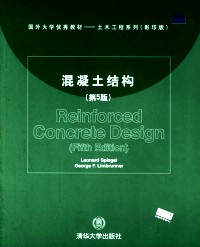
Reinforced concrete design = 混凝土结构 / 5th ed.
副标题:无
作 者:Leonard Spiegel, George F. Limbrunner.
分类号:
ISBN:9787302138372
微信扫一扫,移动浏览光盘
简介
全书为了与新规范相一致而有所变化以外,还增编了一些段落,增添了一些新的课外作业(包括一些扩展性习题),并在书后提供了部分作业的解答。
在第5版全书中,仍然保持有许多用一种基本的、非计算的、实用的方法来设计和分析钢筋混凝土构件的例题,也保持着采用一种分段解题的方式加以阐述。此外,有些章节还提供了有关预应力混凝土和钢筋混凝土细部设计等方面的概念。书中有一个附录引进了国际单位制(SI),附有例题,这是因为在美国已逐渐有了将国际单位制用于钢筋混凝土设计和施工中的势头。
在大多数有混凝土构件的结构设计中,模板设计是一个需要考虑的重要方面;本书第12章说明了在工地现场制作用于板、梁、柱的模板的设计步骤,并附有相应表格,它可以加快模板的设计过程。
目录
chapter 1 materials and mechanics of bending
1-1 concrete.
1-2 the aci building code
1-3 cement and water
1-4 aggregates
1-5 concrete in compression
1-6 concrete in tension
1-7 reinforcing steel
1-8 beams: mechanics of bending review
references
problems
chapter 2 rectangular reinforced concrete beams and slabs: tension steel only
2-1 introduction
2-2 methods of analysis and design
2-3 behavior under load
2-4 strength design method assumptions
2-5 flexural strength of rectangular beams
2-6 equivalent stress distribution
2-7 balanced, overreinforced, and underreinforced beams
2-8 reinforcement ratio limitations and guidelines
.2-9 strength requirements
2-10 rectangular beam analysis for moment (tension reinforcement only)
2-11 summary of procedure for rectangular beam analysis for φmn (tension reinforcement only)
2-12 slabs: introduction
2-13 one-way slabs: analysis for moment
2-14 rectangular beam design for moment (tension reinforcement only)
2-15 summary of procedure for rectangular reinforced concrete beam design for moment (tension reinforcement only)
2-16 design of one-way slabs for moment (tension reinforcement only)
2-17 summary of procedure for design of one-way slabs for moment (to satisfy aci minimum h)
2-18 slabs on ground
references
problems
chapter 3 reinforced concrete beams: t-beams and doubly reinforced beams
3-1 t-beams: introduction
3-2 t-beam analysis
3-3 development of t-beam as.max
3-4 analysis of beams having irregular cross sections
3-5 t-beam design (for moment)
3-6 summary of procedure for analysis of t-beams (for moment)
3-7 summary of procedure for design of t-beams (for moment)
3-8 doubly reinforced beams: introduction
3-9 doubly reinforced beam analysis for moment (condition i)
3-10 doubly reinforced beam analysis for moment (condition ii)
3-11 summary of procedure for analysis of doubly reinforced beams (for moment)
3-12 doubly reinforced beam design for moment
3-13 summary of procedure for design of doubly reinforced beams (for moment)
3-14 additional code requirements for doubly reinforced beams
problems
chapter 4 shear in beams
4-1 introduction
4-2 shear reinforcement design requirements
4-3 shear analysis procedure
4-4 stirrup design procedure
4-5 torsion: introduction
4-6 design of torsion reinforcement
problems
chapter 5 development, splices, and simple-span bar cutoffs
5-1 development length: introduction
5-2 development length: tension bars
5-3 development length: compression bars
5-4 development length: standard hooks in tension
5-5 development of web reinforcement
5-6 splices
5-7 tension splices
5-8 compression splices
5-9 simple-span bar cutoffs and bends
5-10 code requirements for development of positive moment steel at
simple supports
problems
chapter 6 continuous construction design considerations
6-1 introduction
6-2 continuous-span bar cutoffs
6-3 design of continuous floor systems
problems
chapter 7 serviceability
7-1 introduction
7-2 deflections
7-3 calculation of icr
7-4 immediate deflection
7-5 long-term deflection
7-6 deflections for continuous spans
7-7 crack control..
problems
chapter 8 walls
8-1 introduction
8-2 lateral forces on retaining walls
8-3 design of reinforced concrete cantilever retaining walls
8-4 design considerations for bearing walls
8-5 design considerations for basement walls
problems
chapter 9 columns
9-1 introduction
9-2 strength of reinforced concrete columns: small eccentricity
9-3 code requirements concerning column details
9-4 analysis of short columns: small eccentricity
9-5 design of short columns: small eccentricity
9-6 summary of procedure for analysis and design of short columns with
small eccentricities
9-7 the load-moment relationship
9-8 columns subjected to axial load at large eccentricity
9-9 analysis of short columns: large eccentricity
9-10 φ factor considerations
9-11 the slender column
references
problems
chapter 10 footings
10-1 introduction
10-2 wall footings
10-3 wall footings under light loads
10-4 individual reinforced concrete footings for columns
10-5 square reinforced concrete footings
10-6 rectangular reinforced concrete footings
10-7 eccentrically loaded footings
10-8 combined footings
10-9 cantilever or strap footings
problems
chapter 11 prestressed concrete fundamentals
11-1 introduction
11-2 design approach and basic concepts
11-3 stress patterns in prestressed concrete beams
11-4 prestressed concrete materials
11-5 analysis of rectangular prestressed concrete beams
11-6 alternative methods of elastic analysis: internal couple method
11-7 alternative methods of elastic analysis: load balancing method
11-8 flexural strength analysis
11-9 notes on prestressed concrete design
references
problems
chapter 12 concrete formwork
12-1 introduction
12-2 formwork requirements
12-3 formwork materials and accessories
12-4 loads and pressures on forms
12-5 the design approach
12-6 design of formwork for slabs
12-7 design of formwork for beams
12-8 wall form design
12-9 forms for columns
references
problems
chapter 13 detailing reinforced concrete structures
13-1 introduction
13-2 placing drawings
13-3 marking systems and bar marks
13-4 schedules
13-5 fabricating standards
13-6 bar lists
13-7 extras
13-8 bar supports and bar placement
13-9 computer detailing
references
appendix a tables
appendix b supplementary aids and guidelines
b-1 accuracy for computations for reinforced concrete
b-2 as,max for doubly reinforced beams
b-3 flow diagrams
appendix c metrication
c-1 the international system of units (si)
c-2 si style and usage
c-3 conversion factors
references
answers to selected problems
index...
1-1 concrete.
1-2 the aci building code
1-3 cement and water
1-4 aggregates
1-5 concrete in compression
1-6 concrete in tension
1-7 reinforcing steel
1-8 beams: mechanics of bending review
references
problems
chapter 2 rectangular reinforced concrete beams and slabs: tension steel only
2-1 introduction
2-2 methods of analysis and design
2-3 behavior under load
2-4 strength design method assumptions
2-5 flexural strength of rectangular beams
2-6 equivalent stress distribution
2-7 balanced, overreinforced, and underreinforced beams
2-8 reinforcement ratio limitations and guidelines
.2-9 strength requirements
2-10 rectangular beam analysis for moment (tension reinforcement only)
2-11 summary of procedure for rectangular beam analysis for φmn (tension reinforcement only)
2-12 slabs: introduction
2-13 one-way slabs: analysis for moment
2-14 rectangular beam design for moment (tension reinforcement only)
2-15 summary of procedure for rectangular reinforced concrete beam design for moment (tension reinforcement only)
2-16 design of one-way slabs for moment (tension reinforcement only)
2-17 summary of procedure for design of one-way slabs for moment (to satisfy aci minimum h)
2-18 slabs on ground
references
problems
chapter 3 reinforced concrete beams: t-beams and doubly reinforced beams
3-1 t-beams: introduction
3-2 t-beam analysis
3-3 development of t-beam as.max
3-4 analysis of beams having irregular cross sections
3-5 t-beam design (for moment)
3-6 summary of procedure for analysis of t-beams (for moment)
3-7 summary of procedure for design of t-beams (for moment)
3-8 doubly reinforced beams: introduction
3-9 doubly reinforced beam analysis for moment (condition i)
3-10 doubly reinforced beam analysis for moment (condition ii)
3-11 summary of procedure for analysis of doubly reinforced beams (for moment)
3-12 doubly reinforced beam design for moment
3-13 summary of procedure for design of doubly reinforced beams (for moment)
3-14 additional code requirements for doubly reinforced beams
problems
chapter 4 shear in beams
4-1 introduction
4-2 shear reinforcement design requirements
4-3 shear analysis procedure
4-4 stirrup design procedure
4-5 torsion: introduction
4-6 design of torsion reinforcement
problems
chapter 5 development, splices, and simple-span bar cutoffs
5-1 development length: introduction
5-2 development length: tension bars
5-3 development length: compression bars
5-4 development length: standard hooks in tension
5-5 development of web reinforcement
5-6 splices
5-7 tension splices
5-8 compression splices
5-9 simple-span bar cutoffs and bends
5-10 code requirements for development of positive moment steel at
simple supports
problems
chapter 6 continuous construction design considerations
6-1 introduction
6-2 continuous-span bar cutoffs
6-3 design of continuous floor systems
problems
chapter 7 serviceability
7-1 introduction
7-2 deflections
7-3 calculation of icr
7-4 immediate deflection
7-5 long-term deflection
7-6 deflections for continuous spans
7-7 crack control..
problems
chapter 8 walls
8-1 introduction
8-2 lateral forces on retaining walls
8-3 design of reinforced concrete cantilever retaining walls
8-4 design considerations for bearing walls
8-5 design considerations for basement walls
problems
chapter 9 columns
9-1 introduction
9-2 strength of reinforced concrete columns: small eccentricity
9-3 code requirements concerning column details
9-4 analysis of short columns: small eccentricity
9-5 design of short columns: small eccentricity
9-6 summary of procedure for analysis and design of short columns with
small eccentricities
9-7 the load-moment relationship
9-8 columns subjected to axial load at large eccentricity
9-9 analysis of short columns: large eccentricity
9-10 φ factor considerations
9-11 the slender column
references
problems
chapter 10 footings
10-1 introduction
10-2 wall footings
10-3 wall footings under light loads
10-4 individual reinforced concrete footings for columns
10-5 square reinforced concrete footings
10-6 rectangular reinforced concrete footings
10-7 eccentrically loaded footings
10-8 combined footings
10-9 cantilever or strap footings
problems
chapter 11 prestressed concrete fundamentals
11-1 introduction
11-2 design approach and basic concepts
11-3 stress patterns in prestressed concrete beams
11-4 prestressed concrete materials
11-5 analysis of rectangular prestressed concrete beams
11-6 alternative methods of elastic analysis: internal couple method
11-7 alternative methods of elastic analysis: load balancing method
11-8 flexural strength analysis
11-9 notes on prestressed concrete design
references
problems
chapter 12 concrete formwork
12-1 introduction
12-2 formwork requirements
12-3 formwork materials and accessories
12-4 loads and pressures on forms
12-5 the design approach
12-6 design of formwork for slabs
12-7 design of formwork for beams
12-8 wall form design
12-9 forms for columns
references
problems
chapter 13 detailing reinforced concrete structures
13-1 introduction
13-2 placing drawings
13-3 marking systems and bar marks
13-4 schedules
13-5 fabricating standards
13-6 bar lists
13-7 extras
13-8 bar supports and bar placement
13-9 computer detailing
references
appendix a tables
appendix b supplementary aids and guidelines
b-1 accuracy for computations for reinforced concrete
b-2 as,max for doubly reinforced beams
b-3 flow diagrams
appendix c metrication
c-1 the international system of units (si)
c-2 si style and usage
c-3 conversion factors
references
answers to selected problems
index...
Reinforced concrete design = 混凝土结构 / 5th ed.
- 名称
- 类型
- 大小
光盘服务联系方式: 020-38250260 客服QQ:4006604884
云图客服:
用户发送的提问,这种方式就需要有位在线客服来回答用户的问题,这种 就属于对话式的,问题是这种提问是否需要用户登录才能提问
Video Player
×
Audio Player
×
pdf Player
×
