

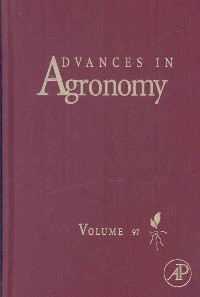
Advances in agronomy. V.97 /
副标题:无
分类号:
ISBN:9780123743527
微信扫一扫,移动浏览光盘
简介
Summary:
Publisher Summary 1
Advances in Agronomy continues to be recognized as a leading reference and a first-rate source for the latest research in agronomy. As always, the subjects covered are varied and exemplary of the myriad of subject matter dealt with by this long-running serial.
* Maintains the highest impact factor among serial publications in Agriculture
* Presents timely reviews on important agronomy issues
* Enjoys a long-standing reputation for excellence in the field
目录
Table Of Contents:
Contributors ix
Preface xiii
1. Impact of Global Warming on Soil Organic Carbon
Pete Smith, Changming Fang, Julian J.C. Dawson, and John B. Moncrieff
1. Introduction 2
1.1. Scope of the review 2
1.2. Recent trends in global temperature 3
1.3. Why is the response of soil carbon response to global warming important? 5
2. Factors Affecting the Response of SOC to Global Warming 6
2.1. The balance of carbon inputs to, and outputs from, the soil 6
2.2. Increasing decomposition rate under global warming 7
2.3. Global and regional trends in changes in NPP and SOC loss 9
2.4. Overall impact鈥攖ransient versus equilibrium effects 10
3. Temperature Sensitivity of SOC Pools 12
3.1. Summary of the debate on temperature sensitivity 12
3.2. Apparent versus actual temperature sensitivity 14
3.3. Q10 and beyond 16
4. Methods for Measuring Soil Responses to Global Warming 18
4.1. Soil respiration measurements in the laboratory 18
4.2. Soil respiration measurements in the field 19
4.3. Manipulation methods in the field 22
4.4. Eddy covariance for total net ecosystem exchange 25
5. Approaches to Modeling Soil Responses to Global Warming 26
5.1. Soil decomposition in models 26
5.2. Carbon input to the soil in models 29
6. How Will Soil Carbon Respond the Global Warming? 29
6.1 New perspectives 29
6.2 Reducing the vulnerability of soil C to the impacts of global warming 31
7. Conclusions 32
References 33
2. Some Prospective Strategies for Improving Crop Salt Tolerance 45
M. Ashraf, H.R. Athar, P.J.C. Harris, and T.R. Kwon
1. Introduction 46
2. Presowing Seed Treatment: A Shotgun Approach to Enhance Crop Salt Tolerance 47
2.1. Osmopriming 48
2.2. Halopriming 48
2.3. Hydropriming 49
2.4. Thermopriming 49
2.5. Hormone-priming 50
3. Exogenous Application of Osmolytes, Osmoprotectants, and PGRs 51
3.1. Glycine betaine 52
3.2. Proline 53
3.3. Plant growth regulators 57
3.4. Supply of nutrients through the rooting medium 62
3.5. Foliar application of macronutrients 64
4. Breeding for Salt Tolerance 65
4.1. Mutation breeding 66
4.2. Identification of traits using advanced molecular techniques 68
4.3. Molecular breeding for salt tolerance 69
5. Conclusion and Future Prospects 90
References 92
3. Succession of Arbuscular Mycorrhizal Fungi: Patterns, Causes, and Considerations for Organic Agriculture 111
Jeff S. Piotrowski and Matthias C. Rillig
1. Introduction 112
2. Are There Predictable Patterns of AMF Succession? 114
2.1. Succession in natural systems 114
2.2. AMF succession in organically managed agricultural systems 116
3. Potential Environmental Drivers of AMF Succession in Organic Management 118
3.1. Long-term abiotic changes of organic management that can affect AMF 119
3.2. Long-term biotic changes affecting AMF 121
3.3. Inoculum immigration 122
4. Consequences of AMF Succession to Production 122
5. Can We Manage AMF Succession in Organic Agriculture? 124
5.1. Managing succession of AMF abundance 124
5.2. Maintaining AMF species composition 124
6. Future Research Needs to Improve AMF Application 125
6.1. Measures of persistence 125
6.2. Physiological studies and environmental match of AM species and ecotypes 125
6.3. Characterization of native communities 126
7. Conclusions 126
References 127
4. Modeling N Dynamics to Assess Environmental Impacts of Cropped Soils 131
P. Cannavo, S. Recous, V. Parnaudeau, and R. Reau
1. Introduction 139
2. Models Survey and Their Characteristics 140
2.1. Methodology 140
2.2. Models characteristics 143
2.3. Conclusions 149
3. Description of Equations Used for Nitrogen Processes Calculations 150
3.1. Nitrogen uptake 150
3.2. Nitrification 157
3.3. Denitrification 157
3.4. Mineralization 158
3.5. Volatilization 159
3.6. Fixation 159
3.7. Leaching 160
3.8. Correction factors applied to N transformation rates 160
4. Critical Analysis of the Models 161
4.1. Equations used in models 161
4.2. Model performance 162
5. Conclusions: Current Limits and Challenges 166
Acknowledgments 168
References 168
5. The Role of Scientists in Multiscale Land Use Analysis: Lessons Learned from Dutch Communities of Practice 175
J. Bouma, J.A. de Vos, M.P.W. Sonneveld, G.B.M. Heuvelink, and J.J. Stoorvogel
1. Introduction 177
2. The Available Toolkit for Up- and Downscaling 180
2.1. Introduction and rationale 180
2.2. Tools for upscaling 181
2.3. Tools for downscaling 187
3. Four Considerations When Dealing with Interactive Research 188
3.1. Introduction 188
3.2. The role of scientists as knowledge facilitators 188
3.3. Different levels of knowledge in a given discipline 188
3.4. Long-term engagement when following the policy cycle 190
3.5. Avoid getting lost 190
4. Introduction to the Case Studies 191
4.1. Selecting relevant spatial levels to be considered in a demand analysis 191
4.2. Format for analyzing the case studies 192
5. Case Studies at Farm Level 193
5.1. Introduction 193
5.2. Case study Van Bergeijk: Precision agriculture 193
5.3. Case study Spruit: Production of "new" manure 201
6. Case Study at Regional Level 211
6.1. Introduction 211
6.2. Case study NFW: Agriculture in a national landscape 215
7. General Conclusions and Recommendations 231
Acknowledgments 233
References 234
6. Soil Structure: A History from Tilth to Habitat 239
Benno P. Warkentin
1. Introduction 240
2. Early Historical Concepts 242
2.1. Soil structure in pre-renaissance writing 242
2.2. From 1450 to 1850 243
3. From 1850 to 1930 245
3.1. Beginnings of soil physics 245
3.2. Changing concepts of soil structure 247
3.3. Early soil textbooks and the plow 249
4. From 1930 to 1950 250
4.1. Aggregates 250
4.2. Aggregation 252
4.3. Field description of soil structure 254
5. From 1950 to 1980 256
5.1. Aggregation and tilth 256
5.2. Soil structure and soil erosion 256
5.3. Soil mechanics studies of soil structure 259
5.4. Soil compaction 261
5.5. The tilth story summary 262
6. Architecture for Soil Functions After 198o 263
6.1. Structure or architecture and ecosystems 263
6.2. The char story 265
6.3. Tillage after 1980 266
6.4. The developing story of architecture (or structure) as habitat 267
7. Summary 268
Acknowledgments 269
References 269
7. Long-Term Cereal-Based Rotation Trials in the Mediterranean Region: Implications for Cropping Sustainability 273
John Ryan, Murari Singh, and Mustafa Pala
1. Introduction 274
2. Perspective on Global Long-Term Cropping System Trials 276
2.1. The concept of sustainable cropping 276
2.2. Relevance to current conditions 277
3. The Mediterranean Region 279
3.1. Climate and environmental conditions 279
3.2. Soil and water resources 282
3.3. Cropping systems and rotations 284
4. Overview of Long-Term Trials in the Mediterranean Region 285
4.1. North Africa 286
4.2. West Asia 288
5. Cropping System Trials at ICARDA in Syria 290
5.1. Rationale for long-term experimentation 290
5.2. Multiyear rotation and tillage trials 291
6. Synthesis of Long-Term Cropping System Trials at ICARDA 294
6.1. Crop yield trends: Cereal, food, and forage legumes 294
6.2. Quality components of grain and straw 298
6.3. Soil mineral nitrogen and nitrogen cycling 298
6.4. Potential benefits for soil quality 300
6.5. Crop water use and water use efficiency 303
6.6. Phosphorus dynamics in arable soils and rangeland 305
6.7. Economic assessment 306
7. Statistical Trends in Crop Rotations 307
7.1. Estimation of time trends 308
8. Lessons Learned 309
9. Future Strategies 311
Acknowledgments 312
References 312
8. Imaging Spectrometry for Soil Applications 321
E. Ben-Dor, R.G. Taylor, J. Hill, J.A.M. Dematte, M.L. Whiting, S. Chabrillat, and S. Sommer
1. Introduction 322
2. Part I 324
2.1. Fundamentals of IS and spectral analyses of soils 324
2.2. The importance of IS for soil 329
2.3. IS for soil applications: Some difficulties 338
2.4. Summary and conclusion of Part I 339
3. Part II 340
3.1. IS: Case-studies in soil science 340
3.2. Summary and conclusions of Part II 379
4. General Summary and Concluding Remarks 380
References 382
Index 393
Contributors ix
Preface xiii
1. Impact of Global Warming on Soil Organic Carbon
Pete Smith, Changming Fang, Julian J.C. Dawson, and John B. Moncrieff
1. Introduction 2
1.1. Scope of the review 2
1.2. Recent trends in global temperature 3
1.3. Why is the response of soil carbon response to global warming important? 5
2. Factors Affecting the Response of SOC to Global Warming 6
2.1. The balance of carbon inputs to, and outputs from, the soil 6
2.2. Increasing decomposition rate under global warming 7
2.3. Global and regional trends in changes in NPP and SOC loss 9
2.4. Overall impact鈥攖ransient versus equilibrium effects 10
3. Temperature Sensitivity of SOC Pools 12
3.1. Summary of the debate on temperature sensitivity 12
3.2. Apparent versus actual temperature sensitivity 14
3.3. Q10 and beyond 16
4. Methods for Measuring Soil Responses to Global Warming 18
4.1. Soil respiration measurements in the laboratory 18
4.2. Soil respiration measurements in the field 19
4.3. Manipulation methods in the field 22
4.4. Eddy covariance for total net ecosystem exchange 25
5. Approaches to Modeling Soil Responses to Global Warming 26
5.1. Soil decomposition in models 26
5.2. Carbon input to the soil in models 29
6. How Will Soil Carbon Respond the Global Warming? 29
6.1 New perspectives 29
6.2 Reducing the vulnerability of soil C to the impacts of global warming 31
7. Conclusions 32
References 33
2. Some Prospective Strategies for Improving Crop Salt Tolerance 45
M. Ashraf, H.R. Athar, P.J.C. Harris, and T.R. Kwon
1. Introduction 46
2. Presowing Seed Treatment: A Shotgun Approach to Enhance Crop Salt Tolerance 47
2.1. Osmopriming 48
2.2. Halopriming 48
2.3. Hydropriming 49
2.4. Thermopriming 49
2.5. Hormone-priming 50
3. Exogenous Application of Osmolytes, Osmoprotectants, and PGRs 51
3.1. Glycine betaine 52
3.2. Proline 53
3.3. Plant growth regulators 57
3.4. Supply of nutrients through the rooting medium 62
3.5. Foliar application of macronutrients 64
4. Breeding for Salt Tolerance 65
4.1. Mutation breeding 66
4.2. Identification of traits using advanced molecular techniques 68
4.3. Molecular breeding for salt tolerance 69
5. Conclusion and Future Prospects 90
References 92
3. Succession of Arbuscular Mycorrhizal Fungi: Patterns, Causes, and Considerations for Organic Agriculture 111
Jeff S. Piotrowski and Matthias C. Rillig
1. Introduction 112
2. Are There Predictable Patterns of AMF Succession? 114
2.1. Succession in natural systems 114
2.2. AMF succession in organically managed agricultural systems 116
3. Potential Environmental Drivers of AMF Succession in Organic Management 118
3.1. Long-term abiotic changes of organic management that can affect AMF 119
3.2. Long-term biotic changes affecting AMF 121
3.3. Inoculum immigration 122
4. Consequences of AMF Succession to Production 122
5. Can We Manage AMF Succession in Organic Agriculture? 124
5.1. Managing succession of AMF abundance 124
5.2. Maintaining AMF species composition 124
6. Future Research Needs to Improve AMF Application 125
6.1. Measures of persistence 125
6.2. Physiological studies and environmental match of AM species and ecotypes 125
6.3. Characterization of native communities 126
7. Conclusions 126
References 127
4. Modeling N Dynamics to Assess Environmental Impacts of Cropped Soils 131
P. Cannavo, S. Recous, V. Parnaudeau, and R. Reau
1. Introduction 139
2. Models Survey and Their Characteristics 140
2.1. Methodology 140
2.2. Models characteristics 143
2.3. Conclusions 149
3. Description of Equations Used for Nitrogen Processes Calculations 150
3.1. Nitrogen uptake 150
3.2. Nitrification 157
3.3. Denitrification 157
3.4. Mineralization 158
3.5. Volatilization 159
3.6. Fixation 159
3.7. Leaching 160
3.8. Correction factors applied to N transformation rates 160
4. Critical Analysis of the Models 161
4.1. Equations used in models 161
4.2. Model performance 162
5. Conclusions: Current Limits and Challenges 166
Acknowledgments 168
References 168
5. The Role of Scientists in Multiscale Land Use Analysis: Lessons Learned from Dutch Communities of Practice 175
J. Bouma, J.A. de Vos, M.P.W. Sonneveld, G.B.M. Heuvelink, and J.J. Stoorvogel
1. Introduction 177
2. The Available Toolkit for Up- and Downscaling 180
2.1. Introduction and rationale 180
2.2. Tools for upscaling 181
2.3. Tools for downscaling 187
3. Four Considerations When Dealing with Interactive Research 188
3.1. Introduction 188
3.2. The role of scientists as knowledge facilitators 188
3.3. Different levels of knowledge in a given discipline 188
3.4. Long-term engagement when following the policy cycle 190
3.5. Avoid getting lost 190
4. Introduction to the Case Studies 191
4.1. Selecting relevant spatial levels to be considered in a demand analysis 191
4.2. Format for analyzing the case studies 192
5. Case Studies at Farm Level 193
5.1. Introduction 193
5.2. Case study Van Bergeijk: Precision agriculture 193
5.3. Case study Spruit: Production of "new" manure 201
6. Case Study at Regional Level 211
6.1. Introduction 211
6.2. Case study NFW: Agriculture in a national landscape 215
7. General Conclusions and Recommendations 231
Acknowledgments 233
References 234
6. Soil Structure: A History from Tilth to Habitat 239
Benno P. Warkentin
1. Introduction 240
2. Early Historical Concepts 242
2.1. Soil structure in pre-renaissance writing 242
2.2. From 1450 to 1850 243
3. From 1850 to 1930 245
3.1. Beginnings of soil physics 245
3.2. Changing concepts of soil structure 247
3.3. Early soil textbooks and the plow 249
4. From 1930 to 1950 250
4.1. Aggregates 250
4.2. Aggregation 252
4.3. Field description of soil structure 254
5. From 1950 to 1980 256
5.1. Aggregation and tilth 256
5.2. Soil structure and soil erosion 256
5.3. Soil mechanics studies of soil structure 259
5.4. Soil compaction 261
5.5. The tilth story summary 262
6. Architecture for Soil Functions After 198o 263
6.1. Structure or architecture and ecosystems 263
6.2. The char story 265
6.3. Tillage after 1980 266
6.4. The developing story of architecture (or structure) as habitat 267
7. Summary 268
Acknowledgments 269
References 269
7. Long-Term Cereal-Based Rotation Trials in the Mediterranean Region: Implications for Cropping Sustainability 273
John Ryan, Murari Singh, and Mustafa Pala
1. Introduction 274
2. Perspective on Global Long-Term Cropping System Trials 276
2.1. The concept of sustainable cropping 276
2.2. Relevance to current conditions 277
3. The Mediterranean Region 279
3.1. Climate and environmental conditions 279
3.2. Soil and water resources 282
3.3. Cropping systems and rotations 284
4. Overview of Long-Term Trials in the Mediterranean Region 285
4.1. North Africa 286
4.2. West Asia 288
5. Cropping System Trials at ICARDA in Syria 290
5.1. Rationale for long-term experimentation 290
5.2. Multiyear rotation and tillage trials 291
6. Synthesis of Long-Term Cropping System Trials at ICARDA 294
6.1. Crop yield trends: Cereal, food, and forage legumes 294
6.2. Quality components of grain and straw 298
6.3. Soil mineral nitrogen and nitrogen cycling 298
6.4. Potential benefits for soil quality 300
6.5. Crop water use and water use efficiency 303
6.6. Phosphorus dynamics in arable soils and rangeland 305
6.7. Economic assessment 306
7. Statistical Trends in Crop Rotations 307
7.1. Estimation of time trends 308
8. Lessons Learned 309
9. Future Strategies 311
Acknowledgments 312
References 312
8. Imaging Spectrometry for Soil Applications 321
E. Ben-Dor, R.G. Taylor, J. Hill, J.A.M. Dematte, M.L. Whiting, S. Chabrillat, and S. Sommer
1. Introduction 322
2. Part I 324
2.1. Fundamentals of IS and spectral analyses of soils 324
2.2. The importance of IS for soil 329
2.3. IS for soil applications: Some difficulties 338
2.4. Summary and conclusion of Part I 339
3. Part II 340
3.1. IS: Case-studies in soil science 340
3.2. Summary and conclusions of Part II 379
4. General Summary and Concluding Remarks 380
References 382
Index 393
Advances in agronomy. V.97 /
- 名称
- 类型
- 大小
光盘服务联系方式: 020-38250260 客服QQ:4006604884
云图客服:
用户发送的提问,这种方式就需要有位在线客服来回答用户的问题,这种 就属于对话式的,问题是这种提问是否需要用户登录才能提问
Video Player
×
Audio Player
×
pdf Player
×
