

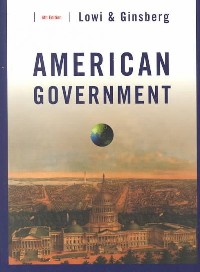
简介
A textbook for a first course that Lowi (Cornell U.) and Ginsburg (Johns Hopkins U.) have revised almost yearly since the first edition in 1990. Recognizing the theater inherent in politics, they include many narratives in which characters deal with the facts of complex situations they find themselves in. The broad sections cover the historical foundations, institutions, politics, and governance. A study guide is available on the Web. Annotation c. Book News, Inc., Portland, OR (booknews.com)
目录
Preface p. xv
Foundations
Freedom and Power: An Introduction to the Problem p. 3
Government and Control p. 9
Foundations of Government p. 10
Forms of Government p. 11
Why is Government Necessary? p. 12
Influencing the Government: Politics p. 14
From Coercion to Consent p. 16
The Extraction-Coercion Cycle p. 16
Limits and Democratization p. 17
The Great Transformation: Tying Democracy to Strong Government p. 23
Freedom and Power: The Problem p. 23
For Further Reading p. 25
Constructing a Government: The Founding and the Constitution p. 27
The First Founding: Interests and Conflicts p. 30
British Taxes and Colonial Interests p. 30
Political Strife and the Radicalizing of the Colonists p. 32
The Declaration of Independence p. 32
The Articles of Confederation p. 34
The Second Founding: From Compromise to Constitution p. 34
International Standing and Balance of Power p. 34
The Annapolis Convention p. 34
Shays's Rebellion p. 35
The Constitutional Convention p. 35
The Constitution p. 41
The Legislative Branch p. 42
The Executive Branch p. 43
The Judicial Branch p. 44
National Unity and Power p. 45
Amending the Constitution p. 46
Ratifying the Constitution p. 46
Constitutional Limits on the National Government's Power p. 46
The Fight for Ratification p. 47
Federalists versus Antifederalists p. 49
Changing the Framework: Constitutional Amendment p. 56
Amendments: Many Are Called, Few Are Chosen p. 56
The Case of the Equal Rights Amendment p. 57
Which Were Chosen? An Analysis of the Twenty-Seven p. 59
Reflections on the Founding: Principles or Interests? p. 63
Summary p. 65
For Further Reading p. 66
The Constitutional Framework: Federalism and the Separation of Powers p. 67
The Federal Framework p. 72
Dividing National Power with Dual Federalism, 1789-1937 p. 73
Federalism as a Limitation on the National Government's Power p. 76
The Changing Role of the States p. 79
Who Does What? The Changing Federal Framework p. 90
The Second Principle: The Separation of Powers p. 100
Checks and Balances p. 100
Legislative Supremacy p. 102
The Constitution and Limited Government p. 105
Summary p. 107
For Further Reading p. 108
The Constitutional Framework and the Individual: Civil Liberties and Civil Rights p. 109
Civil Liberties: Nationalizing the Bill of Rights p. 114
Dual Citizenship p. 115
The Fourteenth Amendment p. 116
The Second Constitutional Revolution p. 120
Rehnquist: A De-nationalizing Trend? p. 122
Civil Rights p. 126
Plessy v. Ferguson: "Separate but Equal" p. 127
Racial Discrimination after World War II p. 128
Simple Justice: The Courts, the Constitution, and Civil Rights after Brown v. Board of Education p. 131
The Rise of the Politics of Rights p. 138
Affirmative Action p. 144
Reflections on Government, Liberties, and Rights p. 154
Summary p. 156
For Further Reading p. 158
Institutions
Congress: The First Branch p. 161
Representation p. 165
Sociological versus Agency Representation p. 166
Representation and Elections p. 172
House and Senate: Differences in Representation p. 176
The Organization of Congress p. 178
Party Leadership in the House and the Senate p. 179
The Committee System: The Core of Congress p. 182
The Staff System: Staffers and Agencies p. 185
Informal Organization: The Caucuses p. 187
Rules of Lawmaking: How a Bill Becomes a Law p. 190
Committee Deliberation p. 190
Debate p. 191
Conference Committee: Reconciling House and Senate Versions of a Bill p. 192
Presidential Action p. 194
How Congress Decides p. 195
Constituency p. 195
Interest Groups p. 197
Party Discipline p. 198
Weighing Diverse Influences p. 202
Beyond Legislation: Additional Congressional Powers p. 203
Oversight p. 204
Advice and Consent: Special Senate Powers p. 204
Impeachment p. 205
Power and Representation p. 206
Summary p. 210
For Further Reading p. 213
The President: From Chief Clerk to Chief Executive p. 215
The Constitutional Basis of the Presidency p. 220
The President as Head of State: Some Imperial Qualities p. 221
The Domestic Presidency: The President as Head of Government p. 224
The Rise of Presidential Government p. 233
The Legislative Epoch, 1800-1933 p. 233
The New Deal and the Presidency p. 237
Presidential Government p. 239
Formal Resources of Presidential Power p. 240
Informal Resources of Presidential Power p. 246
Reflections on Presidential Power p. 259
Summary p. 261
For Further Reading p. 262
The Executive Branch: Bureaucracy in a Democracy p. 263
The Bureaucratic Phenomenon p. 267
Bureaucratic Organization p. 267
The Size of the Federal Service p. 268
Bureaucrats p. 272
Agencies and Their Politics p. 274
The Clientele Agencies: Structures and Politics p. 276
Agencies for Maintenance of the Union p. 278
The Regulatory Agencies p. 285
Redistributive Administration--Fiscal/Monetary and Welfare Agencies p. 287
Controlling the Bureaucracy p. 292
President as Chief Executive p. 292
Congress and Responsible Bureaucracy p. 299
Bureaucracy in a Democracy p. 303
Summary p. 304
For Further Reading p. 306
The Federal Courts: Least Dangerous Branch or Imperial Judiciary? p. 307
The Judicial Process p. 310
Cases and the Law p. 311
Types of Courts p. 313
Federal Jurisdiction p. 317
The Lower Federal Courts p. 317
The Appellate Courts p. 318
The Supreme Court p. 318
Judicial Review p. 319
Judicial Review of Acts of Congress p. 319
Judicial Review of State Actions p. 320
Judicial Review and Lawmaking p. 321
How Cases Reach the Supreme Court p. 324
Influences on Supreme Court Decisions p. 327
The Supreme Court Justices p. 327
Controlling the Flow of Cases p. 336
The Case Pattern p. 338
Judicial Power and Politics p. 341
Traditional Limitations on the Federal Courts p. 341
Two Judicial Revolutions p. 342
Summary p. 347
For Further Reading p. 349
Politics
Public Opinion p. 353
The Marketplace of Ideas p. 357
Origins of the Idea Market p. 357
The Idea Market Today p. 359
How Are Political Opinions Formed? p. 367
Shaping Public Opinion p. 369
Enlisting Public Support for Government p. 369
Marketing Political Issues p. 373
Measuring Public Opinion p. 379
Getting Public Opinion Directly from People p. 379
Constructing Public Opinion from Surveys p. 381
Limits to Assessing Political Knowledge with Polls p. 384
Public Opinion, Political Knowledge, and the Importance of Ignorance p. 392
Public Opinion and Government Policy p. 393
Summary p. 397
For Further Reading p. 398
Elections p. 399
Political Participation p. 403
Encouraging Electoral Participation p. 404
Regulating the Electoral Process p. 410
Electoral Composition p. 411
Translating Voters' Choices into Electoral Outcomes p. 415
Insulating Decision-Making Processes p. 419
How Voters Decide p. 423
The Bases of Electoral Choice p. 423
The 1996 and 1998 Elections p. 426
Campaign Issues in the 1996 Election p. 428
Campaign Issues in the 1998 Elections p. 429
Money and Elections p. 430
Sources of Campaign Funds p. 431
Campaign Finance Reform p. 436
Do Elections Matter? p. 438
The Decline of Voting p. 438
The Consequences of Consent p. 442
Summary p. 444
For Further Reading p. 444
Political Parties p. 447
What are Political Parties? p. 451
Outgrowths of the Electoral Process p. 451
Outgrowths of the Policy-making Process p. 451
Party Organization: The Committees p. 452
The Two-Party System in America p. 457
Historical Origins p. 457
Electoral Alignments and Realignments p. 461
American Third Parties p. 463
Functions of the Parties p. 466
Recruiting Candidates p. 467
Nominations p. 467
The Role of the Parties in Getting Out the Vote p. 472
Facilitation of Mass Electoral Choice p. 473
The Parties' Influence on National Government p. 476
President and Party p. 478
Weakening of Party Organization p. 479
High-Tech Politics p. 479
From Labor-Intensive to Capital-Intensive Politics p. 483
The Role of the Parties in Contemporary Politics p. 487
Summary p. 489
For Further Reading p. 490
Groups and Interests p. 491
Character of Interest Groups p. 496
What Interests Are Represented p. 496
Organizational Components p. 497
The Characteristics of Members p. 498
The Proliferation of Groups p. 499
The Expansion of Government p. 500
The New Politics Movement and Public Interest Groups p. 502
Conservative Interest Groups p. 504
Strategies: The Quest for Political Power p. 505
Lobbying p. 506
Gaining Access p. 510
Using the Courts (Litigation) p. 516
Going Public p. 519
Using Electoral Politics p. 521
Groups and Interests--The Dilemma p. 528
Summary p. 528
For Further Reading p. 530
The Media p. 531
The Media Industry and Government p. 535
Types of Media p. 535
Organization of the Media p. 537
Nationalization of the News p. 539
Regulation of the Broadcast and Electronic Media p. 539
Freedom of the Press p. 543
News Coverage p. 544
Journalists p. 544
Sources of the News p. 547
The Power of Consumers p. 548
Media Power in American Politics p. 552
Shaping Events p. 552
The Sources of Media Power p. 553
The Rise of Adversarial Journalism p. 557
Media Power and Responsibility p. 561
Summary p. 563
For Further Reading p. 563
Governance
Government in Action: Public Policy and the Economy p. 567
The Basis of Public Policy: Public Order p. 571
Why is Government Involved in the Economy? p. 572
The Bases of the Market Economy p. 572
Managing the Economy p. 575
Goals: Substantive Uses of Economic Policy p. 577
Policies for Public Order and Private Property p. 577
Making and Maintaining a National Market Economy p. 578
Maintaining a Capitalist Economy p. 590
Implementing Public Policies: The Techniques of Control p. 600
Promotional Techniques p. 600
Regulatory Techniques p. 603
Redistributive Techniques p. 606
Reflections on the Roles of Government p. 610
Summary p. 611
For Further Reading p. 612
Government and Society p. 613
The Welfare State p. 618
Foundations of the Welfare State p. 621
The Welfare State Evaluated p. 629
Breaking Out of the Circle of Poverty p. 638
Who is Poor? What Can Government Do? p. 644
Summary p. 646
For Further Reading p. 647
Foreign Policy and Democracy p. 649
The Players: The Makers and Shapers of Foreign Policy p. 655
Who Makes Foreign Policy? p. 655
Who Shapes Foreign Policy? p. 656
Putting It Together p. 659
The Values in American Foreign Policy p. 660
Legacies of the Traditional System p. 661
The Great Leap to World Power p. 662
The Instruments of Modern American Foreign Policy p. 663
Diplomacy p. 663
The United Nations p. 665
The International Monetary Structure p. 667
Economic Aid p. 668
Collective Security p. 672
Military Deterrence p. 675
Roles Nations Play p. 677
Choosing a Role p. 677
Roles for America Today p. 679
Summary p. 687
For Further Reading p. 689
Can the Government Govern? p. 691
Divided Government and Its Consequences p. 695
Divided Government--The Phenomenon p. 696
Incremental, Not Innovative, Policies p. 697
Symbolic Politics--A Variation on Incrementalism p. 704
"Politics by Other Means" p. 708
Politics outside the Electoral Arena p. 708
Revelation, Investigation, Prosecution p. 716
Politics and Governance p. 719
Restoring the Government's Capacity to Govern p. 724
For Further Reading p. 726
Epilogue: America the Beacon? p. 727
The Globalization of Capitalism p. 728
America and the Free Market p. 728
The Globalization of Democracy p. 730
America and Democratic Principles p. 733
The Basis for Democracy: Liberty p. 735
Appendix
The Declaration of Independence p. 3
The Articles of Confederation p. 6
The Constitution of the United States of America p. 11
Amendments to the Constitution p. 21
Federalist Papers, Nos. 10, 51 p. 30
Glossary of Terms p. 37
Glossary of Court Cases p. 51
Acknowledgments p. 63
Index p. 65
Foundations
Freedom and Power: An Introduction to the Problem p. 3
Government and Control p. 9
Foundations of Government p. 10
Forms of Government p. 11
Why is Government Necessary? p. 12
Influencing the Government: Politics p. 14
From Coercion to Consent p. 16
The Extraction-Coercion Cycle p. 16
Limits and Democratization p. 17
The Great Transformation: Tying Democracy to Strong Government p. 23
Freedom and Power: The Problem p. 23
For Further Reading p. 25
Constructing a Government: The Founding and the Constitution p. 27
The First Founding: Interests and Conflicts p. 30
British Taxes and Colonial Interests p. 30
Political Strife and the Radicalizing of the Colonists p. 32
The Declaration of Independence p. 32
The Articles of Confederation p. 34
The Second Founding: From Compromise to Constitution p. 34
International Standing and Balance of Power p. 34
The Annapolis Convention p. 34
Shays's Rebellion p. 35
The Constitutional Convention p. 35
The Constitution p. 41
The Legislative Branch p. 42
The Executive Branch p. 43
The Judicial Branch p. 44
National Unity and Power p. 45
Amending the Constitution p. 46
Ratifying the Constitution p. 46
Constitutional Limits on the National Government's Power p. 46
The Fight for Ratification p. 47
Federalists versus Antifederalists p. 49
Changing the Framework: Constitutional Amendment p. 56
Amendments: Many Are Called, Few Are Chosen p. 56
The Case of the Equal Rights Amendment p. 57
Which Were Chosen? An Analysis of the Twenty-Seven p. 59
Reflections on the Founding: Principles or Interests? p. 63
Summary p. 65
For Further Reading p. 66
The Constitutional Framework: Federalism and the Separation of Powers p. 67
The Federal Framework p. 72
Dividing National Power with Dual Federalism, 1789-1937 p. 73
Federalism as a Limitation on the National Government's Power p. 76
The Changing Role of the States p. 79
Who Does What? The Changing Federal Framework p. 90
The Second Principle: The Separation of Powers p. 100
Checks and Balances p. 100
Legislative Supremacy p. 102
The Constitution and Limited Government p. 105
Summary p. 107
For Further Reading p. 108
The Constitutional Framework and the Individual: Civil Liberties and Civil Rights p. 109
Civil Liberties: Nationalizing the Bill of Rights p. 114
Dual Citizenship p. 115
The Fourteenth Amendment p. 116
The Second Constitutional Revolution p. 120
Rehnquist: A De-nationalizing Trend? p. 122
Civil Rights p. 126
Plessy v. Ferguson: "Separate but Equal" p. 127
Racial Discrimination after World War II p. 128
Simple Justice: The Courts, the Constitution, and Civil Rights after Brown v. Board of Education p. 131
The Rise of the Politics of Rights p. 138
Affirmative Action p. 144
Reflections on Government, Liberties, and Rights p. 154
Summary p. 156
For Further Reading p. 158
Institutions
Congress: The First Branch p. 161
Representation p. 165
Sociological versus Agency Representation p. 166
Representation and Elections p. 172
House and Senate: Differences in Representation p. 176
The Organization of Congress p. 178
Party Leadership in the House and the Senate p. 179
The Committee System: The Core of Congress p. 182
The Staff System: Staffers and Agencies p. 185
Informal Organization: The Caucuses p. 187
Rules of Lawmaking: How a Bill Becomes a Law p. 190
Committee Deliberation p. 190
Debate p. 191
Conference Committee: Reconciling House and Senate Versions of a Bill p. 192
Presidential Action p. 194
How Congress Decides p. 195
Constituency p. 195
Interest Groups p. 197
Party Discipline p. 198
Weighing Diverse Influences p. 202
Beyond Legislation: Additional Congressional Powers p. 203
Oversight p. 204
Advice and Consent: Special Senate Powers p. 204
Impeachment p. 205
Power and Representation p. 206
Summary p. 210
For Further Reading p. 213
The President: From Chief Clerk to Chief Executive p. 215
The Constitutional Basis of the Presidency p. 220
The President as Head of State: Some Imperial Qualities p. 221
The Domestic Presidency: The President as Head of Government p. 224
The Rise of Presidential Government p. 233
The Legislative Epoch, 1800-1933 p. 233
The New Deal and the Presidency p. 237
Presidential Government p. 239
Formal Resources of Presidential Power p. 240
Informal Resources of Presidential Power p. 246
Reflections on Presidential Power p. 259
Summary p. 261
For Further Reading p. 262
The Executive Branch: Bureaucracy in a Democracy p. 263
The Bureaucratic Phenomenon p. 267
Bureaucratic Organization p. 267
The Size of the Federal Service p. 268
Bureaucrats p. 272
Agencies and Their Politics p. 274
The Clientele Agencies: Structures and Politics p. 276
Agencies for Maintenance of the Union p. 278
The Regulatory Agencies p. 285
Redistributive Administration--Fiscal/Monetary and Welfare Agencies p. 287
Controlling the Bureaucracy p. 292
President as Chief Executive p. 292
Congress and Responsible Bureaucracy p. 299
Bureaucracy in a Democracy p. 303
Summary p. 304
For Further Reading p. 306
The Federal Courts: Least Dangerous Branch or Imperial Judiciary? p. 307
The Judicial Process p. 310
Cases and the Law p. 311
Types of Courts p. 313
Federal Jurisdiction p. 317
The Lower Federal Courts p. 317
The Appellate Courts p. 318
The Supreme Court p. 318
Judicial Review p. 319
Judicial Review of Acts of Congress p. 319
Judicial Review of State Actions p. 320
Judicial Review and Lawmaking p. 321
How Cases Reach the Supreme Court p. 324
Influences on Supreme Court Decisions p. 327
The Supreme Court Justices p. 327
Controlling the Flow of Cases p. 336
The Case Pattern p. 338
Judicial Power and Politics p. 341
Traditional Limitations on the Federal Courts p. 341
Two Judicial Revolutions p. 342
Summary p. 347
For Further Reading p. 349
Politics
Public Opinion p. 353
The Marketplace of Ideas p. 357
Origins of the Idea Market p. 357
The Idea Market Today p. 359
How Are Political Opinions Formed? p. 367
Shaping Public Opinion p. 369
Enlisting Public Support for Government p. 369
Marketing Political Issues p. 373
Measuring Public Opinion p. 379
Getting Public Opinion Directly from People p. 379
Constructing Public Opinion from Surveys p. 381
Limits to Assessing Political Knowledge with Polls p. 384
Public Opinion, Political Knowledge, and the Importance of Ignorance p. 392
Public Opinion and Government Policy p. 393
Summary p. 397
For Further Reading p. 398
Elections p. 399
Political Participation p. 403
Encouraging Electoral Participation p. 404
Regulating the Electoral Process p. 410
Electoral Composition p. 411
Translating Voters' Choices into Electoral Outcomes p. 415
Insulating Decision-Making Processes p. 419
How Voters Decide p. 423
The Bases of Electoral Choice p. 423
The 1996 and 1998 Elections p. 426
Campaign Issues in the 1996 Election p. 428
Campaign Issues in the 1998 Elections p. 429
Money and Elections p. 430
Sources of Campaign Funds p. 431
Campaign Finance Reform p. 436
Do Elections Matter? p. 438
The Decline of Voting p. 438
The Consequences of Consent p. 442
Summary p. 444
For Further Reading p. 444
Political Parties p. 447
What are Political Parties? p. 451
Outgrowths of the Electoral Process p. 451
Outgrowths of the Policy-making Process p. 451
Party Organization: The Committees p. 452
The Two-Party System in America p. 457
Historical Origins p. 457
Electoral Alignments and Realignments p. 461
American Third Parties p. 463
Functions of the Parties p. 466
Recruiting Candidates p. 467
Nominations p. 467
The Role of the Parties in Getting Out the Vote p. 472
Facilitation of Mass Electoral Choice p. 473
The Parties' Influence on National Government p. 476
President and Party p. 478
Weakening of Party Organization p. 479
High-Tech Politics p. 479
From Labor-Intensive to Capital-Intensive Politics p. 483
The Role of the Parties in Contemporary Politics p. 487
Summary p. 489
For Further Reading p. 490
Groups and Interests p. 491
Character of Interest Groups p. 496
What Interests Are Represented p. 496
Organizational Components p. 497
The Characteristics of Members p. 498
The Proliferation of Groups p. 499
The Expansion of Government p. 500
The New Politics Movement and Public Interest Groups p. 502
Conservative Interest Groups p. 504
Strategies: The Quest for Political Power p. 505
Lobbying p. 506
Gaining Access p. 510
Using the Courts (Litigation) p. 516
Going Public p. 519
Using Electoral Politics p. 521
Groups and Interests--The Dilemma p. 528
Summary p. 528
For Further Reading p. 530
The Media p. 531
The Media Industry and Government p. 535
Types of Media p. 535
Organization of the Media p. 537
Nationalization of the News p. 539
Regulation of the Broadcast and Electronic Media p. 539
Freedom of the Press p. 543
News Coverage p. 544
Journalists p. 544
Sources of the News p. 547
The Power of Consumers p. 548
Media Power in American Politics p. 552
Shaping Events p. 552
The Sources of Media Power p. 553
The Rise of Adversarial Journalism p. 557
Media Power and Responsibility p. 561
Summary p. 563
For Further Reading p. 563
Governance
Government in Action: Public Policy and the Economy p. 567
The Basis of Public Policy: Public Order p. 571
Why is Government Involved in the Economy? p. 572
The Bases of the Market Economy p. 572
Managing the Economy p. 575
Goals: Substantive Uses of Economic Policy p. 577
Policies for Public Order and Private Property p. 577
Making and Maintaining a National Market Economy p. 578
Maintaining a Capitalist Economy p. 590
Implementing Public Policies: The Techniques of Control p. 600
Promotional Techniques p. 600
Regulatory Techniques p. 603
Redistributive Techniques p. 606
Reflections on the Roles of Government p. 610
Summary p. 611
For Further Reading p. 612
Government and Society p. 613
The Welfare State p. 618
Foundations of the Welfare State p. 621
The Welfare State Evaluated p. 629
Breaking Out of the Circle of Poverty p. 638
Who is Poor? What Can Government Do? p. 644
Summary p. 646
For Further Reading p. 647
Foreign Policy and Democracy p. 649
The Players: The Makers and Shapers of Foreign Policy p. 655
Who Makes Foreign Policy? p. 655
Who Shapes Foreign Policy? p. 656
Putting It Together p. 659
The Values in American Foreign Policy p. 660
Legacies of the Traditional System p. 661
The Great Leap to World Power p. 662
The Instruments of Modern American Foreign Policy p. 663
Diplomacy p. 663
The United Nations p. 665
The International Monetary Structure p. 667
Economic Aid p. 668
Collective Security p. 672
Military Deterrence p. 675
Roles Nations Play p. 677
Choosing a Role p. 677
Roles for America Today p. 679
Summary p. 687
For Further Reading p. 689
Can the Government Govern? p. 691
Divided Government and Its Consequences p. 695
Divided Government--The Phenomenon p. 696
Incremental, Not Innovative, Policies p. 697
Symbolic Politics--A Variation on Incrementalism p. 704
"Politics by Other Means" p. 708
Politics outside the Electoral Arena p. 708
Revelation, Investigation, Prosecution p. 716
Politics and Governance p. 719
Restoring the Government's Capacity to Govern p. 724
For Further Reading p. 726
Epilogue: America the Beacon? p. 727
The Globalization of Capitalism p. 728
America and the Free Market p. 728
The Globalization of Democracy p. 730
America and Democratic Principles p. 733
The Basis for Democracy: Liberty p. 735
Appendix
The Declaration of Independence p. 3
The Articles of Confederation p. 6
The Constitution of the United States of America p. 11
Amendments to the Constitution p. 21
Federalist Papers, Nos. 10, 51 p. 30
Glossary of Terms p. 37
Glossary of Court Cases p. 51
Acknowledgments p. 63
Index p. 65
- 名称
- 类型
- 大小
光盘服务联系方式: 020-38250260 客服QQ:4006604884
云图客服:
用户发送的提问,这种方式就需要有位在线客服来回答用户的问题,这种 就属于对话式的,问题是这种提问是否需要用户登录才能提问
Video Player
×
Audio Player
×
pdf Player
×
