

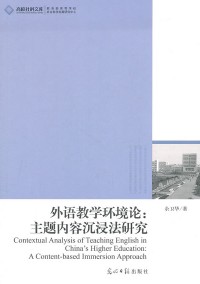
Contextual analysis of teaching English in China’s higher education:a content-based immersion approach
副标题:无
作 者:余卫华著
分类号:
ISBN:9787511207302
微信扫一扫,移动浏览光盘
简介
该书运用国际上最新的主题内容教学法(content-based
instruction) 和双语沉浸法(bilingual
immersion)相结合的双语教育理论和有关研究成果,结合对中国高校学习英语的非英语专业的学生进行的实证访谈调查,指出了当前中国高等教育中非英语专业的英语教育(包括英语语言课程的教学及目前一些高校正试行中的用英语讲授部分专业课程的教学)过程中可能存在的一些潜在的、应该注意的问题。针对这些问题该书结合相关理论进行了深入的探讨并提出了一些切实可行的解决问题的措施和方案。
目录
Chapter One Introduction
1.1 The background of the study
1.2 The research questions
1.3 Composition of the thesis
Chapter Two Analysis of the Literature on EFL
Methodology
2.1 Introduction
2.2 Foreign language education: a global overview
2.2.1 Clarification of concepts
2.2.2 Historical development
2.2.3 Implications
2.3 Bilingualism and bilingual education
2.3.1 Introduction
2.3.2 Bilingualism and bilingual
competence
2.3.2.1 Definition of
bilingualism
2.3.2.2 Bilingual competence
2.3.3 Bilingual education
2.4 Immersion
2.4.1 Historical development
2.4.2 The prototype models and the essential
features
2.4.3 Evaluations
2.5 Content-based instruction
2.5.1 Clarification of concepts
2.5.2 Prototype models
2.5.3 Rationales and evaluations
2.6.Needs analysis
2.6.1 Clarification of concepts
2.6.2 Key models and data collection
procedures
2.6.3 Evaluations
2.7 Conclusions
2.7.1 A summary of the chapter
2.7.2 Theoretical foundations
2.7.3 A proposed integrated EFL teaching
approach
Chapter Three The Contextual Setting: EFL Education in
China
3.1 Introduction
3.2 Historical overview before 1949
3.3 Recent developments since 1949
3.4 Present situation
3.5 Existing problems and a tentative solution
3.5.1 Existing problems
3.5.2 A possible solution
3.6 A summary of the chapter
Chapter Four The Research Methodology
4.1 Introduction
4.2 Research origins
4.3 Qualitative v.s.quantitative research
4.4 The research interview
4.5 Criteria of assessing qualitative research
4.6 Data collection procedures
4.6.1 Interview schedules
4.6.2 Pilot phase
4.6.3 The research sample
4.6.4 Weaknesses of the procedures
4.7 Ethical issues
4.7.1 Informed consent
4.7.2 Trust and confidentiality
4.7.3 Reciprocity
4.8 A summary of the chapter
Chapter Five Data Analysis and Interpretation
5.1 Introduction
5.2 The methods and the process of data analysis
5.2.1 The methods of analysis
5.2.2 The process of the data analysis
5.3 EFL learning
5.3.1 Introduction
5.3.2 EFL learning goals
5.3.3 EFL learning difficulties
5.3.4 EFL learning theories
5.4 Academic learning
5.5 Content-based EFL immersion
5.5.1 Existing problems in China's EFL
education
5.5.2 Feasibility and implementation of the
proposed EFL teaching approach
5.5.2.1 Teaching qualifications
5.5.2.2 Co-operation between language and
content teachers
5.5.2.3 Curriculum planning
5.5.2.g Late immersion
5.5.2.5 Partial Immersion
5.5.2.6 Transformation of conservative
educational values
5.6 A summary of the chapter
Chapter Six Implications and Considerations
6.1 Introduction
6.2 Implications from the data
6.2.1 Ensure sufficient exposure to and create
environments for using the target language
6.2.2 Develop students' intrinsic motivation
through classroom EFL teaching
6.2.3 Adapt the advantages of anglophone
teaching and learning styles into China's higher education
6.2.4 Preserve the advantages of the traditional
Chinese learning styles
6.2.5 Trial and implement the content-based
immersion approach
6.3 Considerations for implementation and trialling
6.3.1 Students' English proficiency levels
6.3.2 Curriculum planning
6.3.3 Assessments and evaluations
6.3.4 Pedagogy and cooperation between content
and language teachers
6.3.5 Approval and support from educational
administration
6.4 A summary of the chapter
Chapter Seven Conclusions
7.1 Introduction
7.2 A general summary of the study
7.3 Limitations of the study
7.4 Future research
7.5 A summary of the chapter
Bibliography
Appendix I A Pre-interview or Pre-reply Letter
Appendix II Questions and Triggers (for Interviews and Entail
Replies)
Appendix ffi A Sample Email Reply
Appendix IV A Sample Interview Transcript
Appendix V Sample Interview Transcript Two
Index
1.1 The background of the study
1.2 The research questions
1.3 Composition of the thesis
Chapter Two Analysis of the Literature on EFL
Methodology
2.1 Introduction
2.2 Foreign language education: a global overview
2.2.1 Clarification of concepts
2.2.2 Historical development
2.2.3 Implications
2.3 Bilingualism and bilingual education
2.3.1 Introduction
2.3.2 Bilingualism and bilingual
competence
2.3.2.1 Definition of
bilingualism
2.3.2.2 Bilingual competence
2.3.3 Bilingual education
2.4 Immersion
2.4.1 Historical development
2.4.2 The prototype models and the essential
features
2.4.3 Evaluations
2.5 Content-based instruction
2.5.1 Clarification of concepts
2.5.2 Prototype models
2.5.3 Rationales and evaluations
2.6.Needs analysis
2.6.1 Clarification of concepts
2.6.2 Key models and data collection
procedures
2.6.3 Evaluations
2.7 Conclusions
2.7.1 A summary of the chapter
2.7.2 Theoretical foundations
2.7.3 A proposed integrated EFL teaching
approach
Chapter Three The Contextual Setting: EFL Education in
China
3.1 Introduction
3.2 Historical overview before 1949
3.3 Recent developments since 1949
3.4 Present situation
3.5 Existing problems and a tentative solution
3.5.1 Existing problems
3.5.2 A possible solution
3.6 A summary of the chapter
Chapter Four The Research Methodology
4.1 Introduction
4.2 Research origins
4.3 Qualitative v.s.quantitative research
4.4 The research interview
4.5 Criteria of assessing qualitative research
4.6 Data collection procedures
4.6.1 Interview schedules
4.6.2 Pilot phase
4.6.3 The research sample
4.6.4 Weaknesses of the procedures
4.7 Ethical issues
4.7.1 Informed consent
4.7.2 Trust and confidentiality
4.7.3 Reciprocity
4.8 A summary of the chapter
Chapter Five Data Analysis and Interpretation
5.1 Introduction
5.2 The methods and the process of data analysis
5.2.1 The methods of analysis
5.2.2 The process of the data analysis
5.3 EFL learning
5.3.1 Introduction
5.3.2 EFL learning goals
5.3.3 EFL learning difficulties
5.3.4 EFL learning theories
5.4 Academic learning
5.5 Content-based EFL immersion
5.5.1 Existing problems in China's EFL
education
5.5.2 Feasibility and implementation of the
proposed EFL teaching approach
5.5.2.1 Teaching qualifications
5.5.2.2 Co-operation between language and
content teachers
5.5.2.3 Curriculum planning
5.5.2.g Late immersion
5.5.2.5 Partial Immersion
5.5.2.6 Transformation of conservative
educational values
5.6 A summary of the chapter
Chapter Six Implications and Considerations
6.1 Introduction
6.2 Implications from the data
6.2.1 Ensure sufficient exposure to and create
environments for using the target language
6.2.2 Develop students' intrinsic motivation
through classroom EFL teaching
6.2.3 Adapt the advantages of anglophone
teaching and learning styles into China's higher education
6.2.4 Preserve the advantages of the traditional
Chinese learning styles
6.2.5 Trial and implement the content-based
immersion approach
6.3 Considerations for implementation and trialling
6.3.1 Students' English proficiency levels
6.3.2 Curriculum planning
6.3.3 Assessments and evaluations
6.3.4 Pedagogy and cooperation between content
and language teachers
6.3.5 Approval and support from educational
administration
6.4 A summary of the chapter
Chapter Seven Conclusions
7.1 Introduction
7.2 A general summary of the study
7.3 Limitations of the study
7.4 Future research
7.5 A summary of the chapter
Bibliography
Appendix I A Pre-interview or Pre-reply Letter
Appendix II Questions and Triggers (for Interviews and Entail
Replies)
Appendix ffi A Sample Email Reply
Appendix IV A Sample Interview Transcript
Appendix V Sample Interview Transcript Two
Index
Contextual analysis of teaching English in China’s higher education:a content-based immersion approach
- 名称
- 类型
- 大小
光盘服务联系方式: 020-38250260 客服QQ:4006604884
云图客服:
用户发送的提问,这种方式就需要有位在线客服来回答用户的问题,这种 就属于对话式的,问题是这种提问是否需要用户登录才能提问
Video Player
×
Audio Player
×
pdf Player
×
