

简介
Summary:
Publisher Summary 1
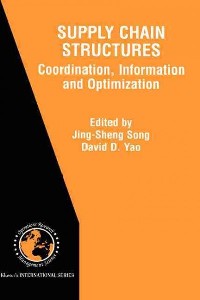
In the foreword to Supply Chain Structures, Professor Paul Zipkin notes three global changes that have enabled the recent vast developments in the field of supply chains. Moreover, these changes may be only the beginning and more change is likely in the fast-moving field of supply chain management. These global changes are: the explosive growth of the Internet; the growth in free-market economies with the corresponding political interest in global economic stability; and the emergence of a global managerial culture focused on performance, quality, and service. Professor Zipkin goes on to say "In Supply Chain Structures, the editors Jeannette Song and David Yao have collected a spectrum of approaches to these challenges from some of the leading scholars of supply chains, from both the academic and commercial worlds. Each of the articles offers an interesting and illuminating way to think about the key issues in supply chain management. Some also offer practical techniques to solve important problems. Together they provide an excellent survey of the current state of the art in research and practice."
目录
Table Of Contents:
Introduction and Overview 1(6)
Jing-Sheng Song
David D. Yao
Structures, Flexibility, and Coordination 2(1)
Value of Information 3(1)
Optimization, with Industrial Applications 4(1)
Inventory-Service Tradeoff under Demand Correlation 5(2)
Efficient Supply Chain Structures for Personal Computers 7(38)
Lingxiu Dong
Hau L. Lee
Introduction 7(4)
Literature Review 11(1)
Distribution Channel Structures and Supply Chain Performance 12(13)
Postponement in Channel Assembly 25(6)
Conclusions and Discussions 31(2)
Appendix: Notation 33(3)
Appendix: Proofs 36(9)
Intrafirm Incentives and Supply Chain Performance 45(28)
Narendra Agrawal
Andy A. Tsay
Introduction 45(3)
Model Assumptions 48(2)
Analysis of Control System M 50(4)
Analysis of Control System R 54(2)
Analysis of Control System C 56(1)
Comparing the Control Systems 57(6)
Conclusion 63(1)
Appendix: Proofs of Theorems 64(9)
Impact of Manufacturing Flexibility on Supply Chain Performance in the Automotive Industry 73(46)
Stephan Biller
Ebru K. Bish
Ana Muriel
Introduction and Motivation 73(2)
The Automotive Supply Chain 75(6)
Model Overview and Analytical Results 81(21)
A Simulation Study 102(11)
Conclusions and Directions for Future Research 113(6)
Optimal Use of Demand Information in Supply Chain Management 119(42)
Guillermo Gallego
Ozalp Ozer
Introduction 119(2)
Using Current Demand Information 121(9)
Using Advance Demand Information 130(26)
Directions for Future Research 156(5)
Supply Chain Information Sharing in a Competitive Environment 161(46)
Lode Li
Hongtao Zhang
Introduction 161(2)
The Models 163(4)
Cournot Retailers and a Homogeneous Product 167(10)
Make-to-Stock Manufacturer 177(6)
Duopoly Retailers with Differentiated Goods 183(11)
Information about Cost Uncertainty 194(5)
Conclusions and Future Research 199(2)
Bibliographical Notes 201(6)
Planning and Scheduling in an Assemble-To-Order Environment: Spicer-Off-Highway Products Division 207(50)
Nico J. Vandaele
Marc R. Lambrecht
Introduction 207(1)
The Business Case: Spicer-Off-Highway 208(5)
The ACLIPS Approach 213(13)
Methodological Issues 226(21)
The Results of ACLIPS 247(5)
Conclusion 252(5)
Network Server Supply Chain at HP: A Case Study 257(26)
Dirk Beyer
Julie Ward
Introduction 257(4)
Problem Description 261(5)
Related Literature 266(2)
The Model 268(2)
Approach 270(6)
Sample Results 276(3)
Conclusion 279(4)
Inventory Allocation at a Semiconductor Company 283(28)
Alexander O. Brown
Markus Ettl
Grace Y. Lin
Raja Petrakian
David D. Yao
Introduction 284(2)
Production-Inventory Planning at Xilinx 286(3)
Problem Formulation 289(3)
The Optimization Algorithm 292(3)
Safety-Stock Constraints 295(3)
Numerical Results 298(9)
Summary and Conclusions 307(4)
Leadtime, Inventory, and Service Level in ATO Systems 311(48)
Yashan Wang
Introduction 311(3)
The Model and the Asymptotic Fill Rate 314(6)
Leadtime-Inventory Trade-Offs 320(10)
Cost Optimization 330(14)
Proofs 344(9)
Concluding Remarks 353(6)
Dependence Analysis of Assemble-to-Order Systems 359(56)
Susan H. Xu
Introduction 359(6)
The Approach and Main Results 365(4)
The Model and Performance Measures 369(5)
Dependence Orders of Product-Type Indicator Vectors 374(9)
Capacitated Assemble-to-Order Systems 383(9)
Uncapacitated Assemble-to-Order Systems 392(4)
Performance Bounds 396(12)
Summary 408(1)
Appendices 409(6)
Inventory Policies for Sequences of Multi-Item Demands with No Backorders Permitted 415
John W. Mamer
Stephen A. Smith
Introduction 418
The Model 418
Two Examples 429
Conclusion 434
Introduction and Overview 1(6)
Jing-Sheng Song
David D. Yao
Structures, Flexibility, and Coordination 2(1)
Value of Information 3(1)
Optimization, with Industrial Applications 4(1)
Inventory-Service Tradeoff under Demand Correlation 5(2)
Efficient Supply Chain Structures for Personal Computers 7(38)
Lingxiu Dong
Hau L. Lee
Introduction 7(4)
Literature Review 11(1)
Distribution Channel Structures and Supply Chain Performance 12(13)
Postponement in Channel Assembly 25(6)
Conclusions and Discussions 31(2)
Appendix: Notation 33(3)
Appendix: Proofs 36(9)
Intrafirm Incentives and Supply Chain Performance 45(28)
Narendra Agrawal
Andy A. Tsay
Introduction 45(3)
Model Assumptions 48(2)
Analysis of Control System M 50(4)
Analysis of Control System R 54(2)
Analysis of Control System C 56(1)
Comparing the Control Systems 57(6)
Conclusion 63(1)
Appendix: Proofs of Theorems 64(9)
Impact of Manufacturing Flexibility on Supply Chain Performance in the Automotive Industry 73(46)
Stephan Biller
Ebru K. Bish
Ana Muriel
Introduction and Motivation 73(2)
The Automotive Supply Chain 75(6)
Model Overview and Analytical Results 81(21)
A Simulation Study 102(11)
Conclusions and Directions for Future Research 113(6)
Optimal Use of Demand Information in Supply Chain Management 119(42)
Guillermo Gallego
Ozalp Ozer
Introduction 119(2)
Using Current Demand Information 121(9)
Using Advance Demand Information 130(26)
Directions for Future Research 156(5)
Supply Chain Information Sharing in a Competitive Environment 161(46)
Lode Li
Hongtao Zhang
Introduction 161(2)
The Models 163(4)
Cournot Retailers and a Homogeneous Product 167(10)
Make-to-Stock Manufacturer 177(6)
Duopoly Retailers with Differentiated Goods 183(11)
Information about Cost Uncertainty 194(5)
Conclusions and Future Research 199(2)
Bibliographical Notes 201(6)
Planning and Scheduling in an Assemble-To-Order Environment: Spicer-Off-Highway Products Division 207(50)
Nico J. Vandaele
Marc R. Lambrecht
Introduction 207(1)
The Business Case: Spicer-Off-Highway 208(5)
The ACLIPS Approach 213(13)
Methodological Issues 226(21)
The Results of ACLIPS 247(5)
Conclusion 252(5)
Network Server Supply Chain at HP: A Case Study 257(26)
Dirk Beyer
Julie Ward
Introduction 257(4)
Problem Description 261(5)
Related Literature 266(2)
The Model 268(2)
Approach 270(6)
Sample Results 276(3)
Conclusion 279(4)
Inventory Allocation at a Semiconductor Company 283(28)
Alexander O. Brown
Markus Ettl
Grace Y. Lin
Raja Petrakian
David D. Yao
Introduction 284(2)
Production-Inventory Planning at Xilinx 286(3)
Problem Formulation 289(3)
The Optimization Algorithm 292(3)
Safety-Stock Constraints 295(3)
Numerical Results 298(9)
Summary and Conclusions 307(4)
Leadtime, Inventory, and Service Level in ATO Systems 311(48)
Yashan Wang
Introduction 311(3)
The Model and the Asymptotic Fill Rate 314(6)
Leadtime-Inventory Trade-Offs 320(10)
Cost Optimization 330(14)
Proofs 344(9)
Concluding Remarks 353(6)
Dependence Analysis of Assemble-to-Order Systems 359(56)
Susan H. Xu
Introduction 359(6)
The Approach and Main Results 365(4)
The Model and Performance Measures 369(5)
Dependence Orders of Product-Type Indicator Vectors 374(9)
Capacitated Assemble-to-Order Systems 383(9)
Uncapacitated Assemble-to-Order Systems 392(4)
Performance Bounds 396(12)
Summary 408(1)
Appendices 409(6)
Inventory Policies for Sequences of Multi-Item Demands with No Backorders Permitted 415
John W. Mamer
Stephen A. Smith
Introduction 418
The Model 418
Two Examples 429
Conclusion 434
- 名称
- 类型
- 大小
光盘服务联系方式: 020-38250260 客服QQ:4006604884
云图客服:
用户发送的提问,这种方式就需要有位在线客服来回答用户的问题,这种 就属于对话式的,问题是这种提问是否需要用户登录才能提问
Video Player
×
Audio Player
×
pdf Player
×
