

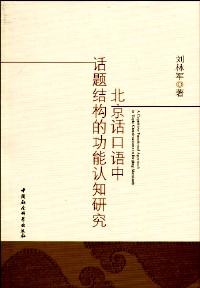
Cognitive-functional approach to topic constructions in Beijing mandarin
副标题:无
作 者:刘林军著
分类号:
ISBN:9787500485131
微信扫一扫,移动浏览光盘
简介
《北京话口语中话题结构的功能认知研究》采用认知和功能相结合的研究方法,对北京话口语语料进行分析,指出认知参照点模式可以对汉语中的话题做出统一的解释,实际语言运用中的各式话题结构可视为认知参照点模式的具体实例。本研究重点考察停顿和几个高频话题标记在北京话口语中的使用情况,对各自的使用的频率、语境和功能进行全面而系统的分析。进而,《北京话口语中话题结构的功能认知研究》对汉语话题所构成的认知参照点模式从横向和纵向两个方面进行勾勒,指出话题既可以是述题的主观参照点,也可以是客观参照点,从而发展了Langacker(1991,1993,1998)把话题作为主观参照点的理论。
目录
List of Abbreviations
List of Tables
List of Figures
Chapter 1 Introduction
1.1 The Issue
1.2 Cognitive Linguistics as an Alternative
1.3 A Corpus Approach
1.4 Monograph Chapters
Chapter 2 Review of Previous Studies on Mandarin Topics and the Cognitive Approach as an Alternative
2.1 Findings on and Controversies over Topic
2.2 A Cognitive Approach to Topic
2.3 Findings in Other Topic-Prominent Languages
Chapter 3 Pauses and Pause Particles as Topic Markers in Mandarin
3.1 Pauses as Topic Markers
3.2 Pause Particles as Topic Markers
3.3 Discourse Use of Pause Particles in Beijing Mandarin
Chapter 4 Methodology of a Corpus Study
4.1 A Coding Property Based Approach to Topic Identification
4.2 Defining Some Grammatical Terms
4.3 Data: The Beijing Corpus
4.4 Corpus Analysis Procedure
4.5 Research Goals
Chapter 5 Pausing and Topic Marking
5.1 Pausing in Nominal Constructions
5.2 Pausing in Double-Subject Constructions
5.3 Pausing in TOP-subject Constructions
5.4 Summary
Chapter 6 High Frequency Topic Markers in Beijing Mandarin
6.1 Pause Particle ne
6.2 Pause Particle ba
6.3 Pause particle a and its phonetic variants
6.4 Pause particle ma
6.5 Lexical topic marker dehua ' if' and laijiang ' speaking of'
6.6 Discussion
6.7 Summary
Chapter 7 A Unified Interpretation of Topic as Conceptual Reference Point
7.1 Reference Points are more than entities
7.2 Reference Points can be multiple
7.3 Schematizing Topic-Comment Constructions
7.4 Summary
Chapter 8 Conclusion
8.1 A Brief Review
8.2 Revisiting the Controversies over Mandarin Topics
8.3 Reference Point as a Conceptual Archetype
8.4 Areas of Further Study
Appendix : Characteristics of Monologues Comprising the Corpus
References
List of Tables
List of Figures
Chapter 1 Introduction
1.1 The Issue
1.2 Cognitive Linguistics as an Alternative
1.3 A Corpus Approach
1.4 Monograph Chapters
Chapter 2 Review of Previous Studies on Mandarin Topics and the Cognitive Approach as an Alternative
2.1 Findings on and Controversies over Topic
2.2 A Cognitive Approach to Topic
2.3 Findings in Other Topic-Prominent Languages
Chapter 3 Pauses and Pause Particles as Topic Markers in Mandarin
3.1 Pauses as Topic Markers
3.2 Pause Particles as Topic Markers
3.3 Discourse Use of Pause Particles in Beijing Mandarin
Chapter 4 Methodology of a Corpus Study
4.1 A Coding Property Based Approach to Topic Identification
4.2 Defining Some Grammatical Terms
4.3 Data: The Beijing Corpus
4.4 Corpus Analysis Procedure
4.5 Research Goals
Chapter 5 Pausing and Topic Marking
5.1 Pausing in Nominal Constructions
5.2 Pausing in Double-Subject Constructions
5.3 Pausing in TOP-subject Constructions
5.4 Summary
Chapter 6 High Frequency Topic Markers in Beijing Mandarin
6.1 Pause Particle ne
6.2 Pause Particle ba
6.3 Pause particle a and its phonetic variants
6.4 Pause particle ma
6.5 Lexical topic marker dehua ' if' and laijiang ' speaking of'
6.6 Discussion
6.7 Summary
Chapter 7 A Unified Interpretation of Topic as Conceptual Reference Point
7.1 Reference Points are more than entities
7.2 Reference Points can be multiple
7.3 Schematizing Topic-Comment Constructions
7.4 Summary
Chapter 8 Conclusion
8.1 A Brief Review
8.2 Revisiting the Controversies over Mandarin Topics
8.3 Reference Point as a Conceptual Archetype
8.4 Areas of Further Study
Appendix : Characteristics of Monologues Comprising the Corpus
References
Cognitive-functional approach to topic constructions in Beijing mandarin
- 名称
- 类型
- 大小
光盘服务联系方式: 020-38250260 客服QQ:4006604884
云图客服:
用户发送的提问,这种方式就需要有位在线客服来回答用户的问题,这种 就属于对话式的,问题是这种提问是否需要用户登录才能提问
Video Player
×
Audio Player
×
pdf Player
×
