

简介
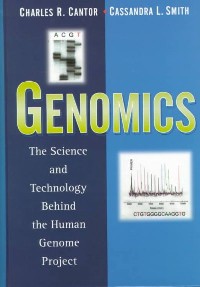
A unique exploration of the principles and methods underlying the Human Genome Project and modern molecular genetics and biotechnology-from two top researchers In Genomics, Charles R. Cantor, former director of the Human Genome Project, and Cassandra L. Smith give the first integral overview of the strategies and technologies behind the Human Genome Project and the field of molecular genetics and biotechnology. Written with a range of readers in mind-from chemists and biologists to computer scientists and engineers-the book begins with a review of the basic properties of DNA and the chromosomes that package it in cells. The authors describe the three main techniques used in DNA analysis-hybridization, polymerase chain reaction, and electrophoresis-and present a complete exploration of DNA mapping in its many different forms. By explaining both the theoretical principles and practical foundations of modern molecular genetics to a wide audience, the book brings the scientific community closer to the ultimate goal of understanding the biological function of DNA. Genomics features: Topical organization within chapters for easy reference A discussion of the developing methods of sequencing, such as sequencing by hybridization (SBH) in which data is read through words instead of letters Detailed explanations and critical evaluations of the many different types of DNA maps that can be generated-including cytogenic and restriction maps as well as interspecies cell hybrids Informed predictions for the future of DNA sequencing
目录
Table Of Contents:
Preface xiii(2)
Introduction xv
1 DNA Chemistry and Biology 1(28)
Basic Properties of DNA 1(1)
Covalent Structure 1(1)
Double Helical Structure 1(4)
Methylated Bases 5(2)
Plasticity in DNA Structure 7(1)
DNA Synthesis 8(7)
DNA as a Flexible Set of Chemical Reagents 15(4)
Basic DNA Biology 19(6)
Genome Sizes 25(2)
Number of Genes 27(1)
Sources and Additional Readings 27(2)
2 A Genome Overview at the Level of Chromosomes 29(35)
Basic Properties of Chromosomes 29(1)
Bacterial Chromosomes 29(3)
Chromosomes of Eukaryotic Organisms 32(1)
Centromeres 32(2)
Telomeres 34(1)
Dynamic Behavior of Telomeres 35(1)
Chromatin and the Higher-Order Structure of Chromosomes 36(3)
Chromosomes in the Cell Cycle 39(1)
Genome Organization 40(3)
Chromosome Purification 43(8)
Chromosome Number 51(3)
Unusual Characteristics of Sex Chromosomes and Mitochondria 54(5)
Synteny 59(4)
Sources and Additional Readings 63(1)
3 Analysis of DNA Sequences by Hybridization 64(34)
Basic Requirements for Selectivity and Sensitivity 64(2)
Detection of Specific DNA Sequences 66(1)
Equilibria between DNA Double and Single Strands 67(4)
Thermodynamics of the Melting of Short Duplexes 71(3)
Thermodynamics of Imperfectly Paired Duplexes 74(3)
Kinetics of the Melting of Short Duplexes 77(2)
Kinetics of Melting of Long DNA 79(1)
Kinetics of Double-Strand Formation 80(5)
Complexity 85(1)
Hybridization on Filters 86(4)
Sensitive Detection 90(7)
Sources and Additional Readings 97(1)
4 Polymerase Chain Reaction and Other Methods for In Vitro DNA Amplification 98(33)
Why Amplify DNA? 98(1)
Basic Principles of the Polymerase Chain Reaction (PCR) 98(5)
Noise in PCR: Contamination 103(1)
PCR Noise: Mispriming 104(2)
Misincorporation 106(1)
Long PCR 106(1)
Incorporating Extra Functionalities 107(1)
Single-Sided PCR 107(5)
Reducing Complexity with PCR 112(2)
Additional Variants of the Basic PCR Reaction 114(2)
Total Genome Amplification Methods 116(3)
Application of PCR to Detect Molecules Other Than DNA 119(3)
DNA Amplification without Thermal Cycling and Other Alternatives to PCR 122(5)
Future of PCR 127(1)
Sources and Additional Readings 128(3)
5 Principles of DNA Electrophoresis 131(34)
Physical Fractionation of DNA 131(1)
Separation of DNA in the Ultracentrifuge 131(1)
Electrophoretic Size Separations of DNA 132(1)
Electrophoresis without Gels 133(2)
Motions of DNA Molecules in Gels 135(1)
Complex Effects of Gel Structure and Behavior 136(2)
Biased Reptation Model of DNA Behavior in Gels 138(2)
Pulsed Field Gel Electrophoresis (PFG) 140(6)
Macroscopic Behavior of DNA in PFG 146(2)
Inadequacy of Reptation Models for PFG 148(7)
DNA Trapping Electrophoresis 155(2)
Secondary Pulsed Field Gel Electrophoresis (SPFG) 157(1)
Entry of DNAs into Gels 158(6)
Sources and Additional Readings 164(1)
6 Genetic Analysis 165(43)
Why We Need Genetics 165(1)
Basic Strategy for Genetic Analysis in the Human: Linkage Mapping 165(5)
A Glossary of Genetic Terms 170(4)
Relationship between the Physical and the Genetic Maps 174(4)
Power of Mouse Genetics 178(1)
Weakness of Human Genetics 178(2)
Linkage Analysis Ignoring Recombination 180(3)
Linkage Analysis with Recombination 183(2)
Interval Mapping 185(3)
Finding Genes by Genetic Mapping 188(2)
Moving from Weak Linkage Closer to a Gene 190(1)
Linkage Disequilibrium 191(2)
Complications in Linkage Disequilibrium and Genetic Maps in General 193(1)
Distortions in the Genetic Map 194(1)
Current State of the Human Genetic Map 195(2)
Genetics in the Pseudoautosomal Region 197(4)
Why Genetics Needs DNA Analysis 201(3)
Detection of Homozygous Regions 204(2)
Sources and Additional Readings 206(2)
7 Cytogenetics and Pseudogenetics 208(26)
Why Genetics Is Insufficient 208(1)
Somatic Cell Genetics 208(2)
Subchromosomal Mapping Panels 210(2)
Radiation Hybrids 212(3)
Single-Sperm PCR 215(3)
In Situ Hybridization 218(6)
High-Resolution FISH 224(5)
Chromosome Painting 229(1)
Chromosome Microdissection 230(2)
Sources and Additional Readings 232(2)
8 Physical Mapping 234(51)
Why High Resolution Physical Maps Are Needed 234(1)
Restriction Maps 235(4)
Ordered Libraries 239(2)
Restriction Nuclease Genomic Digests 241(4)
HTF Islands 245(1)
Ordering Restriction Fragments 246(2)
Identifying the DNA Fragments Generated by a Rare-Cutting Restriction Enzyme 248(4)
Mapping in Cases Where Fragment Lengths Can Be Measured Directly 252(1)
Generation of Larger DNA Fragment Sizes 253(1)
Linking Clones 254(3)
Jumping Libraries 257(2)
Partial Digestion 259(3)
Exploiting DNA Polymorphisms to Assist Mapping 262(2)
Placing Small Fragments on Maps 264(1)
Reaching the Ends of the Physical Map: Cloning Telomeres 265(4)
Optical Mapping 269(1)
Bottom-Up Library Ordering 269(6)
Measurements of Progress in Building Ordered Libraries 275(2)
Survey of Restriction Map and Ordered Library Construction 277(7)
Sources and Additional Readings 284(1)
9 Enhanced Methods for Physical Mapping 285(40)
Why Better Mapping Methods Are Needed 285(1)
Larger Yeast Artificial Chromosomes (YACs) 285(3)
How Far Can YACs Go? 288(2)
Vector Obsolescence 290(1)
Hybrid Mapping Strategies: Cross-connections between Libraries 291(5)
Screening by PCR versus Hybridization 296(2)
Tiered Sets of Samples 298(2)
Simple Pooling Strategies for Finding a Clone of Interest 300(1)
Sequence-Specific Tags 301(2)
Pooling in Mapping Strategies 303(2)
Probe Pooling in S. pombe Mapping 305(6)
False Positives with Simple Pooling Schemes 311(1)
More General Pooling Schemes 312(4)
Alternate Array Configurations 316(2)
Inner Product Mapping 318(2)
Sliced PFG Fractionations as Natural Pools of Samples 320(1)
Restriction Landmark Genome Scanning 320(2)
Prognosis for the Future of Genome Mapping 322(1)
Sources and Additional Readings 323(2)
10 DNA Sequencing: Current Tactics 325(36)
Why Determine DNA Sequence 325(1)
Design of DNA Sequencing Projects 326(1)
Ladder Sequencing Tactics 327(3)
Issues in Ladder Sequencing 330(4)
Current Fluorescent DNA Sequencing 334(2)
Variations in Contemporary DNA Sequencing Tactics 336(5)
Errors in DNA Sequencing 341(4)
Automated DNA Sequencing Chemistry 345(3)
Future Improvements in Ladder Sequencing 348(1)
Approaches to DNA Sequencing by Mass Spectrometry 349(9)
Rate-Limiting Steps in Current DNA Sequencing 358(1)
Sources and Additional Readings 359(2)
11 Strategies for Large-Scale DNA Sequencing 361(33)
Why Strategies Are Needed 361(1)
Shotgun DNA Sequencing 361(2)
Directed Sequencing with Walking Primers 363(2)
Priming with Mixtures of Short Oligonucleotides 365(3)
Ordered Subdivision of DNA Targets 368(1)
Transposon-Mediated DNA Sequencing 368(2)
Delta Restriction Cloning 370(1)
Nested Deletions 371(2)
Primer Jumping 373(2)
Primer Multiplexing 375(1)
Multiplex Genomic Walking 376(1)
Global Strategies 377(2)
Sequence-Ready Libraries 379(1)
Sequencing cDNA Libraries 380(1)
Dealing with Uneven cDNA Distribution 381(3)
Large-Scale cDNA Sequencing 384(5)
What Is Meant by a Complete Genome Sequence? 389(1)
Sequencing the Fifth Base 390(2)
Sources and Additional Readings 392(2)
12 Future DNA Sequencing without Length Fractionation 394(39)
Why Try to Avoid Length Fractionations? 394(1)
Single-Molecule Sequencing 394(3)
Sequencing by High-Resolution Microscopy 397(3)
Stepwise Enzymatic Sequencing 400(3)
DNA Sequencing by Hybridization (SBH) 403(1)
Branch Point Ambiguities 404(2)
SBH Using Oligonucleotide Chips 406(4)
Sequencing by Hybridization to Sample Chips 410(2)
Early Experiences with SBH 412(3)
Data Acquisition and Analysis 415(2)
Obstacles to Successful SBH 417(3)
SBH in Comparative DNA Sequencing 420(1)
Oligonucleotide Stacking Hybridization 421(3)
Other Approaches for Enhancing SBH 424(1)
Positional Sequencing by Hybridization (PSBH) 425(5)
Combination of SBH with Other Sequencing Methods 430(1)
Sources and Additional Readings 431(2)
13 Finding Genes and Mutations 433(37)
Detection of Altered DNA Sequences 433(1)
Finding Genes 434(14)
Diagnostics at the DNA Level 448(7)
Analysis of DNA Sequence Differences 455(1)
Heteroduplex Detection 456(6)
Diagnosis of Infectious Disease 462(1)
Detection of New Mutations 463(4)
Sources and Additional Readings 467(3)
14 Sequence-Specific Manipulation of DNA 470(56)
Exploiting the Specificity of Base-Base Recognition 470(1)
Structure of Triple-Stranded DNA 470(6)
Triplex-Mediated DNA Cleavage 476(4)
Sequence-Specific DNA Capture 480(1)
Triplex-Mediated DNA Capture 480(6)
Affinity Capture Electrophoresis 486(3)
Use of Backbone Analogues in Sequence-Specific DNA Manipulation 489(3)
Sequence-Specific Cloning Procedures 492(7)
Identification or Cloning of Sequences Based on Differences in Expression Level 499(1)
Coincidence Cloning 500(6)
Human Interspersed Repeated DNA Sequences 506(3)
Distribution of Repeats Along Chromosomes 509(1)
PCR Based on Repeating Sequences 510(6)
Repeat Expansion Detection 516(1)
Aptamer Selection Strategies 517(3)
Oligonucleotides as Drugs 520(3)
Sources and Additional Readings 523(3)
15 Results and Implications of Large-Scale DNA Sequencing 526(43)
Costing the Genome Project 526(4)
Finding Genes 530(2)
More Robust Methods for Finding Genes by DNA Sequence Analysis 532(3)
Neural Net Analysis of DNA Sequences 535(5)
Survey of Past Large-Scale DNA Sequencing Projects 540(5)
Finding Errors in DNA Sequences 545(2)
Searching for the Biological Function of DNA Sequences 547(1)
Searching for the Biological Function of Genes 548(3)
Methods for Comparing Sequences 551(6)
Dynamic Programming 557(3)
Gaining Additional Power in Sequence Comparisons 560(1)
Domains and Motifs 561(2)
Interpreting Noncoding Sequence 563(1)
Diversity of DNA Sequences 564(1)
Sources and Additional Readings 565(4)
Appendix: Databases 569(6)
Index 575
Preface xiii(2)
Introduction xv
1 DNA Chemistry and Biology 1(28)
Basic Properties of DNA 1(1)
Covalent Structure 1(1)
Double Helical Structure 1(4)
Methylated Bases 5(2)
Plasticity in DNA Structure 7(1)
DNA Synthesis 8(7)
DNA as a Flexible Set of Chemical Reagents 15(4)
Basic DNA Biology 19(6)
Genome Sizes 25(2)
Number of Genes 27(1)
Sources and Additional Readings 27(2)
2 A Genome Overview at the Level of Chromosomes 29(35)
Basic Properties of Chromosomes 29(1)
Bacterial Chromosomes 29(3)
Chromosomes of Eukaryotic Organisms 32(1)
Centromeres 32(2)
Telomeres 34(1)
Dynamic Behavior of Telomeres 35(1)
Chromatin and the Higher-Order Structure of Chromosomes 36(3)
Chromosomes in the Cell Cycle 39(1)
Genome Organization 40(3)
Chromosome Purification 43(8)
Chromosome Number 51(3)
Unusual Characteristics of Sex Chromosomes and Mitochondria 54(5)
Synteny 59(4)
Sources and Additional Readings 63(1)
3 Analysis of DNA Sequences by Hybridization 64(34)
Basic Requirements for Selectivity and Sensitivity 64(2)
Detection of Specific DNA Sequences 66(1)
Equilibria between DNA Double and Single Strands 67(4)
Thermodynamics of the Melting of Short Duplexes 71(3)
Thermodynamics of Imperfectly Paired Duplexes 74(3)
Kinetics of the Melting of Short Duplexes 77(2)
Kinetics of Melting of Long DNA 79(1)
Kinetics of Double-Strand Formation 80(5)
Complexity 85(1)
Hybridization on Filters 86(4)
Sensitive Detection 90(7)
Sources and Additional Readings 97(1)
4 Polymerase Chain Reaction and Other Methods for In Vitro DNA Amplification 98(33)
Why Amplify DNA? 98(1)
Basic Principles of the Polymerase Chain Reaction (PCR) 98(5)
Noise in PCR: Contamination 103(1)
PCR Noise: Mispriming 104(2)
Misincorporation 106(1)
Long PCR 106(1)
Incorporating Extra Functionalities 107(1)
Single-Sided PCR 107(5)
Reducing Complexity with PCR 112(2)
Additional Variants of the Basic PCR Reaction 114(2)
Total Genome Amplification Methods 116(3)
Application of PCR to Detect Molecules Other Than DNA 119(3)
DNA Amplification without Thermal Cycling and Other Alternatives to PCR 122(5)
Future of PCR 127(1)
Sources and Additional Readings 128(3)
5 Principles of DNA Electrophoresis 131(34)
Physical Fractionation of DNA 131(1)
Separation of DNA in the Ultracentrifuge 131(1)
Electrophoretic Size Separations of DNA 132(1)
Electrophoresis without Gels 133(2)
Motions of DNA Molecules in Gels 135(1)
Complex Effects of Gel Structure and Behavior 136(2)
Biased Reptation Model of DNA Behavior in Gels 138(2)
Pulsed Field Gel Electrophoresis (PFG) 140(6)
Macroscopic Behavior of DNA in PFG 146(2)
Inadequacy of Reptation Models for PFG 148(7)
DNA Trapping Electrophoresis 155(2)
Secondary Pulsed Field Gel Electrophoresis (SPFG) 157(1)
Entry of DNAs into Gels 158(6)
Sources and Additional Readings 164(1)
6 Genetic Analysis 165(43)
Why We Need Genetics 165(1)
Basic Strategy for Genetic Analysis in the Human: Linkage Mapping 165(5)
A Glossary of Genetic Terms 170(4)
Relationship between the Physical and the Genetic Maps 174(4)
Power of Mouse Genetics 178(1)
Weakness of Human Genetics 178(2)
Linkage Analysis Ignoring Recombination 180(3)
Linkage Analysis with Recombination 183(2)
Interval Mapping 185(3)
Finding Genes by Genetic Mapping 188(2)
Moving from Weak Linkage Closer to a Gene 190(1)
Linkage Disequilibrium 191(2)
Complications in Linkage Disequilibrium and Genetic Maps in General 193(1)
Distortions in the Genetic Map 194(1)
Current State of the Human Genetic Map 195(2)
Genetics in the Pseudoautosomal Region 197(4)
Why Genetics Needs DNA Analysis 201(3)
Detection of Homozygous Regions 204(2)
Sources and Additional Readings 206(2)
7 Cytogenetics and Pseudogenetics 208(26)
Why Genetics Is Insufficient 208(1)
Somatic Cell Genetics 208(2)
Subchromosomal Mapping Panels 210(2)
Radiation Hybrids 212(3)
Single-Sperm PCR 215(3)
In Situ Hybridization 218(6)
High-Resolution FISH 224(5)
Chromosome Painting 229(1)
Chromosome Microdissection 230(2)
Sources and Additional Readings 232(2)
8 Physical Mapping 234(51)
Why High Resolution Physical Maps Are Needed 234(1)
Restriction Maps 235(4)
Ordered Libraries 239(2)
Restriction Nuclease Genomic Digests 241(4)
HTF Islands 245(1)
Ordering Restriction Fragments 246(2)
Identifying the DNA Fragments Generated by a Rare-Cutting Restriction Enzyme 248(4)
Mapping in Cases Where Fragment Lengths Can Be Measured Directly 252(1)
Generation of Larger DNA Fragment Sizes 253(1)
Linking Clones 254(3)
Jumping Libraries 257(2)
Partial Digestion 259(3)
Exploiting DNA Polymorphisms to Assist Mapping 262(2)
Placing Small Fragments on Maps 264(1)
Reaching the Ends of the Physical Map: Cloning Telomeres 265(4)
Optical Mapping 269(1)
Bottom-Up Library Ordering 269(6)
Measurements of Progress in Building Ordered Libraries 275(2)
Survey of Restriction Map and Ordered Library Construction 277(7)
Sources and Additional Readings 284(1)
9 Enhanced Methods for Physical Mapping 285(40)
Why Better Mapping Methods Are Needed 285(1)
Larger Yeast Artificial Chromosomes (YACs) 285(3)
How Far Can YACs Go? 288(2)
Vector Obsolescence 290(1)
Hybrid Mapping Strategies: Cross-connections between Libraries 291(5)
Screening by PCR versus Hybridization 296(2)
Tiered Sets of Samples 298(2)
Simple Pooling Strategies for Finding a Clone of Interest 300(1)
Sequence-Specific Tags 301(2)
Pooling in Mapping Strategies 303(2)
Probe Pooling in S. pombe Mapping 305(6)
False Positives with Simple Pooling Schemes 311(1)
More General Pooling Schemes 312(4)
Alternate Array Configurations 316(2)
Inner Product Mapping 318(2)
Sliced PFG Fractionations as Natural Pools of Samples 320(1)
Restriction Landmark Genome Scanning 320(2)
Prognosis for the Future of Genome Mapping 322(1)
Sources and Additional Readings 323(2)
10 DNA Sequencing: Current Tactics 325(36)
Why Determine DNA Sequence 325(1)
Design of DNA Sequencing Projects 326(1)
Ladder Sequencing Tactics 327(3)
Issues in Ladder Sequencing 330(4)
Current Fluorescent DNA Sequencing 334(2)
Variations in Contemporary DNA Sequencing Tactics 336(5)
Errors in DNA Sequencing 341(4)
Automated DNA Sequencing Chemistry 345(3)
Future Improvements in Ladder Sequencing 348(1)
Approaches to DNA Sequencing by Mass Spectrometry 349(9)
Rate-Limiting Steps in Current DNA Sequencing 358(1)
Sources and Additional Readings 359(2)
11 Strategies for Large-Scale DNA Sequencing 361(33)
Why Strategies Are Needed 361(1)
Shotgun DNA Sequencing 361(2)
Directed Sequencing with Walking Primers 363(2)
Priming with Mixtures of Short Oligonucleotides 365(3)
Ordered Subdivision of DNA Targets 368(1)
Transposon-Mediated DNA Sequencing 368(2)
Delta Restriction Cloning 370(1)
Nested Deletions 371(2)
Primer Jumping 373(2)
Primer Multiplexing 375(1)
Multiplex Genomic Walking 376(1)
Global Strategies 377(2)
Sequence-Ready Libraries 379(1)
Sequencing cDNA Libraries 380(1)
Dealing with Uneven cDNA Distribution 381(3)
Large-Scale cDNA Sequencing 384(5)
What Is Meant by a Complete Genome Sequence? 389(1)
Sequencing the Fifth Base 390(2)
Sources and Additional Readings 392(2)
12 Future DNA Sequencing without Length Fractionation 394(39)
Why Try to Avoid Length Fractionations? 394(1)
Single-Molecule Sequencing 394(3)
Sequencing by High-Resolution Microscopy 397(3)
Stepwise Enzymatic Sequencing 400(3)
DNA Sequencing by Hybridization (SBH) 403(1)
Branch Point Ambiguities 404(2)
SBH Using Oligonucleotide Chips 406(4)
Sequencing by Hybridization to Sample Chips 410(2)
Early Experiences with SBH 412(3)
Data Acquisition and Analysis 415(2)
Obstacles to Successful SBH 417(3)
SBH in Comparative DNA Sequencing 420(1)
Oligonucleotide Stacking Hybridization 421(3)
Other Approaches for Enhancing SBH 424(1)
Positional Sequencing by Hybridization (PSBH) 425(5)
Combination of SBH with Other Sequencing Methods 430(1)
Sources and Additional Readings 431(2)
13 Finding Genes and Mutations 433(37)
Detection of Altered DNA Sequences 433(1)
Finding Genes 434(14)
Diagnostics at the DNA Level 448(7)
Analysis of DNA Sequence Differences 455(1)
Heteroduplex Detection 456(6)
Diagnosis of Infectious Disease 462(1)
Detection of New Mutations 463(4)
Sources and Additional Readings 467(3)
14 Sequence-Specific Manipulation of DNA 470(56)
Exploiting the Specificity of Base-Base Recognition 470(1)
Structure of Triple-Stranded DNA 470(6)
Triplex-Mediated DNA Cleavage 476(4)
Sequence-Specific DNA Capture 480(1)
Triplex-Mediated DNA Capture 480(6)
Affinity Capture Electrophoresis 486(3)
Use of Backbone Analogues in Sequence-Specific DNA Manipulation 489(3)
Sequence-Specific Cloning Procedures 492(7)
Identification or Cloning of Sequences Based on Differences in Expression Level 499(1)
Coincidence Cloning 500(6)
Human Interspersed Repeated DNA Sequences 506(3)
Distribution of Repeats Along Chromosomes 509(1)
PCR Based on Repeating Sequences 510(6)
Repeat Expansion Detection 516(1)
Aptamer Selection Strategies 517(3)
Oligonucleotides as Drugs 520(3)
Sources and Additional Readings 523(3)
15 Results and Implications of Large-Scale DNA Sequencing 526(43)
Costing the Genome Project 526(4)
Finding Genes 530(2)
More Robust Methods for Finding Genes by DNA Sequence Analysis 532(3)
Neural Net Analysis of DNA Sequences 535(5)
Survey of Past Large-Scale DNA Sequencing Projects 540(5)
Finding Errors in DNA Sequences 545(2)
Searching for the Biological Function of DNA Sequences 547(1)
Searching for the Biological Function of Genes 548(3)
Methods for Comparing Sequences 551(6)
Dynamic Programming 557(3)
Gaining Additional Power in Sequence Comparisons 560(1)
Domains and Motifs 561(2)
Interpreting Noncoding Sequence 563(1)
Diversity of DNA Sequences 564(1)
Sources and Additional Readings 565(4)
Appendix: Databases 569(6)
Index 575
- 名称
- 类型
- 大小
光盘服务联系方式: 020-38250260 客服QQ:4006604884
云图客服:
用户发送的提问,这种方式就需要有位在线客服来回答用户的问题,这种 就属于对话式的,问题是这种提问是否需要用户登录才能提问
Video Player
×
Audio Player
×
pdf Player
×
