

简介
Summary:
Publisher Summary 1
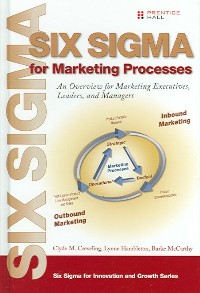
Building on their Design for Six Sigma in Technology and Product Development (Prentice Hall, 2003) in this new series, a trio of business consultants introduce marketing professionals to a newer version of the widely-used Six Sigma paradigm. Scorecards, methods, and best practices aim at enhancing strategic, tactical, and operational marketing processes. Sample scorecards and a glossary are helpful. Access to an electronic resource is available. Annotation 漏2006 Book News, Inc., Portland, OR (booknews.com)
Publisher Summary 2
Nearly half of the top one hundred Fortune 500 companies use Six Sigma methodology in some part of their business.These companies have been among the top one hundred for five or more years and consistently report higher revenue and significantly higher profits than competitors. This underscores the impact on the cost side. Now the focus moves to revenue growth. Six Sigma consultant Clyde M. Creveling’s Design for Six Sigma in Technology and Product Development is the standard guide for product commercialization and manufacturing support engineers who want to apply Six Sigma methodology to technology development and product commercialization. Now, in Six Sigma for Marketing Processes, Creveling joins with Lynne Hambleton and Burke McCarthy to show the ways marketing professionals can adapt and apply those same Six Sigma concepts to create a lean marketing workflow built for growth. This book provides an overview of the way marketing professionals can utilize the value offered by Six Sigma tools, methods, and best practices, within their existing phase-gate processes, as well as the traditional Six Sigma problem-solving approach: define, measure, analyze, improve, control (DMAIC). It provides unique methods for employing Six Sigma to enhance the three marketing processes for enabling a business to attain growth: strategic, tactical, and operational. It goes further to demonstrate the way Six Sigma for marketing and Six Sigma for design can be combined into a unified Six Sigma for growth. In this book, you’ll learn how to apply Six Sigma methodology to Develop a lean, efficient marketing workflow designed for growth Enhance the three marketing arenas for growth: strategic, tactical, and operational Identify leading indicators of growth and become proactive about performance improvement Strengthen links between customers, products, and profitability Redesign marketing work to streamline workflow and reduce variability Assess and mitigate cycle-time risk in any marketing initiative or project Leverage DMAIC to solve specific problems and improve existing processes Use lean techniques to streamline repeatable processes, such as collateral development and trade-show participationPreface xvAcknowledgments xxiiiAbout the Authors xxv Chapter 1: Introduction to Six Sigma for Marketing Processes 1Chapter 2: Measuring Marketing Performance and Risk Accrual Using Scorecards 25Chapter 3: Six Sigma-Enabled Project Management in Marketing Processes 45Chapter 4: Six Sigma in the Strategic Marketing Process 63Chapter 5: Six Sigma in the Tactical Marketing Process 117Chapter 6: Six Sigma in the Operational Marketing Process 173Chapter 7: Quick Review of Traditional DMAIC 209Chapter 8: Future Trends in Six Sigma and Marketing Processes 229 Glossary 235Index 261
目录
Table Of Contents:
Preface xv
Acknowledgments xxiii
About the Authors xxv
Chapter 1: Introduction to Six Sigma for Marketing Processes 1(24)
Growth and Innovation 2(4)
What Is Six Sigma? 6(3)
The Traditional Six Sigma Approach 9(4)
Applying Six Sigma to Marketing 13(7)
Unique Six Sigma Marketing Methods 20(3)
Summary 23(2)
Chapter 2: Measuring Marketing Performance and Risk Accrual Using Scorecards 25(20)
Scorecards in Marketing Processes 26(2)
Checklists 28(1)
Scorecards 29(9)
Conducting Gate Reviews 38(3)
Summary 41(4)
Chapter 3: Six Sigma-Enabled Project Management in Marketing Processes 45(18)
Six Sigma Contributions to Project Management in Marketing Processes 46(3)
Designing Cycle Time: Critical Paths of Key Marketing Task-Tool Sets by Phase 49(4)
Modeling Marketing Task Cycle Time Using Monte Carlo Simulations 53(4)
Documenting Failure Modes in the Critical Paths of Marketing Tasks by Phase 57(5)
Summary 62(1)
Chapter 4: Six Sigma in the Strategic Marketing Process 63(54)
Portfolio Renewal 64(1)
Process Discipline in Portfolio Renewal 65(1)
Design Process Discipline During Inbound Marketing 66(3)
Phases of Portfolio Renewal 69(2)
Identify Phase of Portfolio Renewal 71(3)
Identify Phase Tools, Tasks, and Deliverables 74(12)
Define Phase Tools, Tasks, and Deliverables 86(14)
Evaluate Phase Tools, Tasks, and Deliverables 100(7)
Activate Phase Tools, Tasks, and Deliverables 107(7)
Summary 114(3)
Chapter 5: Six Sigma in the Tactical Marketing Process 117(56)
Tactical Marketing Process: Commercialization 118(2)
Commercialization Phases and Gates: Introduction to UAPL 120(4)
The Understand Phase 124(16)
Requirements for the Understand Gate 125(1)
Understand Phase Tools, Tasks, and Deliverables 126(1)
Understand Gate Deliverables 127(5)
Understand Phase Tasks 132(4)
Tools That Enable the Understand Tasks 136(4)
The Analyze Phase 140(10)
Requirements for the Analyze Gate 141(1)
Analyze Phase Tools, Tasks, and Deliverables 142(1)
Analyze Gate Deliverables 143(2)
Analyze Phase Tasks 145(1)
Tools, Methods, and Best Practices That Enable the Analyze Tasks 146(4)
The Plan Phase 150(11)
Requirements for the Plan Gate 150(1)
Plan Phase Tools, Tasks, and Deliverables 151(1)
Plan Gate Deliverables 152(3)
Plan Phase Tasks 155(2)
Tools, Methods, and Best Practices That Enable the Plan Tasks 157(4)
The Launch Phase 161(10)
Requirements for the Launch Gate 161(1)
Launch Phase Tools, Tasks, and Deliverables 162(1)
Launch Gate Deliverables 163(3)
Launch Phase Tasks 166(2)
Tools, Methods, and Best Practices That Enable the Launch Tasks 168(3)
Summary 171(2)
Chapter 6: Six Sigma in the Operational Marketing Process 173(36)
Six Sigma in the Operational Marketing Process 174(9)
Hard Versus Easy Data Sets 183(1)
The Tools, Methods, and Best Practices that Enable the LMAD Tasks 184(4)
The Launch Phase 188(6)
Requirements for the Launch
Phase Milestone 189(1)
Launch Phase Tasks and Deliverables 190(4)
The Manage Phase 194(1)
Requirements for the Manage
Phase Milestone 194(1)
Manage Phase Tasks and Deliverables 195(1)
The Adapt Phase 195(7)
Requirements for the Adapt Phase Milestone 197(1)
Adapt Phase Tasks and Deliverables 197(5)
The Discontinue Phase 202(6)
Requirements for the Discontinue Phase Milestone 202(1)
Discontinue Phase Tasks and Deliverables 203(5)
Summary 208(1)
Chapter 7: Quick Review of Traditional DMAIC 209(20)
The Traditional Six Sigma DMAIC Method 210(2)
The Define Step 212(3)
Define Step Tools, Tasks, and Deliverables 212(1)
Define Step Deliverables 213(1)
Define Step Tasks 214(1)
Tools That Enable the Define Tasks 215(1)
The Measure Step 215(3)
Measure Step Tools, Tasks, and Deliverables 216(1)
Measure Step Deliverables 217(1)
Measure Step Tasks 217(1)
Tools, Methods, and Best Practices That Enable the Measure Tasks 218(1)
The Analyze Step 218(3)
Analyze Step Tools, Tasks, and Deliverables 219(1)
Analyze Step Deliverables 220(1)
Analyze Step Tasks 220(1)
Tools, Methods, and Best Practices That Enable the Analyze Tasks 220(1)
The Improve Step 221(3)
Improve Step Tools, Tasks, and Deliverables 222(1)
Improve Step Deliverables 222(1)
Improve Step Tasks 223(1)
Tools, Methods, and Best Practices That Enable the Improve Tasks 224(1)
The Control Step 224(5)
Control Step Tools, Tasks, and Deliverables 225(1)
Control Step Deliverables 226(1)
Control Step Tasks 226(1)
Tools, Methods, and Best Practices That Enable the Control Tasks 227(2)
Chapter 8: Future Trends in Six Sigma and Marketing Processes 229(6)
Glossary 235(26)
Index 261
Preface xv
Acknowledgments xxiii
About the Authors xxv
Chapter 1: Introduction to Six Sigma for Marketing Processes 1(24)
Growth and Innovation 2(4)
What Is Six Sigma? 6(3)
The Traditional Six Sigma Approach 9(4)
Applying Six Sigma to Marketing 13(7)
Unique Six Sigma Marketing Methods 20(3)
Summary 23(2)
Chapter 2: Measuring Marketing Performance and Risk Accrual Using Scorecards 25(20)
Scorecards in Marketing Processes 26(2)
Checklists 28(1)
Scorecards 29(9)
Conducting Gate Reviews 38(3)
Summary 41(4)
Chapter 3: Six Sigma-Enabled Project Management in Marketing Processes 45(18)
Six Sigma Contributions to Project Management in Marketing Processes 46(3)
Designing Cycle Time: Critical Paths of Key Marketing Task-Tool Sets by Phase 49(4)
Modeling Marketing Task Cycle Time Using Monte Carlo Simulations 53(4)
Documenting Failure Modes in the Critical Paths of Marketing Tasks by Phase 57(5)
Summary 62(1)
Chapter 4: Six Sigma in the Strategic Marketing Process 63(54)
Portfolio Renewal 64(1)
Process Discipline in Portfolio Renewal 65(1)
Design Process Discipline During Inbound Marketing 66(3)
Phases of Portfolio Renewal 69(2)
Identify Phase of Portfolio Renewal 71(3)
Identify Phase Tools, Tasks, and Deliverables 74(12)
Define Phase Tools, Tasks, and Deliverables 86(14)
Evaluate Phase Tools, Tasks, and Deliverables 100(7)
Activate Phase Tools, Tasks, and Deliverables 107(7)
Summary 114(3)
Chapter 5: Six Sigma in the Tactical Marketing Process 117(56)
Tactical Marketing Process: Commercialization 118(2)
Commercialization Phases and Gates: Introduction to UAPL 120(4)
The Understand Phase 124(16)
Requirements for the Understand Gate 125(1)
Understand Phase Tools, Tasks, and Deliverables 126(1)
Understand Gate Deliverables 127(5)
Understand Phase Tasks 132(4)
Tools That Enable the Understand Tasks 136(4)
The Analyze Phase 140(10)
Requirements for the Analyze Gate 141(1)
Analyze Phase Tools, Tasks, and Deliverables 142(1)
Analyze Gate Deliverables 143(2)
Analyze Phase Tasks 145(1)
Tools, Methods, and Best Practices That Enable the Analyze Tasks 146(4)
The Plan Phase 150(11)
Requirements for the Plan Gate 150(1)
Plan Phase Tools, Tasks, and Deliverables 151(1)
Plan Gate Deliverables 152(3)
Plan Phase Tasks 155(2)
Tools, Methods, and Best Practices That Enable the Plan Tasks 157(4)
The Launch Phase 161(10)
Requirements for the Launch Gate 161(1)
Launch Phase Tools, Tasks, and Deliverables 162(1)
Launch Gate Deliverables 163(3)
Launch Phase Tasks 166(2)
Tools, Methods, and Best Practices That Enable the Launch Tasks 168(3)
Summary 171(2)
Chapter 6: Six Sigma in the Operational Marketing Process 173(36)
Six Sigma in the Operational Marketing Process 174(9)
Hard Versus Easy Data Sets 183(1)
The Tools, Methods, and Best Practices that Enable the LMAD Tasks 184(4)
The Launch Phase 188(6)
Requirements for the Launch
Phase Milestone 189(1)
Launch Phase Tasks and Deliverables 190(4)
The Manage Phase 194(1)
Requirements for the Manage
Phase Milestone 194(1)
Manage Phase Tasks and Deliverables 195(1)
The Adapt Phase 195(7)
Requirements for the Adapt Phase Milestone 197(1)
Adapt Phase Tasks and Deliverables 197(5)
The Discontinue Phase 202(6)
Requirements for the Discontinue Phase Milestone 202(1)
Discontinue Phase Tasks and Deliverables 203(5)
Summary 208(1)
Chapter 7: Quick Review of Traditional DMAIC 209(20)
The Traditional Six Sigma DMAIC Method 210(2)
The Define Step 212(3)
Define Step Tools, Tasks, and Deliverables 212(1)
Define Step Deliverables 213(1)
Define Step Tasks 214(1)
Tools That Enable the Define Tasks 215(1)
The Measure Step 215(3)
Measure Step Tools, Tasks, and Deliverables 216(1)
Measure Step Deliverables 217(1)
Measure Step Tasks 217(1)
Tools, Methods, and Best Practices That Enable the Measure Tasks 218(1)
The Analyze Step 218(3)
Analyze Step Tools, Tasks, and Deliverables 219(1)
Analyze Step Deliverables 220(1)
Analyze Step Tasks 220(1)
Tools, Methods, and Best Practices That Enable the Analyze Tasks 220(1)
The Improve Step 221(3)
Improve Step Tools, Tasks, and Deliverables 222(1)
Improve Step Deliverables 222(1)
Improve Step Tasks 223(1)
Tools, Methods, and Best Practices That Enable the Improve Tasks 224(1)
The Control Step 224(5)
Control Step Tools, Tasks, and Deliverables 225(1)
Control Step Deliverables 226(1)
Control Step Tasks 226(1)
Tools, Methods, and Best Practices That Enable the Control Tasks 227(2)
Chapter 8: Future Trends in Six Sigma and Marketing Processes 229(6)
Glossary 235(26)
Index 261
- 名称
- 类型
- 大小
光盘服务联系方式: 020-38250260 客服QQ:4006604884
云图客服:
用户发送的提问,这种方式就需要有位在线客服来回答用户的问题,这种 就属于对话式的,问题是这种提问是否需要用户登录才能提问
Video Player
×
Audio Player
×
pdf Player
×
