

简介
Summary:
Publisher Summary 1
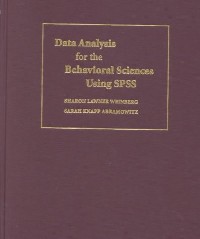
Suitable for both graduate and undergraduate students in the behavioral sciences, this introductory text demonstrates how the tools of statistics may be used to reveal the story contained in numerical data. The accompanying floppy disk contains several real data sets used throughout the text. Weinberg teaches quantitative methods and psychology at New York U., and Abramowitz teaches mathematics and computer science at Drew University. The text is based loosely on Basic Statistics for Education and the Behavioral Sciences (1990, Cambridge U. Press). Annotation c. Book News, Inc., Portland, OR (booknews.com)
Publisher Summary 2
An introductory applied statistics text that can be used at either undergraduate or graduate level.
Publisher Summary 3
This book is written from the perspective that statistics is an integrated set of tools used together to uncover the story contained in numerical data. Accordingly, the book comes with a disk containing a series of real data sets to motivate discussions of appropriate methods of analysis. The presentation is based on a conceptual approach supported by an understanding of underlying mathematical foundations. Students learn that more than one method of analysis is typically needed and that an ample characterization of results is a critical component of any data analytic plan. The use of real data and SPSS to perform computations and create graphical summaries enables a greater emphasis on conceptual understanding and interpretation.
目录
Preface p. xiii
Introduction p. 1
The Role of the Computer in Data Analysis p. 1
Statistics: Descriptive and Inferential p. 2
Variables and Constants p. 3
The Measurement of Variables p. 3
Nominal Level p. 3
Ordinal Level p. 4
Interval Level p. 4
Ratio Level p. 5
Choosing a Scale of Measurement p. 5
Discrete and Continuous Variables p. 7
Setting a Context with Real Data p. 10
Exercises p. 11
Examining Univariate Distributions p. 17
Counting the Occurrence of Data Values p. 17
When Variables are Measured at the Nominal Level p. 17
When Variables are Measured at the Ordinal, Interval, or Ratio Level p. 22
Describing the Shape of a Distribution p. 30
Accumulating Data p. 32
Cumulative Percent Distributions p. 33
Ogive Curves p. 33
Percentile Ranks p. 34
Percentiles p. 35
Five-Number Summaries and Boxplots p. 37
Exercises p. 43
Measures of Location, Spread, and Skewness p. 61
Characterizing the Location of a Distribution p. 61
The Mode p. 61
The Median p. 64
The Arithmetic Mean p. 66
Comparing the Mode, Median, and Mean p. 68
Characterizing the Spread of a Distribution p. 70
The Range and Interquartile Range p. 73
The Variance p. 75
The Standard Deviation p. 77
Characterizing the Skewness of a Distribution p. 78
Selecting Measures of Location and Spread p. 79
Applying What We Have Learned p. 80
Exercises p. 84
Re-Expressing Variables p. 95
Linear and Nonlinear Transformations p. 95
Linear Transformations: Addition, Subtraction, Multiplication, and Division p. 96
The Effect on the Shape of a Distribution p. 98
The Effect on Summary Statistics of a Distribution p. 98
Common Linear Transformations p. 100
Standard Scores p. 101
z-Scores p. 102
Nonlinear Transformations: Square Roots and Logarithms p. 107
Nonlinear Transformations: Ranking Variables p. 114
Other Transformations: Recoding and Combining Variables p. 115
Recoding Variables p. 115
Combining Variables p. 117
Exercises p. 117
Exploring Relationships Between Two Variables p. 126
When Both Variables Are at Least Interval Leveled p. 126
Scatterplots p. 128
The Pearson Product Moment Correlation Coefficient p. 131
When One Variable Is Ordinal and the Other Is At Least Ordinal: The Spearman Rank Correlation Coefficient p. 139
When at Least One Variable Is Dichotomous: Other Special Cases of the Pearson Correlation Coefficient p. 140
The Point Biserial Correlation Coefficient: The Case of One At Least Interval and One Dichotomous Variable p. 140
The Phi Coefficient: The Case of Two Dichotomous Variables p. 144
Other Visual Displays of Bivariate Relationships p. 149
Exercises p. 153
Simple Linear Regression p. 168
The "Best-Fitting" Linear Equation p. 168
The Accuracy of Prediction Using the Linear Regression Model p. 174
The Standardized Regression Equation p. 175
R as a Measure of the Overall Fit of the Linear Regression Model p. 175
Simple Linear Reegression When the Independent Variable Is Dichotomous p. 179
Using r and R as Measures of Effect Size p. 181
Emphasizing the Importance of the Scatterplot p. 181
Exercises p. 183
Probability Fundamentals p. 195
The Discrete Case p. 195
The Complement Rule of Probability p. 197
The Additive Rules of Probability p. 197
First Additive Rule of Probability p. 198
Second Additive Rule of Probability p. 199
The Multiplicative Rule of Probability p. 200
The Relationship between Independence and Mutual Exclusivity p. 202
Conditional Probability p. 203
The Law of Large Numbers p. 204
Exercises p. 205
Theoretical Probability Models p. 209
The Binomial Probability Model and Distribution p. 209
The Applicability of the Binomial Probability Model p. 214
The Normal Probability Model and Distribution p. 218
Using the Normal Distribution to Approximate the Binomial Distribution p. 224
Exercises p. 224
The Role of Sampling in Inferential Statistics p. 231
Samples and Populations p. 231
Random Samples p. 232
Obtaining a Simple Random Sample p. 233
Sampling with and without Replacement p. 235
Sampling Distributions p. 237
Describing the Sampling Distribution of Means Empirically p. 237
Describing the Sampling Distribution of Means Theoretically: The Central Limit Theorem p. 240
Central Limit Theorem (CLT) p. 241
Estimators and Bias p. 244
Exercises p. 245
Inferences Involving the Mean of a Single Population When [sigma] is Known p. 248
Estimating the Population Mean, [mu], When the Population Standard Deviation, [sigma], Is Known p. 248
Interval Estimation p. 250
Relating the Length of a Confidence Interval, the Level of Confidence, and the Sample Size p. 252
Hypothesis Testing p. 253
The Relationship between Hypothesis Testing and Interval Estimation p. 261
Effect Size p. 262
Type II Error and the Concept of Power p. 263
Increasing the Level of Significance p. 267
Increasing the Effect Size p. 267
Decreasing the Standard Error of the Mean p. 267
Closing Remarks p. 268
Exercises p. 269
Inferences Involving the Mean When [sigma] is Not Known: One and Two Sample Designs p. 273
Single Sample Designs When the Parameter of Interest Is the Mean and [simga] Is Not Known p. 273
The t Distribution p. 274
Degrees of Freedom for the One Sample t-Test p. 275
Violating the Assumption of a Normally Distributed Parent Population in the One Sample t-Test p. 276
Confidence Intervals for the One Sample t-Test p. 277
Hypothesis Tests: The One Sample t-Test p. 281
Effect Size for the One Sample t-Test p. 283
Two Sample Designs When the Parameter of Interest Is [mu] and [simga] Is Not Known p. 287
Independent (or Unrelated) and Dependent (or Related) Samples p. 288
Independent Samples t-Test and Confidence Interval p. 289
The Assumptions of the Independent Samples t-Test p. 291
Paired Samples t-Test and Confidence Interval p. 302
The Assumptions of the Paired Samples t-Test p. 303
Effect Size for the Paired Samples t-Test p. 307
Summary p. 308
The Standard Error of the Mean Difference for Independent Samples: A More Complete Account (OPTIONAL) p. 309
[sigma] Known p. 309
[sigma] Not Known p. 313
Exercises p. 315
One-Way Analysis of Variance p. 337
The Disadvantage of Multiple t-Tests p. 337
The One-Way Analysis of Variance p. 339
A Graphical Illustration of the Role of Variance in Tests on Means p. 339
ANOVA as an Extension of the Independent Groups t-Test p. 340
Developing an Index of Separation for the Analysis of Variance p. 341
Carrying out the ANOVA Computation p. 341
The Assumptions of the One-Way ANOVA p. 343
Testing the Equality of Population Means: The F-Ratio p. 344
How to Read the Tables and Use the SPSS Compute Statement for the F Distribution p. 346
ANOVA Summary Table p. 349
Measuring the Effect Size p. 350
Post-Hoc Multiple Comparison Tests p. 352
The Bonferroni Adjustment: Testing Planned Comparisons p. 363
The Bonferroni Tests on Multiple Measures p. 365
Exercises p. 366
Two-Way Analysis of Variance p. 373
The Two-Factor Design p. 373
The Concept of Interaction p. 377
The Hypotheses that are Tested by a Two-Way Analysis of Variance p. 381
Assumptions of the Two-Way Analysis of Variance p. 381
Balanced Versus Unbalanced Factorial Designs p. 383
Partitioning the Total Sum of Squares p. 383
Using the F-Ratio to Test the Effects in Two-Way ANOVA p. 384
Carrying out the Two-Way ANOVA Computation by Hand p. 384
Decomposing Score Deviations about the Grand Mean p. 389
Modeling Each Score as a Sum of Component Parts p. 390
Explaining the Interaction as a Joint (or Multiplicative) Effect p. 390
Measuring Effect Size p. 391
Fixed Versus Random Factors p. 395
Post-Hoc Multiple Comparison Tests p. 396
Summary of Steps to be Taken in a Two-Way ANOVA Procedure p. 401
Exercises p. 405
Correlation and Simple Regression As Inferential Techniques p. 419
The Bivariate Normal Distribution p. 419
Testing Whether the Population Pearson Product Moment Correlation Equals Zero p. 422
Using a Confidence Interval to Estimate the Size of the Population Correlation Coefficient, [rho] p. 425
Revisiting Simple Linear Regression for Prediction p. 429
Estimating the Population Standard Error of Prediction, [sigma subscript Y|X] p. 429
Testing the b-Weight for Statistical Significance p. 430
Explaining Simple Regression Using an Analysis of Variance Framework p. 434
Measuring the Fit of the Overall Regression Equation: Using R and R[superscript 2] p. 436
Relating R[superscript 2] to [sigma superscript 2 subscript Y|X] p. 437
Testing R[superscript 2] for Statistical Significance p. 438
Estimating the True Population R[superscript 2]: The Adjusted R[superscript 2] p. 439
Exploring the Goodness of Fit of the Regression Equation: Using Regression Diagnostics p. 440
Using the Prediction Model to Predict Ice Cream Sales p. 450
Simple Regression When the Predictor Is Dichotomous p. 450
Exercises p. 452
An Introduction to Multiple Regression p. 469
The Basic Equation with Two Predictors p. 470
Equations for b, [beta] and R[subscript Y.12] When the Predictors Are Not Correlated p. 471
Equations for b, [beta], and R[subscript Y.12] When the Predictors Are Correlated p. 472
Summarizing and Expanding on Some Important Principles of Multiple Regression p. 474
Testing the b-Weights for Statistical Significance p. 479
Assessing the Relative Importance of the Independent Variables in the Equation p. 480
Measuring the Drop in R[superscript 2] Directly: An Alternative to the Squared Part Correlation p. 481
Evaluating the Statistical Significance of the Change in R[superscript 2] p. 481
The b-Weight as a Partial Slope in Multiple Regression p. 482
Multiple Regression When One of the Two Independent Variables is Dichotomous p. 485
The Concept of Interaction between Two Variables that are At Least Interval-Leveled p. 488
Testing the Statistical Significance of an Interaction Using SPSS p. 490
Centering First-Order Effects to Achieve Meaningful Interpretations of b-Weights p. 494
Understanding the Nature of a Statistically Significant Two-Way Interaction p. 494
Interaction When One of the Independent Variables is Dichotomous and the Other is Continuous p. 497
Putting It All Together: A Student Project Reprinted p. 501
Measuring the Variables p. 501
Examining the Variables Individually and in Paris p. 502
Examining the Variables Multivariately with Mathematics Achievement as the Criterion p. 505
Exercises p. 509
Nonparametric Methods p. 527
Parametric Versus Nonparametric Methods p. 527
Nonparametric Methods When the Dependent Variable is at the Nominal Level p. 528
The Chi-Square Distribution (x[superscript 2]) p. 528
The Chi-Square Goodness-of-Fit Test p. 531
The Chi-Square Test of Independence p. 535
Nonparametric Methods When the Dependent Variable is Ordinal-Leveled p. 542
The Sign Test p. 543
The Mann-Whitney U Test p. 545
The Kruskal-Wallis Analysis of Variance p. 549
Exercises p. 551
Data Set Descriptions p. 559
Anscombe.sav p. 559
Basket.sav p. 559
Blood.sav p. 559
Brainsz.sav p. 560
Colleges.sav p. 560
Currency.sav p. 561
Hamburg.sav p. 561
HR.sav p. 561
Icecream.sav p. 562
Impeach.sav p. 562
Learndis.sav p. 563
Mandex.sav p. 563
Marijuan.sav p. 564
NELS.sav p. 564
Skulls.sav p. 568
States.sav p. 568
Stress.sav p. 569
Temp.sav p. 569
Wages.sav p. 570
SPSS Macro To Generate a Sampling Distribution of Means p. 571
Statistical Tables p. 573
Areas Under the Standard Normal Curve (to the Right of the z-Score) p. 573
t Distribution Values for Right-Tailed Areas p. 574
F Distribution Values for Right-Tailed Areas p. 575
Binomial Distribution Table p. 580
Chi-Square Distribution Table for Right-Tailed Areas p. 585
The Critical q-Values p. 586
The Critical U-Values p. 587
References p. 591
Solutions to Exercises p. 593
Chapter 1 Solutions p. 593
Chapter 2 Solutions p. 595
Chapter 3 Solutions p. 610
Chapter 4 Solutions p. 620
Chapter 5 Solutions p. 625
Chapter 6 Solutions p. 638
Chapter 7 Solutions p. 644
Chapter 8 Solutions p. 645
Chapter 9 Solutions p. 648
Chapter 10 Solutions p. 650
Chapter 11 Solutions p. 651
Chapter 12 Solutions p. 668
Chapter 13 Solutions p. 676
Chapter 14 Solutions p. 687
Chapter 15 Solutions p. 697
Chapter 16 Solutions p. 716
Index p. 723
Introduction p. 1
The Role of the Computer in Data Analysis p. 1
Statistics: Descriptive and Inferential p. 2
Variables and Constants p. 3
The Measurement of Variables p. 3
Nominal Level p. 3
Ordinal Level p. 4
Interval Level p. 4
Ratio Level p. 5
Choosing a Scale of Measurement p. 5
Discrete and Continuous Variables p. 7
Setting a Context with Real Data p. 10
Exercises p. 11
Examining Univariate Distributions p. 17
Counting the Occurrence of Data Values p. 17
When Variables are Measured at the Nominal Level p. 17
When Variables are Measured at the Ordinal, Interval, or Ratio Level p. 22
Describing the Shape of a Distribution p. 30
Accumulating Data p. 32
Cumulative Percent Distributions p. 33
Ogive Curves p. 33
Percentile Ranks p. 34
Percentiles p. 35
Five-Number Summaries and Boxplots p. 37
Exercises p. 43
Measures of Location, Spread, and Skewness p. 61
Characterizing the Location of a Distribution p. 61
The Mode p. 61
The Median p. 64
The Arithmetic Mean p. 66
Comparing the Mode, Median, and Mean p. 68
Characterizing the Spread of a Distribution p. 70
The Range and Interquartile Range p. 73
The Variance p. 75
The Standard Deviation p. 77
Characterizing the Skewness of a Distribution p. 78
Selecting Measures of Location and Spread p. 79
Applying What We Have Learned p. 80
Exercises p. 84
Re-Expressing Variables p. 95
Linear and Nonlinear Transformations p. 95
Linear Transformations: Addition, Subtraction, Multiplication, and Division p. 96
The Effect on the Shape of a Distribution p. 98
The Effect on Summary Statistics of a Distribution p. 98
Common Linear Transformations p. 100
Standard Scores p. 101
z-Scores p. 102
Nonlinear Transformations: Square Roots and Logarithms p. 107
Nonlinear Transformations: Ranking Variables p. 114
Other Transformations: Recoding and Combining Variables p. 115
Recoding Variables p. 115
Combining Variables p. 117
Exercises p. 117
Exploring Relationships Between Two Variables p. 126
When Both Variables Are at Least Interval Leveled p. 126
Scatterplots p. 128
The Pearson Product Moment Correlation Coefficient p. 131
When One Variable Is Ordinal and the Other Is At Least Ordinal: The Spearman Rank Correlation Coefficient p. 139
When at Least One Variable Is Dichotomous: Other Special Cases of the Pearson Correlation Coefficient p. 140
The Point Biserial Correlation Coefficient: The Case of One At Least Interval and One Dichotomous Variable p. 140
The Phi Coefficient: The Case of Two Dichotomous Variables p. 144
Other Visual Displays of Bivariate Relationships p. 149
Exercises p. 153
Simple Linear Regression p. 168
The "Best-Fitting" Linear Equation p. 168
The Accuracy of Prediction Using the Linear Regression Model p. 174
The Standardized Regression Equation p. 175
R as a Measure of the Overall Fit of the Linear Regression Model p. 175
Simple Linear Reegression When the Independent Variable Is Dichotomous p. 179
Using r and R as Measures of Effect Size p. 181
Emphasizing the Importance of the Scatterplot p. 181
Exercises p. 183
Probability Fundamentals p. 195
The Discrete Case p. 195
The Complement Rule of Probability p. 197
The Additive Rules of Probability p. 197
First Additive Rule of Probability p. 198
Second Additive Rule of Probability p. 199
The Multiplicative Rule of Probability p. 200
The Relationship between Independence and Mutual Exclusivity p. 202
Conditional Probability p. 203
The Law of Large Numbers p. 204
Exercises p. 205
Theoretical Probability Models p. 209
The Binomial Probability Model and Distribution p. 209
The Applicability of the Binomial Probability Model p. 214
The Normal Probability Model and Distribution p. 218
Using the Normal Distribution to Approximate the Binomial Distribution p. 224
Exercises p. 224
The Role of Sampling in Inferential Statistics p. 231
Samples and Populations p. 231
Random Samples p. 232
Obtaining a Simple Random Sample p. 233
Sampling with and without Replacement p. 235
Sampling Distributions p. 237
Describing the Sampling Distribution of Means Empirically p. 237
Describing the Sampling Distribution of Means Theoretically: The Central Limit Theorem p. 240
Central Limit Theorem (CLT) p. 241
Estimators and Bias p. 244
Exercises p. 245
Inferences Involving the Mean of a Single Population When [sigma] is Known p. 248
Estimating the Population Mean, [mu], When the Population Standard Deviation, [sigma], Is Known p. 248
Interval Estimation p. 250
Relating the Length of a Confidence Interval, the Level of Confidence, and the Sample Size p. 252
Hypothesis Testing p. 253
The Relationship between Hypothesis Testing and Interval Estimation p. 261
Effect Size p. 262
Type II Error and the Concept of Power p. 263
Increasing the Level of Significance p. 267
Increasing the Effect Size p. 267
Decreasing the Standard Error of the Mean p. 267
Closing Remarks p. 268
Exercises p. 269
Inferences Involving the Mean When [sigma] is Not Known: One and Two Sample Designs p. 273
Single Sample Designs When the Parameter of Interest Is the Mean and [simga] Is Not Known p. 273
The t Distribution p. 274
Degrees of Freedom for the One Sample t-Test p. 275
Violating the Assumption of a Normally Distributed Parent Population in the One Sample t-Test p. 276
Confidence Intervals for the One Sample t-Test p. 277
Hypothesis Tests: The One Sample t-Test p. 281
Effect Size for the One Sample t-Test p. 283
Two Sample Designs When the Parameter of Interest Is [mu] and [simga] Is Not Known p. 287
Independent (or Unrelated) and Dependent (or Related) Samples p. 288
Independent Samples t-Test and Confidence Interval p. 289
The Assumptions of the Independent Samples t-Test p. 291
Paired Samples t-Test and Confidence Interval p. 302
The Assumptions of the Paired Samples t-Test p. 303
Effect Size for the Paired Samples t-Test p. 307
Summary p. 308
The Standard Error of the Mean Difference for Independent Samples: A More Complete Account (OPTIONAL) p. 309
[sigma] Known p. 309
[sigma] Not Known p. 313
Exercises p. 315
One-Way Analysis of Variance p. 337
The Disadvantage of Multiple t-Tests p. 337
The One-Way Analysis of Variance p. 339
A Graphical Illustration of the Role of Variance in Tests on Means p. 339
ANOVA as an Extension of the Independent Groups t-Test p. 340
Developing an Index of Separation for the Analysis of Variance p. 341
Carrying out the ANOVA Computation p. 341
The Assumptions of the One-Way ANOVA p. 343
Testing the Equality of Population Means: The F-Ratio p. 344
How to Read the Tables and Use the SPSS Compute Statement for the F Distribution p. 346
ANOVA Summary Table p. 349
Measuring the Effect Size p. 350
Post-Hoc Multiple Comparison Tests p. 352
The Bonferroni Adjustment: Testing Planned Comparisons p. 363
The Bonferroni Tests on Multiple Measures p. 365
Exercises p. 366
Two-Way Analysis of Variance p. 373
The Two-Factor Design p. 373
The Concept of Interaction p. 377
The Hypotheses that are Tested by a Two-Way Analysis of Variance p. 381
Assumptions of the Two-Way Analysis of Variance p. 381
Balanced Versus Unbalanced Factorial Designs p. 383
Partitioning the Total Sum of Squares p. 383
Using the F-Ratio to Test the Effects in Two-Way ANOVA p. 384
Carrying out the Two-Way ANOVA Computation by Hand p. 384
Decomposing Score Deviations about the Grand Mean p. 389
Modeling Each Score as a Sum of Component Parts p. 390
Explaining the Interaction as a Joint (or Multiplicative) Effect p. 390
Measuring Effect Size p. 391
Fixed Versus Random Factors p. 395
Post-Hoc Multiple Comparison Tests p. 396
Summary of Steps to be Taken in a Two-Way ANOVA Procedure p. 401
Exercises p. 405
Correlation and Simple Regression As Inferential Techniques p. 419
The Bivariate Normal Distribution p. 419
Testing Whether the Population Pearson Product Moment Correlation Equals Zero p. 422
Using a Confidence Interval to Estimate the Size of the Population Correlation Coefficient, [rho] p. 425
Revisiting Simple Linear Regression for Prediction p. 429
Estimating the Population Standard Error of Prediction, [sigma subscript Y|X] p. 429
Testing the b-Weight for Statistical Significance p. 430
Explaining Simple Regression Using an Analysis of Variance Framework p. 434
Measuring the Fit of the Overall Regression Equation: Using R and R[superscript 2] p. 436
Relating R[superscript 2] to [sigma superscript 2 subscript Y|X] p. 437
Testing R[superscript 2] for Statistical Significance p. 438
Estimating the True Population R[superscript 2]: The Adjusted R[superscript 2] p. 439
Exploring the Goodness of Fit of the Regression Equation: Using Regression Diagnostics p. 440
Using the Prediction Model to Predict Ice Cream Sales p. 450
Simple Regression When the Predictor Is Dichotomous p. 450
Exercises p. 452
An Introduction to Multiple Regression p. 469
The Basic Equation with Two Predictors p. 470
Equations for b, [beta] and R[subscript Y.12] When the Predictors Are Not Correlated p. 471
Equations for b, [beta], and R[subscript Y.12] When the Predictors Are Correlated p. 472
Summarizing and Expanding on Some Important Principles of Multiple Regression p. 474
Testing the b-Weights for Statistical Significance p. 479
Assessing the Relative Importance of the Independent Variables in the Equation p. 480
Measuring the Drop in R[superscript 2] Directly: An Alternative to the Squared Part Correlation p. 481
Evaluating the Statistical Significance of the Change in R[superscript 2] p. 481
The b-Weight as a Partial Slope in Multiple Regression p. 482
Multiple Regression When One of the Two Independent Variables is Dichotomous p. 485
The Concept of Interaction between Two Variables that are At Least Interval-Leveled p. 488
Testing the Statistical Significance of an Interaction Using SPSS p. 490
Centering First-Order Effects to Achieve Meaningful Interpretations of b-Weights p. 494
Understanding the Nature of a Statistically Significant Two-Way Interaction p. 494
Interaction When One of the Independent Variables is Dichotomous and the Other is Continuous p. 497
Putting It All Together: A Student Project Reprinted p. 501
Measuring the Variables p. 501
Examining the Variables Individually and in Paris p. 502
Examining the Variables Multivariately with Mathematics Achievement as the Criterion p. 505
Exercises p. 509
Nonparametric Methods p. 527
Parametric Versus Nonparametric Methods p. 527
Nonparametric Methods When the Dependent Variable is at the Nominal Level p. 528
The Chi-Square Distribution (x[superscript 2]) p. 528
The Chi-Square Goodness-of-Fit Test p. 531
The Chi-Square Test of Independence p. 535
Nonparametric Methods When the Dependent Variable is Ordinal-Leveled p. 542
The Sign Test p. 543
The Mann-Whitney U Test p. 545
The Kruskal-Wallis Analysis of Variance p. 549
Exercises p. 551
Data Set Descriptions p. 559
Anscombe.sav p. 559
Basket.sav p. 559
Blood.sav p. 559
Brainsz.sav p. 560
Colleges.sav p. 560
Currency.sav p. 561
Hamburg.sav p. 561
HR.sav p. 561
Icecream.sav p. 562
Impeach.sav p. 562
Learndis.sav p. 563
Mandex.sav p. 563
Marijuan.sav p. 564
NELS.sav p. 564
Skulls.sav p. 568
States.sav p. 568
Stress.sav p. 569
Temp.sav p. 569
Wages.sav p. 570
SPSS Macro To Generate a Sampling Distribution of Means p. 571
Statistical Tables p. 573
Areas Under the Standard Normal Curve (to the Right of the z-Score) p. 573
t Distribution Values for Right-Tailed Areas p. 574
F Distribution Values for Right-Tailed Areas p. 575
Binomial Distribution Table p. 580
Chi-Square Distribution Table for Right-Tailed Areas p. 585
The Critical q-Values p. 586
The Critical U-Values p. 587
References p. 591
Solutions to Exercises p. 593
Chapter 1 Solutions p. 593
Chapter 2 Solutions p. 595
Chapter 3 Solutions p. 610
Chapter 4 Solutions p. 620
Chapter 5 Solutions p. 625
Chapter 6 Solutions p. 638
Chapter 7 Solutions p. 644
Chapter 8 Solutions p. 645
Chapter 9 Solutions p. 648
Chapter 10 Solutions p. 650
Chapter 11 Solutions p. 651
Chapter 12 Solutions p. 668
Chapter 13 Solutions p. 676
Chapter 14 Solutions p. 687
Chapter 15 Solutions p. 697
Chapter 16 Solutions p. 716
Index p. 723
- 名称
- 类型
- 大小
光盘服务联系方式: 020-38250260 客服QQ:4006604884
云图客服:
用户发送的提问,这种方式就需要有位在线客服来回答用户的问题,这种 就属于对话式的,问题是这种提问是否需要用户登录才能提问
Video Player
×
Audio Player
×
pdf Player
×
亲爱的云图用户,
光盘内的文件都可以直接点击浏览哦
无需下载,在线查阅资料!
