

简介
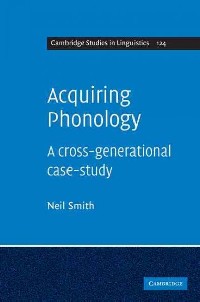
"Children often mispronounce words when learning their first language. Is it because they cannot perceive the differences that adults make or is it because they can't produce the sounds involved? Neither hypothesis is sufficient on its own to explain the facts. On the basis of detailed analyses of his son's and grandson's development, Neil Smith explains the everyday miracle of one aspect of first language acquisition.
Mispronunciations are now attributed to performance ratherthan to competence, and he argues at length that children's productions are not mentally represented. The study also highlights the constructs of current linguistictheory, arguing for distinctive features and the notion 'onset', and against some of the claims of Optimality Theory and usage-based accounts.
Smith provides an important and engaging update to his previous work, The Acquisition of Phonology, building on ideas previously developed and drawing new conclusions with the aid of fresh data."--BOOK JACKET.
目录
Preface p. xiii
Acknowledgements p. xvi
Preliminaries p. 1
Background p. 1
Phonological theory and phonological acquisition p. 1
Perception and production p. 2
Competence and performance p. 4
Levels of adequacy p. 6
Levels of representation and the units of representation p. 8
Learnability p. 11
Universals and innateness p. 15
Continuity p. 17
The main claims of Smith (1973) and the evidence for them p. 19
Inroduction p. 19
The nature of lexical representations p. 20
Realisation rules p. 25
The role of perception p. 27
Competing theories p. 30
Rule-based (generative) theories p. 30
Parameter-setting models p. 32
Constraint-based theories, especially Optimality Theory p. 33
Learnability in OT p. 37
Opacity and the perception-production asymmetry p. 40
Usage-based and connectionist models p. 44
Interim conclusions p. 47
Z and his development p. 50
Family background p. 50
Data and their collection p. 50
Analysis p. 51
Stages of development p. 51
The nature of the acquisition of phonology p. 101
Conceptual issues arising from the phonological development of A and Z p. 102
Competence and performance (again) p. 102
The child's'system' p. 103
Lexical representations p. 105
The perception-production mismatch: gestures p. 108
The perception-production mismatch: theoretical alternatives p. 109
Metalinguistic abilities p. 115
Technical issues arising from the phonological development of A and Z p. 119
The units of phonological analysis p. 119
Explananda p. 121
A smorgasbord? p. 123
Conclusions and speculations p. 125
Diachronic lexicon of Z data p. 127
Table of stages and ages p. 127
Table of sessions and ages p. 128
The lexicon p. 132
Z's repertoire of gestures p. 233
Appendices p. 235
Z's cluster production p. 235
Sporadic clusters p. 235
Final clusters p. 236
Initial clusters p. 238
Adult English initial clusters and their realisation by Z p. 241
Metalinguistic data p. 242
Inventory of Z's judgements of what various words begin with p. 245
References p. 249
Index p. 260
Acknowledgements p. xvi
Preliminaries p. 1
Background p. 1
Phonological theory and phonological acquisition p. 1
Perception and production p. 2
Competence and performance p. 4
Levels of adequacy p. 6
Levels of representation and the units of representation p. 8
Learnability p. 11
Universals and innateness p. 15
Continuity p. 17
The main claims of Smith (1973) and the evidence for them p. 19
Inroduction p. 19
The nature of lexical representations p. 20
Realisation rules p. 25
The role of perception p. 27
Competing theories p. 30
Rule-based (generative) theories p. 30
Parameter-setting models p. 32
Constraint-based theories, especially Optimality Theory p. 33
Learnability in OT p. 37
Opacity and the perception-production asymmetry p. 40
Usage-based and connectionist models p. 44
Interim conclusions p. 47
Z and his development p. 50
Family background p. 50
Data and their collection p. 50
Analysis p. 51
Stages of development p. 51
The nature of the acquisition of phonology p. 101
Conceptual issues arising from the phonological development of A and Z p. 102
Competence and performance (again) p. 102
The child's'system' p. 103
Lexical representations p. 105
The perception-production mismatch: gestures p. 108
The perception-production mismatch: theoretical alternatives p. 109
Metalinguistic abilities p. 115
Technical issues arising from the phonological development of A and Z p. 119
The units of phonological analysis p. 119
Explananda p. 121
A smorgasbord? p. 123
Conclusions and speculations p. 125
Diachronic lexicon of Z data p. 127
Table of stages and ages p. 127
Table of sessions and ages p. 128
The lexicon p. 132
Z's repertoire of gestures p. 233
Appendices p. 235
Z's cluster production p. 235
Sporadic clusters p. 235
Final clusters p. 236
Initial clusters p. 238
Adult English initial clusters and their realisation by Z p. 241
Metalinguistic data p. 242
Inventory of Z's judgements of what various words begin with p. 245
References p. 249
Index p. 260
- 名称
- 类型
- 大小
光盘服务联系方式: 020-38250260 客服QQ:4006604884
云图客服:
用户发送的提问,这种方式就需要有位在线客服来回答用户的问题,这种 就属于对话式的,问题是这种提问是否需要用户登录才能提问
Video Player
×
Audio Player
×
pdf Player
×
