

简介
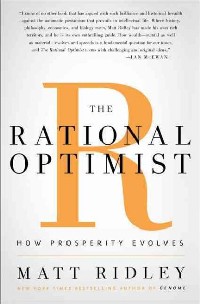
Life is getting better鈥攁nd at an accelerating rate. Food availability, income, and life span are up; disease, child mortality, and violence are down 鈥?all across the globe. Though the world is far from perfect, necessities and luxuries alike are getting cheaper; population growth is slowing; Africa is following Asia out of poverty; the Internet, the mobile phone, and container shipping are enriching people鈥檚 lives as never before. The pessimists who dominate public discourse insist that we will soon reach a turning point and things will start to get worse. But they have been saying this for two hundred years. Yet Matt Ridley does more than describe how things are getting better. He explains why. Prosperity comes from everybody working for everybody else. The habit of exchange and specialization鈥攚hich started more than 100,000 years ago鈥攈as created a collective brain that sets human living standards on a rising trend. The mutual dependence, trust, and sharing that result are causes for hope, not despair. This bold book covers the entire sweep of human history, from the Stone Age to the Internet, from the stagnation of the Ming empire to the invention of the steam engine, from the population explosion to the likely consequences of climate change. It ends with a confident assertion that thanks to the ceaseless capacity of the human race for innovative change, and despite inevitable disasters along the way, the twenty-first century will see both human prosperity and natural biodiversity enhanced. Acute, refreshing, and revelatory, The Rational Optimist will change your way of thinking about the world for the better.
目录
Prologue: when ideas have sex p. 1
A better today: the unprecedented present p. 11
The collective brain: exchange and specialisation after 200,000 years ago p. 47
The manufacture of virtue: barter, trust and rules after 50,000 years ago p. 85
The feeding of the nine billion: farming after 10,000 years ago p. 121
The triumph of cities: trade after 5,000 years ago p. 157
Escaping Malthus's trap: population after 1200 p. 191
The release of slaves: energy after 1700 p. 213
The invention of invention: increasing returns after 1800 p. 247
Turning points: pessimism after 1900 p. 279
The two great pessimisms of today: Africa and climate after 2010 p. 313
The catallaxy: rational optimism about 2100 p. 349
Acknowledgements p. 361
Notes and references p. 363
Index p. 421
A better today: the unprecedented present p. 11
The collective brain: exchange and specialisation after 200,000 years ago p. 47
The manufacture of virtue: barter, trust and rules after 50,000 years ago p. 85
The feeding of the nine billion: farming after 10,000 years ago p. 121
The triumph of cities: trade after 5,000 years ago p. 157
Escaping Malthus's trap: population after 1200 p. 191
The release of slaves: energy after 1700 p. 213
The invention of invention: increasing returns after 1800 p. 247
Turning points: pessimism after 1900 p. 279
The two great pessimisms of today: Africa and climate after 2010 p. 313
The catallaxy: rational optimism about 2100 p. 349
Acknowledgements p. 361
Notes and references p. 363
Index p. 421
- 名称
- 类型
- 大小
光盘服务联系方式: 020-38250260 客服QQ:4006604884
云图客服:
用户发送的提问,这种方式就需要有位在线客服来回答用户的问题,这种 就属于对话式的,问题是这种提问是否需要用户登录才能提问
Video Player
×
Audio Player
×
pdf Player
×
