

简介
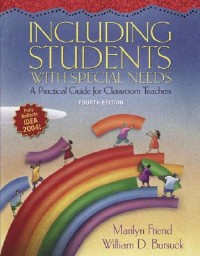
Friend and Bursuck (specialized education services, U. of North Carolina at Greensboro) detail how general education teachers can include students with special needs in the classroom. They describe the special education context and how students with disabilities are served within inclusive school environments; a framework for thinking about instructional practices for struggling students; specific disabilities and other special needs; and instructional approaches that emphasize teaching students in academic and social and behavior areas, regardless of disability. This edition incorporates updated legislation and court cases, response-to-intervention, parents' rights, professional collaboration, math and writing in curriculum-based assessment, selecting and using evidence-based practices, students with autism spectrum disorders, using assistive technology in reading, and ADHD. Annotation 漏2011 Book News, Inc., Portland, OR (booknews.com)
目录
Features p. xviii
Preface p. xxii
The Foundation for Educating Students with Special Needs p. XXX
Learner Objectives p. 1
Key Terms and Concepts p. 1
What Key Terms and Concepts Define Special Education? p. 2
Least Restrictive Environment p. 3
Mainstreaming p. 4
Inclusive Practices p. 4
How Did Today's Special Education Services Come to Exist? p. 6
The Development of Education for Students with Disabilities p. 6
The Impact of the Civil Rights Movement on Special Education p. 7
The Legislative Basis for Contemporary Special Education p. 10
What Are Current Perspectives on Inclusive Practices? p. 14
A Problem of Definition p. 14
Perceptions of School Professionals p. 16
Perceptions of Parents p. 17
Student Outcomes p. 18
Putting the Pieces Together p. 18
Who Receives Special Education and Other Special Services? p. 20
Categories of Disability in Federal Law p. 20
Cross-Categorical Approaches to Special Education p. 25
Other Students with Special Needs p. 26
Summary p. 28
Applications in Teaching Practice: Understanding Contemporary Special Education Practices p. 29
Working the Standards p. 30
Further Readings p. 31
Special Education Procedures and Services p. 32
Learner Objectives p. 33
Key Terms and Concepts p. 33
Who Are the Professionals in Special Education? p. 34
General Education Teachers p. 34
Special Education Teachers p. 36
Other Specialists and Related Service Providers p. 37
How Can You Decide Whether a Student Need Might Be a Disability? p. 44
Analyze Unmet Needs p. 44
Communicate Your Observations and Try Your Own Interventions p. 46
How Do Students Obtain Special Services? p. 47
Initial Consideration of Student Problems p. 49
The Special Education Referral and Assessment Process p. 49
Decision Making for Special Services p. 53
Monitoring Special Education Services p. 53
What Is an Individualized Education Program? p. 56
Required Components of an IEP p. 56
The Value of IEPs p. 60
What Services Do Students with Disabilities Receive? p. 61
Special Education and Related Services p. 61
Student Placement p. 62
Summary p. 67
Applications in Teaching Practice: A Visit to an MDT Meeting p. 67
Working the Standards p. 69
Further Readings p. 71
Building Partnerships through Collaboration p. 72
Learner Objectives p. 73
Key Terms and Concepts p. 73
What Are the Basics of Collaboration? p. 75
Characteristics of Collaboration p. 75
Prerequisites for Collaboration p. 78
What Are Effective Applications of Collaboration in Schools That Foster Inclusion? p. 81
Shared Problem Solving p. 81
Co-Teaching p. 87
Working on a Team p. 90
Consultation p. 92
How Can You Work Effectively with Parents? p. 94
Understanding the Perspective of Family Members p. 94
Parents' Reactions to Their Child's Disability p. 95
Family-Centered Practices p. 96
Collaborating with Parents p. 98
How Can You Work Effectively with Paraprofessionals? p. 100
Understanding Your Working Relationship with Paraprofessionals p. 100
Collaborating with Paraprofessionals p. 102
Summary p. 102
Applications in Teaching Practice: Collaboration in the Washington School District p. 103
Working the Standards p. 104
Further Readings p. 105
Assessing Student Needs p. 106
Learner Objectives p. 107
Key Terms and Concepts p. 107
How Do Your Student Assessments Contribute to Special Education Decisions? p. 108
Screening p. 108
Diagnosis p. 109
Program Placement p. 110
Curriculum Placement p. 111
Instructional Evaluation p. 111
Program Evaluation p. 112
What Information Sources Are Used in Programming for Students with Special Needs? p. 112
High-Stakes Achievement Tests p. 112
Standardized Achievement Tests p. 114
Psychological Tests p. 116
Alternate Assessments p. 117
Curriculum-Based Assessments p. 121
What Kinds of Curriculum-Based Assessments Can You Create for Your Students? p. 122
Probes of Basic Academic Skills p. 122
Content-Area Assessments p. 126
How Are Curriculum-Based Probes Used to Make Special Education Decisions? p. 133
Peer Comparison in Screening p. 133
Fluency and Accuracy in Diagnosis p. 136
Skill Mastery and Curriculum Placement p. 138
Monitoring Student Progress and Instructional Evaluation p. 138
Summary p. 139
Applications in Teaching Practice: Collecting and Using Assessment Information p. 139
Working the Standards p. 141
Further Readings p. 143
Planning Instruction by Analyzing Classroom and Student Needs p. 144
Learner Objectives p. 145
Key Terms and Concepts p. 145
How Can the INCLUDE Strategy Help You Make Reasonable Adaptations for Students with Special Needs? p. 146
Identify Classroom Demands p. 148
Note Student Learning Strengths and Needs p. 150
Check for Potential Areas of Student Success p. 151
Look for Potential Problem Areas p. 151
Use Information to Brainstorm Adaptations p. 152
Decide Which Adaptations to Implement p. 155
Evaluate Student Progress p. 156
How Is an Inclusive Classroom Organized? p. 156
Physical Organization p. 156
Routines for Classroom Business p. 158
Classroom Climate p. 159
Classroom Rules p. 160
Monitoring p. 160
The Use of Time p. 161
How Can You Group All Your Students for Instruction in Inclusive Classrooms? p. 162
Whole-Class or Large-Group Instruction p. 163
Small-Group Instruction p. 164
One-to-One Instruction p. 164
How Can You Evaluate Instructional Materials for Inclusive Classrooms? p. 165
Textbooks p. 165
Manipulatives and Models p. 169
Technology p. 170
How Can You Analyze Instructional Methods in Relation to Student Needs? p. 171
Elements of Direct Instruction p. 173
Indirect Methods of Instruction p. 176
Scaffolding p. 177
Independent Student Practice p. 180
Evaluation of Student Performance p. 181
Summary p. 182
Applications in Teaching Practice: Planning Adaptations in the Instructional Environment p. 184
Working the Standards p. 184
Further Readings p. 185
Students with Low-Incidence Disabilities p. 186
Learner Objectives p. 187
Key Terms and Concepts p. 187
What Are Low-Incidence Disabilities? p. 188
What Accommodations Can You Make for Students with Moderate, Severe, or Multiple Disabilities? p. 190
Students with Moderate to Severe Intellectual Disabilities p. 191
Accommodations for Students with Moderate to Severe Intellectual Disabilities p. 195
Students with Multiple Disabilities p. 198
Deaf-Blindness p. 200
What Accommodations Can You Make for Students with Sensory Impairments? p. 200
Students with Visual Impairments p. 201
Students with Hearing Loss p. 201
Accommodations for Students with Visual Impairments p. 203
Accommodations for Students Who Are Deaf or Hard of Hearing p. 205
What Accommodations Can You Make for Students with Physical, Medical, or Health Disabilities? p. 212
Orthopedic Impairments p. 213
Other Health Impairments p. 215
Traumatic Brain Injury p. 219
What Accommodations Can You Make for Students with Autism Spectrum Disorders? p. 222
Characteristics of Students with Autism Spectrum Disorders p. 223
Accommodations for Students with Autism Spectrum Disorders p. 224
Summary p. 226
Applications in Teaching Practice: Planning Adaptations for Students with Low-Incidence Disabilities p. 228
Working the Standards p. 229
Further Readings p. 231
Students with High-Incidence Disabilities p. 232
Learner Objectives p. 233
Key Terms and Concepts p. 233
What Are High-Incidence Disabilities? p. 234
What Accommodations Can You Make for Students with Communication Disorders? p. 234
Understanding Speech Problems p. 234
Understanding Language Problems p. 236
Accommodations for Students with Communication Disorders p. 238
What Are the Academic Needs of Students with Learning and Behavioral Disabilities? p. 241
Reading Skills p. 243
Written Language Skills p. 243
Math Skills p. 246
Learning Skills p. 248
What Are the Social and Emotional Needs of Students with Learning and Behavioral Disabilities? p. 249
Interpersonal Skills p. 252
Personal and Psychological Adjustment p. 254
What Accommodations Can You Make for Students with Learning and Behavioral Disabilities? p. 255
Addressing Academic Needs p. 255
Addressing Social and Emotional Needs p. 256
Summary p. 260
Applications in Teaching Practice: Using the INCLUDE Strategy with Students with High-Incidence Disabilities p. 261
Working the Standards p. 261
Further Readings p. 262
Other Students with Special Needs p. 264
Learner Objectives p. 265
Key Terms and Concepts p. 265
Which Students Are Protected by Section 504? p. 267
Understanding Section 504 p. 268
Section 504 and Students with Medical and Health Needs p. 268
How Can You Accommodate Students with Attention Deficit-Hyperactivity Disorder (ADHD)? p. 271
Characteristics and Needs of Students with Attention Deficit-Hyperactivity Disorder p. 272
Interventions for Students with Attention Deficit-Hyperactivity Disorder p. 274
Families of Children with Attention Deficit-Hyperactivity Disorder p. 276
How Can You Accommodate Students Who Are Gifted and Talented? p. 278
Characteristics and Needs of Students Who Are Gifted and Talented p. 279
Cognitive Abilities and Academic Skills p. 280
Interventions for Students Who Are Gifted and Talented p. 281
What Are the Needs of Students from Culturally Diverse Backgrounds? p. 283
Diversity and Special Education p. 285
Cultural Awareness p. 286
Families and Diversity p. 290
Multicultural and Bilingual Education p. 291
How Can You Meet the Needs of Students Who Are at Risk? p. 292
Characteristics and Needs of Students at Risk p. 292
Interventions for Students at Risk p. 296
Summary p. 300
Applications in Teaching Practice: Diversity in a High School Class p. 300
Working the Standards p. 302
Further Readings p. 303
Instructional Adaptations p. 304
Learner Objectives p. 305
Key Terms and Concepts p. 305
How Can You Make Accommodations for Students with Special Needs in Basic Skills Instruction? p. 307
Teaching Preskills p. 307
Selecting and Sequencing Examples p. 308
Deciding the Rate of Introduction of New Skills p. 310
Providing Direct Instruction and Opportunities for Practice and Review p. 312
How Can You Make Accommodations for Students with Special Needs When Teaching Subject-Area Content? p. 316
Activating Background Knowledge p. 317
Organizing Content p. 322
Teaching Terms and Concepts p. 328
How Can You Improve Clarity in Written and Oral Communication? p. 334
Clarity in Written Communication p. 335
Clarity in Oral Communication p. 337
How Can You Involve Parents in Teaching Their Children? p. 340
What Adaptations Can You Make to Help Students Succeed in Independent Practice? p. 341
Adapting Seatwork Assignments p. 341
Providing Feedback on Independent Practice Activities p. 342
Adapting Homework Assignments p. 344
Involving Parents in the Homework Process p. 346
Making Instructional Modifications for Students with Moderate to Severe Disabilities p. 347
Summary p. 350
Applications in Teaching Practice: Developing a Repertoire of Instructional Adaptations p. 350
Working the Standards p. 351
Further Readings p. 353
Strategies for Independent Learning p. 354
Learner Objectives p. 355
Key Terms and Concepts p. 355
How Can You Encourage Student Self-Awareness and Self-Advocacy? p. 357
How Can You Effectively Teach Independent Learning Strategies in Class? p. 360
Assessing Current Strategy Use p. 360
Clarifying Expectations p. 361
Demonstrating Strategy Use p. 361
Encouraging Students to Memorize Strategy Steps p. 362
Providing Guided and Independent Practice p. 362
Administering Posttests p. 364
What Are Some Examples of Successful Learning Strategies? p. 365
Word Identification and Reading Fluency Strategies p. 365
Vocabulary Strategies p. 366
Reading Comprehension Strategies p. 367
Listening and Note-Taking Strategies p. 371
Writing Strategies p. 379
Strategies for Using Technology to Improve Student Writing p. 382
Strategies for Problem Solving in Math p. 384
Strategies for Managing Time and Resources p. 387
How Can Students Learn to Use Strategies Independently? p. 389
Self-Instruction p. 390
Self-Monitoring p. 390
Self-Questioning p. 391
Self-Reinforcement p. 391
Summary p. 393
Applications in Teaching Practice: Designing Strategies for Independence p. 393
Working the Standards p. 394
Further Readings p. 395
Evaluating Student Learning p. 396
Learner Objectives p. 397
Key Terms and Concepts p. 397
How Can Classroom Tests Be Adapted for Students with Special Needs? p. 398
Adaptations before the Test p. 399
Adaptations during the Test p. 404
Adaptations after the Test p. 406
How Can Report Card Grades Be Adapted for Students with Special Needs? p. 410
Changes to Letter and Number Grades p. 411
Making Grading Adaptations for Students with Disabilities p. 414
How Can Performance-Based Assessment Benefit Students with Special Needs? p. 422
How Can Portfolio Assessment Benefit Students with Special Needs? p. 424
Summary p. 426
Applications in Teaching Practice: Adapting Evaluations for Students with Special Needs p. 428
Working the Standards p. 428
Further Readings p. 429
Responding to Student Behavior p. 430
Learner Objectives p. 431
Key Terms and Concepts p. 431
What Are Positive Behavioral Interventions and Supports? p. 434
How Can You Prevent Discipline Problems? p. 434
Instructional Environments Conducive to Learning p. 435
Effective Classroom Communication p. 435
Effective Teaching Methods p. 437
Schoolwide Strategies p. 437
How Can You Promote Positive Group Behavior? p. 438
Token Economy p. 438
Other Peer-Mediated Approaches p. 439
What Are Effective Strategies for Responding to Minor Individual Behaviors? p. 440
Use Minimum Interventions p. 440
Manage Students' Surface Behaviors p. 441
How Can Functional Behavior Assessment Help You Respond to Serious Individual Behaviors? p. 442
Rationale for Functional Behavior Assessment p. 442
Verifying the Seriousness of the Problem p. 446
Defining the Problem Behavior p. 447
Collecting Data to Better Understand the Behavior p. 448
Analyzing the Data and Forming Hypotheses p. 451
Developing a Behavior Intervention Plan p. 451
Implementing the Plan p. 453
Monitoring the Plan's Effectiveness p. 454
What Are Effective Strategies for Responding to Serious Individual Behaviors? p. 455
Increasing Desirable Behaviors p. 455
Decreasing Undesirable Behaviors p. 458
Using Behavior Contracts p. 462
How Can You Help Students Manage Their Own Behavior? p. 464
Cognitive Behavior Management Strategies p. 464
Teaching Cognitive Behavior Management Strategies p. 465
Summary p. 466
Applications in Teaching Practice: Developing Strategies for Responding to Individual Student Behavior p. 466
Working the Standards p. 467
Further Readings p. 468
Building Social Relationships p. 470
Learner Objectives p. 471
Key Terms and Concepts p. 471
What Is Your Role in Promoting Positive Social Interactions among Students with and without Disabilities? p. 473
Creating Opportunities for Social Interactions p. 474
Nurturing Support and Friendship p. 476
Providing Positive Role Models p. 479
How Can You Provide Education about Individuals with Disabilities? p. 481
Informing through Direct Instruction p. 481
Using Video and Print Media p. 482
Demonstrating and Using Adaptive Technology p. 483
How Can You Develop and Support Peer Tutoring? p. 483
Developing Peer Tutoring Programs p. 485
Supporting Peer Tutoring Programs p. 488
How Can You Use Cooperative Learning Strategies to Facilitate Social Inclusion? p. 489
The Rationale for Cooperative Learning p. 490
Characteristics of Cooperative Learning Approaches p. 491
Developing Cooperative Learning Programs p. 491
How Can You Help Students with Disabilities Improve Their Social Skills? p. 497
Using Informal Instruction p. 498
Using Behavioral Interventions p. 498
Using Social Skills Training Programs p. 499
Final Thoughts About Inclusion and the INCLUDE Strategy p. 500
Summary p. 500
Applications in Teaching Practice: Planning for Promoting Positive Peer Relations p. 501
Working the Standards p. 502
Further Readings p. 504
Glossary p. 505
References p. 519
Preface p. xxii
The Foundation for Educating Students with Special Needs p. XXX
Learner Objectives p. 1
Key Terms and Concepts p. 1
What Key Terms and Concepts Define Special Education? p. 2
Least Restrictive Environment p. 3
Mainstreaming p. 4
Inclusive Practices p. 4
How Did Today's Special Education Services Come to Exist? p. 6
The Development of Education for Students with Disabilities p. 6
The Impact of the Civil Rights Movement on Special Education p. 7
The Legislative Basis for Contemporary Special Education p. 10
What Are Current Perspectives on Inclusive Practices? p. 14
A Problem of Definition p. 14
Perceptions of School Professionals p. 16
Perceptions of Parents p. 17
Student Outcomes p. 18
Putting the Pieces Together p. 18
Who Receives Special Education and Other Special Services? p. 20
Categories of Disability in Federal Law p. 20
Cross-Categorical Approaches to Special Education p. 25
Other Students with Special Needs p. 26
Summary p. 28
Applications in Teaching Practice: Understanding Contemporary Special Education Practices p. 29
Working the Standards p. 30
Further Readings p. 31
Special Education Procedures and Services p. 32
Learner Objectives p. 33
Key Terms and Concepts p. 33
Who Are the Professionals in Special Education? p. 34
General Education Teachers p. 34
Special Education Teachers p. 36
Other Specialists and Related Service Providers p. 37
How Can You Decide Whether a Student Need Might Be a Disability? p. 44
Analyze Unmet Needs p. 44
Communicate Your Observations and Try Your Own Interventions p. 46
How Do Students Obtain Special Services? p. 47
Initial Consideration of Student Problems p. 49
The Special Education Referral and Assessment Process p. 49
Decision Making for Special Services p. 53
Monitoring Special Education Services p. 53
What Is an Individualized Education Program? p. 56
Required Components of an IEP p. 56
The Value of IEPs p. 60
What Services Do Students with Disabilities Receive? p. 61
Special Education and Related Services p. 61
Student Placement p. 62
Summary p. 67
Applications in Teaching Practice: A Visit to an MDT Meeting p. 67
Working the Standards p. 69
Further Readings p. 71
Building Partnerships through Collaboration p. 72
Learner Objectives p. 73
Key Terms and Concepts p. 73
What Are the Basics of Collaboration? p. 75
Characteristics of Collaboration p. 75
Prerequisites for Collaboration p. 78
What Are Effective Applications of Collaboration in Schools That Foster Inclusion? p. 81
Shared Problem Solving p. 81
Co-Teaching p. 87
Working on a Team p. 90
Consultation p. 92
How Can You Work Effectively with Parents? p. 94
Understanding the Perspective of Family Members p. 94
Parents' Reactions to Their Child's Disability p. 95
Family-Centered Practices p. 96
Collaborating with Parents p. 98
How Can You Work Effectively with Paraprofessionals? p. 100
Understanding Your Working Relationship with Paraprofessionals p. 100
Collaborating with Paraprofessionals p. 102
Summary p. 102
Applications in Teaching Practice: Collaboration in the Washington School District p. 103
Working the Standards p. 104
Further Readings p. 105
Assessing Student Needs p. 106
Learner Objectives p. 107
Key Terms and Concepts p. 107
How Do Your Student Assessments Contribute to Special Education Decisions? p. 108
Screening p. 108
Diagnosis p. 109
Program Placement p. 110
Curriculum Placement p. 111
Instructional Evaluation p. 111
Program Evaluation p. 112
What Information Sources Are Used in Programming for Students with Special Needs? p. 112
High-Stakes Achievement Tests p. 112
Standardized Achievement Tests p. 114
Psychological Tests p. 116
Alternate Assessments p. 117
Curriculum-Based Assessments p. 121
What Kinds of Curriculum-Based Assessments Can You Create for Your Students? p. 122
Probes of Basic Academic Skills p. 122
Content-Area Assessments p. 126
How Are Curriculum-Based Probes Used to Make Special Education Decisions? p. 133
Peer Comparison in Screening p. 133
Fluency and Accuracy in Diagnosis p. 136
Skill Mastery and Curriculum Placement p. 138
Monitoring Student Progress and Instructional Evaluation p. 138
Summary p. 139
Applications in Teaching Practice: Collecting and Using Assessment Information p. 139
Working the Standards p. 141
Further Readings p. 143
Planning Instruction by Analyzing Classroom and Student Needs p. 144
Learner Objectives p. 145
Key Terms and Concepts p. 145
How Can the INCLUDE Strategy Help You Make Reasonable Adaptations for Students with Special Needs? p. 146
Identify Classroom Demands p. 148
Note Student Learning Strengths and Needs p. 150
Check for Potential Areas of Student Success p. 151
Look for Potential Problem Areas p. 151
Use Information to Brainstorm Adaptations p. 152
Decide Which Adaptations to Implement p. 155
Evaluate Student Progress p. 156
How Is an Inclusive Classroom Organized? p. 156
Physical Organization p. 156
Routines for Classroom Business p. 158
Classroom Climate p. 159
Classroom Rules p. 160
Monitoring p. 160
The Use of Time p. 161
How Can You Group All Your Students for Instruction in Inclusive Classrooms? p. 162
Whole-Class or Large-Group Instruction p. 163
Small-Group Instruction p. 164
One-to-One Instruction p. 164
How Can You Evaluate Instructional Materials for Inclusive Classrooms? p. 165
Textbooks p. 165
Manipulatives and Models p. 169
Technology p. 170
How Can You Analyze Instructional Methods in Relation to Student Needs? p. 171
Elements of Direct Instruction p. 173
Indirect Methods of Instruction p. 176
Scaffolding p. 177
Independent Student Practice p. 180
Evaluation of Student Performance p. 181
Summary p. 182
Applications in Teaching Practice: Planning Adaptations in the Instructional Environment p. 184
Working the Standards p. 184
Further Readings p. 185
Students with Low-Incidence Disabilities p. 186
Learner Objectives p. 187
Key Terms and Concepts p. 187
What Are Low-Incidence Disabilities? p. 188
What Accommodations Can You Make for Students with Moderate, Severe, or Multiple Disabilities? p. 190
Students with Moderate to Severe Intellectual Disabilities p. 191
Accommodations for Students with Moderate to Severe Intellectual Disabilities p. 195
Students with Multiple Disabilities p. 198
Deaf-Blindness p. 200
What Accommodations Can You Make for Students with Sensory Impairments? p. 200
Students with Visual Impairments p. 201
Students with Hearing Loss p. 201
Accommodations for Students with Visual Impairments p. 203
Accommodations for Students Who Are Deaf or Hard of Hearing p. 205
What Accommodations Can You Make for Students with Physical, Medical, or Health Disabilities? p. 212
Orthopedic Impairments p. 213
Other Health Impairments p. 215
Traumatic Brain Injury p. 219
What Accommodations Can You Make for Students with Autism Spectrum Disorders? p. 222
Characteristics of Students with Autism Spectrum Disorders p. 223
Accommodations for Students with Autism Spectrum Disorders p. 224
Summary p. 226
Applications in Teaching Practice: Planning Adaptations for Students with Low-Incidence Disabilities p. 228
Working the Standards p. 229
Further Readings p. 231
Students with High-Incidence Disabilities p. 232
Learner Objectives p. 233
Key Terms and Concepts p. 233
What Are High-Incidence Disabilities? p. 234
What Accommodations Can You Make for Students with Communication Disorders? p. 234
Understanding Speech Problems p. 234
Understanding Language Problems p. 236
Accommodations for Students with Communication Disorders p. 238
What Are the Academic Needs of Students with Learning and Behavioral Disabilities? p. 241
Reading Skills p. 243
Written Language Skills p. 243
Math Skills p. 246
Learning Skills p. 248
What Are the Social and Emotional Needs of Students with Learning and Behavioral Disabilities? p. 249
Interpersonal Skills p. 252
Personal and Psychological Adjustment p. 254
What Accommodations Can You Make for Students with Learning and Behavioral Disabilities? p. 255
Addressing Academic Needs p. 255
Addressing Social and Emotional Needs p. 256
Summary p. 260
Applications in Teaching Practice: Using the INCLUDE Strategy with Students with High-Incidence Disabilities p. 261
Working the Standards p. 261
Further Readings p. 262
Other Students with Special Needs p. 264
Learner Objectives p. 265
Key Terms and Concepts p. 265
Which Students Are Protected by Section 504? p. 267
Understanding Section 504 p. 268
Section 504 and Students with Medical and Health Needs p. 268
How Can You Accommodate Students with Attention Deficit-Hyperactivity Disorder (ADHD)? p. 271
Characteristics and Needs of Students with Attention Deficit-Hyperactivity Disorder p. 272
Interventions for Students with Attention Deficit-Hyperactivity Disorder p. 274
Families of Children with Attention Deficit-Hyperactivity Disorder p. 276
How Can You Accommodate Students Who Are Gifted and Talented? p. 278
Characteristics and Needs of Students Who Are Gifted and Talented p. 279
Cognitive Abilities and Academic Skills p. 280
Interventions for Students Who Are Gifted and Talented p. 281
What Are the Needs of Students from Culturally Diverse Backgrounds? p. 283
Diversity and Special Education p. 285
Cultural Awareness p. 286
Families and Diversity p. 290
Multicultural and Bilingual Education p. 291
How Can You Meet the Needs of Students Who Are at Risk? p. 292
Characteristics and Needs of Students at Risk p. 292
Interventions for Students at Risk p. 296
Summary p. 300
Applications in Teaching Practice: Diversity in a High School Class p. 300
Working the Standards p. 302
Further Readings p. 303
Instructional Adaptations p. 304
Learner Objectives p. 305
Key Terms and Concepts p. 305
How Can You Make Accommodations for Students with Special Needs in Basic Skills Instruction? p. 307
Teaching Preskills p. 307
Selecting and Sequencing Examples p. 308
Deciding the Rate of Introduction of New Skills p. 310
Providing Direct Instruction and Opportunities for Practice and Review p. 312
How Can You Make Accommodations for Students with Special Needs When Teaching Subject-Area Content? p. 316
Activating Background Knowledge p. 317
Organizing Content p. 322
Teaching Terms and Concepts p. 328
How Can You Improve Clarity in Written and Oral Communication? p. 334
Clarity in Written Communication p. 335
Clarity in Oral Communication p. 337
How Can You Involve Parents in Teaching Their Children? p. 340
What Adaptations Can You Make to Help Students Succeed in Independent Practice? p. 341
Adapting Seatwork Assignments p. 341
Providing Feedback on Independent Practice Activities p. 342
Adapting Homework Assignments p. 344
Involving Parents in the Homework Process p. 346
Making Instructional Modifications for Students with Moderate to Severe Disabilities p. 347
Summary p. 350
Applications in Teaching Practice: Developing a Repertoire of Instructional Adaptations p. 350
Working the Standards p. 351
Further Readings p. 353
Strategies for Independent Learning p. 354
Learner Objectives p. 355
Key Terms and Concepts p. 355
How Can You Encourage Student Self-Awareness and Self-Advocacy? p. 357
How Can You Effectively Teach Independent Learning Strategies in Class? p. 360
Assessing Current Strategy Use p. 360
Clarifying Expectations p. 361
Demonstrating Strategy Use p. 361
Encouraging Students to Memorize Strategy Steps p. 362
Providing Guided and Independent Practice p. 362
Administering Posttests p. 364
What Are Some Examples of Successful Learning Strategies? p. 365
Word Identification and Reading Fluency Strategies p. 365
Vocabulary Strategies p. 366
Reading Comprehension Strategies p. 367
Listening and Note-Taking Strategies p. 371
Writing Strategies p. 379
Strategies for Using Technology to Improve Student Writing p. 382
Strategies for Problem Solving in Math p. 384
Strategies for Managing Time and Resources p. 387
How Can Students Learn to Use Strategies Independently? p. 389
Self-Instruction p. 390
Self-Monitoring p. 390
Self-Questioning p. 391
Self-Reinforcement p. 391
Summary p. 393
Applications in Teaching Practice: Designing Strategies for Independence p. 393
Working the Standards p. 394
Further Readings p. 395
Evaluating Student Learning p. 396
Learner Objectives p. 397
Key Terms and Concepts p. 397
How Can Classroom Tests Be Adapted for Students with Special Needs? p. 398
Adaptations before the Test p. 399
Adaptations during the Test p. 404
Adaptations after the Test p. 406
How Can Report Card Grades Be Adapted for Students with Special Needs? p. 410
Changes to Letter and Number Grades p. 411
Making Grading Adaptations for Students with Disabilities p. 414
How Can Performance-Based Assessment Benefit Students with Special Needs? p. 422
How Can Portfolio Assessment Benefit Students with Special Needs? p. 424
Summary p. 426
Applications in Teaching Practice: Adapting Evaluations for Students with Special Needs p. 428
Working the Standards p. 428
Further Readings p. 429
Responding to Student Behavior p. 430
Learner Objectives p. 431
Key Terms and Concepts p. 431
What Are Positive Behavioral Interventions and Supports? p. 434
How Can You Prevent Discipline Problems? p. 434
Instructional Environments Conducive to Learning p. 435
Effective Classroom Communication p. 435
Effective Teaching Methods p. 437
Schoolwide Strategies p. 437
How Can You Promote Positive Group Behavior? p. 438
Token Economy p. 438
Other Peer-Mediated Approaches p. 439
What Are Effective Strategies for Responding to Minor Individual Behaviors? p. 440
Use Minimum Interventions p. 440
Manage Students' Surface Behaviors p. 441
How Can Functional Behavior Assessment Help You Respond to Serious Individual Behaviors? p. 442
Rationale for Functional Behavior Assessment p. 442
Verifying the Seriousness of the Problem p. 446
Defining the Problem Behavior p. 447
Collecting Data to Better Understand the Behavior p. 448
Analyzing the Data and Forming Hypotheses p. 451
Developing a Behavior Intervention Plan p. 451
Implementing the Plan p. 453
Monitoring the Plan's Effectiveness p. 454
What Are Effective Strategies for Responding to Serious Individual Behaviors? p. 455
Increasing Desirable Behaviors p. 455
Decreasing Undesirable Behaviors p. 458
Using Behavior Contracts p. 462
How Can You Help Students Manage Their Own Behavior? p. 464
Cognitive Behavior Management Strategies p. 464
Teaching Cognitive Behavior Management Strategies p. 465
Summary p. 466
Applications in Teaching Practice: Developing Strategies for Responding to Individual Student Behavior p. 466
Working the Standards p. 467
Further Readings p. 468
Building Social Relationships p. 470
Learner Objectives p. 471
Key Terms and Concepts p. 471
What Is Your Role in Promoting Positive Social Interactions among Students with and without Disabilities? p. 473
Creating Opportunities for Social Interactions p. 474
Nurturing Support and Friendship p. 476
Providing Positive Role Models p. 479
How Can You Provide Education about Individuals with Disabilities? p. 481
Informing through Direct Instruction p. 481
Using Video and Print Media p. 482
Demonstrating and Using Adaptive Technology p. 483
How Can You Develop and Support Peer Tutoring? p. 483
Developing Peer Tutoring Programs p. 485
Supporting Peer Tutoring Programs p. 488
How Can You Use Cooperative Learning Strategies to Facilitate Social Inclusion? p. 489
The Rationale for Cooperative Learning p. 490
Characteristics of Cooperative Learning Approaches p. 491
Developing Cooperative Learning Programs p. 491
How Can You Help Students with Disabilities Improve Their Social Skills? p. 497
Using Informal Instruction p. 498
Using Behavioral Interventions p. 498
Using Social Skills Training Programs p. 499
Final Thoughts About Inclusion and the INCLUDE Strategy p. 500
Summary p. 500
Applications in Teaching Practice: Planning for Promoting Positive Peer Relations p. 501
Working the Standards p. 502
Further Readings p. 504
Glossary p. 505
References p. 519
- 名称
- 类型
- 大小
光盘服务联系方式: 020-38250260 客服QQ:4006604884
云图客服:
用户发送的提问,这种方式就需要有位在线客服来回答用户的问题,这种 就属于对话式的,问题是这种提问是否需要用户登录才能提问
Video Player
×
Audio Player
×
pdf Player
×
