

简介
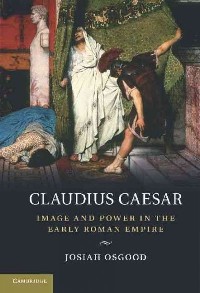
"The story of Claudius has been often told before. Ancient writers saw the emperor as the dupe of his wives and palace insiders; Robert Graves tried to rehabilitate him as a far shrewder, if still frustrated, politician. Josiah Osgood shifts the focus off the personality of Claudius and on to what his tumultuous years in power reveal about the developing political culture of the early Roman Empire. What precedents set by Augustus were followed? What had to be abandoned? How could a new emperor win the support of key elements of Roman society? This richly illustrated discussion draws on a range of newly discovered documents, exploring events that move far beyond the city of Rome and Italy to Egypt and Judea, Morocco and Britain. Claudius Caesar opens up a new perspective not just on Claudius himself, but all Roman emperors, the Roman Empire, and the nature of empires more generally"--Provided by publisher.
"Throughout his childhood and early adult years, Claudius never could have expected to become ruler of the Roman world. Born in 10 bc to Drusus, Augustus' stepson, and Antonia, Augustus' niece, he had not a drop of the first emperor's blood in him. But that was not his disqualification, for Claudius' own older brother, Germanicus, was considered a possible successor (Fig. 1). When, in ad 4, Augustus finally adopted Tiberius, gave him new powers, and made him his heir, he required Tiberius first to adopt Germanicus; both thereby gained the crucial name "Caesar" and entered the Julian family.1 And after the premature death of Germanicus in ad 19, it was Germanicus' own young sons, including Gaius Caesar - otherwise known as Caligula - rather than Claudius, who came to be seen as possible successors to Tiberius.2 The obstacle for Claudius was that as a child he suffered from a nervous disorder now diagnosed as dystonia - symptoms mentioned included irregular motor movements, a stammer, and drooling - and was thus deemed unsuitable for public life.3 His own mother, it could be claimed, liked to call him "a freak of a man, not finished by Nature but only begun."4 She, along with the rest of rest of the family, finally decided, when Germanicus was consul in ad 12, that Claudius was not to serve in any magistracy or to join the Senate"--Provided by publisher.
目录
List of illustrations p. vi
List of maps and tables p. x
Acknowledgments p. xi
Note on abbreviations p. xiii
Prologue: The Roman Empire in ad 41 p. 1
Introduction: The problem of Claudius p. 9
Claudius Caesar p. 29
A statue in silver p. 47
Imperial favors p. 69
Subduing the ocean p. 84
Lists of peoples and places p. 107
Caesar-lovers p. 126
The eight-hundredth year of Rome p. 147
Practical pyramids p. 168
The burden of government p. 190
The judgment of Pallas p. 206
Signaling retreat? p. 225
The golden predicament p. 242
Notes p. 260
Bibliography p. 322
Index p. 351
List of maps and tables p. x
Acknowledgments p. xi
Note on abbreviations p. xiii
Prologue: The Roman Empire in ad 41 p. 1
Introduction: The problem of Claudius p. 9
Claudius Caesar p. 29
A statue in silver p. 47
Imperial favors p. 69
Subduing the ocean p. 84
Lists of peoples and places p. 107
Caesar-lovers p. 126
The eight-hundredth year of Rome p. 147
Practical pyramids p. 168
The burden of government p. 190
The judgment of Pallas p. 206
Signaling retreat? p. 225
The golden predicament p. 242
Notes p. 260
Bibliography p. 322
Index p. 351
- 名称
- 类型
- 大小
光盘服务联系方式: 020-38250260 客服QQ:4006604884
云图客服:
用户发送的提问,这种方式就需要有位在线客服来回答用户的问题,这种 就属于对话式的,问题是这种提问是否需要用户登录才能提问
Video Player
×
Audio Player
×
pdf Player
×
