

简介
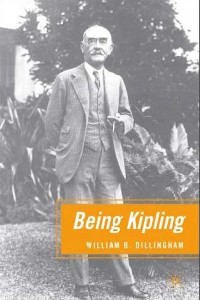
Being Kipling exposes Rudyard Kipling's identity as he himself perceived it through the lens of a collection of works composed over a period of years and brought together in the volume Land and Sea Tales for Scouts and Guides. Dillingham uses this extraordinary collection, ostensibly put together for the inspiration of Boy Scouts and Girl Guides and frequently ignored by critics and biographers, to offer rare insight into formative events from Kipling's youth that shaped his personality and made him the man and writer that he became. The eight stories, eight poems, and three essays of Land and Sea Tales for Scouts and Guides are all examined closely both for what they reveal about Kipling's life and worldview and for their rarely perceived, but considerable literary merit. - Back cover.
目录
To Elizabeth
(For being Lizzie)
Contents
Preface and Acknowledgments
List of Illustrations
Introduction: Being Fit
1. Being Modest
2. Being Wary
3. Being Unqualified
4. Being Called
5. Being Transported
6. Being Stalky
7. Being Heroic
8. Being Converted
9. Being Practical
10. Being English
11. Being ?It?
Index
Preface and Acknowledgments
In a speech to the students of Wellington College in 1912, Kipling told the story of a highly intelligent and splendidly trained young man who had just begun his career as a college teacher. He was one of those up-and-coming intellectual bright lights such as one encounters in the academic world. Still in his twenties, he oozed self-confidence because he had won just about every fellowship and honor available to him. In his new position, he felt it incumbent upon him (and no doubt politic) to pay courtesy calls on certain of the older professors. One of them was, like the young man, a Greek scholar, but he was something of a philosopher as well. After a few pleasantries, this much seasoned professor said, questioningly: ?You know Plato of course.? Without hesitation, and probably wondering why he should be asked such an absurd question, the young instructor answered that he believed he did know Plato. In fact, ?He had an idea at the back of his head that he knew Plato rather better than most men of his time.? He was not, however, prepared for the next question: ??Well,? said the old man, ?what?s it all
about??? 1
That question is perhaps the most basic and the most probing that can be raised about anyone or anything. It insists upon the essential. It aims at the heart of the matter or of the person asked about. Answers to it are not easy to come by. Consequently, it frequently causes discomfort. In the case of Kipling?s young friend, the college instructor, it may have initiated the beginning of wisdom. Kipling ends his anecdote in this fashion:
Then it slowly dawned on him that he literally and absolutely did not know what Plato was all about. He knew pretty much everything else connected with the gentleman, but to put it roughly, what Plato was after, what Plato?s game was in the world, my friend did not know. Then he sat down and began to think what Plato was all about.2
I did not start out to write this particular book but one of another sort. It was to focus on but a single issue in Kipling?s writings, that of war, but it was to trace the author?s treatment of that subject through all of his works. What I have actually written takes the opposite approach: it examines a broad area of Kipling?s life and thought through the narrow lens of a single volume. This drastic shift in intention came about when, as preparation for the book I originally planned, I began to consider the often ignored work entitled Land and Sea Tales for Scouts and Guides. I had read and to some extent studied it before. This time, however, when I got to it, I got no further with the project to which I had devoted considerable time and thought. All that I had done thus far was abandoned. The works included in Land and Sea Tales short-circuited all my previous plans, for, shockingly, these writings seemed to me to direct themselves precisely to that most important of all questions about Kipling, the same question that the old don asked the young instructor about Plato: what is he all about?
The thesis of Being Kipling is that the author of Land and Sea Tales himself gave substantial answers to that essential question through the stories, essays, and poems in that collection. The selections in Land and Sea Tales reveal to a remarkable degree what from the author?s own perspective he was about, what he was after, what his game was in the world. These works were written over a period of about thirty years and then gathered together in this single extraordinary volume, a treasure of insight into the man and writer, a treasure that has long remained buried.
My intention has been to unearth it, to show not only that these writings in Land and Sea Tales reveal what it was like to be Kipling, what he was all about from his own viewpoint, but also to point out that through the years they have been greatly underrated as works of art. Dismissed as below par, they cry out for a fair hearing. I have tried to give them that. I do not expect that from here on out they will be considered the crown jewels of the Kipling realm, but perhaps they will no longer be thought of as just paste. They are herein discussed in the order of their appearance in Land and Sea Tales. That is an arrangement the logic of which perhaps only the author perceived, which is not to say that such a scheme does not exist but simply that it is not apparent. Kipling obviously did not arrange the selections in the order of their original publication, for the earliest one of the works collected in the volume occupies the final position. Nor does the book appear to follow any other customary organization such as that of a developing theme. What does stand out brightly is that each of the eleven prose selections (and the poems that accompany most of them) focuses on a different aspect of being Kipling. Each is a candle lighting up an important corner of his personality. Together these illuminating single candles search, to quote Proverbs, ?the inward parts of the belly.? The overall impact of these eight stories, three essays, and eight poems can be memorably dramatic for anyone who has sat down and pondered, really pondered, what Kipling is all about.
I wish to thank the Kipling Journal for permission to reprint herein a version of ?Bacon and Eggs: Kipling?s Calling,? 79 (March 2005), 34-46. My thanks also go to the Kipling Society for permission to use two photographs in its possession, Kipling at School (preceding Chapter 4) and Rudyard as a Child (preceding Chapter 10). As always, I am grateful to the staff of the Woodruff Library, Emory University, for their help in matters too numerous and varied to name. Would that all scholars had such people as friends and helpers.
List of Illustrations
Preceding Chapter 1: Kipling in His Study, Brattleboro, Vermont
Preceding Chapter 4: Kipling at School
Preceding Chapter 10: Rudyard as a child
- 名称
- 类型
- 大小
光盘服务联系方式: 020-38250260 客服QQ:4006604884
云图客服:
用户发送的提问,这种方式就需要有位在线客服来回答用户的问题,这种 就属于对话式的,问题是这种提问是否需要用户登录才能提问
Video Player
×
Audio Player
×
pdf Player
×
