

简介
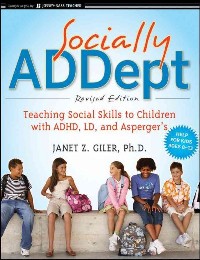
"Decodes the often confusing rules of social behavior for all children Socially ADDept helps educators and parents teach the hidden rules of social behavior to children with limited social skills, notably those with special needs like ADHD, learning disabilities, Asperger's and high-functioning autism, Tourette Syndrome, and nonverbal learning disabilities. The author provides all the information parents and professionals need to know to help kids learn social skills in simple, concise explanations. The book is divided into eight sections that educators can use as teaching units or parents can work through one week (or month) at a time. Includes a way for children to see themselves and how their behavior looks to others. Deciphers the complex rules of nonverbal language into friendly, bite-sized morsels that kids can understand. Offers a field-tested collection of suggestions and strategies for parents and professionals who want to enhance a child's social competence. Socially ADDept is presented in a hands-on workbook format, complete with reproducible student worksheets that are also available for free download from the publisher web site."--
目录
Table Of Contents:
About This Book v
About the Author vii
Acknowledgments ix
Introduction 1(6)
Part I What Parents and Teachers Need to Know
Chapter 1 Why Children with Special Needs Struggle Socially 7(18)
Why Teach Social Skills? 7(2)
Language Difficulties and the Hidden Rules of Conversation 9(1)
Difficulty Recognizing and Labeling Feelings 10(1)
Poor Problem-Solving Skills 10(2)
Failure to Mimic Behavior 12(1)
How Children Deal with "Different" Behavior 12(1)
Why Train Preadolescent Children? 12(1)
Two Major Weaknesses That Lead to Social Mistakes 13(2)
Black-or-White Thinking 15(1)
Teaching Children with SN the Behaviors of Popular Children 15(1)
The Importance of Early Intervention 16(1)
Teaching Joint Attention 16(1)
Two Major Deficits 16(3)
Ten Essential Skills for Being Socially ADDept 19(3)
Notes 22(3)
Chapter 2 Tips for Communicating with Children 25(8)
Coaching Children on Desirable Behaviors 27(1)
Role-Playing the Right Way Versus the Wrong Way 28(1)
Empathy: Being in the Other Person's Shoes 28(1)
Using Humor 29(1)
Observing and Dealing with Perseveration 29(1)
Recess 30(1)
Monitoring Play 30(1)
Using Opportunistic Reinforcement 31(2)
Chapter 3 Setting Individual Goals and Giving Structured Feedback 33(16)
Building Skills Teaches Resiliency 33(1)
Helping Children Set Their Goals 34(1)
Creating an Individual Program for Each Child 35(1)
Using the Self-Evaluation Forms 36(1)
Using the Self-Evaluation Form to Confirm Joint Perception 37(1)
The Parent's Role as Facilitator 38(1)
The Teacher's Role as Facilitator 39(1)
Parents and Teachers Working Together 39(1)
Rewarding Progress 39(1)
Correcting Omissions or Inappropriate Behaviors 40(1)
Self-Evaluation Form: Listening 41(1)
Self-Evaluation Form: Showing Interest 42(1)
Self-Evaluation Form: Paying Attention to Stop Signs 43(1)
Self-Evaluation Form: Controlling Talking Too Much 44(1)
Self-Evaluation Form: Being a Good Host 45(1)
Charting Negative Behavior 46(1)
Charting Positive Behavior 46(2)
Notes 48(1)
Chapter 4 Ways Parents Can Help 49(10)
Helping Your Child Find and Excel in an Activity 49(1)
Preparing for Social Situations 50(1)
Using Discipline During a Play Date 51(1)
Preparing Children for New Situations 52(1)
Teaching Manners 52(1)
Building Physical Coordination 53(1)
Helping Children Learn About Time 53(1)
Using Humor Appropriately 54(1)
Finding a Social Skills Group 54(1)
Meeting Other Parents 55(1)
Getting Help for Yourself 55(4)
Part II The Socially ADDept Lessons
Lesson One Friendship Skills and Setting Goals 59(15)
1.1 What Makes a Friend? 59(1)
1.2 What Do Friendly People Do? 60(1)
1.3 Ten Friendship Skills 60(1)
1.4 Defining Personal Goals 61(1)
1.5 Defining Positive Qualities 61(3)
1.6 Identifying Children's Special Interests 64(1)
Exercise 1 What Do Friendly People Do? 65(1)
Exercise 2 Defining My Personal Goals 66(1)
Exercise 3 Tooting Your Own Horn 67(1)
Exercise 4 Private or Public Talk? 68(1)
Exercise 5 Identify Your Interests 69(1)
Exercise 6 Friendship Cards: Keep a Record of Facts About Your Friends 70(1)
Exercise 7 Good Host Rules 71(1)
Exercise 8 Finding Neighborhood Activities: The Parent's Job 72(2)
Lesson Two Being a Good Listener and Other Conversational Skills 74(13)
2.1 Listening 74(1)
2.2 Listening Mistakes 75(1)
2.3 The Body Language of Listening 76(1)
2.4 Elements of a Good Conversation: Listening and Responding 77(1)
2.5 Different Types of Questions 78(1)
2.6 Other Kinds of Responses 79(1)
2.7 How to Deal with Perseveration 79(2)
2.8 Arranging a STOP Sign 81(2)
Exercise 9 Listening Facts 83(1)
Exercise 10 Eye Contact 84(1)
Exercise 11 It's Those Eyes! 85(1)
Exercise 12 Stopping When Asked 86(1)
Lesson Three Verbal Conversational Skills 87(14)
3.1 Greetings 87(1)
3.2 Conversation Openers: Small Talk 88(2)
3.3 The Middle of the Conversation: Asking Questions and Making Comments 90(2)
3.4 Other Ways to Continue a Conversation 92(1)
3.5 Exiting a Conversation 92(1)
3.6 Conversation Mistakes 93(1)
3.7 The Four Kinds of Friendship and When to Share Feelings 94(1)
3.8 Off-Limits Topics 95(2)
Exercise 13 Sharing the Airtime 97(1)
Exercise 14 Listening and Adding to the Story 97(1)
Exercise 15 TV Host 98(1)
Exercise 16 Using the Telephone (for Children at Home) 98(1)
Exercise 17 How Do Boys Greet Each Other at Your School? How Do Girls Greet Each Other? 99(1)
Exercise 18 How Do Children Say Good-Bye to Each Other? 100(1)
Lesson Four Communicating Feelings Through Body Language 101(12)
4.1 Facial Expressions 102(1)
4.2 It's Those Eyes 103(2)
4.3 Open or Closed Gestures and Posture 105(1)
4.4 Respecting Personal Space 106(1)
4.5 Touching People 107(1)
4.6 Stop Signs 107(2)
Exercise 19 Facial Expressions 109(1)
Exercise 20 Practice Identifying Feelings in Facial Expressions and Body Language 110(1)
Exercise 21 Body Language 111(1)
Exercise 22 Physical Proximity 112(1)
Lesson Five Being "in Sync"---Understanding and Echoing Tone 113(10)
5.1 Using Music to Teach Emotional Harmony 114(1)
5.2 The Tone of Emotions 115(1)
5.3 When the Tone or Body Language Disagrees with the Spoken Words 116(2)
Exercise 23 The Right Tone of Voice 118(1)
Exercise 24 Volume Control 119(1)
Exercise 25 Practice Identifying How Feelings Sound 120(1)
Exercise 26 Copy Cat: Practicing Being in Someone Else's Shoes 121(1)
Note for Lesson Five 122(1)
Lesson Six Recognizing Friendly Behavior 123(11)
6.1 Recognizing Friendly Behavior 123(1)
6.2 Review of STOP Signs 124(1)
6.3 Nonverbal STOP Signs 125(1)
6.4 Verbal STOP Signs 126(1)
6.5 Reading STOP Signs 127(1)
6.6 Play Red Light, Green Light 128(1)
6.7 Using Manners to Say STOP 129(2)
Exercise 27 Reading Friendly and Unfriendly Body Language 131(1)
Exercise 28 STOP Signs 132(1)
Exercise 29 Recognizing How Other Children Say Good-Bye 133(1)
Lesson Seven Joining an Ongoing Group 134(13)
7.1 Joining a Group 135(1)
7.2 Join, Don't Intrude 135(1)
7.3 Demonstrate the Wrong Way to Join a Group 136(1)
7.4 Demonstrate the Right Way to Join a Group 137(2)
7.5 Inclusion or Exclusion? 139(1)
7.6 Rejection Versus Refusal 139(2)
7.7 Groups and Cliques 141(2)
7.8 When Your Child Cannot Join a Group (for Parents) 143(1)
Exercise 30 Practice Joining an Ongoing Group 144(1)
Exercise 31 Defining the Groups at School 145(1)
Note for Lesson Seven 146(1)
Lesson Eight Dealing with Teasing 147(14)
8.1 Why Children Tease Others 147(1)
8.2 Three Major Types of Teasing 148(2)
8.3 Why Children Use Status Teasing (or Put-Down Humor) 150(1)
8.4 Boys and Status Teasing 150(1)
8.5 Evaluating the Type of Teasing 151(1)
8.6 The Wrong Way to Handle Teasing 152(1)
8.7 Three Strategies to Handle Teasing 153(1)
8.8 Role-Play Being Teased 154(1)
8.9 When Jokes Aren't Funny: The Rules of Humor 155(1)
8.10 The Rule of Equals 156(3)
Exercise 32 Figuring Out the Type of Teasing 159(1)
Notes for Lesson Eight 160(1)
Lesson Nine Managing Anger 161(13)
9.1 Why Do We Get Angry? 161(1)
9.2 Why Should Children Control Their Anger? 162(1)
9.3 The Hot-Tempered Child 163(1)
9.4 Identifying Physical Responses to Anger 163(1)
9.5 Identifying the Child's Anger Style 163(1)
9.6 Identifying Anger Triggers 164(1)
9.7 Checking Out the Other Person's Intentions 164(1)
9.8 Handling Anger the Wrong Way 165(1)
9.9 Seven Steps to Process Anger 166(1)
9.10 Role-Play Handling Anger 167(1)
9.11 When There Is an Outburst 168(1)
9.12 Apologizing 169(1)
Exercise 33 What Makes You Angry? 170(2)
Exercise 34 Handling Anger Differently 172(1)
Exercise 35 Practice Apologizing 173(1)
Lesson Ten Children in Cyberspace: Old Rules, New Rules 174(5)
10.1 Cell Phone Etiquette and Rules 175(1)
10.2 Rules About Internet Use 176(1)
10.3 Cyber-Bullying 177(1)
Exercise 36 Watch "Kids Online" 178(1)
Conclusion: Learning Social Skills Is a Lifelong Process 179(4)
Part III Appendices
Appendix A What Is ADHD? 183(4)
Appendix B What Are Learning Disabilities? 187(4)
Appendix C What Is Asperger's Syndrome? 191(4)
Bibliography and Resources 195(8)
Index 203
About This Book v
About the Author vii
Acknowledgments ix
Introduction 1(6)
Part I What Parents and Teachers Need to Know
Chapter 1 Why Children with Special Needs Struggle Socially 7(18)
Why Teach Social Skills? 7(2)
Language Difficulties and the Hidden Rules of Conversation 9(1)
Difficulty Recognizing and Labeling Feelings 10(1)
Poor Problem-Solving Skills 10(2)
Failure to Mimic Behavior 12(1)
How Children Deal with "Different" Behavior 12(1)
Why Train Preadolescent Children? 12(1)
Two Major Weaknesses That Lead to Social Mistakes 13(2)
Black-or-White Thinking 15(1)
Teaching Children with SN the Behaviors of Popular Children 15(1)
The Importance of Early Intervention 16(1)
Teaching Joint Attention 16(1)
Two Major Deficits 16(3)
Ten Essential Skills for Being Socially ADDept 19(3)
Notes 22(3)
Chapter 2 Tips for Communicating with Children 25(8)
Coaching Children on Desirable Behaviors 27(1)
Role-Playing the Right Way Versus the Wrong Way 28(1)
Empathy: Being in the Other Person's Shoes 28(1)
Using Humor 29(1)
Observing and Dealing with Perseveration 29(1)
Recess 30(1)
Monitoring Play 30(1)
Using Opportunistic Reinforcement 31(2)
Chapter 3 Setting Individual Goals and Giving Structured Feedback 33(16)
Building Skills Teaches Resiliency 33(1)
Helping Children Set Their Goals 34(1)
Creating an Individual Program for Each Child 35(1)
Using the Self-Evaluation Forms 36(1)
Using the Self-Evaluation Form to Confirm Joint Perception 37(1)
The Parent's Role as Facilitator 38(1)
The Teacher's Role as Facilitator 39(1)
Parents and Teachers Working Together 39(1)
Rewarding Progress 39(1)
Correcting Omissions or Inappropriate Behaviors 40(1)
Self-Evaluation Form: Listening 41(1)
Self-Evaluation Form: Showing Interest 42(1)
Self-Evaluation Form: Paying Attention to Stop Signs 43(1)
Self-Evaluation Form: Controlling Talking Too Much 44(1)
Self-Evaluation Form: Being a Good Host 45(1)
Charting Negative Behavior 46(1)
Charting Positive Behavior 46(2)
Notes 48(1)
Chapter 4 Ways Parents Can Help 49(10)
Helping Your Child Find and Excel in an Activity 49(1)
Preparing for Social Situations 50(1)
Using Discipline During a Play Date 51(1)
Preparing Children for New Situations 52(1)
Teaching Manners 52(1)
Building Physical Coordination 53(1)
Helping Children Learn About Time 53(1)
Using Humor Appropriately 54(1)
Finding a Social Skills Group 54(1)
Meeting Other Parents 55(1)
Getting Help for Yourself 55(4)
Part II The Socially ADDept Lessons
Lesson One Friendship Skills and Setting Goals 59(15)
1.1 What Makes a Friend? 59(1)
1.2 What Do Friendly People Do? 60(1)
1.3 Ten Friendship Skills 60(1)
1.4 Defining Personal Goals 61(1)
1.5 Defining Positive Qualities 61(3)
1.6 Identifying Children's Special Interests 64(1)
Exercise 1 What Do Friendly People Do? 65(1)
Exercise 2 Defining My Personal Goals 66(1)
Exercise 3 Tooting Your Own Horn 67(1)
Exercise 4 Private or Public Talk? 68(1)
Exercise 5 Identify Your Interests 69(1)
Exercise 6 Friendship Cards: Keep a Record of Facts About Your Friends 70(1)
Exercise 7 Good Host Rules 71(1)
Exercise 8 Finding Neighborhood Activities: The Parent's Job 72(2)
Lesson Two Being a Good Listener and Other Conversational Skills 74(13)
2.1 Listening 74(1)
2.2 Listening Mistakes 75(1)
2.3 The Body Language of Listening 76(1)
2.4 Elements of a Good Conversation: Listening and Responding 77(1)
2.5 Different Types of Questions 78(1)
2.6 Other Kinds of Responses 79(1)
2.7 How to Deal with Perseveration 79(2)
2.8 Arranging a STOP Sign 81(2)
Exercise 9 Listening Facts 83(1)
Exercise 10 Eye Contact 84(1)
Exercise 11 It's Those Eyes! 85(1)
Exercise 12 Stopping When Asked 86(1)
Lesson Three Verbal Conversational Skills 87(14)
3.1 Greetings 87(1)
3.2 Conversation Openers: Small Talk 88(2)
3.3 The Middle of the Conversation: Asking Questions and Making Comments 90(2)
3.4 Other Ways to Continue a Conversation 92(1)
3.5 Exiting a Conversation 92(1)
3.6 Conversation Mistakes 93(1)
3.7 The Four Kinds of Friendship and When to Share Feelings 94(1)
3.8 Off-Limits Topics 95(2)
Exercise 13 Sharing the Airtime 97(1)
Exercise 14 Listening and Adding to the Story 97(1)
Exercise 15 TV Host 98(1)
Exercise 16 Using the Telephone (for Children at Home) 98(1)
Exercise 17 How Do Boys Greet Each Other at Your School? How Do Girls Greet Each Other? 99(1)
Exercise 18 How Do Children Say Good-Bye to Each Other? 100(1)
Lesson Four Communicating Feelings Through Body Language 101(12)
4.1 Facial Expressions 102(1)
4.2 It's Those Eyes 103(2)
4.3 Open or Closed Gestures and Posture 105(1)
4.4 Respecting Personal Space 106(1)
4.5 Touching People 107(1)
4.6 Stop Signs 107(2)
Exercise 19 Facial Expressions 109(1)
Exercise 20 Practice Identifying Feelings in Facial Expressions and Body Language 110(1)
Exercise 21 Body Language 111(1)
Exercise 22 Physical Proximity 112(1)
Lesson Five Being "in Sync"---Understanding and Echoing Tone 113(10)
5.1 Using Music to Teach Emotional Harmony 114(1)
5.2 The Tone of Emotions 115(1)
5.3 When the Tone or Body Language Disagrees with the Spoken Words 116(2)
Exercise 23 The Right Tone of Voice 118(1)
Exercise 24 Volume Control 119(1)
Exercise 25 Practice Identifying How Feelings Sound 120(1)
Exercise 26 Copy Cat: Practicing Being in Someone Else's Shoes 121(1)
Note for Lesson Five 122(1)
Lesson Six Recognizing Friendly Behavior 123(11)
6.1 Recognizing Friendly Behavior 123(1)
6.2 Review of STOP Signs 124(1)
6.3 Nonverbal STOP Signs 125(1)
6.4 Verbal STOP Signs 126(1)
6.5 Reading STOP Signs 127(1)
6.6 Play Red Light, Green Light 128(1)
6.7 Using Manners to Say STOP 129(2)
Exercise 27 Reading Friendly and Unfriendly Body Language 131(1)
Exercise 28 STOP Signs 132(1)
Exercise 29 Recognizing How Other Children Say Good-Bye 133(1)
Lesson Seven Joining an Ongoing Group 134(13)
7.1 Joining a Group 135(1)
7.2 Join, Don't Intrude 135(1)
7.3 Demonstrate the Wrong Way to Join a Group 136(1)
7.4 Demonstrate the Right Way to Join a Group 137(2)
7.5 Inclusion or Exclusion? 139(1)
7.6 Rejection Versus Refusal 139(2)
7.7 Groups and Cliques 141(2)
7.8 When Your Child Cannot Join a Group (for Parents) 143(1)
Exercise 30 Practice Joining an Ongoing Group 144(1)
Exercise 31 Defining the Groups at School 145(1)
Note for Lesson Seven 146(1)
Lesson Eight Dealing with Teasing 147(14)
8.1 Why Children Tease Others 147(1)
8.2 Three Major Types of Teasing 148(2)
8.3 Why Children Use Status Teasing (or Put-Down Humor) 150(1)
8.4 Boys and Status Teasing 150(1)
8.5 Evaluating the Type of Teasing 151(1)
8.6 The Wrong Way to Handle Teasing 152(1)
8.7 Three Strategies to Handle Teasing 153(1)
8.8 Role-Play Being Teased 154(1)
8.9 When Jokes Aren't Funny: The Rules of Humor 155(1)
8.10 The Rule of Equals 156(3)
Exercise 32 Figuring Out the Type of Teasing 159(1)
Notes for Lesson Eight 160(1)
Lesson Nine Managing Anger 161(13)
9.1 Why Do We Get Angry? 161(1)
9.2 Why Should Children Control Their Anger? 162(1)
9.3 The Hot-Tempered Child 163(1)
9.4 Identifying Physical Responses to Anger 163(1)
9.5 Identifying the Child's Anger Style 163(1)
9.6 Identifying Anger Triggers 164(1)
9.7 Checking Out the Other Person's Intentions 164(1)
9.8 Handling Anger the Wrong Way 165(1)
9.9 Seven Steps to Process Anger 166(1)
9.10 Role-Play Handling Anger 167(1)
9.11 When There Is an Outburst 168(1)
9.12 Apologizing 169(1)
Exercise 33 What Makes You Angry? 170(2)
Exercise 34 Handling Anger Differently 172(1)
Exercise 35 Practice Apologizing 173(1)
Lesson Ten Children in Cyberspace: Old Rules, New Rules 174(5)
10.1 Cell Phone Etiquette and Rules 175(1)
10.2 Rules About Internet Use 176(1)
10.3 Cyber-Bullying 177(1)
Exercise 36 Watch "Kids Online" 178(1)
Conclusion: Learning Social Skills Is a Lifelong Process 179(4)
Part III Appendices
Appendix A What Is ADHD? 183(4)
Appendix B What Are Learning Disabilities? 187(4)
Appendix C What Is Asperger's Syndrome? 191(4)
Bibliography and Resources 195(8)
Index 203
- 名称
- 类型
- 大小
光盘服务联系方式: 020-38250260 客服QQ:4006604884
云图客服:
用户发送的提问,这种方式就需要有位在线客服来回答用户的问题,这种 就属于对话式的,问题是这种提问是否需要用户登录才能提问
Video Player
×
Audio Player
×
pdf Player
×
