

简介
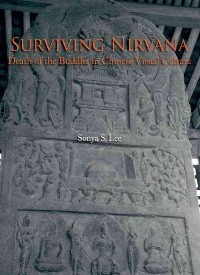
The Buddha's nirvana marks the end of the life of a great spiritual figure and the beginning of Buddhism as a world religion. Surviving Nirvana is the first book in the English language to examine how this historic moment was represented and received in the visual culture of China, of which the nirvana image has been a part for over 1,500 years. --Mining a selection of well-documented and well-preserved examples from the sixth to twelfth centuries, Sonya Lee offers a reassessment of medieval Chinese Buddhism by focusing on practices of devotion and image-making that were inspired by the Buddha's "complete extinction." The nirvana image, comprised of a reclining Buddha and a mourning audience, was central to defining the local meanings of the nirvana moment in different times and places. The motif's many guises, whether on a stone-carved stele, inside a pagoda crypt, or as a painted mural in a cave temple, were the product of social interactions, religious institutions, and artistic practices prevalent in a given historical context. They were also cogent responses to the fundamental anxiety about the absence of the Buddha and the prospect of one's salvation. By reinventing the nirvana image to address its own needs, each community of patrons, makers, and viewers sought to recast the Buddha's "death" into an allegory of survival that was charged with local pride and contemporary relevance.- -Thoroughly researched, this study engages methods and debates from the fields of art history, religion, archaeology, architecture, and East Asian history that are relevant to scholars and students alike. The many examples analyzed in the book offer well-defined local contexts to discuss broader historical and theoretical issues concerning representation, patronage, religion and politics, family values, and vision.--Sonya S. Lee is assistant professor of art history and East Asian languages and cultures at University of Southern California.-- -
目录
Table Of Contents:
List of Maps and Tables ix
Acknowledgements xi
Conventions xv
INTRODUCTION 3(22)
CHAPTER 1 Doubles: Stone Implements 25(58)
CHAPTER 2 Transformation: Pictorial Narratives 83(56)
CHAPTER 3 Family Matters: Nirvana Caves 139(64)
CHAPTER 4 Impermanent Burials: Relic Deposits 203(62)
EPILOGUE 265(6)
APPENDICES Chinese Texts of Inscriptional Materials 271(20)
1 The Chicago Stele 273(2)
2 The Shanxi Stele 275(3)
3 The Shengli Stele from Mogao Cave 332 278(4)
4 The Dali Stele from Mogao Cave 148 282(2)
5 From the Jingzhi Monastery Pagoda Crypt 284(4)
6 From the Jingzhong Cloister Pagoda Crypt 288(3)
Abbreviations 291(2)
Notes 293(28)
Character List 321(4)
Bibliography 325(22)
Index 347
List of Maps and Tables ix
Acknowledgements xi
Conventions xv
INTRODUCTION 3(22)
CHAPTER 1 Doubles: Stone Implements 25(58)
CHAPTER 2 Transformation: Pictorial Narratives 83(56)
CHAPTER 3 Family Matters: Nirvana Caves 139(64)
CHAPTER 4 Impermanent Burials: Relic Deposits 203(62)
EPILOGUE 265(6)
APPENDICES Chinese Texts of Inscriptional Materials 271(20)
1 The Chicago Stele 273(2)
2 The Shanxi Stele 275(3)
3 The Shengli Stele from Mogao Cave 332 278(4)
4 The Dali Stele from Mogao Cave 148 282(2)
5 From the Jingzhi Monastery Pagoda Crypt 284(4)
6 From the Jingzhong Cloister Pagoda Crypt 288(3)
Abbreviations 291(2)
Notes 293(28)
Character List 321(4)
Bibliography 325(22)
Index 347
- 名称
- 类型
- 大小
光盘服务联系方式: 020-38250260 客服QQ:4006604884
云图客服:
用户发送的提问,这种方式就需要有位在线客服来回答用户的问题,这种 就属于对话式的,问题是这种提问是否需要用户登录才能提问
Video Player
×
Audio Player
×
pdf Player
×
