

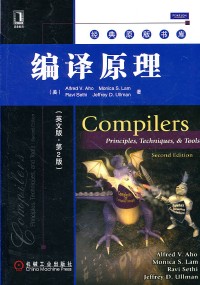
Compilers:principles, techniques, and tools
副标题:无
分类号:
ISBN:9787111326748
微信扫一扫,移动浏览光盘
简介
本书是编译领域无可替代的经典著作,被广大计算机专业人士誉为“
龙书”。本书上一版自1986年出版以来,被世界各地的著名高等院校和研
究机构(包括美国哥伦比亚大学、斯坦福大学、哈佛大学、普林斯顿大学
、贝尔实验室)作为本科生和研究生的编译原理课程的教材。该书对我国
高等计算机教育领域也产生了重大影响。
第2版对每一章都进行了全面的修订,以反映自上一版出版20多年来软
件工程。程序设计语言和计算机体系结构方面的发展对编译技术的影响。
本书全面介绍了编译器的设计,并强调编译技术在软件设计和开发中
的广泛应用。每章中都包含大量的习题和丰富的参考文献。本书适合作为
高等院校计算机专业本科生和研究生的编译原理与技术课程的教材,也可
供广大计算机技术人员参考。
目录
Introduction
1.1 LanguageProcessors
1.1.1 ExercisesforSection1.1
1.2 TheStructureofaCompiler
1.2.1 LexicalAnalysis
1.2.2 SyntaxAnalysis
1.2.3 SemanticAnalysis
1.2.4 IntermediateCodeGeneration
1.2.5 CodeOptimization
1.2.6 CodeGeneration
1.2.7 Symbol-TableManagement.
1.2.8 TheGroupingofPhasesintoPasses
1.2.9 Compiler-ConstructionTools1.3 TheEvolutionofProgrammingLanguages
1.3.1 TheMovetoHigher-levelLanguages
1.3.2 ImpactsonCompilers
1.3.3 ExercisesforSection1.3 1.4 TheScienceofBuildingaCompiler
1.4.1 ModelinginCompilerDesignandImplementation.
1.4.2 TheScienceofCodeOptimization1.5 ApplicationsofCompilerTechnology.
1.5.1 ImplementationofHigh-LevelProgrammingLanguages
1.5.2 OptimizationsforComputerArchitectures
1.5.3 DesignofNewComputerArchitectures
1.5.4 ProgramTranslations
1.5.5 SoftwareProductivityTools1.6 ProgrammingLanguageBasics
1.6.1 TheStatic/DynamicDistinction
1.6.2 EnvironmentsandStates
1.6.3 StaticScopeandBlockStructure
1.6.4 ExplicitAccessControl
1.6.5 DynamicScope
1.6.6 ParameterPassingMechanisms
1.6.7 Aliasing
1.6.8 ExercisesforSection1.6
1.7 SummaryofChapter1
1.8 ReferencesforChapter1
2 ASimpleSyntax-DirectedTranslator
2.1 Introduction
2.2 SyntaxDefinition
2.2.1 DefinitionofGrammars
2.2.2 Derivations
2.2.3 ParseTrees
2.2.4 Ambiguity
2.2.5 AssociativityofOperators
2.2.6 PrecedenceofOperators
2.2.7 ExercisesforSection2.2 2.3 Syntax-DirectedTranslation
2.3.1 PostfixNotation
2.3.2 SynthesizedAttributes
2.3.3 SimpleSyntax-DirectedDefinitions
2.3.4 TreeTraversals
2.3.5 TranslationSchemes
2.3.6 ExercisesforSection2.3 2.4 Parsing
2.4.1 Top-DownParsing
2.4.2 PredictiveParsing
2.4.3 WhentoUsee-Productions
2.4.4 DesigningaPredictiveParser
2.4.5 LeftRecursion
2.4.6 ExercisesforSection2.4 2.5 ATranslatorforSimpleExpressions
2.5.1 AbstractandConcreteSyntax
2.5.2 AdaptingtheTranslationScheme
2.5.3 ProceduresfortheNonterminals
2.5.4 SimplifyingtheTranslator
2.5.5 TheCompleteProgram2.6 LexicalAnalysis
2.6.1 RemovalofWhiteSpaceandComments
2.6.2 ReadingAhead
2.6.3 Constants
2.6.4 RecognizingKeywordsandIdentifiers
2.6.5 ALexicalAnalyzer
2.6.6 ExercisesforSection2.6 2.7 SymbolTables
2.7.1 SymbolTablePerScope
2.7.2 TheUseofSymbolTables
2.8 IntermediateCodeGeneration
2.8.1 TwoKindsofIntermediateRepresentations
2.8.2 ConstructionofSyntaxTrees
2.8.3 StaticChecking
2.8.4 Three-AddressCode
2.8.5 ExercisesforSection2.8
2.9 SummaryofChapter2
3 LexicalAnalysis
3.1 TheRoleoftheLexicalAnalyzer
3.1.1 LexicalAnalysisVersusParsing
3.1.2 Tokens,Patterns,andLexemes
3.1.3 AttributesforTokens
3.1.4 LexicalErrors
3.1.5 ExercisesforSection3.1
3.2 InputBuffering
3.2.1 BufferPairs
3.2.2 Sentinels
3.3 SpecificationofTokens
3.3.1 StringsandLanguages
3.3.2 OperationsonLanguages
3.3.3 RegularExpressions
3.3.4 RegularDefinitions
3.3.5 ExtensionsofRegularExpressions
3.3.6 ExercisesforSection3.3
3.4 RecognitionofTokens
3.4.1 TransitionDiagrams
3.4.2 RecognitionofReservedWordsandIdentifiers
3.4.3 CompletionoftheRunningExample
3.4.4 ArchitectureofaTransition-Diagram-BasedLexicalAnalyzer
3.4.5 ExercisesforSection3.4
3.5 TheLexical-AnalyzerGeneratorLex
3.5.1 UseofLex
3.5.2 StructureofLexPrograms
3.5.3 ConflictResolutioninLex
3.5.4 TheLookaheadOperator
3.5.5 ExercisesforSection3.5
3.6 FiniteAutomata
3.6.1 NondeterministicFiniteAutomata
3.6.2 TransitionTables
3.6.3 AcceptanceofInputStringsbyAutomata
3.6.4 DeterministicFiniteAutomata
3.6.5 ExercisesforSection3.6
3.7 FromRegularExpressionstoAutomata
3.7.1 ConversionofanNFAtoaDFA
3.7.2 SimulationofanNFA
3.7.3 EfficiencyofNFASimulation
3.7.4 ConstructionofanNFAfromaRegularExpression
3.7.5 EfficiencyofString-ProcessingAlgorithms
3.7.6 ExercisesforSection3.7 3.8 DesignofaLexical-AnalyzerGenerator
3.8.1 TheStructureoftheGeneratedAnalyzer
3.8.2 PatternMatchingBasedonNFA's
3.8.3 DFA'sforLexicalAnalyzers
3.8.4 ImplementingtheLookaheadOperator
3.8.5 ExercisesforSection3.8 3.9 OptimizationofDFA-BasedPatternMatchers
3.9.1 ImportantStatesofanNFA
3.9.2 FunctionsComputedFromtheSyntaxTree
3.9.3 Computingnullable,firstpos,andlastpos
3.9.4 Computingfollowpos
3.9.5 ConvertingaRegularExpressionDirectlytoaDFA
3.9.6 MinimizingtheNumberofStatesofaDFA
3.9.7 StateMinimizationinLexicalAnalyzers
3.9.8 TradingTimeforSpaceinDFASimulation
3.9.9ExercisesforSection
3.9 3.I0SummaryofChapter33.1 1ReferencesforChapter3
4 SyntaxAnalysis
4.1 Introduction
4.1.1 TheRoleoftheParser
4.1.2 RepresentativeGrammars
4.1.3 SyntaxErrorHandling
4.1.4 Error-RecoveryStrategies4.2 Context-FreeGrammars
4.2.1 TheFormalDefinitionofaContext-FreeGrammar
4.2.2 NotationalConventions
4.2.3 Derivations
4.2.4 ParseTreesandDerivations
4.2.5 Ambiguity
4.2.6 VerifyingtheLanguageGeneratedbyaGrammar
4.2.7 Context-FreeGrammarsVersusRegularExpressions
4.2.8 ExercisesforSection4.2 4.3 WritingaGrammar
4.3.1 LexicalVersusSyntacticAnalysis
4.3.2 EliminatingAmbiguity
4.3.3 EliminationofLeftRecursion
4.3.4 LeftFactoring
……
1.1 LanguageProcessors
1.1.1 ExercisesforSection1.1
1.2 TheStructureofaCompiler
1.2.1 LexicalAnalysis
1.2.2 SyntaxAnalysis
1.2.3 SemanticAnalysis
1.2.4 IntermediateCodeGeneration
1.2.5 CodeOptimization
1.2.6 CodeGeneration
1.2.7 Symbol-TableManagement.
1.2.8 TheGroupingofPhasesintoPasses
1.2.9 Compiler-ConstructionTools1.3 TheEvolutionofProgrammingLanguages
1.3.1 TheMovetoHigher-levelLanguages
1.3.2 ImpactsonCompilers
1.3.3 ExercisesforSection1.3 1.4 TheScienceofBuildingaCompiler
1.4.1 ModelinginCompilerDesignandImplementation.
1.4.2 TheScienceofCodeOptimization1.5 ApplicationsofCompilerTechnology.
1.5.1 ImplementationofHigh-LevelProgrammingLanguages
1.5.2 OptimizationsforComputerArchitectures
1.5.3 DesignofNewComputerArchitectures
1.5.4 ProgramTranslations
1.5.5 SoftwareProductivityTools1.6 ProgrammingLanguageBasics
1.6.1 TheStatic/DynamicDistinction
1.6.2 EnvironmentsandStates
1.6.3 StaticScopeandBlockStructure
1.6.4 ExplicitAccessControl
1.6.5 DynamicScope
1.6.6 ParameterPassingMechanisms
1.6.7 Aliasing
1.6.8 ExercisesforSection1.6
1.7 SummaryofChapter1
1.8 ReferencesforChapter1
2 ASimpleSyntax-DirectedTranslator
2.1 Introduction
2.2 SyntaxDefinition
2.2.1 DefinitionofGrammars
2.2.2 Derivations
2.2.3 ParseTrees
2.2.4 Ambiguity
2.2.5 AssociativityofOperators
2.2.6 PrecedenceofOperators
2.2.7 ExercisesforSection2.2 2.3 Syntax-DirectedTranslation
2.3.1 PostfixNotation
2.3.2 SynthesizedAttributes
2.3.3 SimpleSyntax-DirectedDefinitions
2.3.4 TreeTraversals
2.3.5 TranslationSchemes
2.3.6 ExercisesforSection2.3 2.4 Parsing
2.4.1 Top-DownParsing
2.4.2 PredictiveParsing
2.4.3 WhentoUsee-Productions
2.4.4 DesigningaPredictiveParser
2.4.5 LeftRecursion
2.4.6 ExercisesforSection2.4 2.5 ATranslatorforSimpleExpressions
2.5.1 AbstractandConcreteSyntax
2.5.2 AdaptingtheTranslationScheme
2.5.3 ProceduresfortheNonterminals
2.5.4 SimplifyingtheTranslator
2.5.5 TheCompleteProgram2.6 LexicalAnalysis
2.6.1 RemovalofWhiteSpaceandComments
2.6.2 ReadingAhead
2.6.3 Constants
2.6.4 RecognizingKeywordsandIdentifiers
2.6.5 ALexicalAnalyzer
2.6.6 ExercisesforSection2.6 2.7 SymbolTables
2.7.1 SymbolTablePerScope
2.7.2 TheUseofSymbolTables
2.8 IntermediateCodeGeneration
2.8.1 TwoKindsofIntermediateRepresentations
2.8.2 ConstructionofSyntaxTrees
2.8.3 StaticChecking
2.8.4 Three-AddressCode
2.8.5 ExercisesforSection2.8
2.9 SummaryofChapter2
3 LexicalAnalysis
3.1 TheRoleoftheLexicalAnalyzer
3.1.1 LexicalAnalysisVersusParsing
3.1.2 Tokens,Patterns,andLexemes
3.1.3 AttributesforTokens
3.1.4 LexicalErrors
3.1.5 ExercisesforSection3.1
3.2 InputBuffering
3.2.1 BufferPairs
3.2.2 Sentinels
3.3 SpecificationofTokens
3.3.1 StringsandLanguages
3.3.2 OperationsonLanguages
3.3.3 RegularExpressions
3.3.4 RegularDefinitions
3.3.5 ExtensionsofRegularExpressions
3.3.6 ExercisesforSection3.3
3.4 RecognitionofTokens
3.4.1 TransitionDiagrams
3.4.2 RecognitionofReservedWordsandIdentifiers
3.4.3 CompletionoftheRunningExample
3.4.4 ArchitectureofaTransition-Diagram-BasedLexicalAnalyzer
3.4.5 ExercisesforSection3.4
3.5 TheLexical-AnalyzerGeneratorLex
3.5.1 UseofLex
3.5.2 StructureofLexPrograms
3.5.3 ConflictResolutioninLex
3.5.4 TheLookaheadOperator
3.5.5 ExercisesforSection3.5
3.6 FiniteAutomata
3.6.1 NondeterministicFiniteAutomata
3.6.2 TransitionTables
3.6.3 AcceptanceofInputStringsbyAutomata
3.6.4 DeterministicFiniteAutomata
3.6.5 ExercisesforSection3.6
3.7 FromRegularExpressionstoAutomata
3.7.1 ConversionofanNFAtoaDFA
3.7.2 SimulationofanNFA
3.7.3 EfficiencyofNFASimulation
3.7.4 ConstructionofanNFAfromaRegularExpression
3.7.5 EfficiencyofString-ProcessingAlgorithms
3.7.6 ExercisesforSection3.7 3.8 DesignofaLexical-AnalyzerGenerator
3.8.1 TheStructureoftheGeneratedAnalyzer
3.8.2 PatternMatchingBasedonNFA's
3.8.3 DFA'sforLexicalAnalyzers
3.8.4 ImplementingtheLookaheadOperator
3.8.5 ExercisesforSection3.8 3.9 OptimizationofDFA-BasedPatternMatchers
3.9.1 ImportantStatesofanNFA
3.9.2 FunctionsComputedFromtheSyntaxTree
3.9.3 Computingnullable,firstpos,andlastpos
3.9.4 Computingfollowpos
3.9.5 ConvertingaRegularExpressionDirectlytoaDFA
3.9.6 MinimizingtheNumberofStatesofaDFA
3.9.7 StateMinimizationinLexicalAnalyzers
3.9.8 TradingTimeforSpaceinDFASimulation
3.9.9ExercisesforSection
3.9 3.I0SummaryofChapter33.1 1ReferencesforChapter3
4 SyntaxAnalysis
4.1 Introduction
4.1.1 TheRoleoftheParser
4.1.2 RepresentativeGrammars
4.1.3 SyntaxErrorHandling
4.1.4 Error-RecoveryStrategies4.2 Context-FreeGrammars
4.2.1 TheFormalDefinitionofaContext-FreeGrammar
4.2.2 NotationalConventions
4.2.3 Derivations
4.2.4 ParseTreesandDerivations
4.2.5 Ambiguity
4.2.6 VerifyingtheLanguageGeneratedbyaGrammar
4.2.7 Context-FreeGrammarsVersusRegularExpressions
4.2.8 ExercisesforSection4.2 4.3 WritingaGrammar
4.3.1 LexicalVersusSyntacticAnalysis
4.3.2 EliminatingAmbiguity
4.3.3 EliminationofLeftRecursion
4.3.4 LeftFactoring
……
Compilers:principles, techniques, and tools
- 名称
- 类型
- 大小
光盘服务联系方式: 020-38250260 客服QQ:4006604884
云图客服:
用户发送的提问,这种方式就需要有位在线客服来回答用户的问题,这种 就属于对话式的,问题是这种提问是否需要用户登录才能提问
Video Player
×
Audio Player
×
pdf Player
×
