

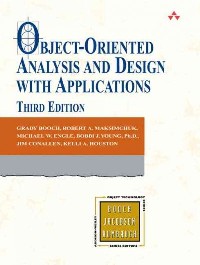
Object-oriented analysis and design with applications / 3rd ed.
副标题:无
分类号:
ISBN:9780201895513
微信扫一扫,移动浏览光盘
简介
Summary:
Publisher Summary 1
Editor Booch (UML founder) and contributors outline object-oriented methods using the Unified Modeling Language 2.0. Problems encountered by system and software developers are enumerated, including concepts, notation, and applications; the book is also appropriate for students and program managers. This edition incorporates an introduction to UML 2.0, a focus on modeling aspects (with five chapters on specific phases of the development lifecycle), new treatment of system architecture using object-oriented analysis and design and UML, an appendix on object-oriented programming languages, and other information. Most of the coding discussions have been removed. Annotation 漏2007 Book News, Inc., Portland, OR (booknews.com)
Publisher Summary 2
Object-Oriented Design with Applicationshas long been the essential reference to object-oriented technology, which, in turn, has evolved to join the mainstream of industrial-strength software development. In this third edition--the first revision in 13 years--readers can learn to apply object-oriented methods using new paradigms such as Java, the Unified Modeling Language (UML) 2.0, and .NET.The authors draw upon their rich and varied experience to offer improved methods for object development and numerous examples that tackle the complex problems faced by software engineers, including systems architecture, data acquisition, cryptoanalysis, control systems, and Web development. They illustrate essential concepts, explain the method, and show successful applications in a variety of fields. You'll also find pragmatic advice on a host of issues, including classification, implementation strategies, and cost-effective project management.New to this new edition areAn introduction to the new UML 2.0, from the notation's most fundamental and advanced elements with an emphasis on key changesNew domains and contextsA greatly enhanced focus on modeling--as eagerly requested by readers--with five chapters that each delve into one phase of the overall development lifecycle.Fresh approaches to reasoning about complex systemsAn examination of the conceptual foundation of the widely misunderstood fundamental elements of the object model, such as abstraction, encapsulation, modularity, and hierarchyHow to allocate the resources of a team of developers and mange the risks associated with developing complex software systemsAn appendix on object-oriented programming languagesThis is the seminal text for anyone who wishes to use object-oriented technology to manage the complexity inherent in many kinds of systems.
Sidebars聽聽
Preface聽
Acknowledgments 聽聽
About the Authors 聽聽
Section I: Concepts聽聽
Chapter 1: Complexity聽聽聽
Chapter 2: The Object Model 聽聽
Chapter 3: Classes and Objects 聽聽
Chapter 4: Classification 聽聽
Section II: Method 聽
Chapter 5: Notation 聽聽
Chapter 6: Process
Chapter 7: Pragmatics聽聽聽
Chapter 8: System Architecture: Satellite-Based Navigation 聽聽
Chapter 9: Control System: Traffic Management 聽聽
Chapter 10: Artificial Intelligence: Cryptanalysis 聽聽
Chapter 11: Data Acquisition: Weather Monitoring Station 聽
Chapter 12: Web Application: Vacation Tracking System 聽聽聽
Appendix A: Object-Oriented Programming Languages聽
Appendix B: Further Reading 聽聽
Notes 聽聽
Glossary 聽聽
Classified Bibliography 聽聽
Index 聽聽
目录
Copyright
The Addison-Wesley Object Technology Series
Sidebars
Preface
Acknowledgments
About the Authors
Section:聽I聽Concepts Chapter 1.聽Complexity Section 1.1.聽The Structure of Complex Systems
Section 1.2.聽The Inherent Complexity of Software
Section 1.3.聽The Five Attributes of a Complex System
Section 1.4.聽Organized and Disorganized Complexity
Section 1.5.聽Bringing Order to Chaos
Section 1.6.聽On Designing Complex Systems
Summary
Download Chapter
1 Token Chapter 2.聽The Object Model Section 2.1.聽The Evolution of the Object Model
Section 2.2.聽Foundations of the Object Model
Section 2.3.聽Elements of the Object Model
Section 2.4.聽Applying the Object Model
Summary
Download Chapter
1 Token Chapter 3.聽Classes and Objects Section 3.1.聽The Nature of an Object
Section 3.2.聽Relationships among Objects
Section 3.3.聽The Nature of a Class
Section 3.4.聽Relationships among Classes
Section 3.5.聽The Interplay of Classes and Objects
Section 3.6.聽On Building Quality Classes and Objects
Summary
Download Chapter
1 Token Chapter 4.聽Classification Section 4.1.聽The Importance of Proper Classification
Section 4.2.聽Identifying Classes and Objects
Section 4.3.聽Key Abstractions and Mechanisms
Summary
Section:聽II聽Method Download Chapter
1 Token Chapter 5.聽Notation Section 5.1.聽The Unified Modeling Language
Section 5.2.聽Package Diagrams
Section 5.3.聽Component Diagrams
Section 5.4.聽Deployment Diagrams
Section 5.5.聽Use Case Diagrams
Section 5.6.聽Activity Diagrams
Section 5.7.聽Class Diagrams
Section 5.8.聽Sequence Diagrams
Section 5.9.聽Interaction Overview Diagrams
Section 5.10.聽Composite Structure Diagrams
Section 5.11.聽State Machine Diagrams
Section 5.12.聽Timing Diagrams
Section 5.13.聽Object Diagrams
Section 5.14.聽Communication Diagrams
Summary
Download Chapter
1 Token Chapter 6.聽Process Section 6.1.聽First Principles
Section 6.2.聽The Macro Process: The Software Development Lifecycle
Section 6.3.聽The Micro Process: The Analysis and Design Process
Summary
Download Chapter
1 Token Chapter 7.聽Pragmatics Section 7.1.聽Management and Planning
Section 7.2.聽Staffing
Section 7.3.聽Release Management
Section 7.4.聽Reuse
Section 7.5.聽Quality Assurance and Metrics
Section 7.6.聽Documentation
Section 7.7.聽Tools
Section 7.8.聽Special Topics
Section 7.9.聽The Benefits and Risks of Object-Oriented Development
Summary
Section:聽III聽Applications Download Chapter
1 Token Chapter 8.聽System Architecture: Satellite-Based Navigation Section 8.1.聽Inception
Section 8.2.聽Elaboration
Section 8.3.聽Construction
Section 8.4.聽Post-Transition
Download Chapter
1 Token Chapter 9.聽Control System: Traffic Management Section 9.1.聽Inception
Section 9.2.聽Elaboration
Section 9.3.聽Construction
Section 9.4.聽Post-Transition
Download Chapter
1 Token Chapter 10.聽Artificial Intelligence: Cryptanalysis Section 10.1.聽Inception
Section 10.2.聽Elaboration
Section 10.3.聽Construction
Section 10.4.聽Post-Transition
Download Chapter
1 Token Chapter 11.聽Data Acquisition: Weather Monitoring Station Section 11.1.聽Inception
Section 11.2.聽Elaboration
Section 11.3.聽Construction
Section 11.4.聽Post-Transition
Download Chapter
1 Token Chapter 12.聽Web Application: Vacation Tracking System Section 12.1.聽Inception
Section 12.2.聽Elaboration
Section 12.3.聽Construction
Section 12.4.聽Transition and Post-Transition
Download Chapter
1 Token Appendix A.聽Object-Oriented Programming Languages Section A.1.聽Language Evolution
Section A.2.聽Smalltalk
Section A.3.聽C++
Section A.4.聽Java
Download Chapter
1 Token Appendix B.聽Further Reading Chapter 1
Chapter 2
Chapter 3
Chapter 4
Chapter 5
Chapter 6
Chapter 7
Chapter 8
Chapter 9
Chapter 10
Chapter 11
Chapter 12
Download Chapter
1 Token Notes Preface
Section I: Concepts
Chapter 1: Complexity
Chapter 2: The Object Model
Chapter 3: Classes and Objects
Chapter 4: Classification
Section II: Method
Chapter 5: Notation
Chapter 6: Process
Chapter 7: Pragmatics
Section III: Applications
Chapter 8: System Architecture: Satellite-Based Navigation
Chapter 9: Control System: Traffic Management
Chapter 10: Artificial Intelligence: Cryptanalysis
Chapter 12: Web Application: Vacation Tracking System
Appendix A: Object-Oriented Programming Languages
Download Chapter
1 Token Glossary A
B
C
D
E
F
G
H
I
K
L
M
O
P
Q
R
S
T
U
V
Download Chapter
1 Token Classified Bibliography A. Classification
B. Object-Oriented Analysis
C. Object-Oriented Applications
D. Object-Oriented Architectures
E. Object-Oriented Databases
F. Object-Oriented Design
G. Object-Oriented Programming
H. Software Engineering
I. Special References
J. Theory
K. Tools and Environments
L. The Unified Modeling Language
M. Web-Based Modeling
Index
The Addison-Wesley Object Technology Series
Sidebars
Preface
Acknowledgments
About the Authors
Section:聽I聽Concepts Chapter 1.聽Complexity Section 1.1.聽The Structure of Complex Systems
Section 1.2.聽The Inherent Complexity of Software
Section 1.3.聽The Five Attributes of a Complex System
Section 1.4.聽Organized and Disorganized Complexity
Section 1.5.聽Bringing Order to Chaos
Section 1.6.聽On Designing Complex Systems
Summary
Download Chapter
1 Token Chapter 2.聽The Object Model Section 2.1.聽The Evolution of the Object Model
Section 2.2.聽Foundations of the Object Model
Section 2.3.聽Elements of the Object Model
Section 2.4.聽Applying the Object Model
Summary
Download Chapter
1 Token Chapter 3.聽Classes and Objects Section 3.1.聽The Nature of an Object
Section 3.2.聽Relationships among Objects
Section 3.3.聽The Nature of a Class
Section 3.4.聽Relationships among Classes
Section 3.5.聽The Interplay of Classes and Objects
Section 3.6.聽On Building Quality Classes and Objects
Summary
Download Chapter
1 Token Chapter 4.聽Classification Section 4.1.聽The Importance of Proper Classification
Section 4.2.聽Identifying Classes and Objects
Section 4.3.聽Key Abstractions and Mechanisms
Summary
Section:聽II聽Method Download Chapter
1 Token Chapter 5.聽Notation Section 5.1.聽The Unified Modeling Language
Section 5.2.聽Package Diagrams
Section 5.3.聽Component Diagrams
Section 5.4.聽Deployment Diagrams
Section 5.5.聽Use Case Diagrams
Section 5.6.聽Activity Diagrams
Section 5.7.聽Class Diagrams
Section 5.8.聽Sequence Diagrams
Section 5.9.聽Interaction Overview Diagrams
Section 5.10.聽Composite Structure Diagrams
Section 5.11.聽State Machine Diagrams
Section 5.12.聽Timing Diagrams
Section 5.13.聽Object Diagrams
Section 5.14.聽Communication Diagrams
Summary
Download Chapter
1 Token Chapter 6.聽Process Section 6.1.聽First Principles
Section 6.2.聽The Macro Process: The Software Development Lifecycle
Section 6.3.聽The Micro Process: The Analysis and Design Process
Summary
Download Chapter
1 Token Chapter 7.聽Pragmatics Section 7.1.聽Management and Planning
Section 7.2.聽Staffing
Section 7.3.聽Release Management
Section 7.4.聽Reuse
Section 7.5.聽Quality Assurance and Metrics
Section 7.6.聽Documentation
Section 7.7.聽Tools
Section 7.8.聽Special Topics
Section 7.9.聽The Benefits and Risks of Object-Oriented Development
Summary
Section:聽III聽Applications Download Chapter
1 Token Chapter 8.聽System Architecture: Satellite-Based Navigation Section 8.1.聽Inception
Section 8.2.聽Elaboration
Section 8.3.聽Construction
Section 8.4.聽Post-Transition
Download Chapter
1 Token Chapter 9.聽Control System: Traffic Management Section 9.1.聽Inception
Section 9.2.聽Elaboration
Section 9.3.聽Construction
Section 9.4.聽Post-Transition
Download Chapter
1 Token Chapter 10.聽Artificial Intelligence: Cryptanalysis Section 10.1.聽Inception
Section 10.2.聽Elaboration
Section 10.3.聽Construction
Section 10.4.聽Post-Transition
Download Chapter
1 Token Chapter 11.聽Data Acquisition: Weather Monitoring Station Section 11.1.聽Inception
Section 11.2.聽Elaboration
Section 11.3.聽Construction
Section 11.4.聽Post-Transition
Download Chapter
1 Token Chapter 12.聽Web Application: Vacation Tracking System Section 12.1.聽Inception
Section 12.2.聽Elaboration
Section 12.3.聽Construction
Section 12.4.聽Transition and Post-Transition
Download Chapter
1 Token Appendix A.聽Object-Oriented Programming Languages Section A.1.聽Language Evolution
Section A.2.聽Smalltalk
Section A.3.聽C++
Section A.4.聽Java
Download Chapter
1 Token Appendix B.聽Further Reading Chapter 1
Chapter 2
Chapter 3
Chapter 4
Chapter 5
Chapter 6
Chapter 7
Chapter 8
Chapter 9
Chapter 10
Chapter 11
Chapter 12
Download Chapter
1 Token Notes Preface
Section I: Concepts
Chapter 1: Complexity
Chapter 2: The Object Model
Chapter 3: Classes and Objects
Chapter 4: Classification
Section II: Method
Chapter 5: Notation
Chapter 6: Process
Chapter 7: Pragmatics
Section III: Applications
Chapter 8: System Architecture: Satellite-Based Navigation
Chapter 9: Control System: Traffic Management
Chapter 10: Artificial Intelligence: Cryptanalysis
Chapter 12: Web Application: Vacation Tracking System
Appendix A: Object-Oriented Programming Languages
Download Chapter
1 Token Glossary A
B
C
D
E
F
G
H
I
K
L
M
O
P
Q
R
S
T
U
V
Download Chapter
1 Token Classified Bibliography A. Classification
B. Object-Oriented Analysis
C. Object-Oriented Applications
D. Object-Oriented Architectures
E. Object-Oriented Databases
F. Object-Oriented Design
G. Object-Oriented Programming
H. Software Engineering
I. Special References
J. Theory
K. Tools and Environments
L. The Unified Modeling Language
M. Web-Based Modeling
Index
Object-oriented analysis and design with applications / 3rd ed.
- 名称
- 类型
- 大小
光盘服务联系方式: 020-38250260 客服QQ:4006604884
云图客服:
用户发送的提问,这种方式就需要有位在线客服来回答用户的问题,这种 就属于对话式的,问题是这种提问是否需要用户登录才能提问
Video Player
×
Audio Player
×
pdf Player
×
