

简介
Summary:
Publisher Summary 1
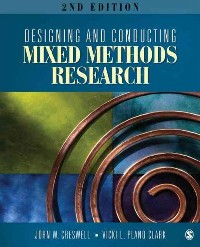
In the first edition (no date cited), Creswell (educational psychology) and Plano Clark (quantitative, qualitative, and psychometric methods; both U. of Nebraska-Lincoln) spent considerable time explaining the concept and justifying the practice of research in social and behavioral sciences that combines qualitative and quantitative methods. That no longer seems necessary, they say, so they can devote more attention to the steps of designing and conducting a study, the actual procedures involved, and new techniques and strategies that have unfolded in mixed method research. The introduction is for graduate students who have some background in either qualitative or quantitative research, and for researchers and others who read and evaluate research results. Annotation 漏2010 Book News, Inc., Portland, OR (booknews.com)
Publisher Summary 2
A practical, how-to guide to designing mixed methods studiesCombining the latest thinking about mixed methods research designs with practical, step-by-step guidance, the Second Editionof Designing and Conducting Mixed Methods Research now covers six major mixed methods designs. Authors John W. Creswell and Vicki L. Plano Clark walk readers through the entire research process, from formulating questions to designing, collecting data, and interpreting results and include updated examples from published mixed methods studies drawn from the social, behavioral, health, and education disciplines.Intended AudienceThis text is intended for use in Intermediate/Advanced Research Methods, Mixed Methods, Research Design, and Social Research Methods courses across the social and behavioral sciences. 聽
目录
Table Of Contents:
Preface xix
Purpose of the Book xix
Audience for the Book xx
Book Features xx
New Features Added to the Second Edition xxi
Acknowledgments xxv
About the Authors xvii
Chapter 1 The Nature of Mixed Methods Research 1(18)
Defining Mixed Methods Research 2(4)
Examples of Mixed Methods Studies 6(1)
What Research Problems Fit Mixed Methods? 7(5)
A Need Exists Because One Data Source May Be Insufficient 8(1)
A Need Exists to Explain Initial Results 9(1)
A Need Exists to Generalize Exploratory Findings 9(1)
A Need Exists to Enhance a Study With a Second Method 10(1)
A Need Exists to Best Employ a Theoretical Stance 10(1)
A Need Exists to Understand a Research Objective Through Multiple Research Phases 11(1)
What Are the Advantages of Using Mixed Methods? 12(1)
What Are the Challenges in Using Mixed Methods? 13(3)
The Question of Skills 13(1)
The Question of Time and Resources 14(1)
The Question of Convincing Others 15(1)
Summary 16(1)
Activities 17(1)
Additional Resources to Examine 18(1)
Chapter 2 The Foundations of Mixed Methods Research 19(34)
Historical Foundations 20(18)
When Did Mixed Methods Begin? 20(1)
Why Mixed Methods Emerged 21(1)
The Development of the Name 22(1)
Stages in the Evolution of Mixed Methods 22(3)
Formative period 25(1)
Paradigm debate period 25(1)
Procedural development period 26(1)
Advocacy and expansion period 27(3)
Reflective period 30(8)
Philosophical Foundations 38(9)
Philosophy and Worldviews 38(5)
Worldviews Applied to Mixed Methods 43(1)
One "best" worldview for mixed methods 43(2)
Multiple worldviews in mixed methods 45(1)
Worldviews relate to the type of mixed methods design 45(1)
Worldviews depend on the scholarly community 46(1)
Theoretical Foundations 47(3)
Summary 50(1)
Activities 51(1)
Additional Resources to Examine 52(1)
Chapter 3 Choosing a Mixed Methods Design 53(54)
Principles for Designing a Mixed Methods Study 54(9)
Recognize That Mixed Methods Designs Can Be Fixed and/or Emergent 54(1)
Identify an Approach to Design 55(5)
Match the Design to the Research Problem, Purpose, and Questions 60(1)
Be Explicit About the Reasons for Mixing Methods 61(2)
Key Decisions in Choosing a Mixed Methods Design 63(5)
Determine the Level of Interaction Between the Quantitative and Qualitative Strands 64(1)
Determine the Priority of the Quantitative and Qualitative Strands 65(1)
Determine the Timing of the Quantitative and Qualitative Strands 65(1)
Determine Where and How to Mix the Quantitative and Qualitative Strands 66(2)
The Major Mixed Methods Designs 68(13)
Prototypes of the Major Designs 69(8)
The Convergent Parallel Design 77(1)
The purpose of the convergent design 77(1)
When to choose the convergent design 77(1)
Philosophical assumptions behind the convergent design 78(1)
The convergent design procedures 78(1)
Strengths of the convergent design 78(2)
Challenges in using the convergent design 80(1)
Convergent design variants 80(1)
The Explanatory Sequential Design 81(5)
The purpose of the explanatory design 82(1)
When to choose the explanatory design 82(1)
Philosophical assumptions behind the explanatory design 82(1)
The explanatory design procedures 83(1)
Strengths of the explanatory design 83(2)
Challenges in using the explanatory design 85(1)
Explanatory design variants 85(1)
The Exploratory Sequential Design 86(4)
The purpose of the exploratory design 86(1)
When to choose the exploratory design 87(1)
Philosophical assumptions behind the exploratory design 87(1)
The exploratory design procedures 87(2)
Strengths of the exploratory design 89(1)
Challenges in using the exploratory design 89(1)
Exploratory design variants 90(1)
The Embedded Design 90(6)
The purpose of the embedded design 91(1)
When to choose the embedded design 91(1)
Philosophical assumptions behind the embedded design 92(1)
The embedded design procedures 92(2)
Strengths of the embedded design 94(1)
Challenges in using the embedded design 94(1)
Embedded design variants 95(1)
The Transformative Design 96(4)
The purpose of the transformative design 96(1)
When to choose the transformative design 97(1)
Philosophical assumptions behind the transformative design 97(1)
The transformative design procedures 97(2)
Strengths of the transformative design 99(1)
Challenges in using the transformative design 99(1)
Transformative design variants 99(1)
The Multiphase Design 100(4)
The purpose of the multiphase design 100(1)
When to choose the multiphase design 100(1)
Philosophical assumptions behind the multiphase design 101(1)
The multiphase design procedures 101(1)
Strengths of the multiphase design 101(2)
Challenges in using the multiphase design 103(1)
Multiphase design variants 103(1)
A Model for Describing a Design in a Written Report 104(1)
Summary 105(1)
Activities 105(1)
Additional Resources to Examine 106(1)
Chapter 4 Examples of Mixed Methods Designs 107(36)
Learning From Examples of Mixed Methods Research 108(1)
Using Tools to Describe Mixed Methods Designs 108(4)
A Notation System 108(2)
Procedural Diagrams 110(2)
Examining the Design Features of Mixed Methods Studies 112(3)
Six Examples of Mixed Methods Designs 115(18)
Study A An Example of the Convergent Parallel Design (Wittink, Barg, & Gallo, 2006) 116(3)
Study B An Example of the Explanatory Sequential Design (Ivankova & Stick, 2007) 119(3)
Study C An Example of the Exploratory Sequential Design (Myers & Oetzel, 2003) 122(1)
Study D An Example of the Embedded Design (Brady & O'Regan, 2009) 123(4)
Study E An Example of the Transformative Design (Hodgkin, 2008) 127(3)
Study F An Example of the Multiphase Design (Nastasi et al., 2007) 130(3)
Similarities and Differences Among the Sample Studies 133(8)
Summary 141(1)
Activities 142(1)
Additional Resources to Examine 142(1)
Chapter 5 Introducing a Mixed Methods Study 143(28)
Writing a Mixed Methods Title 144(4)
Qualitative and Quantitative Titles 144(1)
Mixed Methods Titles 145(3)
Stating the Research Problem in the Introduction 148(3)
Topics in a Statement of the Problem Section 149(1)
Integrate Mixed Methods Into the Statement of the Problem 150(1)
Developing the Purpose Statement 151(9)
Qualitative and Quantitative Purpose Statements 151(2)
Mixed Methods Purpose Statements 153(7)
Writing Research Questions and Hypotheses 160(8)
Qualitative Questions and Quantitative Questions and Hypotheses 160(1)
Mixed Methods Research Questions 161(7)
Summary 168(1)
Activities 169(1)
Additional Resources to Examine 169(2)
Chapter 6 Collecting Data in Mixed Methods Research 171(32)
Procedures in Collecting Qualitative and Quantitative Data 172(7)
Using Sampling Procedures 172(3)
Gaining Permissions 175(1)
Collecting Information 176(2)
Recording the Data 178(1)
Administering the Procedures 178(1)
Data Collection in Mixed Methods 179(6)
Convergent Design 180(1)
Decide whether the two samples will include different or the same individuals 180(3)
Decide whether the size of the two samples will be the same or different 183(1)
Decide to design parallel data collection questions 184(1)
Decide if the data will be collected on two, independent sources or a single source 185(1)
Explanatory Design 185(2)
Decide whether to use the same or different individuals in both samples 185(1)
Decide on the sizes for the two samples 186(1)
Decide what quantitative results to follow up 186(1)
Decide how to select the best participants for the qualitative follow-up phase 186(1)
Decide how to describe the emerging follow-up phase for institutional review board approval 187(1)
Exploratory Design 187(3)
Decide who and how many individuals to include in the sample for the quantitative phase 187(1)
Decide how to describe the emerging follow-up phase for institutional review board approval 188(1)
Decide what aspects of the qualitative results to use to inform the quantitative data collection 188(1)
Decide what steps to take in developing a good quantitative instrument 188(2)
Decide how to convey the instrument development component in a procedural diagram 190(1)
Embedded Design 190(4)
Decide the reason and timing for embedding a second type of data within a larger design 190(3)
Decide whether the issue of introducing bias within an embedded experiment is a concern 193(1)
Decide what approach will provide the design or procedure for collecting quantitative and qualitative data 193(1)
Decide what data collection issues can be anticipated within the chosen design or procedure 194(1)
Transformative Design 194(2)
Decide how best to refer to and interact with participants 195(1)
Decide what sampling strategies will promote inclusiveness 195(1)
Decide how to actively involve participants in the data collection process 195(1)
Decide to use instruments that are sensitive to the cultural context of the group being studied 195(1)
Decide how the data collection process and outcomes will benefit the community being studied 196(1)
Multiphase Design 196(2)
Decide to use multiple sampling strategies 197(1)
Decide how to sample and collect data for each phase 197(1)
Decide how to handle measurement and attrition issues 197(1)
Decide on the programmatic thrust to provide the framework for the multiphase projects 198(1)
Summary 198(1)
Activities 199(1)
Additional Resources to Examine 200(3)
Chapter 7 Analyzing and Interpreting Data in Mixed Methods Research 203(48)
The Basics of Quantitative and Qualitative Data Analysis and Interpretation 204(8)
Preparing the Data for Analysis 204(2)
Exploring the Data 206(1)
Analyzing the Data 207(1)
Representing the Data Analysis 208(1)
Interpreting the Results 209(1)
Validating the Data and Results 210(2)
Data Analysis and Interpretation Within Mixed Methods Designs 212(26)
Steps and Key Decisions in Data Analysis for Each Mixed Methods Design 214(8)
Decisions for Merged Data Analysis in a Concurrent Approach 222(1)
Strategies for comparing results 223(9)
Strategies for interpreting merged results and reconciling differences 232(1)
Decisions for Connected Data Analysis in a Sequential Approach 233(1)
Strategies for connected data analysis 234(3)
Strategies for interpreting connected results 237(1)
Validation and Mixed Methods Designs 238(5)
Software Applications and Mixed Methods Data Analysis 243(5)
Summary 248(1)
Activities 248(1)
Additional Resources to Examine 249(2)
Chapter 8 Writing and Evaluating Mixed Methods Research 251(22)
General Guidelines for Writing 252(1)
Relate the Structure to the Mixed Methods Design 253(13)
Structure of a Proposal for a Mixed Methods Dissertation or Thesis 254(3)
Structure of a Mixed Methods Dissertation or Thesis 257(2)
Structure for a National Institutes of Health Proposal 259(4)
Structure of a Mixed Methods Journal Article 263(3)
Evaluating a Mixed Methods Study 266(4)
Quantitative and Qualitative Evaluation Criteria 266(1)
Mixed Methods Evaluation Criteria 267(3)
Summary 270(1)
Activities 271(1)
Additional Resources to Examine 272(1)
Chapter 9 Summary and Recommendations 273(14)
On Writing a Methodological Paper 274(1)
On Defining Mixed Methods 275(2)
On Using Terms 277(1)
On Using Philosophy 278(2)
On Designing Procedures 280(2)
On the Value Added by Mixed Methods 282(1)
Summary 283(1)
Activities 284(1)
Additional Resources to Examine 285(2)
Appendix A An Example of the Convergent Parallel Design (Wittink, Barg, & Gallo, 2006) 287(14)
Appendix B An Example of the Explanatory Sequential Design (Ivankova & Stick, 2007) 301(34)
Appendix C An Example of the Exploratory Sequential Design (Myers & Oetzel, 2003) 335(20)
Appendix D An Example of the Embedded Design (Brady & O'Regan, 2009) 355(16)
Appendix E An Example of the Transformative Design (Hodgkin, 2008) 371(20)
Appendix F An Example of the Multiphase Design (Nastasi et al., 2007) 391(18)
Glossary 409(10)
References 419(14)
Author Index 433(10)
Subject Index 443
Preface xix
Purpose of the Book xix
Audience for the Book xx
Book Features xx
New Features Added to the Second Edition xxi
Acknowledgments xxv
About the Authors xvii
Chapter 1 The Nature of Mixed Methods Research 1(18)
Defining Mixed Methods Research 2(4)
Examples of Mixed Methods Studies 6(1)
What Research Problems Fit Mixed Methods? 7(5)
A Need Exists Because One Data Source May Be Insufficient 8(1)
A Need Exists to Explain Initial Results 9(1)
A Need Exists to Generalize Exploratory Findings 9(1)
A Need Exists to Enhance a Study With a Second Method 10(1)
A Need Exists to Best Employ a Theoretical Stance 10(1)
A Need Exists to Understand a Research Objective Through Multiple Research Phases 11(1)
What Are the Advantages of Using Mixed Methods? 12(1)
What Are the Challenges in Using Mixed Methods? 13(3)
The Question of Skills 13(1)
The Question of Time and Resources 14(1)
The Question of Convincing Others 15(1)
Summary 16(1)
Activities 17(1)
Additional Resources to Examine 18(1)
Chapter 2 The Foundations of Mixed Methods Research 19(34)
Historical Foundations 20(18)
When Did Mixed Methods Begin? 20(1)
Why Mixed Methods Emerged 21(1)
The Development of the Name 22(1)
Stages in the Evolution of Mixed Methods 22(3)
Formative period 25(1)
Paradigm debate period 25(1)
Procedural development period 26(1)
Advocacy and expansion period 27(3)
Reflective period 30(8)
Philosophical Foundations 38(9)
Philosophy and Worldviews 38(5)
Worldviews Applied to Mixed Methods 43(1)
One "best" worldview for mixed methods 43(2)
Multiple worldviews in mixed methods 45(1)
Worldviews relate to the type of mixed methods design 45(1)
Worldviews depend on the scholarly community 46(1)
Theoretical Foundations 47(3)
Summary 50(1)
Activities 51(1)
Additional Resources to Examine 52(1)
Chapter 3 Choosing a Mixed Methods Design 53(54)
Principles for Designing a Mixed Methods Study 54(9)
Recognize That Mixed Methods Designs Can Be Fixed and/or Emergent 54(1)
Identify an Approach to Design 55(5)
Match the Design to the Research Problem, Purpose, and Questions 60(1)
Be Explicit About the Reasons for Mixing Methods 61(2)
Key Decisions in Choosing a Mixed Methods Design 63(5)
Determine the Level of Interaction Between the Quantitative and Qualitative Strands 64(1)
Determine the Priority of the Quantitative and Qualitative Strands 65(1)
Determine the Timing of the Quantitative and Qualitative Strands 65(1)
Determine Where and How to Mix the Quantitative and Qualitative Strands 66(2)
The Major Mixed Methods Designs 68(13)
Prototypes of the Major Designs 69(8)
The Convergent Parallel Design 77(1)
The purpose of the convergent design 77(1)
When to choose the convergent design 77(1)
Philosophical assumptions behind the convergent design 78(1)
The convergent design procedures 78(1)
Strengths of the convergent design 78(2)
Challenges in using the convergent design 80(1)
Convergent design variants 80(1)
The Explanatory Sequential Design 81(5)
The purpose of the explanatory design 82(1)
When to choose the explanatory design 82(1)
Philosophical assumptions behind the explanatory design 82(1)
The explanatory design procedures 83(1)
Strengths of the explanatory design 83(2)
Challenges in using the explanatory design 85(1)
Explanatory design variants 85(1)
The Exploratory Sequential Design 86(4)
The purpose of the exploratory design 86(1)
When to choose the exploratory design 87(1)
Philosophical assumptions behind the exploratory design 87(1)
The exploratory design procedures 87(2)
Strengths of the exploratory design 89(1)
Challenges in using the exploratory design 89(1)
Exploratory design variants 90(1)
The Embedded Design 90(6)
The purpose of the embedded design 91(1)
When to choose the embedded design 91(1)
Philosophical assumptions behind the embedded design 92(1)
The embedded design procedures 92(2)
Strengths of the embedded design 94(1)
Challenges in using the embedded design 94(1)
Embedded design variants 95(1)
The Transformative Design 96(4)
The purpose of the transformative design 96(1)
When to choose the transformative design 97(1)
Philosophical assumptions behind the transformative design 97(1)
The transformative design procedures 97(2)
Strengths of the transformative design 99(1)
Challenges in using the transformative design 99(1)
Transformative design variants 99(1)
The Multiphase Design 100(4)
The purpose of the multiphase design 100(1)
When to choose the multiphase design 100(1)
Philosophical assumptions behind the multiphase design 101(1)
The multiphase design procedures 101(1)
Strengths of the multiphase design 101(2)
Challenges in using the multiphase design 103(1)
Multiphase design variants 103(1)
A Model for Describing a Design in a Written Report 104(1)
Summary 105(1)
Activities 105(1)
Additional Resources to Examine 106(1)
Chapter 4 Examples of Mixed Methods Designs 107(36)
Learning From Examples of Mixed Methods Research 108(1)
Using Tools to Describe Mixed Methods Designs 108(4)
A Notation System 108(2)
Procedural Diagrams 110(2)
Examining the Design Features of Mixed Methods Studies 112(3)
Six Examples of Mixed Methods Designs 115(18)
Study A An Example of the Convergent Parallel Design (Wittink, Barg, & Gallo, 2006) 116(3)
Study B An Example of the Explanatory Sequential Design (Ivankova & Stick, 2007) 119(3)
Study C An Example of the Exploratory Sequential Design (Myers & Oetzel, 2003) 122(1)
Study D An Example of the Embedded Design (Brady & O'Regan, 2009) 123(4)
Study E An Example of the Transformative Design (Hodgkin, 2008) 127(3)
Study F An Example of the Multiphase Design (Nastasi et al., 2007) 130(3)
Similarities and Differences Among the Sample Studies 133(8)
Summary 141(1)
Activities 142(1)
Additional Resources to Examine 142(1)
Chapter 5 Introducing a Mixed Methods Study 143(28)
Writing a Mixed Methods Title 144(4)
Qualitative and Quantitative Titles 144(1)
Mixed Methods Titles 145(3)
Stating the Research Problem in the Introduction 148(3)
Topics in a Statement of the Problem Section 149(1)
Integrate Mixed Methods Into the Statement of the Problem 150(1)
Developing the Purpose Statement 151(9)
Qualitative and Quantitative Purpose Statements 151(2)
Mixed Methods Purpose Statements 153(7)
Writing Research Questions and Hypotheses 160(8)
Qualitative Questions and Quantitative Questions and Hypotheses 160(1)
Mixed Methods Research Questions 161(7)
Summary 168(1)
Activities 169(1)
Additional Resources to Examine 169(2)
Chapter 6 Collecting Data in Mixed Methods Research 171(32)
Procedures in Collecting Qualitative and Quantitative Data 172(7)
Using Sampling Procedures 172(3)
Gaining Permissions 175(1)
Collecting Information 176(2)
Recording the Data 178(1)
Administering the Procedures 178(1)
Data Collection in Mixed Methods 179(6)
Convergent Design 180(1)
Decide whether the two samples will include different or the same individuals 180(3)
Decide whether the size of the two samples will be the same or different 183(1)
Decide to design parallel data collection questions 184(1)
Decide if the data will be collected on two, independent sources or a single source 185(1)
Explanatory Design 185(2)
Decide whether to use the same or different individuals in both samples 185(1)
Decide on the sizes for the two samples 186(1)
Decide what quantitative results to follow up 186(1)
Decide how to select the best participants for the qualitative follow-up phase 186(1)
Decide how to describe the emerging follow-up phase for institutional review board approval 187(1)
Exploratory Design 187(3)
Decide who and how many individuals to include in the sample for the quantitative phase 187(1)
Decide how to describe the emerging follow-up phase for institutional review board approval 188(1)
Decide what aspects of the qualitative results to use to inform the quantitative data collection 188(1)
Decide what steps to take in developing a good quantitative instrument 188(2)
Decide how to convey the instrument development component in a procedural diagram 190(1)
Embedded Design 190(4)
Decide the reason and timing for embedding a second type of data within a larger design 190(3)
Decide whether the issue of introducing bias within an embedded experiment is a concern 193(1)
Decide what approach will provide the design or procedure for collecting quantitative and qualitative data 193(1)
Decide what data collection issues can be anticipated within the chosen design or procedure 194(1)
Transformative Design 194(2)
Decide how best to refer to and interact with participants 195(1)
Decide what sampling strategies will promote inclusiveness 195(1)
Decide how to actively involve participants in the data collection process 195(1)
Decide to use instruments that are sensitive to the cultural context of the group being studied 195(1)
Decide how the data collection process and outcomes will benefit the community being studied 196(1)
Multiphase Design 196(2)
Decide to use multiple sampling strategies 197(1)
Decide how to sample and collect data for each phase 197(1)
Decide how to handle measurement and attrition issues 197(1)
Decide on the programmatic thrust to provide the framework for the multiphase projects 198(1)
Summary 198(1)
Activities 199(1)
Additional Resources to Examine 200(3)
Chapter 7 Analyzing and Interpreting Data in Mixed Methods Research 203(48)
The Basics of Quantitative and Qualitative Data Analysis and Interpretation 204(8)
Preparing the Data for Analysis 204(2)
Exploring the Data 206(1)
Analyzing the Data 207(1)
Representing the Data Analysis 208(1)
Interpreting the Results 209(1)
Validating the Data and Results 210(2)
Data Analysis and Interpretation Within Mixed Methods Designs 212(26)
Steps and Key Decisions in Data Analysis for Each Mixed Methods Design 214(8)
Decisions for Merged Data Analysis in a Concurrent Approach 222(1)
Strategies for comparing results 223(9)
Strategies for interpreting merged results and reconciling differences 232(1)
Decisions for Connected Data Analysis in a Sequential Approach 233(1)
Strategies for connected data analysis 234(3)
Strategies for interpreting connected results 237(1)
Validation and Mixed Methods Designs 238(5)
Software Applications and Mixed Methods Data Analysis 243(5)
Summary 248(1)
Activities 248(1)
Additional Resources to Examine 249(2)
Chapter 8 Writing and Evaluating Mixed Methods Research 251(22)
General Guidelines for Writing 252(1)
Relate the Structure to the Mixed Methods Design 253(13)
Structure of a Proposal for a Mixed Methods Dissertation or Thesis 254(3)
Structure of a Mixed Methods Dissertation or Thesis 257(2)
Structure for a National Institutes of Health Proposal 259(4)
Structure of a Mixed Methods Journal Article 263(3)
Evaluating a Mixed Methods Study 266(4)
Quantitative and Qualitative Evaluation Criteria 266(1)
Mixed Methods Evaluation Criteria 267(3)
Summary 270(1)
Activities 271(1)
Additional Resources to Examine 272(1)
Chapter 9 Summary and Recommendations 273(14)
On Writing a Methodological Paper 274(1)
On Defining Mixed Methods 275(2)
On Using Terms 277(1)
On Using Philosophy 278(2)
On Designing Procedures 280(2)
On the Value Added by Mixed Methods 282(1)
Summary 283(1)
Activities 284(1)
Additional Resources to Examine 285(2)
Appendix A An Example of the Convergent Parallel Design (Wittink, Barg, & Gallo, 2006) 287(14)
Appendix B An Example of the Explanatory Sequential Design (Ivankova & Stick, 2007) 301(34)
Appendix C An Example of the Exploratory Sequential Design (Myers & Oetzel, 2003) 335(20)
Appendix D An Example of the Embedded Design (Brady & O'Regan, 2009) 355(16)
Appendix E An Example of the Transformative Design (Hodgkin, 2008) 371(20)
Appendix F An Example of the Multiphase Design (Nastasi et al., 2007) 391(18)
Glossary 409(10)
References 419(14)
Author Index 433(10)
Subject Index 443
- 名称
- 类型
- 大小
光盘服务联系方式: 020-38250260 客服QQ:4006604884
云图客服:
用户发送的提问,这种方式就需要有位在线客服来回答用户的问题,这种 就属于对话式的,问题是这种提问是否需要用户登录才能提问
Video Player
×
Audio Player
×
pdf Player
×
