

简介
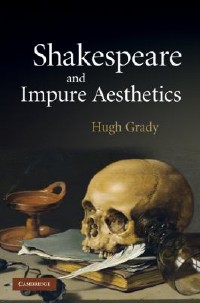
Shakespeare and Impure Aesthetics explores ideas about art implicit in Shakespeare's plays and defines specific Shakespearean aesthetic practices in his use of desire, death and mourning as resources for art. Hugh Grady draws on a tradition of aesthetic theorists who understand art as always formed in a specific historical moment but as also distanced from its context through its form and Utopian projections. Grady sees A Midsummer Night's Dream, Timon of Athens, Hamlet, and Romeo and Juliet as displaying these qualities, showing aesthetic theory's usefulness for close readings of the plays. The book argues that such social-minded 'impure aesthetics' can revitalize the political impulses of the new historicism while opening up a new aesthetic dimension in the current discussion of Shakespeare.
目录
Cover 1
Half-title 3
Title 5
Copyright 6
Dedication 7
Contents 9
Acknowledgements 10
Chapter 1: Introduction: impure aesthetics 13
Kant and 'pure' and 'impure' aesthetics 17
Historicizing Kant 23
Aesthetics in Hegel and Marx 24
Aesthetics, modernity, and the circulation of commodities 28
The origin of Western Marxism: Lukcs, Benjamin, and Adorno 34
Autonomy and form 40
Aesthetic subtexts: desire and death in art 42
Art as labor 43
Art and the reconciliation with nature 46
Aesthetics and the new historicism 47
Aesthetics in the age of Shakespeare 52
Part One: A Shakespearean Aesthetic: into the woods Outside Athens 57
Chapter 2: A Midsummer Night's Dream \u2013 eros and the aesthetic 59
Aesthetic unity and a midsummer night's dream 65
Aesthetic space, form, and autonomy 66
Utopian vision and the fairy realm 74
The aesthetic and the ideological 76
Sexuality and hierarchy 80
Nature as Other 83
The aesthetic space of dreams 89
'Pyramus and Thisbe' 94
Love, madness, and the aesthetic 96
Chapter 3: Modernity, usury, and art in Timon of Athens 102
Shakespeare's theater and commodity production 107
Timon's critical fortunes 108
Text and authorship 110
Monetary and aesthetic value in scene i.i 111
The alterity of art in Timon 115
Mysteries of the commodity 117
The play's condemnation of a money economy 125
Timon misanthropos 129
The realization of the aesthetic 136
Part Two: The a Esthetics of Death and Mourning 143
Chapter 4: Hamlet as mourning-play 145
The Aesthetics of the Trauerspiel 145
Some Benjaminian sources 147
Benjamin and Hegelian \u2018pre-Marxism\u2019 150
The form of allegory 154
Allegory and Postmodernism 158
Breaking with Romanticism 159
Allegory, history, and aesthetics 164
HAMLET AS TRAUERSPIEL 166
The Ghost in the emptied world 172
The tables of memory 175
The unweeded garden and the beetling cliff 177
The satirical book as allegory 179
Hamlet\u2019s metadramatic turn: The mousetrap 183
Allegorical deferral and the prayer scene 185
More images of dissolution and corruption 188
Ophelia\u2019s allegorical bouquet 189
The allegories of the graveyard scene 190
The allegorical signet 192
Catastrophe and redemption 195
POST-Script: Hamlet, Subjectivity, and Aesthetics 199
The emptied world and alienated subject 200
Hamlet\u2019s resistance to unified subjectivity 201
Hamlet\u2019s resistance to unity 203
Chapter 5: Beautiful Death in Romeo and Juliet 205
Shakespeare's secular deaths and the aesthetic 207
The psychoanalysis of death 209
The history of death 211
Love-death, or liebestod 214
Romeo and juliet in critical history 216
The comic elements of romeo and juliet 218
Utopian love and nature 222
The turn to trauerspiel aesthetics 227
The dark side of desire 229
The antagonism of desire and death 230
Romeo and juliet as art 235
Conclusion: the critical present 237
The turn to 'returns' 245
Ecocriticism 246
Presentism and aesthetics 248
Shakespeare as art 251
Bibliography 252
Index 269
Half-title 3
Title 5
Copyright 6
Dedication 7
Contents 9
Acknowledgements 10
Chapter 1: Introduction: impure aesthetics 13
Kant and 'pure' and 'impure' aesthetics 17
Historicizing Kant 23
Aesthetics in Hegel and Marx 24
Aesthetics, modernity, and the circulation of commodities 28
The origin of Western Marxism: Lukcs, Benjamin, and Adorno 34
Autonomy and form 40
Aesthetic subtexts: desire and death in art 42
Art as labor 43
Art and the reconciliation with nature 46
Aesthetics and the new historicism 47
Aesthetics in the age of Shakespeare 52
Part One: A Shakespearean Aesthetic: into the woods Outside Athens 57
Chapter 2: A Midsummer Night's Dream \u2013 eros and the aesthetic 59
Aesthetic unity and a midsummer night's dream 65
Aesthetic space, form, and autonomy 66
Utopian vision and the fairy realm 74
The aesthetic and the ideological 76
Sexuality and hierarchy 80
Nature as Other 83
The aesthetic space of dreams 89
'Pyramus and Thisbe' 94
Love, madness, and the aesthetic 96
Chapter 3: Modernity, usury, and art in Timon of Athens 102
Shakespeare's theater and commodity production 107
Timon's critical fortunes 108
Text and authorship 110
Monetary and aesthetic value in scene i.i 111
The alterity of art in Timon 115
Mysteries of the commodity 117
The play's condemnation of a money economy 125
Timon misanthropos 129
The realization of the aesthetic 136
Part Two: The a Esthetics of Death and Mourning 143
Chapter 4: Hamlet as mourning-play 145
The Aesthetics of the Trauerspiel 145
Some Benjaminian sources 147
Benjamin and Hegelian \u2018pre-Marxism\u2019 150
The form of allegory 154
Allegory and Postmodernism 158
Breaking with Romanticism 159
Allegory, history, and aesthetics 164
HAMLET AS TRAUERSPIEL 166
The Ghost in the emptied world 172
The tables of memory 175
The unweeded garden and the beetling cliff 177
The satirical book as allegory 179
Hamlet\u2019s metadramatic turn: The mousetrap 183
Allegorical deferral and the prayer scene 185
More images of dissolution and corruption 188
Ophelia\u2019s allegorical bouquet 189
The allegories of the graveyard scene 190
The allegorical signet 192
Catastrophe and redemption 195
POST-Script: Hamlet, Subjectivity, and Aesthetics 199
The emptied world and alienated subject 200
Hamlet\u2019s resistance to unified subjectivity 201
Hamlet\u2019s resistance to unity 203
Chapter 5: Beautiful Death in Romeo and Juliet 205
Shakespeare's secular deaths and the aesthetic 207
The psychoanalysis of death 209
The history of death 211
Love-death, or liebestod 214
Romeo and juliet in critical history 216
The comic elements of romeo and juliet 218
Utopian love and nature 222
The turn to trauerspiel aesthetics 227
The dark side of desire 229
The antagonism of desire and death 230
Romeo and juliet as art 235
Conclusion: the critical present 237
The turn to 'returns' 245
Ecocriticism 246
Presentism and aesthetics 248
Shakespeare as art 251
Bibliography 252
Index 269
Shakespeare and impure aesthetics /
- 名称
- 类型
- 大小
光盘服务联系方式: 020-38250260 客服QQ:4006604884
云图客服:
用户发送的提问,这种方式就需要有位在线客服来回答用户的问题,这种 就属于对话式的,问题是这种提问是否需要用户登录才能提问
Video Player
×
Audio Player
×
pdf Player
×
