

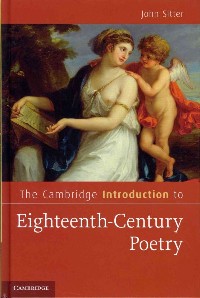
The Cambridge introduction to eighteenth-century poetry /
副标题:无
作 者:John Sitter.
分类号:
ISBN:9780521848244
微信扫一扫,移动浏览光盘
简介
"For readers daunted by the formal structures and rhetorical sophistication of eighteenth-century English poetry, this introduction by John Sitter brings the techniques and the major poets of the period 1700-1785 triumphantly to life. Sitter begins by offering a guide to poetic forms ranging from heroic couplets to blank verse, then demonstrates how skilfully male and female poets of the period used them as vehicles for imaginative experience, feelings and ideas. He then provides detailed analyses of individual works by poets from Finch, Swift and Pope, to Gray, Cowper and Barbauld. An approachable introduction to English poetry and major poets of the eighteenth century, this book provides a grounding in poetic analysis useful to students and general readers of literature"--
目录
Table Of Contents:
Acknowledgments x
Note on texts and titles xii
Introduction 1(4)
PART I VOICE 5(86)
Chapter 1 Voice in eighteenth-century poetry 7(9)
Poem as script 8(5)
Poems on pages 13(3)
Chapter 2 The heroic couplet continuum 16(18)
Closing the sense 17(3)
The example of Donne and eighteenth-century versification 20(6)
Couplet wit and beyond 26(3)
The verse paragraph 29(5)
Chapter 3 Vocal engagement: reading Pope's An Essay on Criticism 34(12)
Chapter 4 Talking in tetrameter 46(28)
Butler and burlesque 48(4)
Familiarity breeds tetrameter 52(4)
Marvell and the meditative line 56(3)
Trochaic variations 59(3)
Couplet "odes" and hymns 62(5)
Reading Swift's tetrameter: the Satirical Elegy on the Death of a Late Famous General and Cadenus and Vanessa 67(7)
Chapter 5 Blank verse and stanzaic poetry 74(17)
Blank verse 74(7)
Stanzaic poems 81(10)
PART II POETIC CONSCIOUSNESS 91(58)
Chapter 6 Satiric poetry 93(21)
Formal verse satire 95(5)
Pope's Epistle to Dr. Arbuthnot and Swift's Verses on the Death of Dr. Swift 100(7)
Formal verse satire after Pope 107(7)
Chapter 7 Pope as metapoet 114(19)
Autobiography and self-reflexivity in Pope's early poetry 115(4)
The Rape of the Lock as "tertiary epic" 119(5)
The early Dunciad as epilogue and prologue 124(4)
The metapoetics of Pope's later career 128(5)
Chapter 8 Metapoetry beyond Pope 133(16)
The vocation of invocation: melancholy, contemplation, celebration 133(6)
Collins, Gray, and modern ambition 139(4)
Smart's Song and Cowper's Task as metapoems 143(6)
PART III VISION 149(67)
Chapter 9 Reading visions 151(6)
Chapter 10 Personification 157(21)
Recovering personification 157(7)
Personification herself? 164(5)
The knowledge of personification 169(9)
Chapter 11 Prophecy and prospects of society 178(20)
Personification and "society" 179(2)
Elizabeth Tollet and William Wordsworth on Westminster Bridge 181(3)
Commerce, Liberty, Dulness, and other goddesses 184(5)
Villages of the whole: Goldsmith, Gray, Crabbe 189(4)
Social redemption and negative sociology 193(5)
Chapter 12 Ecological prospects and natural knowledge 198(18)
"Was it for this?" 199(2)
Nature's people, including humans 201(2)
The ecology of eighteenth-century nature poetry 203(3)
"Physicotheology" and nature poetry 206(4)
The Task and social ecology 210(4)
"Ecographic" poetry? 214(2)
A concluding note: then and now 216(3)
Notes 219(17)
Further reading 236(2)
Index 238
Acknowledgments x
Note on texts and titles xii
Introduction 1(4)
PART I VOICE 5(86)
Chapter 1 Voice in eighteenth-century poetry 7(9)
Poem as script 8(5)
Poems on pages 13(3)
Chapter 2 The heroic couplet continuum 16(18)
Closing the sense 17(3)
The example of Donne and eighteenth-century versification 20(6)
Couplet wit and beyond 26(3)
The verse paragraph 29(5)
Chapter 3 Vocal engagement: reading Pope's An Essay on Criticism 34(12)
Chapter 4 Talking in tetrameter 46(28)
Butler and burlesque 48(4)
Familiarity breeds tetrameter 52(4)
Marvell and the meditative line 56(3)
Trochaic variations 59(3)
Couplet "odes" and hymns 62(5)
Reading Swift's tetrameter: the Satirical Elegy on the Death of a Late Famous General and Cadenus and Vanessa 67(7)
Chapter 5 Blank verse and stanzaic poetry 74(17)
Blank verse 74(7)
Stanzaic poems 81(10)
PART II POETIC CONSCIOUSNESS 91(58)
Chapter 6 Satiric poetry 93(21)
Formal verse satire 95(5)
Pope's Epistle to Dr. Arbuthnot and Swift's Verses on the Death of Dr. Swift 100(7)
Formal verse satire after Pope 107(7)
Chapter 7 Pope as metapoet 114(19)
Autobiography and self-reflexivity in Pope's early poetry 115(4)
The Rape of the Lock as "tertiary epic" 119(5)
The early Dunciad as epilogue and prologue 124(4)
The metapoetics of Pope's later career 128(5)
Chapter 8 Metapoetry beyond Pope 133(16)
The vocation of invocation: melancholy, contemplation, celebration 133(6)
Collins, Gray, and modern ambition 139(4)
Smart's Song and Cowper's Task as metapoems 143(6)
PART III VISION 149(67)
Chapter 9 Reading visions 151(6)
Chapter 10 Personification 157(21)
Recovering personification 157(7)
Personification herself? 164(5)
The knowledge of personification 169(9)
Chapter 11 Prophecy and prospects of society 178(20)
Personification and "society" 179(2)
Elizabeth Tollet and William Wordsworth on Westminster Bridge 181(3)
Commerce, Liberty, Dulness, and other goddesses 184(5)
Villages of the whole: Goldsmith, Gray, Crabbe 189(4)
Social redemption and negative sociology 193(5)
Chapter 12 Ecological prospects and natural knowledge 198(18)
"Was it for this?" 199(2)
Nature's people, including humans 201(2)
The ecology of eighteenth-century nature poetry 203(3)
"Physicotheology" and nature poetry 206(4)
The Task and social ecology 210(4)
"Ecographic" poetry? 214(2)
A concluding note: then and now 216(3)
Notes 219(17)
Further reading 236(2)
Index 238
The Cambridge introduction to eighteenth-century poetry /
- 名称
- 类型
- 大小
光盘服务联系方式: 020-38250260 客服QQ:4006604884
云图客服:
用户发送的提问,这种方式就需要有位在线客服来回答用户的问题,这种 就属于对话式的,问题是这种提问是否需要用户登录才能提问
Video Player
×
Audio Player
×
pdf Player
×
