

简介
Summary:
Publisher Summary 1
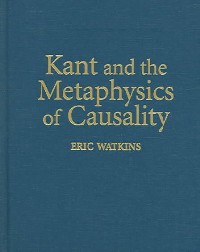
A book about Kant's views on causality as understood in their proper historical context.
Publisher Summary 2
Eric Watkins argues that a grasp of Leibnizian and anti-Leibnizian thought in eighteenth-century Germany helps one to see how Kant (in his critical period) argued for causal principles that have both metaphysical and epistemological elements. According to this interpretation, Kant's model of causality does not consist of events, but rather of substances endowed with causal powers that are exercised according to their natures and circumstances.
目录
Contents 7
Acknowledgments 9
A Note on Citations and Translations 13
Introduction 15
PART ONE CAUSALITY IN CONTEXT 35
1 Pre-established Harmony versus Physical Influx 37
INTRODUCTION 37
LEIBNIZ AND THE MANY FACES OF PRE-ESTABLISHED HARMONY 38
Leibniz on the Mind-Body Problem in Descartes 40
Leibniz\u2019s Objections to Occasionalism 42
Leibniz\u2019s Positive Case for Pre-established Harmony 46
Pre-established Harmony in the Context of Leibniz\u2019s Broader Metaphysics 48
CHRISTIAN WOLFF AND PRE-ESTABLISHED HARMONY IN EIGHTEENTH-CENTURY GERMANY 52
A Radical Shift in Context: From Seventeenth-Century Europe to Eighteenth-Century Germany 52
Pre-established Harmony in Wolff 59
KNUTZEN\u2019S LEIBNIZIAN ARGUMENTS FOR PHYSICAL INFLUX 64
The Argument from vis motrix 68
The Argument from Impenetrability 74
The Argument from the Simplicity of (Divine) Action 77
The Argument from Probability 81
Objections and Replies 82
BAUMGARTEN AND MEIER: A NEW CASE FOR PRE-ESTABLISHED HARMONY 87
Baumgarten and the Perfection of the World 88
Meier 92
CRUSIUS AND FUNDAMENTAL POWERS 95
Basic Ontological Concepts: Powers, Grounds, and the Possibility of Freedom 96
The \u201cReal\u201d World 99
Mind-Body Interaction and the Power to Move 103
CONCLUSION 107
2 Kant\u2019s Pre-Critical Theory of Causality 115
INTRODUCTION 115
KANT\u2019S CONCEPT OF FORCE IN THE TRUE ESTIMATIONAND PHYSICAL MONADOLOGY 118
THE NOVA DILUCIDATIOAND THE PRINCIPLE OF SUCCESSION 126
Is Pre-established Harmony Consistent with Change? 127
Three Arguments 128
Kant and Wolff on the Nature of Grounds 132
Kant and Leibniz on Grounds and Explaining Change 139
Kant\u2019s Positive Account of Change 143
Causal Connections plus Changing Relations 145
Can God Cause Change? 148
Must the Connection between Substances Be Mutual Interaction? 150
Can a Substance Cause Changes in Itself? 152
THE NOVA DILUCIDATIO AND THE PRINCIPLE OF COEXISTENCE 154
Leibniz, Crusius, and the \u201cMere Existence\u201d of Substance 155
God\u2019s Role in the Interaction of Substances 163
Physical Influx, Pre-established Harmony, and Occasionalism 169
KANT\u2019S PRE-CRITICAL REACTION TO HUME 174
The Implication of Hume\u2019s Position 174
Real versus Logical Grounds 176
Real Grounds as a Response to Hume 180
NEW DEVELOPMENTS IN THE INAUGURAL DISSERTATION 184
CONCLUSION 191
PART TWO CAUSALITY IN THE CRITICAL PERIOD 195
3 Kant\u2019s Second and Third Analogies of Experience 199
INTRODUCTION 199
THE CONTEXT OF THE SECOND AND THIRD ANALOGIES 199
The Analogies within the \u201cAnalytic of Principles\u201d 200
The Problem of Time-Determination 202
The Unity of Time 205
The Status of the Claims: Analytic or Epistemological? 210
THE ARGUMENT OF THE SECOND ANALOGY 217
Preliminaries 217
The Introductory Argument 221
The Main Argument 223
THE ARGUMENT OF THE THIRD ANALOGY 231
The Introductory Argument 232
The Main Argument 233
The Meaning of \u201cThoroughgoing\u201d Mutual Interaction 241
CONCLUSION 243
4 Kant\u2019s Model of Causality 244
INTRODUCTION 244
EVENTS AND EVENT-BASED MODELS OF CAUSALITY 246
Humean and Kantian Events 246
Event-Event Models of Causality 251
Simple Event-Event Models 252
Complex Event-Event Models 253
GROUNDS, CAUSAL POWERS, AND DETERMINATIONS 257
Indeterminate Grounds, Joint Determination, and Causal Powers 257
Simultaneous Causation and the Principle of Continuity 266
Causal Powers, Asymmetry, and Activity 271
MAKING SENSE OF ACTIVITY, OR THE \u201cCAUSALITY OF THE CAUSE \u201d 279
Architectonic Considerations 280
Scientific Considerations 282
Self-consciousness 286
IMPLICATIONS FOR THE SECOND AND THIRD ANALOGIES AND FOR THE \u201cCRITICAL TURN\u201d 296
Implications of Kant\u2019s Model for the Second and Third Analogies 296
The \u201cCritical Turn\u201d and the Limits of Metaphysics 305
CONCLUSION 310
PART THREE CAUSALITY AND CONSEQUENCES 313
5 The Metaphysics of Freedom 315
INTRODUCTION 315
THE THIRD ANTINOMY 318
The Thesis and Antithesis Arguments 319
The Resolution 325
ASPECTS OF TRANSCENDENTAL IDEALISM 331
Things in Themselves and Appearances: Epistemological or Ontological? 331
The Grounding Thesis 339
Grounding and Compatibilism 343
Impersonal and Personal Facts 353
FREEDOM AND CAUSALITY 357
Consistency 358
Textual Troubles? 361
Phenomenal Substances and Noumenal Causality 363
Determination and the Problems of Regress and Location 368
CONCLUSION 374
6 Kant\u2019s Reply to Hume 376
INTRODUCTION 376
THE HISTORICAL QUESTION OF KANT\u2019S REPLY TO HUME 377
German Reactions to Hume: Sulzer and Tetens 378
Kant and Hume in the Critique 387
Kant\u2019s Explicit Remarks about Hume in the Critique 388
Kant\u2019s Reply to Hume 395
CONTEMPORARY CONSIDERATIONS 403
The Metaphysics of Causality 404
Laws of Nature 414
Free Will and Determinism 422
Systematic Metaphysics 433
CONCLUSION 435
Conclusion 437
Bibliography 445
PRIMARY LITERATURE 445
SECONDARY LITERATURE 448
Index 455
Acknowledgments 9
A Note on Citations and Translations 13
Introduction 15
PART ONE CAUSALITY IN CONTEXT 35
1 Pre-established Harmony versus Physical Influx 37
INTRODUCTION 37
LEIBNIZ AND THE MANY FACES OF PRE-ESTABLISHED HARMONY 38
Leibniz on the Mind-Body Problem in Descartes 40
Leibniz\u2019s Objections to Occasionalism 42
Leibniz\u2019s Positive Case for Pre-established Harmony 46
Pre-established Harmony in the Context of Leibniz\u2019s Broader Metaphysics 48
CHRISTIAN WOLFF AND PRE-ESTABLISHED HARMONY IN EIGHTEENTH-CENTURY GERMANY 52
A Radical Shift in Context: From Seventeenth-Century Europe to Eighteenth-Century Germany 52
Pre-established Harmony in Wolff 59
KNUTZEN\u2019S LEIBNIZIAN ARGUMENTS FOR PHYSICAL INFLUX 64
The Argument from vis motrix 68
The Argument from Impenetrability 74
The Argument from the Simplicity of (Divine) Action 77
The Argument from Probability 81
Objections and Replies 82
BAUMGARTEN AND MEIER: A NEW CASE FOR PRE-ESTABLISHED HARMONY 87
Baumgarten and the Perfection of the World 88
Meier 92
CRUSIUS AND FUNDAMENTAL POWERS 95
Basic Ontological Concepts: Powers, Grounds, and the Possibility of Freedom 96
The \u201cReal\u201d World 99
Mind-Body Interaction and the Power to Move 103
CONCLUSION 107
2 Kant\u2019s Pre-Critical Theory of Causality 115
INTRODUCTION 115
KANT\u2019S CONCEPT OF FORCE IN THE TRUE ESTIMATIONAND PHYSICAL MONADOLOGY 118
THE NOVA DILUCIDATIOAND THE PRINCIPLE OF SUCCESSION 126
Is Pre-established Harmony Consistent with Change? 127
Three Arguments 128
Kant and Wolff on the Nature of Grounds 132
Kant and Leibniz on Grounds and Explaining Change 139
Kant\u2019s Positive Account of Change 143
Causal Connections plus Changing Relations 145
Can God Cause Change? 148
Must the Connection between Substances Be Mutual Interaction? 150
Can a Substance Cause Changes in Itself? 152
THE NOVA DILUCIDATIO AND THE PRINCIPLE OF COEXISTENCE 154
Leibniz, Crusius, and the \u201cMere Existence\u201d of Substance 155
God\u2019s Role in the Interaction of Substances 163
Physical Influx, Pre-established Harmony, and Occasionalism 169
KANT\u2019S PRE-CRITICAL REACTION TO HUME 174
The Implication of Hume\u2019s Position 174
Real versus Logical Grounds 176
Real Grounds as a Response to Hume 180
NEW DEVELOPMENTS IN THE INAUGURAL DISSERTATION 184
CONCLUSION 191
PART TWO CAUSALITY IN THE CRITICAL PERIOD 195
3 Kant\u2019s Second and Third Analogies of Experience 199
INTRODUCTION 199
THE CONTEXT OF THE SECOND AND THIRD ANALOGIES 199
The Analogies within the \u201cAnalytic of Principles\u201d 200
The Problem of Time-Determination 202
The Unity of Time 205
The Status of the Claims: Analytic or Epistemological? 210
THE ARGUMENT OF THE SECOND ANALOGY 217
Preliminaries 217
The Introductory Argument 221
The Main Argument 223
THE ARGUMENT OF THE THIRD ANALOGY 231
The Introductory Argument 232
The Main Argument 233
The Meaning of \u201cThoroughgoing\u201d Mutual Interaction 241
CONCLUSION 243
4 Kant\u2019s Model of Causality 244
INTRODUCTION 244
EVENTS AND EVENT-BASED MODELS OF CAUSALITY 246
Humean and Kantian Events 246
Event-Event Models of Causality 251
Simple Event-Event Models 252
Complex Event-Event Models 253
GROUNDS, CAUSAL POWERS, AND DETERMINATIONS 257
Indeterminate Grounds, Joint Determination, and Causal Powers 257
Simultaneous Causation and the Principle of Continuity 266
Causal Powers, Asymmetry, and Activity 271
MAKING SENSE OF ACTIVITY, OR THE \u201cCAUSALITY OF THE CAUSE \u201d 279
Architectonic Considerations 280
Scientific Considerations 282
Self-consciousness 286
IMPLICATIONS FOR THE SECOND AND THIRD ANALOGIES AND FOR THE \u201cCRITICAL TURN\u201d 296
Implications of Kant\u2019s Model for the Second and Third Analogies 296
The \u201cCritical Turn\u201d and the Limits of Metaphysics 305
CONCLUSION 310
PART THREE CAUSALITY AND CONSEQUENCES 313
5 The Metaphysics of Freedom 315
INTRODUCTION 315
THE THIRD ANTINOMY 318
The Thesis and Antithesis Arguments 319
The Resolution 325
ASPECTS OF TRANSCENDENTAL IDEALISM 331
Things in Themselves and Appearances: Epistemological or Ontological? 331
The Grounding Thesis 339
Grounding and Compatibilism 343
Impersonal and Personal Facts 353
FREEDOM AND CAUSALITY 357
Consistency 358
Textual Troubles? 361
Phenomenal Substances and Noumenal Causality 363
Determination and the Problems of Regress and Location 368
CONCLUSION 374
6 Kant\u2019s Reply to Hume 376
INTRODUCTION 376
THE HISTORICAL QUESTION OF KANT\u2019S REPLY TO HUME 377
German Reactions to Hume: Sulzer and Tetens 378
Kant and Hume in the Critique 387
Kant\u2019s Explicit Remarks about Hume in the Critique 388
Kant\u2019s Reply to Hume 395
CONTEMPORARY CONSIDERATIONS 403
The Metaphysics of Causality 404
Laws of Nature 414
Free Will and Determinism 422
Systematic Metaphysics 433
CONCLUSION 435
Conclusion 437
Bibliography 445
PRIMARY LITERATURE 445
SECONDARY LITERATURE 448
Index 455
- 名称
- 类型
- 大小
光盘服务联系方式: 020-38250260 客服QQ:4006604884
云图客服:
用户发送的提问,这种方式就需要有位在线客服来回答用户的问题,这种 就属于对话式的,问题是这种提问是否需要用户登录才能提问
Video Player
×
Audio Player
×
pdf Player
×
