

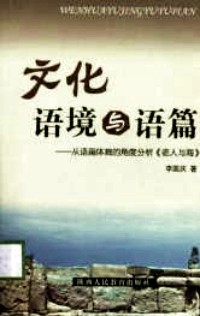
Contextual conditioning in text:a genre-centered analysis of the old man and the sea
副标题:无
作 者:李国庆著
分类号:
ISBN:9787541995132
微信扫一扫,移动浏览光盘
简介
全书以吸引功能语言学为理论框架,以海明威的《老人与海》为语料,研究了语篇体裁作为文化语境是如何在语篇中得以实现的。该书是李国庆教授在其博士论文的基础上整理而成,共分十一章,分别从不同的角度深入以及了与语篇体裁有关的问题。
目录
目录
序
Acknowledgements
Abstract
List of figures
List of tables
Abbreviations
Chapter1 Introduction
1.1 A Systemic Functional Approach
1.1.1 A Muli-leveled Approach
1.1.2 A Modalization Approach
1.1.3 The Three Metafunctions
1.1.4 Social Interaction
1.2 A Genre-centered Approach within a Semiotic Framework
1.3 The Reason for My Choice of Hemingway's The Old Man and the Sea
1.4 Aims and Objectives
1.5 Organization of the Thesis
Chapter2 Halliday's Systemic Functional Approach to Language
2.1 Introduction
2.2 Language as Resource
2.2.1 System and Structure
2.2.2 Stratification
2.3 Language as Institution
2.4 Language as Metaphor
2.5 Concluding Remarks
Chapter3 Genre, Context and Text
3.1 Introduction
3.2 A Review of Folklore Studies and Genre Analysis
3.3 A Review of Socio-Linguistic Studies and Genre Analysis
3.3.1 Ethnography of Communication
3.3.2 Ethnomethodological Approach
3.4 A Review of Systemic Functional Studies and Text Analysis
3.4.1 Binary Picture of Context
3.4.2 Genre and Generic Structure
3.4.2.1 A Review of Hasan's Register Model of Text
3.4.2.2 A Review of Martin's Genre Model of Text
3.4.2.3 An Evaluation of Two Models
3.4.3 Genre and Purpose
3.4.4 A Synoptic Approach and a Dynamic Approach to Text Analysis
3.4.4.1 An Introduction to two Approaches of Systemic Functional Linguists
3.4.4.2 The Importance of a Synoptic Approach in Text Analysis
3.4.4.3 The Importance of a Dynamic Approach in Study of Literary Genre
3.5 Concluding Remarks
Chapter4 Towards Narrative Models and a Discourse Model
4.1 Introduction
4.2 Labov's Narrative Model
4.2.1 Labov's Variation Theory
4.2.2 Labov's Concept of Narrative Genre and Narrative Structure
4.3 Martin & Rothery's Concept of Sub-Classification of Narrative Genre
4.4 A Review of Hoey's Problem - Solution Pattern
4.5 A Semiotic Approach to Discourse Analysis
4.6 Concluding Remarks
Chapter5 Genre, Generic Structure and Text Type
5.1 Introduction
5.2 A Look at The Old Man and the Sea
5.3 Embedding Theory and Embedded Micro-Register Texts
5.4 Identifying Different Text Types at the Genre Plane
5.4.1 Identifying Narrative Text at the Genre Plane
5.4.2 Identifying Descriptive Text at the Genre Plane
5.4.3 Identifying Opinion Text at the Genre Plane
5.4.4 Identifying Hortatory Text at the Genre Plane
5.4.5 Hortatory Text and Observation Text Discussed in Terms of Secondary Genre
5.4.5.1 Visiting the Theory on Primary Genre and Secondary Genre
5.4.5.2 Hortatory Text Treated as a Secondary Genre
5.4.5.3 Observation Text Treated as a Secondary Genre
5.5 Concluding Remarks
Chapter6 Genre, Contextual Parameters, and Text Type
6.1 Introduction
6.2 Classifing Text Types in Terms of Field
6.3 Classifying Text Types in Terms of Tenor
6.3.1 Classifying Text Types from the Perspective of Power
6.3.2 Classifying Text Types from the Perspective of Affection
6.4 Classfying Text Types from the Perspective of Mode
6.4.1 Classifying Text Types in Terms of Mode's Experiential Dimension
6.5 Concluding Remarks
Chapter7 Genre, Theme, and Text Type
7.1 Introduction
7.2 Identification and Delimitation of the Theme
7.3 Trouble Shooting in Identifying the Theme
7.3.1 Theme in Elliptical Clauses
7.3.2 Theme in Clause Complex with a Hypotactic Structure
7.3.3 Theme in Reporting and Reported Clauses
7.4 Functions of Theme
7.5 Theme Distribution and Genre
7.5.1 Lexico-semantic Properties of the Ideational Theme and Genre
7.5.2 The Interpersonal Theme and Genre
7.5.3 The Textual Theme and Genre
7.6 Thematic Development and Genre
7.7 Concluding Remarks
Chapter8 Genre, Transitivity, and Text Type
8.1 Introduction
8.2 A Brief Survey of the Transitivity System
8.3 Ergative:Another Interpretation
8.4 Transitivity Process Distribution and Genre
8.4.1 Transitivity Process Distribution and Descriptive Text
8.4.2 Transitivity Process Distribution and Narrative Text
8.5 Concluding Remarks
Chapter9 Recontextualizing the Novella
9.1 Introduction
9.2 Reading The Old Man and the Sea from the Perspective of the Three Metafunctions
9.2.1 Reading the Field at the Second Order Context
9.2.2 Reading the Mode at the Second Order Context
9.2.2.1 Investigation of the Rhythm at the Phonological Level
9.2.2.2 Investigation of the Rhythm at the Level of the Macro-Structure
9.3 Investigating the Purpose of the Novella
9.3.1 Dual Order Context Theory Considered Metaphorically
9.3.2 Reading the Functional Tenor into Text
9.4 Concluding Remarks
Chapter10 Conclusions and Suggestions
10.1 Introduction
10.2 Summary and Conclusions
10.3 Pedagogical Implications: Teaching Genre
10.4 Suggestions for Further Study
Appendix
References
序
Acknowledgements
Abstract
List of figures
List of tables
Abbreviations
Chapter1 Introduction
1.1 A Systemic Functional Approach
1.1.1 A Muli-leveled Approach
1.1.2 A Modalization Approach
1.1.3 The Three Metafunctions
1.1.4 Social Interaction
1.2 A Genre-centered Approach within a Semiotic Framework
1.3 The Reason for My Choice of Hemingway's The Old Man and the Sea
1.4 Aims and Objectives
1.5 Organization of the Thesis
Chapter2 Halliday's Systemic Functional Approach to Language
2.1 Introduction
2.2 Language as Resource
2.2.1 System and Structure
2.2.2 Stratification
2.3 Language as Institution
2.4 Language as Metaphor
2.5 Concluding Remarks
Chapter3 Genre, Context and Text
3.1 Introduction
3.2 A Review of Folklore Studies and Genre Analysis
3.3 A Review of Socio-Linguistic Studies and Genre Analysis
3.3.1 Ethnography of Communication
3.3.2 Ethnomethodological Approach
3.4 A Review of Systemic Functional Studies and Text Analysis
3.4.1 Binary Picture of Context
3.4.2 Genre and Generic Structure
3.4.2.1 A Review of Hasan's Register Model of Text
3.4.2.2 A Review of Martin's Genre Model of Text
3.4.2.3 An Evaluation of Two Models
3.4.3 Genre and Purpose
3.4.4 A Synoptic Approach and a Dynamic Approach to Text Analysis
3.4.4.1 An Introduction to two Approaches of Systemic Functional Linguists
3.4.4.2 The Importance of a Synoptic Approach in Text Analysis
3.4.4.3 The Importance of a Dynamic Approach in Study of Literary Genre
3.5 Concluding Remarks
Chapter4 Towards Narrative Models and a Discourse Model
4.1 Introduction
4.2 Labov's Narrative Model
4.2.1 Labov's Variation Theory
4.2.2 Labov's Concept of Narrative Genre and Narrative Structure
4.3 Martin & Rothery's Concept of Sub-Classification of Narrative Genre
4.4 A Review of Hoey's Problem - Solution Pattern
4.5 A Semiotic Approach to Discourse Analysis
4.6 Concluding Remarks
Chapter5 Genre, Generic Structure and Text Type
5.1 Introduction
5.2 A Look at The Old Man and the Sea
5.3 Embedding Theory and Embedded Micro-Register Texts
5.4 Identifying Different Text Types at the Genre Plane
5.4.1 Identifying Narrative Text at the Genre Plane
5.4.2 Identifying Descriptive Text at the Genre Plane
5.4.3 Identifying Opinion Text at the Genre Plane
5.4.4 Identifying Hortatory Text at the Genre Plane
5.4.5 Hortatory Text and Observation Text Discussed in Terms of Secondary Genre
5.4.5.1 Visiting the Theory on Primary Genre and Secondary Genre
5.4.5.2 Hortatory Text Treated as a Secondary Genre
5.4.5.3 Observation Text Treated as a Secondary Genre
5.5 Concluding Remarks
Chapter6 Genre, Contextual Parameters, and Text Type
6.1 Introduction
6.2 Classifing Text Types in Terms of Field
6.3 Classifying Text Types in Terms of Tenor
6.3.1 Classifying Text Types from the Perspective of Power
6.3.2 Classifying Text Types from the Perspective of Affection
6.4 Classfying Text Types from the Perspective of Mode
6.4.1 Classifying Text Types in Terms of Mode's Experiential Dimension
6.5 Concluding Remarks
Chapter7 Genre, Theme, and Text Type
7.1 Introduction
7.2 Identification and Delimitation of the Theme
7.3 Trouble Shooting in Identifying the Theme
7.3.1 Theme in Elliptical Clauses
7.3.2 Theme in Clause Complex with a Hypotactic Structure
7.3.3 Theme in Reporting and Reported Clauses
7.4 Functions of Theme
7.5 Theme Distribution and Genre
7.5.1 Lexico-semantic Properties of the Ideational Theme and Genre
7.5.2 The Interpersonal Theme and Genre
7.5.3 The Textual Theme and Genre
7.6 Thematic Development and Genre
7.7 Concluding Remarks
Chapter8 Genre, Transitivity, and Text Type
8.1 Introduction
8.2 A Brief Survey of the Transitivity System
8.3 Ergative:Another Interpretation
8.4 Transitivity Process Distribution and Genre
8.4.1 Transitivity Process Distribution and Descriptive Text
8.4.2 Transitivity Process Distribution and Narrative Text
8.5 Concluding Remarks
Chapter9 Recontextualizing the Novella
9.1 Introduction
9.2 Reading The Old Man and the Sea from the Perspective of the Three Metafunctions
9.2.1 Reading the Field at the Second Order Context
9.2.2 Reading the Mode at the Second Order Context
9.2.2.1 Investigation of the Rhythm at the Phonological Level
9.2.2.2 Investigation of the Rhythm at the Level of the Macro-Structure
9.3 Investigating the Purpose of the Novella
9.3.1 Dual Order Context Theory Considered Metaphorically
9.3.2 Reading the Functional Tenor into Text
9.4 Concluding Remarks
Chapter10 Conclusions and Suggestions
10.1 Introduction
10.2 Summary and Conclusions
10.3 Pedagogical Implications: Teaching Genre
10.4 Suggestions for Further Study
Appendix
References
Contextual conditioning in text:a genre-centered analysis of the old man and the sea
- 名称
- 类型
- 大小
光盘服务联系方式: 020-38250260 客服QQ:4006604884
云图客服:
用户发送的提问,这种方式就需要有位在线客服来回答用户的问题,这种 就属于对话式的,问题是这种提问是否需要用户登录才能提问
Video Player
×
Audio Player
×
pdf Player
×
