

简介
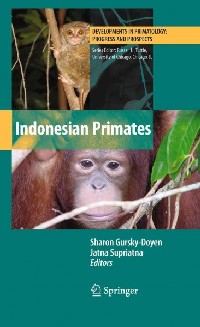
Edited by two internationally renowned primatologists, this new text synthesizes current research on the primates of Indonesia, which include apes, monkeys, and prosimians. It is published at a crucial time as anxiety over the fate of the Indonesian primate population is rising. One study concluded that more than 70% of Asian primate species are threatened with extinction, while 84% of the dozens of Indonesian primate species are threatened. In this volume, the common thread of diversity is inextricably linked to the theme of conservation. Contributed by key researchers from around the world, the volume鈥檚 chapters demonstrate the sheer variety in Indonesian primates, ranging from Nekaris and Munds鈥?study of using slow loris facial variation to distinguish species to Delgado鈥檚 discussion of communication patterns among orangutans. The book鈥檚 first section contains chapters on the endangered orangutans and gibbons. The orangutan, in its Sumatran and Bornean forms, is the only Asian great ape; yet in Borneo, Sugardito and Adhikerana nest densities are severely threatened by logging activity, especially at national park boundaries. The authors highlight the effectiveness of community-based patrolling as a protective measure is becoming an increasingly effective means of protecting orangutans. The second section of the text examines the diversity of monkeys in Indonesia, with each author in turn stressing the importance of conservation. Yorzinski uses the critically endangered pig-tailed langur of the Indonesian Mentawai Islands to demonstrate how isolated island primates react to predation pressure, while further chapters explore the relationship between vegetation and primate densities, habitat quality and its degradation, and human--simian interaction. A further section looks at the region鈥檚 prosimians and notes that the taxonomic diversity is only recently being explored. The cryptic/nocturnal nature of these primates makes their conservation status even more uncertain. Sharon Gursky-Doyen is an associate professor of anthropology at Texas A&M University. She received her BA from Hartwick College, her MS from the University of New Mexico, and her Ph.D. from the State University of New York at Stony Brook. She has been studying Sulawesi tarsiers since 1994. Her present research is centered on understanding the effects of altitude on the recently re-discovered pygmy tarsiers. She is the author of numerous scientific publications including The Spectral Tarsier, (Prentice Hall 2007); Primate Anti-Predator Strategies (coedited with Anna Nekaris, Springer 2007) as well as Tarsiers: Past, Present and Future (co-edited with Patricia Wright and Elwyn Simons, Rutgers University Press, 2003). Jatna Supriatna received his B.S. in Biology from Universitas Nasional, Jakarta, and his M.S. and Ph.D. from the University of New Mexico. He has worked for Conservation International since 1994 and has served as the Vice President for Conservation International Indonesia Program since 2005. In 1999, he received the Golden Ark Award for his conservation work from Prince Bernhard of the Netherlands. In 2009, he received a Science Award also known as the Habibie Award from former Indonesian President B.J. Habibie. He has published 8 books on Indonesian Biodiversity and more than 90 articles in international journals. His books include: Panduan Lapangan Primata Indonesia (Field Guide of Indonesia Primates), Conservation Biology and Saving Indonesia's Nature. The latter two books are among the best-selling environment books in Indonesia.
目录
Contents 6
Chapter 1 13
Introduction 13
References 18
Chapter 2 20
Measuring Performance of Orangutan Protection and Monitoring Unit: Implications for Species Conservation 20
Introduction 20
Methods 21
Orangutan Protection and Monitoring Unit (OPMU) 21
Patrolling 22
Illegal Logging 22
Forest Encroachment 22
Gravel Mining 22
Animal Hunting 23
Wildlife Monitoring 23
Crime Investigation 23
Promoting Awareness 23
Data Analysis 24
Results and Discussion 25
Wildlife Encounters 29
Conclusions and Recommendations 32
References 33
Chapter 3 34
Communication, Culture and Conservation in Orangutans 34
Introduction 34
Communication and Social Organization 36
Orangutan Vocal Communication 40
Culture and Social Learning 43
Vocal Cultures? 45
Conservation and Considerations 46
References 47
Chapter 4 52
The Natural History of Sumatran Orangutan (Pongo abelii) 52
Introduction 52
Field Sites 52
Life History 53
Population Distribution 53
Behavioral Ecology 55
Activity Patterns 55
Diet 56
Meat Eating 57
Tool Use 57
Social Relationships 58
Male\u2013Male Relationships 59
Male\u2013Female Relationships 60
Female\u2013Female Relationships 60
Mating Strategies 61
Conservation 62
Conclusions 62
References 63
Chapter 5 67
Javan Gibbon (Hylobates moloch): Population and Conservation 67
Introduction 67
Threats to the Javan Gibbons 69
Distribution and Key Populations 70
Habitat and Remaining Forest 73
Conservation Measures for the Javan Gibbon 74
Population and Habitat Viability Analysis Workshop 74
Rescue and Rehabilitation Program 75
Javan Gibbon Center 76
Securing More Habitat via Corridor Development 77
Educating People to Save the Javan Gibbon 78
Other Conservation Measure Needs and Recommendations 78
References 80
Chapter 6 83
Siamang Socioecology in Spatiotemporally Heterogenous Landscapes: Do \u201cTypical\u201d Groups Exist? 83
Introduction 83
Methods 85
Study Area and Siamang Population 85
Behavioral Data Collection 87
Data Analysis 88
Results 90
Intergroup Variation in General Activity Patterns 90
Seasonal Variation 93
Inter-annual Differences 95
Discussion 98
References 103
Chapter 7 107
Impact of Forest Fragmentation on Ranging and Home Range of Siamang (Symphalangus syndactylus) and Agile Gibbons (Hylobates 107
Introduction 107
Study Area 108
Sungai (Sg.) Misang 108
Lorong (Lr.) Gambir 110
Sg. Mangun 110
Sg. Tembalun 111
Kulai Tanang 112
Methods 112
Day Range 112
Home Range 113
Results 114
Day Range 114
Home Range Size 117
Number of 0.25-ha Quadrats Entered 118
Overlap 122
Discussion 125
References 127
Chapter 8 130
Behavioural Ecology of Gibbons (Hylobates albibarbis) in a Degraded Peat-Swamp Forest 130
Introduction 130
Historical Note 132
IUCN Status and Threats 133
Hylobates albibarbis 133
Study Area and Gibbons 134
Aims 137
Methods 137
Habituation of Gibbons 138
Habituation Techniques 138
Signs that the Gibbons are Becoming More Habituated 139
Searching for and Locating Gibbons 139
Home Range Size, Group Encounter Rates and Territorial Overlap 140
Activity Patterns and Time Budgets 142
Secondary Activities (Fig. 8.5) 144
Social Interactions Within the Group 145
Conflict Between Groups 147
Ranging Behaviour and Travel Distances 148
Vertical Use of Forest Canopy 151
Diet and Feeding Ecology 152
Energy Intake 156
Sleeping Trees 157
Singing 158
Conclusions 159
Conservation Recommendations 159
References 161
Chapter 9 166
Effect of Habitat Quality on Primate Populations in Kalimantan: Gibbons and Leaf Monkeys as Case Studies 166
Introduction 166
Study Site and Subjects 167
Field Methods 170
Habitat-Specific Population Densities 172
What Determines Habitat Quality for Primates? 172
Effects of Variation in Habitat Quality 174
Discussion 178
Future Directions 180
References 182
Chapter 10 188
Predator Recognition in the Absence of Selection 188
Introduction 188
Case Study: Relaxed Predation Pressure in a Wild Primate 192
Pig-tailed Langurs 192
Hypotheses and Predictions 193
Field Site and Experimental Procedure 194
Results and Discussion 195
Evaluating Predator Recognition 198
Reintroductions 198
Ontogeny 199
Conclusions 199
References 200
Chapter 11 205
The Relationship Between Nonhuman Primate Densities and Vegetation on the Pagai, Mentawai Islands, Indonesia 205
Introduction 205
Hypotheses and Predictions 207
Methods 208
Data Analysis 209
Results 210
Discussion 210
Relationship Between Vegetation Variables and Specific Hypotheses and Predictions 210
Relationship Between Other Vegetation Variables and Primate Densities 213
Conclusions 215
Appendix. Primate Densities and Vegetation Variables. Key is at Bottom of Appendix 216
Key 217
References 218
Chapter 12 222
Proboscis Monkey (Nasalis larvatus): Bio-ecology and Conservation 222
Introduction 222
Habitat Distribution 223
Population Density 224
Population Threats 226
Geometric and Biomass 228
Daily Activities and Energy Requirement 229
Food and Mineral Requirement 231
In Situ Conservation 233
Ex Situ Conservation 234
Conservation Programs 234
Conclusions 236
References 236
Chapter 13 239
Pests, Pestilence, and People: The Long-Tailed Macaque and Its Role in the Cultural Complexities of Bali 239
Introduction 239
Macaque Geographical Distribution 240
The Bali Macaque 240
An Anthropogenic Ecology 241
Population Dynamic Structure: Dispersal 244
Phylogeny and Population Structure 245
Population Management and Conservation Genetics 247
Humans and Macaques on Bali: Ethnoprimatology and Shared Ecologies 248
Conclusion 251
References 251
Chapter 14 253
The Not-So-Sacred Monkeys of Bali: A Radiographic Study of Human-Primate Commensalism 253
Introduction 253
Bali\u2019s Sacred Monkeys 254
Methods 255
Results 256
Discussion and Conclusions 256
Sacred? 259
References 259
Chapter 15 261
Male\u2013Male Affiliation in Sulawesi Tonkean Macaques 261
Introduction 261
Study Site and Species 264
Methods 265
Data Collection 265
Data Analysis 266
Results 266
Affiliation: Nearest Neighbor 266
Affiliation: Grooming 267
Affiliation: Between-Group Comparisons 267
Agonism Rates 268
Discussion 268
References 270
Chapter 16 273
Ecology and Conservation of the Hose\u2019s Langur Group (Colobinae: Presbytis hosei, P. canicrus, P. sabana): A Review 273
Introduction 273
Methods 274
Study Species 274
Data Acquisition 275
Assessment of Remaining Habitat 276
Results and Discussion 277
Ecology and Habitat Use 277
Distribution and Densities 279
Habitat Loss, Selective Logging and Hunting 282
Conclusions 285
References 285
Chapter 17 289
Thomas Langurs: Ecology, Sexual Conflict and Social Dynamics 289
Introduction 289
Thomas Langurs and the Study Areas 290
Distribution and Conservation Status 290
Ecology 292
Thomas Langur Demography 297
Food Competition and Social Behavior 297
Social Dynamics 299
Male and Female Sexual Strategies 301
Male Loud Calls and Male Sexual Strategies 303
Assessing Male Quality 305
Cues of Male Quality 306
Conclusions 308
References 309
Chapter 18 313
Dominance and Reciprocity in the Grooming Relationships of Female Long-Tailed Macaques (Macaca fascicularis) in Indonesia 313
Introduction 313
Grooming in Female Relationships 314
Seyfarth\u2019s Model of Female Grooming 316
Methods 317
Location and Study Group 317
Data Collection and Compilation 318
Matrix Analysis 319
Testing for Time-Matching 326
Comparing Up and Down-Rank Grooming 326
Testing Dominance Rank\u2019s Effect on Grooming 327
Testing Rank Effects in Adjacently Ranked Partners 327
Testing the Influence of Rank on each Individual\u2019s Grooming 327
Results 328
Grooming Reciprocity 328
Group-Level Grooming Reciprocity 328
Time-Matching in Grooming Relationships 329
Rank Direction and Grooming Balance 330
Dominance and Grooming 332
Rank Adjacency and Grooming 333
Individual Rank and Grooming 333
Discussion 333
Grooming Reciprocity 337
Grooming and Dominance 338
Understanding the Social Function of Grooming 339
References 341
Chapter 19 346
Selamatkan Yaki! Conservation of Sulawesi Crested Black Macaques Macaca nigra 346
Introduction 346
Current and Historical Status of M. nigra 347
Why Are M. nigra Numbers Declining? 348
Threats: Habitat Loss and Fragmentation 350
Threats: Hunting 352
Threats: Health 353
Mitigating Threats Which Endanger the Survival of M. nigra 354
Mitigation: Education and Awareness 355
Mitigation: Ecotourism 355
Hope for the Future 356
References 357
Chapter 20 361
The Function of Scentmarking in Spectral Tarsiers 361
Introduction 361
Methods 362
Study Site 362
Study Species 363
Capture and Attachment 363
Data Collection 363
Results 364
Discussion 368
Conclusions 369
References 369
Chapter 21 372
The Population Ecology of Dian\u2019s Tarsier 372
Introduction 372
Taxonomic History 372
Distribution 373
Vocalizations 373
Group Composition 374
Sleeping Tree Choice 375
Population Densities 376
Ranging Patterns 377
Dian\u2019s Tarsiers in Plantations 380
Population Genetics 380
Conservation Status 380
References 381
Chapter 22 384
Using Facial Markings to Unmask Diversity: The Slow Lorises (Primates: Lorisidae: Nycticebus spp.) of Indonesia 384
Introduction 384
Methods 386
Results 387
Studies from the Wild 387
N. coucang 387
N. javanicus 389
N. menagensis 389
Facial Masks 390
Discussion 390
References 395
Chapter 23 398
Conclusions 398
Index 401
Chapter 1 13
Introduction 13
References 18
Chapter 2 20
Measuring Performance of Orangutan Protection and Monitoring Unit: Implications for Species Conservation 20
Introduction 20
Methods 21
Orangutan Protection and Monitoring Unit (OPMU) 21
Patrolling 22
Illegal Logging 22
Forest Encroachment 22
Gravel Mining 22
Animal Hunting 23
Wildlife Monitoring 23
Crime Investigation 23
Promoting Awareness 23
Data Analysis 24
Results and Discussion 25
Wildlife Encounters 29
Conclusions and Recommendations 32
References 33
Chapter 3 34
Communication, Culture and Conservation in Orangutans 34
Introduction 34
Communication and Social Organization 36
Orangutan Vocal Communication 40
Culture and Social Learning 43
Vocal Cultures? 45
Conservation and Considerations 46
References 47
Chapter 4 52
The Natural History of Sumatran Orangutan (Pongo abelii) 52
Introduction 52
Field Sites 52
Life History 53
Population Distribution 53
Behavioral Ecology 55
Activity Patterns 55
Diet 56
Meat Eating 57
Tool Use 57
Social Relationships 58
Male\u2013Male Relationships 59
Male\u2013Female Relationships 60
Female\u2013Female Relationships 60
Mating Strategies 61
Conservation 62
Conclusions 62
References 63
Chapter 5 67
Javan Gibbon (Hylobates moloch): Population and Conservation 67
Introduction 67
Threats to the Javan Gibbons 69
Distribution and Key Populations 70
Habitat and Remaining Forest 73
Conservation Measures for the Javan Gibbon 74
Population and Habitat Viability Analysis Workshop 74
Rescue and Rehabilitation Program 75
Javan Gibbon Center 76
Securing More Habitat via Corridor Development 77
Educating People to Save the Javan Gibbon 78
Other Conservation Measure Needs and Recommendations 78
References 80
Chapter 6 83
Siamang Socioecology in Spatiotemporally Heterogenous Landscapes: Do \u201cTypical\u201d Groups Exist? 83
Introduction 83
Methods 85
Study Area and Siamang Population 85
Behavioral Data Collection 87
Data Analysis 88
Results 90
Intergroup Variation in General Activity Patterns 90
Seasonal Variation 93
Inter-annual Differences 95
Discussion 98
References 103
Chapter 7 107
Impact of Forest Fragmentation on Ranging and Home Range of Siamang (Symphalangus syndactylus) and Agile Gibbons (Hylobates 107
Introduction 107
Study Area 108
Sungai (Sg.) Misang 108
Lorong (Lr.) Gambir 110
Sg. Mangun 110
Sg. Tembalun 111
Kulai Tanang 112
Methods 112
Day Range 112
Home Range 113
Results 114
Day Range 114
Home Range Size 117
Number of 0.25-ha Quadrats Entered 118
Overlap 122
Discussion 125
References 127
Chapter 8 130
Behavioural Ecology of Gibbons (Hylobates albibarbis) in a Degraded Peat-Swamp Forest 130
Introduction 130
Historical Note 132
IUCN Status and Threats 133
Hylobates albibarbis 133
Study Area and Gibbons 134
Aims 137
Methods 137
Habituation of Gibbons 138
Habituation Techniques 138
Signs that the Gibbons are Becoming More Habituated 139
Searching for and Locating Gibbons 139
Home Range Size, Group Encounter Rates and Territorial Overlap 140
Activity Patterns and Time Budgets 142
Secondary Activities (Fig. 8.5) 144
Social Interactions Within the Group 145
Conflict Between Groups 147
Ranging Behaviour and Travel Distances 148
Vertical Use of Forest Canopy 151
Diet and Feeding Ecology 152
Energy Intake 156
Sleeping Trees 157
Singing 158
Conclusions 159
Conservation Recommendations 159
References 161
Chapter 9 166
Effect of Habitat Quality on Primate Populations in Kalimantan: Gibbons and Leaf Monkeys as Case Studies 166
Introduction 166
Study Site and Subjects 167
Field Methods 170
Habitat-Specific Population Densities 172
What Determines Habitat Quality for Primates? 172
Effects of Variation in Habitat Quality 174
Discussion 178
Future Directions 180
References 182
Chapter 10 188
Predator Recognition in the Absence of Selection 188
Introduction 188
Case Study: Relaxed Predation Pressure in a Wild Primate 192
Pig-tailed Langurs 192
Hypotheses and Predictions 193
Field Site and Experimental Procedure 194
Results and Discussion 195
Evaluating Predator Recognition 198
Reintroductions 198
Ontogeny 199
Conclusions 199
References 200
Chapter 11 205
The Relationship Between Nonhuman Primate Densities and Vegetation on the Pagai, Mentawai Islands, Indonesia 205
Introduction 205
Hypotheses and Predictions 207
Methods 208
Data Analysis 209
Results 210
Discussion 210
Relationship Between Vegetation Variables and Specific Hypotheses and Predictions 210
Relationship Between Other Vegetation Variables and Primate Densities 213
Conclusions 215
Appendix. Primate Densities and Vegetation Variables. Key is at Bottom of Appendix 216
Key 217
References 218
Chapter 12 222
Proboscis Monkey (Nasalis larvatus): Bio-ecology and Conservation 222
Introduction 222
Habitat Distribution 223
Population Density 224
Population Threats 226
Geometric and Biomass 228
Daily Activities and Energy Requirement 229
Food and Mineral Requirement 231
In Situ Conservation 233
Ex Situ Conservation 234
Conservation Programs 234
Conclusions 236
References 236
Chapter 13 239
Pests, Pestilence, and People: The Long-Tailed Macaque and Its Role in the Cultural Complexities of Bali 239
Introduction 239
Macaque Geographical Distribution 240
The Bali Macaque 240
An Anthropogenic Ecology 241
Population Dynamic Structure: Dispersal 244
Phylogeny and Population Structure 245
Population Management and Conservation Genetics 247
Humans and Macaques on Bali: Ethnoprimatology and Shared Ecologies 248
Conclusion 251
References 251
Chapter 14 253
The Not-So-Sacred Monkeys of Bali: A Radiographic Study of Human-Primate Commensalism 253
Introduction 253
Bali\u2019s Sacred Monkeys 254
Methods 255
Results 256
Discussion and Conclusions 256
Sacred? 259
References 259
Chapter 15 261
Male\u2013Male Affiliation in Sulawesi Tonkean Macaques 261
Introduction 261
Study Site and Species 264
Methods 265
Data Collection 265
Data Analysis 266
Results 266
Affiliation: Nearest Neighbor 266
Affiliation: Grooming 267
Affiliation: Between-Group Comparisons 267
Agonism Rates 268
Discussion 268
References 270
Chapter 16 273
Ecology and Conservation of the Hose\u2019s Langur Group (Colobinae: Presbytis hosei, P. canicrus, P. sabana): A Review 273
Introduction 273
Methods 274
Study Species 274
Data Acquisition 275
Assessment of Remaining Habitat 276
Results and Discussion 277
Ecology and Habitat Use 277
Distribution and Densities 279
Habitat Loss, Selective Logging and Hunting 282
Conclusions 285
References 285
Chapter 17 289
Thomas Langurs: Ecology, Sexual Conflict and Social Dynamics 289
Introduction 289
Thomas Langurs and the Study Areas 290
Distribution and Conservation Status 290
Ecology 292
Thomas Langur Demography 297
Food Competition and Social Behavior 297
Social Dynamics 299
Male and Female Sexual Strategies 301
Male Loud Calls and Male Sexual Strategies 303
Assessing Male Quality 305
Cues of Male Quality 306
Conclusions 308
References 309
Chapter 18 313
Dominance and Reciprocity in the Grooming Relationships of Female Long-Tailed Macaques (Macaca fascicularis) in Indonesia 313
Introduction 313
Grooming in Female Relationships 314
Seyfarth\u2019s Model of Female Grooming 316
Methods 317
Location and Study Group 317
Data Collection and Compilation 318
Matrix Analysis 319
Testing for Time-Matching 326
Comparing Up and Down-Rank Grooming 326
Testing Dominance Rank\u2019s Effect on Grooming 327
Testing Rank Effects in Adjacently Ranked Partners 327
Testing the Influence of Rank on each Individual\u2019s Grooming 327
Results 328
Grooming Reciprocity 328
Group-Level Grooming Reciprocity 328
Time-Matching in Grooming Relationships 329
Rank Direction and Grooming Balance 330
Dominance and Grooming 332
Rank Adjacency and Grooming 333
Individual Rank and Grooming 333
Discussion 333
Grooming Reciprocity 337
Grooming and Dominance 338
Understanding the Social Function of Grooming 339
References 341
Chapter 19 346
Selamatkan Yaki! Conservation of Sulawesi Crested Black Macaques Macaca nigra 346
Introduction 346
Current and Historical Status of M. nigra 347
Why Are M. nigra Numbers Declining? 348
Threats: Habitat Loss and Fragmentation 350
Threats: Hunting 352
Threats: Health 353
Mitigating Threats Which Endanger the Survival of M. nigra 354
Mitigation: Education and Awareness 355
Mitigation: Ecotourism 355
Hope for the Future 356
References 357
Chapter 20 361
The Function of Scentmarking in Spectral Tarsiers 361
Introduction 361
Methods 362
Study Site 362
Study Species 363
Capture and Attachment 363
Data Collection 363
Results 364
Discussion 368
Conclusions 369
References 369
Chapter 21 372
The Population Ecology of Dian\u2019s Tarsier 372
Introduction 372
Taxonomic History 372
Distribution 373
Vocalizations 373
Group Composition 374
Sleeping Tree Choice 375
Population Densities 376
Ranging Patterns 377
Dian\u2019s Tarsiers in Plantations 380
Population Genetics 380
Conservation Status 380
References 381
Chapter 22 384
Using Facial Markings to Unmask Diversity: The Slow Lorises (Primates: Lorisidae: Nycticebus spp.) of Indonesia 384
Introduction 384
Methods 386
Results 387
Studies from the Wild 387
N. coucang 387
N. javanicus 389
N. menagensis 389
Facial Masks 390
Discussion 390
References 395
Chapter 23 398
Conclusions 398
Index 401
- 名称
- 类型
- 大小
光盘服务联系方式: 020-38250260 客服QQ:4006604884
云图客服:
用户发送的提问,这种方式就需要有位在线客服来回答用户的问题,这种 就属于对话式的,问题是这种提问是否需要用户登录才能提问
Video Player
×
Audio Player
×
pdf Player
×
