

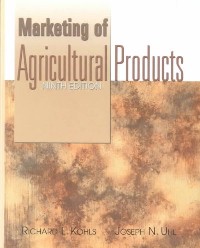
Marketing of Agricultural Products / 9th ed.
副标题:无
作 者:Richard L. Kohls and Joseph N. Uhl
分类号:
ISBN:9780130105844
微信扫一扫,移动浏览光盘
简介
TVS: Geared towards readers with little or no experience, this text strikes a balanced treatment between the facts, principles, and values involved in food marketing. It blends economic, marketing, and institutional approaches to provide the foundation needed by today's readers.
目录
Table Of Contents:
Preface xiii
About the Authors xv
PART I THE FRAMEWORK OF THE MARKETING PROBLEM 1(62)
Introduction to Food Marketing 3(18)
Objectives 3(1)
What Is Marketing? 4(1)
Marketing Is Complex and Costly 4(3)
Marketing Defined 7(1)
Marketing as a Value-Added Process 8(1)
Food Marketing Career Opportunities 9(1)
The Marketing Process 10(2)
Alternative Perspectives of Food Marketing 12(2)
Growth and Role of Marketing 14(1)
Food Marketing in the Market Economy 15(1)
Historical Benchmarks in Food Marketing 16(3)
Summary 19(1)
Key Terms and Concepts 19(1)
Discussion Questions 19(1)
Selected References 20(1)
Analyzing Agricultural and Food Markets 21(23)
Objectives 21(1)
Approaches to the Study of Food Marketing 22(10)
Food Marketing Management 32(1)
Analyzing Market Performance in the Food Industry 33(2)
Food Marketing Efficiency 35(2)
Consumers and Food Marketing 37(2)
Food Marketing Trends and Issues 39(2)
Summary 41(1)
Key Terms and Concepts 42(1)
Discussion Questions 42(1)
Selected References 43(1)
Agricultural Production and Marketing 44(19)
Objectives 44(1)
The Agricultural Plant 45(2)
The Structure of U.S. Agriculture 47(3)
Characteristics of the Product 50(2)
Characteristics of Production 52(4)
The Farm Marketing Problems 56(2)
Farm Marketing Alternatives 58(2)
Summary 60(1)
Key Terms and Concepts 61(1)
Discussion Questions 61(1)
Selected References 61(2)
PART II FOOD MARKETS AND INSTITUTIONS 63(72)
Food Consumption and Marketing 65(16)
Objectives 65(1)
Understanding Food Preferences 66(1)
Food Consumption and Expenditure Patterns 67(2)
The Demographics of Food Consumption 69(3)
Income and Food Consumption 72(3)
Diet, Health, and Food Marketing 75(1)
The Away-from-Home Food Market 76(2)
Public Food Programs 78(1)
Summary 78(1)
Key Terms and Concepts 79(1)
Discussion Questions 79(1)
Selected References 79(2)
Food Processing and Manufacturing 81(15)
Objectives 81(1)
Marketing Management in Food Manufacturing 82(4)
The Structure of Food Manufacturing 86(3)
The Location of Food Processing 89(1)
The Law of Market Areas 90(1)
Food Science and Marketing 91(1)
Management Problems of Food Processors 92(2)
Summary 94(1)
Key Terms and Concepts 94(1)
Discussion Questions 94(1)
Selected References 95(1)
Food Wholesaling and Retailing 96(21)
Objectives 96(1)
Principal Trends in Food Wholesaling and Retailing 97(1)
Food Wholesaling 98(3)
Food Retailing 101(3)
The Changing Nature of Foodstores 104(6)
Competition and Pricing in Food Retailing 110(2)
Marketing Implications of Retailing Developments 112(2)
The Foodservice Market 114(1)
Summary 115(1)
Key Terms and Concepts 115(1)
Discussion Questions 115(1)
Selected References 116(1)
The International Food Market 117(18)
Objectives 117(1)
Contributions of Agricultural Trade 118(1)
The Economic Reasons for Trade 119(4)
U.S. Farm Product Exports 123(1)
U.S. Food Imports 124(2)
America's Competitive Position in World Food Trade 126(1)
Foreign Investment in the Global Food Industry 127(1)
Agricultural Trade Policy 128(4)
Summary 132(1)
Key Terms and Concepts 133(1)
Discussion Questions 133(1)
Selected References 134(1)
PART III PRICES AND MARKETING COSTS 135(82)
Price Analysis and the Exchange Function 137(29)
Objectives 137(1)
Role of Prices in the Competitive Economy 137(1)
Relative Prices and Food Marketing Decisions 138(2)
Supply and Demand Analysis 140(13)
Applications of Supply and Demand Analysis 153(1)
Who Benefits from Cost-Reducing Farm Technology? 154(5)
Marketing and the Law of One Price 159(3)
Price Discovery 162(1)
Summary 163(1)
Key Terms and Concepts 164(1)
Discussion Questions 164(1)
Selected References 165(1)
Competition in Food Markets 166(13)
Objectives 166(1)
Types of Competition 167(1)
Perfect Competition 168(1)
Monopoly 169(1)
Oligopoly 170(1)
Monopolistic Competition 171(1)
Market Structure and Performance 171(1)
Competitive Conditions in Food Markets 172(3)
Workable Competition 175(2)
Summary 177(1)
Key Terms and Concepts 177(1)
Discussion Questions 177(1)
Selected References 178(1)
Farm and Food Prices 179(17)
Objectives 179(1)
Forces Influencing Farm Prices 180(1)
General Food Price Trends and Relationships 180(4)
Commodity Price Fluctuations 184(1)
Farm Prices and Costs over the Business Cycle 185(3)
Agricultural Price Cycles 188(3)
Seasonal Price Variations 191(2)
Farm Income and Prices 193(1)
Summary 194(1)
Key Terms and Concepts 194(1)
Discussion Questions 194(1)
Selected References 195(1)
Food Marketing Costs 196(21)
Objectives 196(1)
The Food Marketing Margin 197(1)
The Food Marketing Bill 198(2)
Cost Components of the Marketing Bill 200(5)
The Marketing Cost Index 205(1)
Farm-Retail Price Spreads 205(1)
The Farmer's Share 206(4)
Interrelationships of the Marketing Margin and Food Prices 210(2)
The Future of Food Marketing Costs 212(2)
Summary 214(1)
Key Terms and Concepts 215(1)
Discussion Questions 215(1)
Selected References 215(2)
PART IV FUNCTIONAL AND ORGANIZATIONAL ISSUES 217(148)
The Changing Organization of Food Markets 219(19)
Objectives 219(1)
Vertical Coordination in Food Markets 219(2)
Specialization and Diversification in Food Markets 221(3)
Decentralization of Food Markets 224(4)
Integration of Food Markets 228(2)
Food Industry Mergers and Alliances 230(1)
Integration into Farming 231(4)
Future Organization of Food Markets 235(1)
Summary 236(1)
Key Terms and Concepts 236(1)
Discussion Questions 236(1)
Selected References 237(1)
Cooperatives in the Food Industry 238(17)
Objectives 238(1)
What Is a Cooperative? 239(1)
Kinds of Cooperative Business 240(2)
Types of Cooperative Organizations 242(2)
History and Status of American Cooperation 244(2)
Cooperation by Regions and Commodities 246(1)
Purposes of Cooperatives 247(2)
Problems of Modern Cooperatives 249(3)
Consumer Food Cooperatives 252(1)
Summary 253(1)
Key Terms and Concepts 253(1)
Discussion Questions 253(1)
Selected References 254(1)
Market Development and Demand Expansion 255(15)
Objectives 255(1)
Market Development in the Food Industry 256(1)
Varieties of Food Demand 257(1)
Roles and Criticisms of Advertising 258(1)
Advertising in the Food System 259(2)
Farmers and Market Development 261(4)
Expanding Nonfood Uses for Agricultural Products 265(1)
Synthetics and Agricultural Substitutes 266(1)
Public Food Programs 267(1)
Summary 268(1)
Key Terms and Concepts 268(1)
Discussion Questions 269(1)
Selected References 269(1)
Market and Bargaining Power 270(16)
Objectives 270(1)
Market Power in the Food Industry 271(4)
Marketing Orders and Agreements 275(6)
Cooperative Bargaining Associations 281(2)
Marketing Boards 283(1)
Summary 283(1)
Key Terms and Concepts 284(1)
Discussion Questions 284(1)
Selected References 284(2)
Market Information 286(14)
Objectives 286(1)
Roles of Market Information 287(1)
Public and Private Food Market Information 287(1)
Criteria for Evaluating Market Information 288(1)
U.S. Department of Agriculture Information Programs 289(5)
Problems of Market News and Information 294(2)
Criticism of Market Information Programs 296(1)
Information Users' Responsibilities 297(1)
Summary 297(1)
Key Terms and Concepts 298(1)
Discussion Questions 298(1)
Selected References 298(2)
Standardization and Grading 300(18)
Objectives 300(1)
Standardization in the Food Industry 301(1)
Food Quality Grades and Standards 301(2)
Market Impacts of Standardization 303(3)
Government and Food Quality Standards 306(3)
Objectives and Problems of Food Quality Grading 309(5)
Farmers and Uniform Grading 314(1)
Marketing Agencies and Food Grading 315(1)
Consumers and Food Grades 315(1)
Summary 316(1)
Key Terms and Concepts 316(1)
Discussion Questions 316(2)
Transportation 318(14)
Objectives 318(1)
Transportation for the Food Industry 319(2)
Alternative Modes of Transportation 321(2)
Transportation Regulation and Freight Rates 323(3)
Food Prices and Transportation Costs 326(1)
Reducing the Food Transportation Bill 327(3)
Summary 330(1)
Key Terms and Concepts 330(1)
Discussion Questions 331(1)
Storage 332(10)
Objectives 332(1)
Food Stocks, Carryover, and Reserves 333(2)
Storage Operations 335(1)
Who Should Store? 336(1)
Improving Food Storage 337(3)
Summary 340(1)
Key Terms and Concepts 341(1)
Discussion Questions 341(1)
Risk Management and the Futures Market 342(23)
Objectives 342(1)
Types of Market Risk 342(2)
The Futures Market 344(4)
Relationships between Cash and Futures Prices 348(1)
Hedging and Risk Management 349(5)
Forward Contracts and Futures Contracts 354(1)
Agricultural Options 355(2)
Futures Market Participants 357(1)
The Futures Market Controversies 358(2)
Is Speculation a Fair Game? 360(1)
Public Regulation of Futures Trading 361(1)
Summary 362(1)
Key Terms and Concepts 362(1)
Discussion Questions 362(1)
Selected References 363(2)
PART V THE GOVERNMENT AND FOOD MARKETING 365(32)
Government Price, Income, and Marketing Programs 367(15)
Objectives 367(1)
Rationale for Government Market Intervention 368(1)
The Evolution of U.S. Farm Price and Income Policy 369(7)
Parity 376(1)
Analysis of Farm Price and Income Support Programs 376(3)
Impacts of Farm Programs on Marketing 379(1)
Summary 380(1)
Key Terms and Concepts 380(1)
Discussion Questions 381(1)
Selected References 381(1)
Food Marketing Regulations 382(15)
Objectives 382(1)
Issues in Market Regulation 383(1)
Regulations to Maintain and Police Competition 384(2)
Regulations to Control or Offset Monopoly Conditions 386(1)
Regulations to Facilitate Trade and Provide Services 387(1)
Regulations to Protect and Promote Consumer Health and Safety 388(4)
Regulations That Directly Affect Food Prices 392(1)
Regulations to Foster Economic and Social Progress 393(1)
The Regulatory Agencies 394(1)
The Future of Food Marketing Regulations 395(1)
Summary 395(1)
Key Laws and Regulations 395(1)
Discussion Questions 396(1)
Selected References 396(1)
PART VI COMMODITY MARKETING 397(114)
Livestock and Meat Marketing 399(21)
Objectives 399(1)
Livestock Production 400(2)
Growth of Specialized Feedlots 402(3)
Livestock Products and Meat Consumption 405(2)
Livestock Assembly Operations 407(1)
Decentralization in the Livestock and Meat Packing Industries 408(3)
Meat Packing and Processing 411(1)
Meat Wholesaling and Retailing 412(1)
Standardization and Grading of Livestock and Meat 413(2)
Livestock Futures and Options 415(1)
Meat Marketing Costs 416(1)
Livestock Marketing Problems 417(1)
Summary 417(1)
Key Terms and Concepts 418(1)
Discussion Questions 418(1)
Selected References 418(2)
Milk and Dairy Product Marketing 420(15)
Objectives 420(1)
Milk Production and Use 421(1)
Milk Products and Consumption 422(2)
Country Assembly of Milk 424(1)
Milk Pricing 424(6)
Fluid Milk Channels 430(1)
Processed Dairy Product Channels 431(1)
Summary 432(1)
Key Terms and Concepts 433(1)
Discussion Questions 433(1)
Selected References 434(1)
Poultry and Egg Marketing 435(15)
Objectives 435(1)
Production Patterns 436(2)
Poultry Products, Consumption, and Prices 438(3)
Integration in the Poultry Industry 441(2)
Poultry and Egg Marketing Channels 443(1)
Marketing Costs 444(1)
Industry Problems 445(3)
Summary 448(1)
Key Terms and Concepts 448(1)
Discussion Questions 448(1)
Selected References 449(1)
Grain Marketing 450(19)
Objectives 450(1)
Grain Production and Uses 451(4)
The Marketing Channels 455(5)
Country Grain Buying and Merchandising 460(1)
Grain Grading 460(2)
Grain Storage 462(1)
Structure and Competition in the Grain and Oilseed Product Industries 463(2)
The International Grain Trade 465(1)
Grain Policy 466(1)
Summary 466(1)
Key Terms and Concepts 466(1)
Discussion Questions 467(1)
Selected References 467(2)
Cotton and Textile Marketing 469(10)
Objectives 469(1)
Cotton Production 470(1)
Consumption Trends 471(4)
Cotton Trade 475(1)
Cotton Marketing Margins and Prices 476(1)
Problems in Cotton Marketing 476(1)
Summary 477(1)
Key Terms and Concepts 477(1)
Discussion Questions 477(1)
Selected References 478(1)
Tobacco and Tobacco Product Marketing 479(12)
Objectives 479(1)
Tobacco Production 480(1)
Tobacco Consumption 481(2)
Marketing Channels and Methods 483(3)
Tobacco Trade 486(1)
Supply Control and Price Support Programs 486(2)
Tobacco Marketing Problems 488(1)
Summary 489(1)
Key Terms and Concepts 489(1)
Discussion Questions 490(1)
Selected References 490(1)
Fruit and Vegetable Marketing 491(20)
Objectives 491(1)
Fruit and Vegetable Production 492(1)
Fruit and Vegetable Consumption 493(3)
Factors Influencing Fruit and Vegetable Marketing 496(5)
Fresh Fruit and Vegetable Marketing Channels 501(4)
Processed Fruit and Vegetable Marketing Channels 505(1)
International Trade in Fruits and Vegetables 506(2)
Marketing Costs and Farm Share 508(1)
Summary 509(1)
Key Terms and Concepts 509(1)
Discussion Questions 509(1)
Selected References 510(1)
Glossary 511(22)
Index 533
Preface xiii
About the Authors xv
PART I THE FRAMEWORK OF THE MARKETING PROBLEM 1(62)
Introduction to Food Marketing 3(18)
Objectives 3(1)
What Is Marketing? 4(1)
Marketing Is Complex and Costly 4(3)
Marketing Defined 7(1)
Marketing as a Value-Added Process 8(1)
Food Marketing Career Opportunities 9(1)
The Marketing Process 10(2)
Alternative Perspectives of Food Marketing 12(2)
Growth and Role of Marketing 14(1)
Food Marketing in the Market Economy 15(1)
Historical Benchmarks in Food Marketing 16(3)
Summary 19(1)
Key Terms and Concepts 19(1)
Discussion Questions 19(1)
Selected References 20(1)
Analyzing Agricultural and Food Markets 21(23)
Objectives 21(1)
Approaches to the Study of Food Marketing 22(10)
Food Marketing Management 32(1)
Analyzing Market Performance in the Food Industry 33(2)
Food Marketing Efficiency 35(2)
Consumers and Food Marketing 37(2)
Food Marketing Trends and Issues 39(2)
Summary 41(1)
Key Terms and Concepts 42(1)
Discussion Questions 42(1)
Selected References 43(1)
Agricultural Production and Marketing 44(19)
Objectives 44(1)
The Agricultural Plant 45(2)
The Structure of U.S. Agriculture 47(3)
Characteristics of the Product 50(2)
Characteristics of Production 52(4)
The Farm Marketing Problems 56(2)
Farm Marketing Alternatives 58(2)
Summary 60(1)
Key Terms and Concepts 61(1)
Discussion Questions 61(1)
Selected References 61(2)
PART II FOOD MARKETS AND INSTITUTIONS 63(72)
Food Consumption and Marketing 65(16)
Objectives 65(1)
Understanding Food Preferences 66(1)
Food Consumption and Expenditure Patterns 67(2)
The Demographics of Food Consumption 69(3)
Income and Food Consumption 72(3)
Diet, Health, and Food Marketing 75(1)
The Away-from-Home Food Market 76(2)
Public Food Programs 78(1)
Summary 78(1)
Key Terms and Concepts 79(1)
Discussion Questions 79(1)
Selected References 79(2)
Food Processing and Manufacturing 81(15)
Objectives 81(1)
Marketing Management in Food Manufacturing 82(4)
The Structure of Food Manufacturing 86(3)
The Location of Food Processing 89(1)
The Law of Market Areas 90(1)
Food Science and Marketing 91(1)
Management Problems of Food Processors 92(2)
Summary 94(1)
Key Terms and Concepts 94(1)
Discussion Questions 94(1)
Selected References 95(1)
Food Wholesaling and Retailing 96(21)
Objectives 96(1)
Principal Trends in Food Wholesaling and Retailing 97(1)
Food Wholesaling 98(3)
Food Retailing 101(3)
The Changing Nature of Foodstores 104(6)
Competition and Pricing in Food Retailing 110(2)
Marketing Implications of Retailing Developments 112(2)
The Foodservice Market 114(1)
Summary 115(1)
Key Terms and Concepts 115(1)
Discussion Questions 115(1)
Selected References 116(1)
The International Food Market 117(18)
Objectives 117(1)
Contributions of Agricultural Trade 118(1)
The Economic Reasons for Trade 119(4)
U.S. Farm Product Exports 123(1)
U.S. Food Imports 124(2)
America's Competitive Position in World Food Trade 126(1)
Foreign Investment in the Global Food Industry 127(1)
Agricultural Trade Policy 128(4)
Summary 132(1)
Key Terms and Concepts 133(1)
Discussion Questions 133(1)
Selected References 134(1)
PART III PRICES AND MARKETING COSTS 135(82)
Price Analysis and the Exchange Function 137(29)
Objectives 137(1)
Role of Prices in the Competitive Economy 137(1)
Relative Prices and Food Marketing Decisions 138(2)
Supply and Demand Analysis 140(13)
Applications of Supply and Demand Analysis 153(1)
Who Benefits from Cost-Reducing Farm Technology? 154(5)
Marketing and the Law of One Price 159(3)
Price Discovery 162(1)
Summary 163(1)
Key Terms and Concepts 164(1)
Discussion Questions 164(1)
Selected References 165(1)
Competition in Food Markets 166(13)
Objectives 166(1)
Types of Competition 167(1)
Perfect Competition 168(1)
Monopoly 169(1)
Oligopoly 170(1)
Monopolistic Competition 171(1)
Market Structure and Performance 171(1)
Competitive Conditions in Food Markets 172(3)
Workable Competition 175(2)
Summary 177(1)
Key Terms and Concepts 177(1)
Discussion Questions 177(1)
Selected References 178(1)
Farm and Food Prices 179(17)
Objectives 179(1)
Forces Influencing Farm Prices 180(1)
General Food Price Trends and Relationships 180(4)
Commodity Price Fluctuations 184(1)
Farm Prices and Costs over the Business Cycle 185(3)
Agricultural Price Cycles 188(3)
Seasonal Price Variations 191(2)
Farm Income and Prices 193(1)
Summary 194(1)
Key Terms and Concepts 194(1)
Discussion Questions 194(1)
Selected References 195(1)
Food Marketing Costs 196(21)
Objectives 196(1)
The Food Marketing Margin 197(1)
The Food Marketing Bill 198(2)
Cost Components of the Marketing Bill 200(5)
The Marketing Cost Index 205(1)
Farm-Retail Price Spreads 205(1)
The Farmer's Share 206(4)
Interrelationships of the Marketing Margin and Food Prices 210(2)
The Future of Food Marketing Costs 212(2)
Summary 214(1)
Key Terms and Concepts 215(1)
Discussion Questions 215(1)
Selected References 215(2)
PART IV FUNCTIONAL AND ORGANIZATIONAL ISSUES 217(148)
The Changing Organization of Food Markets 219(19)
Objectives 219(1)
Vertical Coordination in Food Markets 219(2)
Specialization and Diversification in Food Markets 221(3)
Decentralization of Food Markets 224(4)
Integration of Food Markets 228(2)
Food Industry Mergers and Alliances 230(1)
Integration into Farming 231(4)
Future Organization of Food Markets 235(1)
Summary 236(1)
Key Terms and Concepts 236(1)
Discussion Questions 236(1)
Selected References 237(1)
Cooperatives in the Food Industry 238(17)
Objectives 238(1)
What Is a Cooperative? 239(1)
Kinds of Cooperative Business 240(2)
Types of Cooperative Organizations 242(2)
History and Status of American Cooperation 244(2)
Cooperation by Regions and Commodities 246(1)
Purposes of Cooperatives 247(2)
Problems of Modern Cooperatives 249(3)
Consumer Food Cooperatives 252(1)
Summary 253(1)
Key Terms and Concepts 253(1)
Discussion Questions 253(1)
Selected References 254(1)
Market Development and Demand Expansion 255(15)
Objectives 255(1)
Market Development in the Food Industry 256(1)
Varieties of Food Demand 257(1)
Roles and Criticisms of Advertising 258(1)
Advertising in the Food System 259(2)
Farmers and Market Development 261(4)
Expanding Nonfood Uses for Agricultural Products 265(1)
Synthetics and Agricultural Substitutes 266(1)
Public Food Programs 267(1)
Summary 268(1)
Key Terms and Concepts 268(1)
Discussion Questions 269(1)
Selected References 269(1)
Market and Bargaining Power 270(16)
Objectives 270(1)
Market Power in the Food Industry 271(4)
Marketing Orders and Agreements 275(6)
Cooperative Bargaining Associations 281(2)
Marketing Boards 283(1)
Summary 283(1)
Key Terms and Concepts 284(1)
Discussion Questions 284(1)
Selected References 284(2)
Market Information 286(14)
Objectives 286(1)
Roles of Market Information 287(1)
Public and Private Food Market Information 287(1)
Criteria for Evaluating Market Information 288(1)
U.S. Department of Agriculture Information Programs 289(5)
Problems of Market News and Information 294(2)
Criticism of Market Information Programs 296(1)
Information Users' Responsibilities 297(1)
Summary 297(1)
Key Terms and Concepts 298(1)
Discussion Questions 298(1)
Selected References 298(2)
Standardization and Grading 300(18)
Objectives 300(1)
Standardization in the Food Industry 301(1)
Food Quality Grades and Standards 301(2)
Market Impacts of Standardization 303(3)
Government and Food Quality Standards 306(3)
Objectives and Problems of Food Quality Grading 309(5)
Farmers and Uniform Grading 314(1)
Marketing Agencies and Food Grading 315(1)
Consumers and Food Grades 315(1)
Summary 316(1)
Key Terms and Concepts 316(1)
Discussion Questions 316(2)
Transportation 318(14)
Objectives 318(1)
Transportation for the Food Industry 319(2)
Alternative Modes of Transportation 321(2)
Transportation Regulation and Freight Rates 323(3)
Food Prices and Transportation Costs 326(1)
Reducing the Food Transportation Bill 327(3)
Summary 330(1)
Key Terms and Concepts 330(1)
Discussion Questions 331(1)
Storage 332(10)
Objectives 332(1)
Food Stocks, Carryover, and Reserves 333(2)
Storage Operations 335(1)
Who Should Store? 336(1)
Improving Food Storage 337(3)
Summary 340(1)
Key Terms and Concepts 341(1)
Discussion Questions 341(1)
Risk Management and the Futures Market 342(23)
Objectives 342(1)
Types of Market Risk 342(2)
The Futures Market 344(4)
Relationships between Cash and Futures Prices 348(1)
Hedging and Risk Management 349(5)
Forward Contracts and Futures Contracts 354(1)
Agricultural Options 355(2)
Futures Market Participants 357(1)
The Futures Market Controversies 358(2)
Is Speculation a Fair Game? 360(1)
Public Regulation of Futures Trading 361(1)
Summary 362(1)
Key Terms and Concepts 362(1)
Discussion Questions 362(1)
Selected References 363(2)
PART V THE GOVERNMENT AND FOOD MARKETING 365(32)
Government Price, Income, and Marketing Programs 367(15)
Objectives 367(1)
Rationale for Government Market Intervention 368(1)
The Evolution of U.S. Farm Price and Income Policy 369(7)
Parity 376(1)
Analysis of Farm Price and Income Support Programs 376(3)
Impacts of Farm Programs on Marketing 379(1)
Summary 380(1)
Key Terms and Concepts 380(1)
Discussion Questions 381(1)
Selected References 381(1)
Food Marketing Regulations 382(15)
Objectives 382(1)
Issues in Market Regulation 383(1)
Regulations to Maintain and Police Competition 384(2)
Regulations to Control or Offset Monopoly Conditions 386(1)
Regulations to Facilitate Trade and Provide Services 387(1)
Regulations to Protect and Promote Consumer Health and Safety 388(4)
Regulations That Directly Affect Food Prices 392(1)
Regulations to Foster Economic and Social Progress 393(1)
The Regulatory Agencies 394(1)
The Future of Food Marketing Regulations 395(1)
Summary 395(1)
Key Laws and Regulations 395(1)
Discussion Questions 396(1)
Selected References 396(1)
PART VI COMMODITY MARKETING 397(114)
Livestock and Meat Marketing 399(21)
Objectives 399(1)
Livestock Production 400(2)
Growth of Specialized Feedlots 402(3)
Livestock Products and Meat Consumption 405(2)
Livestock Assembly Operations 407(1)
Decentralization in the Livestock and Meat Packing Industries 408(3)
Meat Packing and Processing 411(1)
Meat Wholesaling and Retailing 412(1)
Standardization and Grading of Livestock and Meat 413(2)
Livestock Futures and Options 415(1)
Meat Marketing Costs 416(1)
Livestock Marketing Problems 417(1)
Summary 417(1)
Key Terms and Concepts 418(1)
Discussion Questions 418(1)
Selected References 418(2)
Milk and Dairy Product Marketing 420(15)
Objectives 420(1)
Milk Production and Use 421(1)
Milk Products and Consumption 422(2)
Country Assembly of Milk 424(1)
Milk Pricing 424(6)
Fluid Milk Channels 430(1)
Processed Dairy Product Channels 431(1)
Summary 432(1)
Key Terms and Concepts 433(1)
Discussion Questions 433(1)
Selected References 434(1)
Poultry and Egg Marketing 435(15)
Objectives 435(1)
Production Patterns 436(2)
Poultry Products, Consumption, and Prices 438(3)
Integration in the Poultry Industry 441(2)
Poultry and Egg Marketing Channels 443(1)
Marketing Costs 444(1)
Industry Problems 445(3)
Summary 448(1)
Key Terms and Concepts 448(1)
Discussion Questions 448(1)
Selected References 449(1)
Grain Marketing 450(19)
Objectives 450(1)
Grain Production and Uses 451(4)
The Marketing Channels 455(5)
Country Grain Buying and Merchandising 460(1)
Grain Grading 460(2)
Grain Storage 462(1)
Structure and Competition in the Grain and Oilseed Product Industries 463(2)
The International Grain Trade 465(1)
Grain Policy 466(1)
Summary 466(1)
Key Terms and Concepts 466(1)
Discussion Questions 467(1)
Selected References 467(2)
Cotton and Textile Marketing 469(10)
Objectives 469(1)
Cotton Production 470(1)
Consumption Trends 471(4)
Cotton Trade 475(1)
Cotton Marketing Margins and Prices 476(1)
Problems in Cotton Marketing 476(1)
Summary 477(1)
Key Terms and Concepts 477(1)
Discussion Questions 477(1)
Selected References 478(1)
Tobacco and Tobacco Product Marketing 479(12)
Objectives 479(1)
Tobacco Production 480(1)
Tobacco Consumption 481(2)
Marketing Channels and Methods 483(3)
Tobacco Trade 486(1)
Supply Control and Price Support Programs 486(2)
Tobacco Marketing Problems 488(1)
Summary 489(1)
Key Terms and Concepts 489(1)
Discussion Questions 490(1)
Selected References 490(1)
Fruit and Vegetable Marketing 491(20)
Objectives 491(1)
Fruit and Vegetable Production 492(1)
Fruit and Vegetable Consumption 493(3)
Factors Influencing Fruit and Vegetable Marketing 496(5)
Fresh Fruit and Vegetable Marketing Channels 501(4)
Processed Fruit and Vegetable Marketing Channels 505(1)
International Trade in Fruits and Vegetables 506(2)
Marketing Costs and Farm Share 508(1)
Summary 509(1)
Key Terms and Concepts 509(1)
Discussion Questions 509(1)
Selected References 510(1)
Glossary 511(22)
Index 533
Marketing of Agricultural Products / 9th ed.
- 名称
- 类型
- 大小
光盘服务联系方式: 020-38250260 客服QQ:4006604884
云图客服:
用户发送的提问,这种方式就需要有位在线客服来回答用户的问题,这种 就属于对话式的,问题是这种提问是否需要用户登录才能提问
Video Player
×
Audio Player
×
pdf Player
×
