

简介
Summary:
Publisher Summary 1
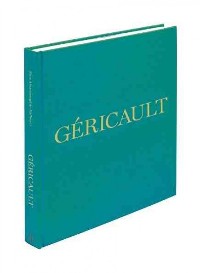
A pioneer of the French Romantic movement, the painter, draughtsman and lithographer Theodore Gericault (1791--1824) remains among the most compelling and troubled figures in Western art. His varied oeuvre--which has consistently defied easy definition -- continues to enthrall audiences, artists and critics alike.
Drawn to subjects of violence and horror, Gericault responded to the turbulent history of France as Napoleon's Empire ceded to a restored Monarchy -- perhaps its most scandalous event was the plight of the shipwrecked victims depicted in his towering masterpiece The Raft of the Medium. Gericault was committed to capturing contemporary life with imaginative verve, taking a deep interest in extreme states and the depths of the human mind, especially as revealed by the medical sciences. These concerns inspired his late, haunting portrayals of monomaniacs. Equally significant was Gericault's passion for the wild imagery of horses, which prompted some of the epoch's greatest equestrian portraits and history paintings.
This comprehensive monograph explores all of Gericault's best-known works, including examples from his remarkable sketchbooks, and sets his artistic originality in its dramatic social and cultural contexts.
Nina Athanassoglou-Kallmyer is currently Professor and Chair of Art History at the University of Delaware. She has published extensively on French nineteenth-century art, including essays on Gericault, Horace Vernet, Delacroix, and Cezanne, and three books: French Images from the Greek War of Independence: Art and Politics under the Restoration (1989), which was a runner up for the CINOA award; Eugene Delacroix: Prints, Politics and Satire (1991); and Cezanne and Provence: The Painter in his Culture (2003), which was a finalist for the College Art Association's Charles Rufus Morey Book Award in 2004.
Publisher Summary 2
A widely-published specialist in 19th-century French painting and an engaging writer, Athanassoglou-Kallmyer (art history, U. of Delaware) has written a study on the French Romantic painter that fully conveys the political unrest and violence in France during the early 19th century, Gericault's political views and engagement, his artistic training and influences, and the unique sensibility he brought to the Romantic movement. The work, which is lavishly illustrated with color plates of his paintings and drawings, concludes with a chapter on the Gericault's reputation after his death, including details of the ownership of his most well known work. This is a compelling book, one that introduces the reader not only to a deservedly famous painter, but also to the complex and intensely political events and beliefs of his time. Published in an oversized format (10.25x11.75"), the volume concludes with short biographies of notable figures in the text, a bibliography, and a glossary. Annotation 漏2011 Book News, Inc., Portland, OR (booknews.com)
Publisher Summary 3
This new monograph explores the life and works of Theodore Gericault (1791-1824), whose compelling career and legacy continue to captivate audiences, artists, and critics alike. In her comprehensive survey, Nina Athanassoglou-Kallmyer pays tribute to established Gericault scholarship while reassessing the career of an artist too easily miscast as the archetypal 'tortured soul' of art-historical Romantic mythology. She examines Gericault's career in the context of France under the Restauration, during which Louis XVIII s controversial rule resulted in vigorous popular debate over civic structures, the political process, and even aesthetic categories. Gericault immersed himself in these polemics, taking an intense interest in the fait divers, or 'daily happenings', of his time. The author explores his interest in medical and psychiatric science (as exemplified by a series of portraits of mental patients), his empathy for the poor and dispossessed (the subject of numerous lithographs), and the entrepreneurial spirit that led him to exhibit his epic canvas, the Raft of the Medusa, in London as a commercial venture. Gericault is presented as an artist committed to capturing contemporary life with creative integrity and dramatic verve.
Born into a provincial middle-class family, Gericault used an inheritance from his mother's death to pursue his artistic vocation, training first under Vernet and Guerin before spending four years on his own course of independent study. His choice of Renaissance and Baroque masters such as Titian, Caravaggio, and Rubens as models shaped his aesthetic agenda and encouraged him to break away from the Neoclassicism favored by his early tutors. Further influenced by a vogue for modern, military subjects, Gericault presented himself at the 1812 Salon with the dashing Charging Chasseur, a critical success that the artist was unable to repeat when he presented again at the Salon three years later. A period of stylistic experimentation followed: Gericault traveled to Rome to absorb classical examples and strove to develop his 'grand' style. The effort spent in Rome served Gericault well when he returned to France and began work on the Raft of the Medusa, a politically charged project that absorbed the painter in obsessive study for more than a year. In her analysis of this enduring image, Athanassoglou-Kallmyer addresses the perception of Gericault as a tragic figure, drawn by temperament to the depiction of morbid and macabre themes, discussing this painting among others in the context of Romantic taste for the 'Gothic' and its political and artistic implications.
Gericault suffered a nervous breakdown in 1819, following the Medusa'sdisappointing reception at the Salon, and retreated to England, where he abandoned grand projects in favor of lighter, more fashionable work. It was not until 1823, on his deathbed, that Gericault's interest in large-scale work was revived and he produced a wealth of sketches for future compositions. These plans, full of energy and drama, serve to suggest why this immensely talented artist has continued to influence artists from the time of his death to the present.
目录
Table Of Contents:
Introduction
Man of his Time 7(6)
1 The Spectacle of War
Beginnings in Life and Art 13(36)
2 `C'est de l'antique moderne'
Gericault and Italy 49(36)
3 Military Martyrs and Military Rebels
Gericault and the Liberal Ideal 85(32)
4 The Politics of Horror
Creating The Raft of the Medusa 117(34)
5 Of England and the English
The Raft of the Medusa in London 151(34)
6 The Reason of Unreason
Portraits of the Insane 185(22)
7 The End and After
Histories of Gericault 207(13)
Chronology 220(3)
Biographies 223(3)
Glossary 226(1)
Bibliography 227(2)
Index 229(3)
Acknowledgements 232
Introduction
Man of his Time 7(6)
1 The Spectacle of War
Beginnings in Life and Art 13(36)
2 `C'est de l'antique moderne'
Gericault and Italy 49(36)
3 Military Martyrs and Military Rebels
Gericault and the Liberal Ideal 85(32)
4 The Politics of Horror
Creating The Raft of the Medusa 117(34)
5 Of England and the English
The Raft of the Medusa in London 151(34)
6 The Reason of Unreason
Portraits of the Insane 185(22)
7 The End and After
Histories of Gericault 207(13)
Chronology 220(3)
Biographies 223(3)
Glossary 226(1)
Bibliography 227(2)
Index 229(3)
Acknowledgements 232
- 名称
- 类型
- 大小
光盘服务联系方式: 020-38250260 客服QQ:4006604884
云图客服:
用户发送的提问,这种方式就需要有位在线客服来回答用户的问题,这种 就属于对话式的,问题是这种提问是否需要用户登录才能提问
Video Player
×
Audio Player
×
pdf Player
×
