

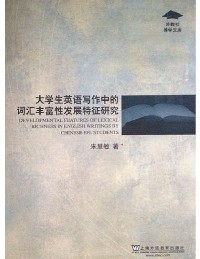
Developmental features of lexical richness in english writings by Chinese efl students
副标题:无
作 者:朱慧敏著
分类号:
ISBN:9787544634410
微信扫一扫,移动浏览光盘
简介
朱慧敏编著的《大学生英语写作中的词汇丰富性发展特征研究/外教社博学文库》在自建语料库的基础上,以横断与纵贯为视角,采用定量与定性的方法,外宏观与微观研究相结合,深入研究了中国高校英语专业学生英语写作中的词汇丰富性发展特征,包括词汇变化性、词汇密度、词汇复杂性、词长、词频分布等方面的内容,探讨了词汇丰富性不同维度与写作质量之间的相关性,比较了横断研究和纵贯研究在词汇丰富性发展特征方面的趋同性与差异性,分析了过度使用词汇在学生作文中的发展特征。《大学生英语写作中的词汇丰富性发展特征研究/外教社博学文库》的研究发现对促进外语教学研究和实践具有重要指导意义和应用价值。
目录
List of Tables
List of Figures
Chapter One Introduction
1.1 Background of the Study
1.2 Rationale for the Study
1.4 Significance of the Study
1.5 Organization of the Book
Chapter Two Literature Review
2.1 Introduction
2.2 Definitions of Lexical Richness
2.3 Measures for Lexical Richness
2.4 Role of Vocabulary in L2 Writing
2.6 Lexical Richness in Writings by L1 and L2 Learners
2.7 Lexical Richness and L2 Writing Quality
2.8 Lexical Features of L2 Writing
2.9 Research Gaps and Research Questions
2.10 Chapter Summary
Chapter Three Methodology
3.1 Introduction
3.2 Special Considerations for Research Design
3.3 Participants
3.4 Source of Data
3.5 Pilot Study
3.6 Procedures for Data Collection
3.7 Building the DIY Corpora
3.8 Data Analysis
3.9 Chapter Summary
Chapter Four Results and Findings of the Cross-sectional
Study
4.1 Introduction
4.2 Features of Lexical Variation
4.3 Features of Lexical Density
4.4 Features of Lexical Sophistication
4.5 Features of Word Length
4.6 Features of Word Frequency Distribution
4.7 Relationship between Lexical Richness and
Overall Writing Performance
4.8 Chapter Summary
Chapter Five Results and Findings of the Longitudinal
Study
5.1 Introduction
5.2 Features of Lexical Variation
5.3 Features of Lexical Density
5.4 Features of Lexical Sophistication
5.5 Features of Word Length
5.6 Features of Word Frequency Distribution
5.7 Relationship between Lexical Richness and
Overall Writing Performance
5.8 Chapter Summary
Chapter Six Results and Findings across the Two Corpora
6.1 Introduction
6.2 Patterns and Discrepancies in Lexical Variation
6.3 Patterns and Discrepancies in Lexical Density
6.4 Patterns and Discrepancies in Lexical Sophistication
6.5 Patterns and Discrepancies in Word Length
6.6 Pattems and Discrepancies in Word Frequency Disl]'ibuUon
6.7 Patterns and Discrepancies in the Relationships between
Lexical Richness and Overall Writing Performance
6.8 Chapter Summary
Chapter Seven Results and Findings of the Case Studies
7.1 Introduction
7.2 Results of KeynessAnalysis
7.3 Developmental Features of "we"
7.4 Developmental Features of "you"
7.5 Developmental Features of "I"
7.6 Developmental Features of "can"
7.7 Developmental Features of "know"
7.8 Developmental Features of "so"
7.9 Chapter Summary
Chapter Eight Discussion
8.1 Introduction
8.2 Overuse of High-frequency Words
8.3 Vocabulary Plateau Phenomenon in Lexical Variation
8.4 Models of Developmental Features of Lexical Richness
8.5 Unbalanced Effects of Lexical Richness on the Overall
Writing Performance
8.6 The Most Overused First and Second Personal Pronouns
8.7 The Most Overused Modal Auxiliary
8.8 The Most Overused Lexical Word
8.9 The Most Overused Multi-function Word
8.10 Chapter Summary
Chapter Nine Conclusion
9.1 Summary of the Study
9.2 Pedagogical Implications
9.3 Limitations of the Study
9.4 Suggestions for Future Studies
9.5 Concluding Remarks
References
Appendix I Prompts of Writing Task
Appendix H Marking Scheme for TEM-4 and
TEM-8 Compositions
Appendix III Stop List
Appendix IV UCREL CLAWS7 Tagset
Acknowledgements
List of Figures
Chapter One Introduction
1.1 Background of the Study
1.2 Rationale for the Study
1.4 Significance of the Study
1.5 Organization of the Book
Chapter Two Literature Review
2.1 Introduction
2.2 Definitions of Lexical Richness
2.3 Measures for Lexical Richness
2.4 Role of Vocabulary in L2 Writing
2.6 Lexical Richness in Writings by L1 and L2 Learners
2.7 Lexical Richness and L2 Writing Quality
2.8 Lexical Features of L2 Writing
2.9 Research Gaps and Research Questions
2.10 Chapter Summary
Chapter Three Methodology
3.1 Introduction
3.2 Special Considerations for Research Design
3.3 Participants
3.4 Source of Data
3.5 Pilot Study
3.6 Procedures for Data Collection
3.7 Building the DIY Corpora
3.8 Data Analysis
3.9 Chapter Summary
Chapter Four Results and Findings of the Cross-sectional
Study
4.1 Introduction
4.2 Features of Lexical Variation
4.3 Features of Lexical Density
4.4 Features of Lexical Sophistication
4.5 Features of Word Length
4.6 Features of Word Frequency Distribution
4.7 Relationship between Lexical Richness and
Overall Writing Performance
4.8 Chapter Summary
Chapter Five Results and Findings of the Longitudinal
Study
5.1 Introduction
5.2 Features of Lexical Variation
5.3 Features of Lexical Density
5.4 Features of Lexical Sophistication
5.5 Features of Word Length
5.6 Features of Word Frequency Distribution
5.7 Relationship between Lexical Richness and
Overall Writing Performance
5.8 Chapter Summary
Chapter Six Results and Findings across the Two Corpora
6.1 Introduction
6.2 Patterns and Discrepancies in Lexical Variation
6.3 Patterns and Discrepancies in Lexical Density
6.4 Patterns and Discrepancies in Lexical Sophistication
6.5 Patterns and Discrepancies in Word Length
6.6 Pattems and Discrepancies in Word Frequency Disl]'ibuUon
6.7 Patterns and Discrepancies in the Relationships between
Lexical Richness and Overall Writing Performance
6.8 Chapter Summary
Chapter Seven Results and Findings of the Case Studies
7.1 Introduction
7.2 Results of KeynessAnalysis
7.3 Developmental Features of "we"
7.4 Developmental Features of "you"
7.5 Developmental Features of "I"
7.6 Developmental Features of "can"
7.7 Developmental Features of "know"
7.8 Developmental Features of "so"
7.9 Chapter Summary
Chapter Eight Discussion
8.1 Introduction
8.2 Overuse of High-frequency Words
8.3 Vocabulary Plateau Phenomenon in Lexical Variation
8.4 Models of Developmental Features of Lexical Richness
8.5 Unbalanced Effects of Lexical Richness on the Overall
Writing Performance
8.6 The Most Overused First and Second Personal Pronouns
8.7 The Most Overused Modal Auxiliary
8.8 The Most Overused Lexical Word
8.9 The Most Overused Multi-function Word
8.10 Chapter Summary
Chapter Nine Conclusion
9.1 Summary of the Study
9.2 Pedagogical Implications
9.3 Limitations of the Study
9.4 Suggestions for Future Studies
9.5 Concluding Remarks
References
Appendix I Prompts of Writing Task
Appendix H Marking Scheme for TEM-4 and
TEM-8 Compositions
Appendix III Stop List
Appendix IV UCREL CLAWS7 Tagset
Acknowledgements
Developmental features of lexical richness in english writings by Chinese efl students
- 名称
- 类型
- 大小
光盘服务联系方式: 020-38250260 客服QQ:4006604884
云图客服:
用户发送的提问,这种方式就需要有位在线客服来回答用户的问题,这种 就属于对话式的,问题是这种提问是否需要用户登录才能提问
Video Player
×
Audio Player
×
pdf Player
×
