

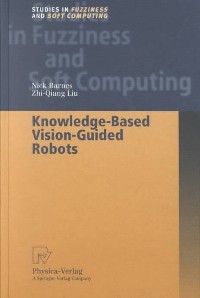
Knowledge-based vision-guided robots /
副标题:无
作 者:Nick Barnes, Zhi-Qiang Liu.
分类号:
ISBN:9783790814941
微信扫一扫,移动浏览光盘
简介
出版日期: 2002年8月1日
目录
Table Of Contents:
Introduction 1(8)
Background 2(2)
A vision-guided approach 2(1)
Computer vision and vision-guided mobile robots 3(1)
Applying high-level computer vision to guide mobile robots 4(1)
Aims of the Research Presented in this Book: A Problem in Robot Vision 4(1)
The Approach of this Book 5(2)
About the Chapters 7(2)
Related Systems and Ideas 9(36)
Basic computer vision approaches 9(2)
Frame-based computer vision 10(1)
Active vision 10(1)
Vision-Guided Mobile Robot Systems 11(20)
Mobile robot subsystems and concepts 12(6)
Mobile robot object recognition 18(1)
Maps and path planning 19(1)
Temporal sequencing for complex tasks 20(1)
Vision-guided mobile robot systems 20(2)
Reactive navigation 22(1)
Model-based vision systems for mobile robots 22(1)
Knowledge-based mobile robotic systems 23(1)
Vision-guided mobile robots using stereo 24(1)
Active perception systems for mobile robots 25(3)
Application of vision-guided mobile robots 28(3)
Computer Vision for Mobile Robots 31(12)
Traditional model-based vision 3D object recognition 32(3)
Shape-from-shading 35(8)
Pose determination 43(1)
Conclusion 43(2)
Embodied Vision For Mobile Robots1 45(18)
Introduction 46(1)
Embodiment 46(1)
Phenomena and noumena 47(1)
The Classical Computer Vision Paradigm 47(2)
Non-Classical Computer Vision 48(1)
Problems with Classical Computer Vision 49(2)
Applying Embodied Concepts in Human Vision 51(2)
Models play an analogous role in computer vision 52(1)
Embodiment of Vision-guided Robots 53(2)
Embodiment, task and environment 54(1)
The role of the task 55(1)
The role of the environment 55(1)
Embodiment for Vision-guided Robots 55(4)
Physical embodiment 56(1)
Embodiment in a task 57(1)
Embodiment in an environment 58(1)
Conclusion 59(4)
Object Recognition Mobile Robot Guidance 63(24)
Introduction 63(2)
Systems Perspective 65(1)
Object Recognition 65(13)
Canonical-views 65(8)
Match verification 73(1)
Edge matching 74(1)
Edge-based features for ground-based robots 74(3)
View prediction 77(1)
Determining Object Pose and Distance 78(7)
Active determination of the sign of θ 82(1)
Error analysis 82(3)
Conclusion 85(2)
Edge Segmentation and Matching 87(22)
Edge Extraction 87(14)
Edge extraction 89(10)
On the choice of window size and quantisation of ρ and θ 99(2)
Edge matching 101(8)
Evaluating matches 101(2)
Spatial elimination 103(1)
Edge coverage 103(2)
Position estimation consistency 105(1)
Geometric verification 105(2)
Quadratic edge extraction 107(1)
Further active processing 107(2)
Knowledge Based Shape from Shading 109(26)
Introduction 110(5)
Motivation and system perspective 111(3)
Assumptions 114(1)
Knowledge-based representation of objects 115(1)
Using Object Model Knowledge for Shape-From-Shading 115(1)
A New Boundary Condition for Shape-From-Shading 116(4)
Knowledge-based Implementation 120(4)
Knowledge / frame topology 120(1)
Fact knowledge 121(2)
Procedural knowledge 123(1)
Shape processing rulebase 124(1)
Experimental Method and Results 124(9)
Synthetic images 124(6)
Real images 130(1)
Domain knowledge 131(2)
Conclusion 133(2)
Supporting Navigation Components 135(12)
Model-based Path Planning 135(7)
Path planning and obstacle avoidance 142(1)
Odometry and Obstacle Avoidance Subsystem 142(5)
Obstacle avoidance strategies 143(2)
Coordinate transforms 145(2)
Fuzzy Control for Active Perceptual Docking 147(18)
Introduction 147(7)
Fuzzy control 148(2)
Fuzzy control for mobile robot control 150(1)
TSK fuzzy model 151(2)
Visual motion-based approaches to mobile robots and the docking problem 153(1)
Direction Control for Robot Docking 154(4)
The log-polar camera 154(1)
Docking for a ground-based robot 155(2)
Noise in the input parameter 157(1)
A Fuzzy Control Scheme 158(1)
Results 159(2)
Conclusion 161(4)
System Results and Case Studies 165(38)
Evaluation of Components 165(18)
Experimental setup 166(1)
View matching 166(2)
Pose determination - power supply 168(12)
Pose determination - model vehicle 180(3)
Case Studies 183(8)
Moving around the corner of an object 183(3)
Distinguishing a particular object among similar objects 186(1)
Docking 186(2)
Object circumnavigation 188(2)
Obstacle avoidance 190(1)
Conclusion 191(12)
Conclusion 203(28)
Limitations of the Research Presented and Future Work 204(3)
Extended quotation from Descartes 207(24)
Index 231
Introduction 1(8)
Background 2(2)
A vision-guided approach 2(1)
Computer vision and vision-guided mobile robots 3(1)
Applying high-level computer vision to guide mobile robots 4(1)
Aims of the Research Presented in this Book: A Problem in Robot Vision 4(1)
The Approach of this Book 5(2)
About the Chapters 7(2)
Related Systems and Ideas 9(36)
Basic computer vision approaches 9(2)
Frame-based computer vision 10(1)
Active vision 10(1)
Vision-Guided Mobile Robot Systems 11(20)
Mobile robot subsystems and concepts 12(6)
Mobile robot object recognition 18(1)
Maps and path planning 19(1)
Temporal sequencing for complex tasks 20(1)
Vision-guided mobile robot systems 20(2)
Reactive navigation 22(1)
Model-based vision systems for mobile robots 22(1)
Knowledge-based mobile robotic systems 23(1)
Vision-guided mobile robots using stereo 24(1)
Active perception systems for mobile robots 25(3)
Application of vision-guided mobile robots 28(3)
Computer Vision for Mobile Robots 31(12)
Traditional model-based vision 3D object recognition 32(3)
Shape-from-shading 35(8)
Pose determination 43(1)
Conclusion 43(2)
Embodied Vision For Mobile Robots1 45(18)
Introduction 46(1)
Embodiment 46(1)
Phenomena and noumena 47(1)
The Classical Computer Vision Paradigm 47(2)
Non-Classical Computer Vision 48(1)
Problems with Classical Computer Vision 49(2)
Applying Embodied Concepts in Human Vision 51(2)
Models play an analogous role in computer vision 52(1)
Embodiment of Vision-guided Robots 53(2)
Embodiment, task and environment 54(1)
The role of the task 55(1)
The role of the environment 55(1)
Embodiment for Vision-guided Robots 55(4)
Physical embodiment 56(1)
Embodiment in a task 57(1)
Embodiment in an environment 58(1)
Conclusion 59(4)
Object Recognition Mobile Robot Guidance 63(24)
Introduction 63(2)
Systems Perspective 65(1)
Object Recognition 65(13)
Canonical-views 65(8)
Match verification 73(1)
Edge matching 74(1)
Edge-based features for ground-based robots 74(3)
View prediction 77(1)
Determining Object Pose and Distance 78(7)
Active determination of the sign of θ 82(1)
Error analysis 82(3)
Conclusion 85(2)
Edge Segmentation and Matching 87(22)
Edge Extraction 87(14)
Edge extraction 89(10)
On the choice of window size and quantisation of ρ and θ 99(2)
Edge matching 101(8)
Evaluating matches 101(2)
Spatial elimination 103(1)
Edge coverage 103(2)
Position estimation consistency 105(1)
Geometric verification 105(2)
Quadratic edge extraction 107(1)
Further active processing 107(2)
Knowledge Based Shape from Shading 109(26)
Introduction 110(5)
Motivation and system perspective 111(3)
Assumptions 114(1)
Knowledge-based representation of objects 115(1)
Using Object Model Knowledge for Shape-From-Shading 115(1)
A New Boundary Condition for Shape-From-Shading 116(4)
Knowledge-based Implementation 120(4)
Knowledge / frame topology 120(1)
Fact knowledge 121(2)
Procedural knowledge 123(1)
Shape processing rulebase 124(1)
Experimental Method and Results 124(9)
Synthetic images 124(6)
Real images 130(1)
Domain knowledge 131(2)
Conclusion 133(2)
Supporting Navigation Components 135(12)
Model-based Path Planning 135(7)
Path planning and obstacle avoidance 142(1)
Odometry and Obstacle Avoidance Subsystem 142(5)
Obstacle avoidance strategies 143(2)
Coordinate transforms 145(2)
Fuzzy Control for Active Perceptual Docking 147(18)
Introduction 147(7)
Fuzzy control 148(2)
Fuzzy control for mobile robot control 150(1)
TSK fuzzy model 151(2)
Visual motion-based approaches to mobile robots and the docking problem 153(1)
Direction Control for Robot Docking 154(4)
The log-polar camera 154(1)
Docking for a ground-based robot 155(2)
Noise in the input parameter 157(1)
A Fuzzy Control Scheme 158(1)
Results 159(2)
Conclusion 161(4)
System Results and Case Studies 165(38)
Evaluation of Components 165(18)
Experimental setup 166(1)
View matching 166(2)
Pose determination - power supply 168(12)
Pose determination - model vehicle 180(3)
Case Studies 183(8)
Moving around the corner of an object 183(3)
Distinguishing a particular object among similar objects 186(1)
Docking 186(2)
Object circumnavigation 188(2)
Obstacle avoidance 190(1)
Conclusion 191(12)
Conclusion 203(28)
Limitations of the Research Presented and Future Work 204(3)
Extended quotation from Descartes 207(24)
Index 231
Knowledge-based vision-guided robots /
- 名称
- 类型
- 大小
光盘服务联系方式: 020-38250260 客服QQ:4006604884
云图客服:
用户发送的提问,这种方式就需要有位在线客服来回答用户的问题,这种 就属于对话式的,问题是这种提问是否需要用户登录才能提问
Video Player
×
Audio Player
×
pdf Player
×
