

简介
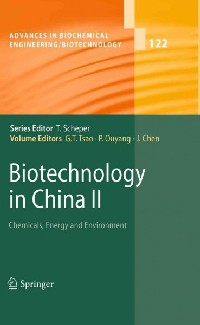
Past, Present, and Future Industrial Biotechnology in China, by Zhenjiang Li, Xiaojun Ji, Suli Kan, Hongqun Qiao, Min Jiang, Dingqiang Lu, Jun Wang, He Huang, Honghua Jia, Pingkai Ouyuang, and Hanjie Ying; Organic Chemicals from Bioprocesses in China, by Jin Huang, Lei Huang, Jianping Lin, Zhinan Xu, and Peilin Cen; Biofuels in China, by Tianwei Tan, Jianliang Yu, Jike Lu, and Tao Zhang; Bioreactors and Bioseparation, by Siliang Zhang, Xuejun Cao, Ju Chu, Jiangchao Qian, and Yingping Zhuang; Environmental Biotechnology in China, by Shuang Jiang Liu , Lei Liu , Muhammad Tausif Chaudhry , Lei Wang , Ying Guang Chen , Qi Zhou , He Liu , and Jian Chen; Traditional Chinese Biotechnology, by Yan Xu , Dong Wang , Wen Lai Fan , Xiao Qing Mu, and Jian Chen; Modern Biotechnology in China, by Qing-Zhao Wang and Xue-Ming Zhao
目录
Chemicals, Energy and Environment 3
Advances in Biochemical Engineering/Biotechnology Also Available Electronically 7
Aims and Scope 8
Attention all Users of the ``Springer Handbook of Enzymes麓麓 9
Preface 11
Contents 13
Past, Present, and Future Industrial Biotechnology in China 15
1 Introduction 17
2 Leading Fermentation Products from China 18
2.1 Vitamin C 18
2.2 Long-Chain Dicarboxylic Acids 19
2.3 Citric Acid 21
2.4 Glutamic Acid 22
2.5 Validamycin 23
3 Fine Chemicals, Active Pharmaceutical Ingredients, and Nutraceuticals 24
3.1 Acrylamide 25
3.2 Amino Acid 26
3.3 Citric Acid 27
3.4 l-Malic Acid 27
3.5 7-APA and 7-ADCA 28
3.6 p-Hydroxyphenyl Glycine 29
3.7 Vitamin C 30
3.8 Nicotinamide 31
3.9 d-Pantothenic Acid 31
3.10 Lycopene 32
3.11 beta-Carotene 33
4 Bio-Based Bulk Chemicals and Polymers 33
4.1 epsi-Poly-l-lysine 33
4.2 d-Malic Acid and Poly-d-Malic Acid 34
4.3 gamma-Poly(glutamic acid) 35
4.4 Welan Gum 36
4.5 Lactic Acid and Polylactic Acid 36
4.6 l-Citramalic Acid 37
4.7 Propionic Acid 38
5 Lignocellulosic Bioethanol and Bioethylene 38
5.1 Introduction 38
5.2 Pretreatment Technology 40
5.2.1 Steam Explosion 40
5.2.2 Acid Pretreatment 41
5.2.3 Alkaline Pretreatment 41
5.2.4 Liquid Hot Water 42
5.3 Cellulase 42
5.3.1 Cellulase-Producing Microorganisms 42
5.3.2 Industrial Cellulase Production in China 43
5.4 Bioethanol Fermentation and Product Recovery 44
5.4.1 Microorganisms 44
5.4.2 Fermentation Process 45
5.4.3 Bioethanol Recovery 46
5.5 Integrated Lignocellulosic Bioethanol Process 47
5.6 Bioethylene 47
5.6.1 Catalysts for Bioethanol Dehydration 49
5.6.2 Bioethanol to Bioethylene Processes 50
5.7 Conclusions 51
References 52
Organic Chemicals from Bioprocesses in China 57
1 Introduction 58
2 Small Organic Chemicals Via Fermentation 60
2.1 Organic Acids from Bioprocesses in China 60
2.1.1 Citric Acid 60
2.1.2 Lactic Acid 61
2.1.3 Itaconic Acid and Succinic Acid 62
2.1.4 Long Carbon Chain Dicarboxylic Acids 63
2.2 Alcohols from Bioprocesses 64
2.2.1 Acetone/Butanol/Ethanol Fermentation 64
2.2.2 1,3-Propanediol 64
3 Biopolymers from Bioprocesses in China 65
3.1 Polyamino Acids 66
3.1.1 gamma-Polyglutamic Acid 66
3.1.2 epsi-Polylysine 67
3.2 Microbial Polysaccharides 68
3.2.1 Xanthan 68
3.2.2 Gellan Gum 71
3.2.3 Hyaluronic Acid 71
3.3 Polyhydroxyalkanoates 73
4 Products from Enzyme-Catalyzed Reactions in China 75
4.1 Acrylamide 75
4.2 d-Panthenol and d-Pantolactone 76
4.3 Malic Acid and l-Tartaric Acid 78
5 Future Perspectives 80
References 81
Biofuels in China 86
1 Bioethanol in China 87
1.1 Bioethanol 87
1.2 Background of Bioethanol Development in China 88
1.3 Development of Non-Grain Ethanol 90
1.3.1 Sweet Sorghum-Based Bioethanol 90
Sweet Sorghum 90
Bioethanol from Sweet Sorghum in China 92
Ethanol Conversion from Sweet Sorghum 93
1.3.2 Cassava-Based Bioethanol 94
Cassava 94
Bioethanol from Cassava in Guangxi, China 94
Ethanol Conversion from Starchy Materials 96
1.3.3 Cellulosic Ethanol 97
Cellulosic Ethanol Production 98
Ethanol Conversion from Lignocellulosic Material 98
1.4 The Problems and Prospects of Bioethanol Industry in China 100
2 Biodiesel in China 101
2.1 Biodiesel 101
2.2 Biodiesel Production by Various Methods 101
2.3 Feedstock for Biodiesel Production 103
2.4 The Status of the Biodiesel Industry in China 106
2.5 The Problems and Prospects of Biodiesel Industry in China 107
3 Other Biofuels in China 109
3.1 Biobutanol 109
3.1.1 Biobutanol 109
3.1.2 The Development of Biobutanol in China 110
3.1.3 Lignocellulosic Materials for Biobutanol Production 111
3.2 Biogas 112
3.3 Biohydrogen 112
References 113
Bioreactors and Bioseparation 118
1 Bioreactors 120
1.1 Overview: Development of Industrial Bioreactor for Cell Cultivation: Classification and Application of Bioreactors 120
1.2 The Status and Development of Bioreactor Industry in China 120
1.3 Bioreactors Based on Metabolic Flux Analysis and the Multiscale Investigation Approach 122
1.3.1 Principles and Fundamentals of Bioreactor Engineering 122
Studies on Microbial Growth and Reaction Processes 122
Studies of Stoichiometry and Thermodynamics of Fermentation Processes 122
Microbial Reaction Kinetics and Bioreaction Engineering 123
1.3.2 Proposal and Principle of Multiscale Approach for the Study of Bioprocess 123
1.3.3 Trans-Scale Determination and Analysis 126
1.3.4 Data-Driven Approach 130
1.3.5 Data Acquisition and Control System of a Computer, Based on Multiscale Consideration and Parameters Correlation in a Bio. 131
1.3.6 Application of Optimization Based on Parameters Association with Multiscale Consideration 132
1.3.7 Study on Bioreactor Process by Integration of the Flow Field of a Bioreactor and Physiological Properties of Microbes 133
1.4 Design of a Large-Scale Bioreactor and the Study of Manufacture Technique 136
1.4.1 Principle of Scale-Up and Design of a Large-Scale Bioreactor 136
1.4.2 Design of Agitation System in a Large-Scale Bioreactor and the Study of Its Flow Field Feature 137
1.5 Development Trend of Bioreactor 138
1.5.1 Research and Development of Large-Scale Bioreactor for Animal Cell Culture 138
1.5.2 Development and Application of Microreactor for the High Throughput Screening of Producing Strain 140
1.5.3 Study on Systems Biology of Bioprocess and Bioreactor 142
1.5.4 Development of a Computer Network System Based on the Information and Investigation of a Bioprocess 143
2 Bioseparation in China 144
2.1 Chromatography Media 145
2.2 Recycling ATPS 148
2.3 Affinity Precipitation 150
2.4 Molecular Imprinting 152
2.5 Renaturation and Modification of Proteins 154
2.6 Protein Fractionation Using UF 154
2.7 Reverse Micellar Extraction 157
2.8 Ionic Liquids and Their Applications in Bioseparation 158
3 Conclusion 159
References 160
Environmental Biotechnology in China 164
1 Introduction 165
2 Microbial Degradation of Toxic and Organic Chemicals 166
2.1 Microorganisms Isolated for Degrading Various Toxic and Organic Compounds 166
2.2 Chloronitrobenzenes 168
2.3 Parathion and Nitrophenols 169
2.4 Carbazole, Dibenzothiophene and Biodesulfurization 171
2.5 Degradation of Aromatic Compounds with Corynebacterium glutamicum 171
3 Biological Treatment of Wastewater 174
3.1 Biosorption Technology for Removal of Heavy Metals and Persistent Organic Pollutants (POPs) from Wastewater 174
3.1.1 Highly Efficient Biosorption Materials 175
3.1.2 Biosorption Mechanism and Kinetics 175
3.1.3 Modification of Biosorbent for Enhancing Biosorption Capability 176
3.1.4 Optimization of the Biosorption Process 176
3.2 Bioflocculation and its Application in Water and Wastewater Treatment 177
3.2.1 Bioflocculents and Bioflocculation Mechanism 177
3.2.2 Application of Microbial Flocculent to Wastewater Treatment 178
3.3 Bio-Removal of Nitrogen and Phosphorus in Wastewater 178
3.3.1 Denitrification 179
3.3.2 Phosphorus Removal 180
3.3.3 Simultaneous Nitrogen and Phosphorus Removal 180
3.3.4 New Processes for Biological Nutrient Removal 181
A2N Process 181
Reversed A2/O Process 182
Integrated AmOn Process 183
3.4 Novel Bio/Eco-treatment Process for Wastewater 183
3.4.1 Constructed Wetland Technology for Wastewater Treatment 183
3.4.2 Another Combined Bioprocess for Treating High Concentration Organic Wastewater 184
4 Bioprocesses for Recycling of Organic Wastes 185
4.1 Methane Production 186
4.1.1 Progress on the Methanogens Study 186
4.1.2 Enhancement of Methane Production 187
Addition of Trace Metals 187
Addition of Enzymes 188
Innovations of Digester Designs 188
4.1.3 New Processes for Methane Fermentation 189
Simultaneous Denitrification/Methanogenesis 189
Methanogenesis in Microaerobic Conditions 189
4.2 Hydrogen Production 189
4.2.1 Mechanisms of Microbial Hydrogen Production 189
4.2.2 Microorganisms for Hydrogen Production 190
4.2.3 Process Development 191
Pretreatment of Raw Material 191
Process Parameters 191
4.3 Biochemicals Production 192
4.3.1 Process of Two-Stage Fermentation for Utilization of Sewage Sludge 192
4.3.2 Factors Influencing the Acidification 193
4.4 Microbial Fuel Cell 195
5 Conclusion and Perspectives 195
References 196
Traditional Chinese Biotechnology 202
1 Chinese Liquor 203
1.1 Introduction 203
1.1.1 Classification 203
1.1.2 Production Processes 204
1.2 Functional Microorganisms and E nzymes 205
1.2.1 Microorganisms and Enzymes of Daqu 205
1.2.2 Bacteria for Producing Hexanoic Acid 207
1.2.3 Microbial Molecular Ecology 208
1.2.4 Aroma Compounds in Chinese Liquors 210
2 Chinese Rice Wine 211
2.1 Introduction 211
2.2 Wheat Qu and Yeast for Making Rice Wine 213
2.2.1 Microorganisms and Enzymes of Wheat Qu 213
2.2.2 Yeast 214
2.3 New Technology Evolution 215
2.3.1 Liquefaction Method of Fermentation 215
2.3.2 Extrusion Method of Fermentation 216
3 Soy Sauce 216
3.1 Introduction 216
3.1.1 History of Soy Sauce in China 216
3.1.2 Soy Sauce Industry in China 217
3.2 Fundamentals of Soy Sauce Production 218
3.2.1 Raw Materials 218
3.2.2 Raw Material Treatment 219
3.2.3 Qu Making 223
3.2.4 Fermentation 224
3.2.5 Refining 226
3.3 Advances in Soy Sauce Production 228
3.3.1 Microorganisms in Soy Sauce Production 228
3.3.2 Aroma and Flavor in Soy Sauce and Immobilization Technology 229
3.3.3 Health and Safety Issues of Soy Sauce 232
4 Chinese Traditional Vinegar 232
4.1 Introduction 232
4.1.1 History of Chinese Vinegar 232
4.1.2 Fundamentals of Vinegar Production 233
4.1.3 Vinegar Production and Use in China 234
4.2 Techniques of Chinese Vinegar Production 235
4.2.1 Raw Materials 235
4.2.2 Microorganisms in Chinese Vinegar Production 235
4.2.3 Vinegar Production by Solid-State Fermentation Process 236
Daqu Vinegar 236
Xiaoqu Vinegar 238
Fuqu Vinegar 238
4.2.4 Vinegar Production by Liquid-State Fermentation Process 239
4.3 Development of Chinese Vinegar 239
4.3.1 Microecology in Chinese Vinegar Production 240
4.3.2 Modification of Techniques and Equipment for Chinese Vinegar Production 241
4.3.3 Health Care and Medicinal Uses of Chinese Vinegar 242
Modern Biotechnology in China 247
1 Introduction 248
2 From Traditional Biotechnology to Modern Biotechnology 249
3 Metabolic Engineering in China 251
3.1 Yield and Productivity Improvement of Biobased Products 251
3.2 Expansion of the Range of the Substances 255
3.3 Cellular Properties Improvement 255
3.4 Environmental Related Pollutants or Xenobiotic Degradation 255
3.5 Speciality and Novel Products 256
4 Genome Sequencing and Bioinformatics 256
4.1 Genome Sequencing and Genomic Research in China 256
4.2 Bioinformatics in Genome Research 257
5 Transcriptomics, Proteomics and Metabolomics 258
5.1 Transcriptomics 258
5.2 Proteomics 259
5.3 Metabolomics 261
6 Metabolic Network Analysis and Flux Analysis 263
6.1 Metabolic Network Topology Analysis 263
6.2 Flux Balance Analysis (FBA) and Specified Applications of Flux Analysis 263
6.3 Pathway Analysis 264
6.4 Platform Construction 265
7 Outlook 265
References 266
Index 270
Advances in Biochemical Engineering/Biotechnology Also Available Electronically 7
Aims and Scope 8
Attention all Users of the ``Springer Handbook of Enzymes麓麓 9
Preface 11
Contents 13
Past, Present, and Future Industrial Biotechnology in China 15
1 Introduction 17
2 Leading Fermentation Products from China 18
2.1 Vitamin C 18
2.2 Long-Chain Dicarboxylic Acids 19
2.3 Citric Acid 21
2.4 Glutamic Acid 22
2.5 Validamycin 23
3 Fine Chemicals, Active Pharmaceutical Ingredients, and Nutraceuticals 24
3.1 Acrylamide 25
3.2 Amino Acid 26
3.3 Citric Acid 27
3.4 l-Malic Acid 27
3.5 7-APA and 7-ADCA 28
3.6 p-Hydroxyphenyl Glycine 29
3.7 Vitamin C 30
3.8 Nicotinamide 31
3.9 d-Pantothenic Acid 31
3.10 Lycopene 32
3.11 beta-Carotene 33
4 Bio-Based Bulk Chemicals and Polymers 33
4.1 epsi-Poly-l-lysine 33
4.2 d-Malic Acid and Poly-d-Malic Acid 34
4.3 gamma-Poly(glutamic acid) 35
4.4 Welan Gum 36
4.5 Lactic Acid and Polylactic Acid 36
4.6 l-Citramalic Acid 37
4.7 Propionic Acid 38
5 Lignocellulosic Bioethanol and Bioethylene 38
5.1 Introduction 38
5.2 Pretreatment Technology 40
5.2.1 Steam Explosion 40
5.2.2 Acid Pretreatment 41
5.2.3 Alkaline Pretreatment 41
5.2.4 Liquid Hot Water 42
5.3 Cellulase 42
5.3.1 Cellulase-Producing Microorganisms 42
5.3.2 Industrial Cellulase Production in China 43
5.4 Bioethanol Fermentation and Product Recovery 44
5.4.1 Microorganisms 44
5.4.2 Fermentation Process 45
5.4.3 Bioethanol Recovery 46
5.5 Integrated Lignocellulosic Bioethanol Process 47
5.6 Bioethylene 47
5.6.1 Catalysts for Bioethanol Dehydration 49
5.6.2 Bioethanol to Bioethylene Processes 50
5.7 Conclusions 51
References 52
Organic Chemicals from Bioprocesses in China 57
1 Introduction 58
2 Small Organic Chemicals Via Fermentation 60
2.1 Organic Acids from Bioprocesses in China 60
2.1.1 Citric Acid 60
2.1.2 Lactic Acid 61
2.1.3 Itaconic Acid and Succinic Acid 62
2.1.4 Long Carbon Chain Dicarboxylic Acids 63
2.2 Alcohols from Bioprocesses 64
2.2.1 Acetone/Butanol/Ethanol Fermentation 64
2.2.2 1,3-Propanediol 64
3 Biopolymers from Bioprocesses in China 65
3.1 Polyamino Acids 66
3.1.1 gamma-Polyglutamic Acid 66
3.1.2 epsi-Polylysine 67
3.2 Microbial Polysaccharides 68
3.2.1 Xanthan 68
3.2.2 Gellan Gum 71
3.2.3 Hyaluronic Acid 71
3.3 Polyhydroxyalkanoates 73
4 Products from Enzyme-Catalyzed Reactions in China 75
4.1 Acrylamide 75
4.2 d-Panthenol and d-Pantolactone 76
4.3 Malic Acid and l-Tartaric Acid 78
5 Future Perspectives 80
References 81
Biofuels in China 86
1 Bioethanol in China 87
1.1 Bioethanol 87
1.2 Background of Bioethanol Development in China 88
1.3 Development of Non-Grain Ethanol 90
1.3.1 Sweet Sorghum-Based Bioethanol 90
Sweet Sorghum 90
Bioethanol from Sweet Sorghum in China 92
Ethanol Conversion from Sweet Sorghum 93
1.3.2 Cassava-Based Bioethanol 94
Cassava 94
Bioethanol from Cassava in Guangxi, China 94
Ethanol Conversion from Starchy Materials 96
1.3.3 Cellulosic Ethanol 97
Cellulosic Ethanol Production 98
Ethanol Conversion from Lignocellulosic Material 98
1.4 The Problems and Prospects of Bioethanol Industry in China 100
2 Biodiesel in China 101
2.1 Biodiesel 101
2.2 Biodiesel Production by Various Methods 101
2.3 Feedstock for Biodiesel Production 103
2.4 The Status of the Biodiesel Industry in China 106
2.5 The Problems and Prospects of Biodiesel Industry in China 107
3 Other Biofuels in China 109
3.1 Biobutanol 109
3.1.1 Biobutanol 109
3.1.2 The Development of Biobutanol in China 110
3.1.3 Lignocellulosic Materials for Biobutanol Production 111
3.2 Biogas 112
3.3 Biohydrogen 112
References 113
Bioreactors and Bioseparation 118
1 Bioreactors 120
1.1 Overview: Development of Industrial Bioreactor for Cell Cultivation: Classification and Application of Bioreactors 120
1.2 The Status and Development of Bioreactor Industry in China 120
1.3 Bioreactors Based on Metabolic Flux Analysis and the Multiscale Investigation Approach 122
1.3.1 Principles and Fundamentals of Bioreactor Engineering 122
Studies on Microbial Growth and Reaction Processes 122
Studies of Stoichiometry and Thermodynamics of Fermentation Processes 122
Microbial Reaction Kinetics and Bioreaction Engineering 123
1.3.2 Proposal and Principle of Multiscale Approach for the Study of Bioprocess 123
1.3.3 Trans-Scale Determination and Analysis 126
1.3.4 Data-Driven Approach 130
1.3.5 Data Acquisition and Control System of a Computer, Based on Multiscale Consideration and Parameters Correlation in a Bio. 131
1.3.6 Application of Optimization Based on Parameters Association with Multiscale Consideration 132
1.3.7 Study on Bioreactor Process by Integration of the Flow Field of a Bioreactor and Physiological Properties of Microbes 133
1.4 Design of a Large-Scale Bioreactor and the Study of Manufacture Technique 136
1.4.1 Principle of Scale-Up and Design of a Large-Scale Bioreactor 136
1.4.2 Design of Agitation System in a Large-Scale Bioreactor and the Study of Its Flow Field Feature 137
1.5 Development Trend of Bioreactor 138
1.5.1 Research and Development of Large-Scale Bioreactor for Animal Cell Culture 138
1.5.2 Development and Application of Microreactor for the High Throughput Screening of Producing Strain 140
1.5.3 Study on Systems Biology of Bioprocess and Bioreactor 142
1.5.4 Development of a Computer Network System Based on the Information and Investigation of a Bioprocess 143
2 Bioseparation in China 144
2.1 Chromatography Media 145
2.2 Recycling ATPS 148
2.3 Affinity Precipitation 150
2.4 Molecular Imprinting 152
2.5 Renaturation and Modification of Proteins 154
2.6 Protein Fractionation Using UF 154
2.7 Reverse Micellar Extraction 157
2.8 Ionic Liquids and Their Applications in Bioseparation 158
3 Conclusion 159
References 160
Environmental Biotechnology in China 164
1 Introduction 165
2 Microbial Degradation of Toxic and Organic Chemicals 166
2.1 Microorganisms Isolated for Degrading Various Toxic and Organic Compounds 166
2.2 Chloronitrobenzenes 168
2.3 Parathion and Nitrophenols 169
2.4 Carbazole, Dibenzothiophene and Biodesulfurization 171
2.5 Degradation of Aromatic Compounds with Corynebacterium glutamicum 171
3 Biological Treatment of Wastewater 174
3.1 Biosorption Technology for Removal of Heavy Metals and Persistent Organic Pollutants (POPs) from Wastewater 174
3.1.1 Highly Efficient Biosorption Materials 175
3.1.2 Biosorption Mechanism and Kinetics 175
3.1.3 Modification of Biosorbent for Enhancing Biosorption Capability 176
3.1.4 Optimization of the Biosorption Process 176
3.2 Bioflocculation and its Application in Water and Wastewater Treatment 177
3.2.1 Bioflocculents and Bioflocculation Mechanism 177
3.2.2 Application of Microbial Flocculent to Wastewater Treatment 178
3.3 Bio-Removal of Nitrogen and Phosphorus in Wastewater 178
3.3.1 Denitrification 179
3.3.2 Phosphorus Removal 180
3.3.3 Simultaneous Nitrogen and Phosphorus Removal 180
3.3.4 New Processes for Biological Nutrient Removal 181
A2N Process 181
Reversed A2/O Process 182
Integrated AmOn Process 183
3.4 Novel Bio/Eco-treatment Process for Wastewater 183
3.4.1 Constructed Wetland Technology for Wastewater Treatment 183
3.4.2 Another Combined Bioprocess for Treating High Concentration Organic Wastewater 184
4 Bioprocesses for Recycling of Organic Wastes 185
4.1 Methane Production 186
4.1.1 Progress on the Methanogens Study 186
4.1.2 Enhancement of Methane Production 187
Addition of Trace Metals 187
Addition of Enzymes 188
Innovations of Digester Designs 188
4.1.3 New Processes for Methane Fermentation 189
Simultaneous Denitrification/Methanogenesis 189
Methanogenesis in Microaerobic Conditions 189
4.2 Hydrogen Production 189
4.2.1 Mechanisms of Microbial Hydrogen Production 189
4.2.2 Microorganisms for Hydrogen Production 190
4.2.3 Process Development 191
Pretreatment of Raw Material 191
Process Parameters 191
4.3 Biochemicals Production 192
4.3.1 Process of Two-Stage Fermentation for Utilization of Sewage Sludge 192
4.3.2 Factors Influencing the Acidification 193
4.4 Microbial Fuel Cell 195
5 Conclusion and Perspectives 195
References 196
Traditional Chinese Biotechnology 202
1 Chinese Liquor 203
1.1 Introduction 203
1.1.1 Classification 203
1.1.2 Production Processes 204
1.2 Functional Microorganisms and E nzymes 205
1.2.1 Microorganisms and Enzymes of Daqu 205
1.2.2 Bacteria for Producing Hexanoic Acid 207
1.2.3 Microbial Molecular Ecology 208
1.2.4 Aroma Compounds in Chinese Liquors 210
2 Chinese Rice Wine 211
2.1 Introduction 211
2.2 Wheat Qu and Yeast for Making Rice Wine 213
2.2.1 Microorganisms and Enzymes of Wheat Qu 213
2.2.2 Yeast 214
2.3 New Technology Evolution 215
2.3.1 Liquefaction Method of Fermentation 215
2.3.2 Extrusion Method of Fermentation 216
3 Soy Sauce 216
3.1 Introduction 216
3.1.1 History of Soy Sauce in China 216
3.1.2 Soy Sauce Industry in China 217
3.2 Fundamentals of Soy Sauce Production 218
3.2.1 Raw Materials 218
3.2.2 Raw Material Treatment 219
3.2.3 Qu Making 223
3.2.4 Fermentation 224
3.2.5 Refining 226
3.3 Advances in Soy Sauce Production 228
3.3.1 Microorganisms in Soy Sauce Production 228
3.3.2 Aroma and Flavor in Soy Sauce and Immobilization Technology 229
3.3.3 Health and Safety Issues of Soy Sauce 232
4 Chinese Traditional Vinegar 232
4.1 Introduction 232
4.1.1 History of Chinese Vinegar 232
4.1.2 Fundamentals of Vinegar Production 233
4.1.3 Vinegar Production and Use in China 234
4.2 Techniques of Chinese Vinegar Production 235
4.2.1 Raw Materials 235
4.2.2 Microorganisms in Chinese Vinegar Production 235
4.2.3 Vinegar Production by Solid-State Fermentation Process 236
Daqu Vinegar 236
Xiaoqu Vinegar 238
Fuqu Vinegar 238
4.2.4 Vinegar Production by Liquid-State Fermentation Process 239
4.3 Development of Chinese Vinegar 239
4.3.1 Microecology in Chinese Vinegar Production 240
4.3.2 Modification of Techniques and Equipment for Chinese Vinegar Production 241
4.3.3 Health Care and Medicinal Uses of Chinese Vinegar 242
Modern Biotechnology in China 247
1 Introduction 248
2 From Traditional Biotechnology to Modern Biotechnology 249
3 Metabolic Engineering in China 251
3.1 Yield and Productivity Improvement of Biobased Products 251
3.2 Expansion of the Range of the Substances 255
3.3 Cellular Properties Improvement 255
3.4 Environmental Related Pollutants or Xenobiotic Degradation 255
3.5 Speciality and Novel Products 256
4 Genome Sequencing and Bioinformatics 256
4.1 Genome Sequencing and Genomic Research in China 256
4.2 Bioinformatics in Genome Research 257
5 Transcriptomics, Proteomics and Metabolomics 258
5.1 Transcriptomics 258
5.2 Proteomics 259
5.3 Metabolomics 261
6 Metabolic Network Analysis and Flux Analysis 263
6.1 Metabolic Network Topology Analysis 263
6.2 Flux Balance Analysis (FBA) and Specified Applications of Flux Analysis 263
6.3 Pathway Analysis 264
6.4 Platform Construction 265
7 Outlook 265
References 266
Index 270
- 名称
- 类型
- 大小
光盘服务联系方式: 020-38250260 客服QQ:4006604884
云图客服:
用户发送的提问,这种方式就需要有位在线客服来回答用户的问题,这种 就属于对话式的,问题是这种提问是否需要用户登录才能提问
Video Player
×
Audio Player
×
pdf Player
×
